Articles | Volume 7-osr10
https://doi.org/10.5194/sp-7-osr10-14-2026
© Author(s) 2026. This work is distributed under
the Creative Commons Attribution 4.0 License.
the Creative Commons Attribution 4.0 License.
https://doi.org/10.5194/sp-7-osr10-14-2026
© Author(s) 2026. This work is distributed under
the Creative Commons Attribution 4.0 License.
the Creative Commons Attribution 4.0 License.

30 Sep 2026
| OSR10 | Chapter 3.2
| 30 Sep 2026 | OSR10 | Chapter 3.2
Metocean study for the planning of the FSRU terminal: a case study at the Estonian coast of the Gulf of Finland
Urmas Raudsepp
Tallinn University of Technology, Ehitajate tee 5, 19086, Tallinn, Estonia
Ilja Maljutenko
CORRESPONDING AUTHOR

Tallinn University of Technology, Ehitajate tee 5, 19086, Tallinn, Estonia
Jan-Victor Björkqvist
Norwegian Meteorological Institute, Allégaten 70, 5007, Bergen, Norway
Amirhossein Barzandeh
Tallinn University of Technology, Ehitajate tee 5, 19086, Tallinn, Estonia
Sander Rikka
Tallinn University of Technology, Ehitajate tee 5, 19086, Tallinn, Estonia
Aarne Männik
Tallinn University of Technology, Ehitajate tee 5, 19086, Tallinn, Estonia
Siim Pärt
Tallinn University of Technology, Ehitajate tee 5, 19086, Tallinn, Estonia
Priidik Lagemaa
Tallinn University of Technology, Ehitajate tee 5, 19086, Tallinn, Estonia
Victor Alari
Tallinn University of Technology, Ehitajate tee 5, 19086, Tallinn, Estonia
Kaimo Vahter
Tallinn University of Technology, Ehitajate tee 5, 19086, Tallinn, Estonia
Rivo Uiboupin
Tallinn University of Technology, Ehitajate tee 5, 19086, Tallinn, Estonia
Related authors
Urmas Raudsepp, Ulvi Ahmadov, Ilja Maljutenko, Amirhossein Barzandeh, Mariliis Kõuts, and Priidik Lagemaa
State Planet, 7-osr10, 11, https://doi.org/10.5194/sp-7-osr10-11-2026, https://doi.org/10.5194/sp-7-osr10-11-2026, 2026
Short summary
Short summary
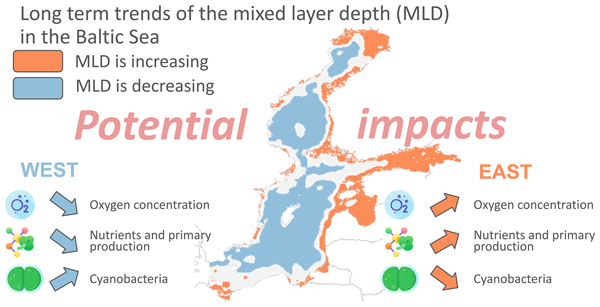
Over the past 30 years, the Baltic Sea's surface mixed layer has changed unevenly: it is shoaling in the southwest due to warming and increased stratification, while deepening in the northeast as ice loss allows more winter mixing. These shifts may affect ecosystems by reducing deep-water ventilation and worsening hypoxia in the south, while enhancing nutrient redistribution and spring bloom potential in the north. The Baltic Sea's climate response is strongly regional.
Laura Tuomi, Milla M. Johansson, Andrew Twelves, Mika Rantanen, Priidik Lagemaa, Hedi Kanarik, Jani Särkkä, Urmas Raudsepp, and Antti Westerlund
State Planet, 7-osr10, 16, https://doi.org/10.5194/sp-7-osr10-16-2026, https://doi.org/10.5194/sp-7-osr10-16-2026, 2026
Short summary
Short summary
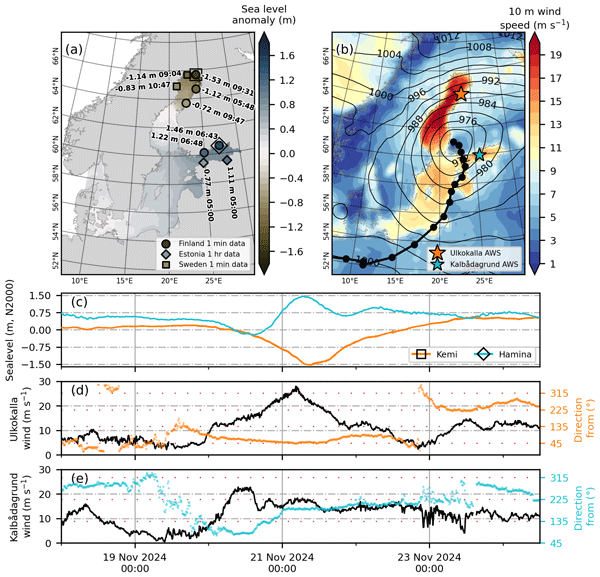
A record low sea level of −153 cm, 34 cm below the previous minimum, was measured in the Bothnian Bay on 21 November 2024. This extreme event was caused by a strong and long-lasting windstorm that followed an unusual track. The Copernicus Marine Service Baltic Sea forecast system accurately predicted the event 3–4 days in advance. However, forecasts with longer lead times failed to predict the record low sea level, although they did indicate a significant drop in sea levels during the storm.
Paul Alexander Nemeth, Amirhossein Barzandeh, Ilja Maljutenko, Priidik Lagemaa, and Urmas Raudsepp
State Planet Discuss., https://doi.org/10.5194/sp-2026-3, https://doi.org/10.5194/sp-2026-3, 2026
Preprint under review for SP
Short summary
Short summary
Using the Copernicus Marine Baltic Sea Physics Reanalysis, this study quantifies water, heat, and salt transports across the Baltic Sea–North Sea transition zone. It shows that transport estimates depend strongly on diagnostic section placement and temporal resolution, especially for salt transport, highlighting the need to consider these sensitivities in Baltic Sea budget analyses.
Ali Hayatijozani, Amirhossein Barzandeh, Ilja Maljutenko, Priidik Lagemaa, and Urmas Raudsepp
State Planet Discuss., https://doi.org/10.5194/sp-2026-4, https://doi.org/10.5194/sp-2026-4, 2026
Preprint under review for SP
Short summary
Short summary
Using long-term regional reanalysis, this study shows that Baltic Sea warming is spatially organized rather than basin-uniform. Heat content anomalies form recurrent regimes, including basin-wide warm/cold states and contrasted patterns with opposite anomalies across regions. Positive regimes increase after the mid-2010s, while regional contrasts persist, highlighting the limits of basin-mean heat metrics.
Urmas Raudsepp, Ilja Maljutenko, Priidik Lagemaa, and Karina von Schuckmann
State Planet, 6-osr9, 6, https://doi.org/10.5194/sp-6-osr9-6-2025, https://doi.org/10.5194/sp-6-osr9-6-2025, 2025
Short summary
Short summary
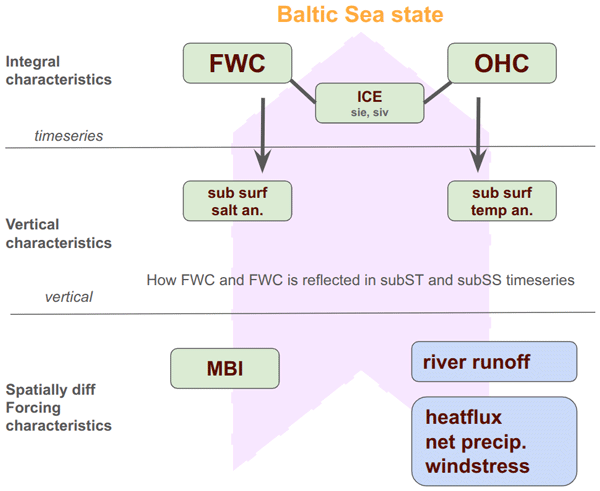
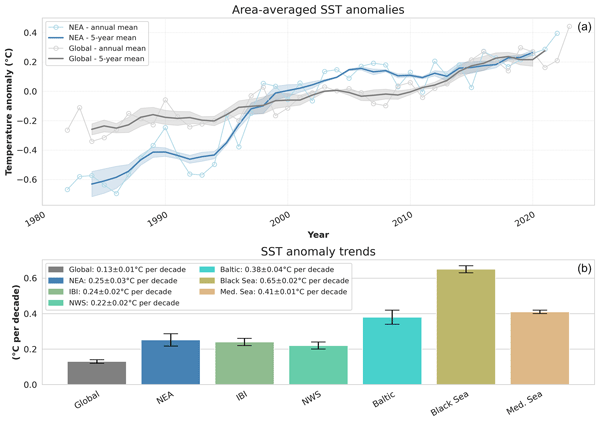
Over the past 3 decades, the Baltic Sea has warmed and become saltier, reflecting broader atmospheric trends. Heat content changes are mainly driven by subsurface temperature variations in the upper 100 m, influenced by air temperature, evaporation, and wind stress. Freshwater content changes are largely controlled by salinity shifts in the halocline (40–120 m), with key drivers being saline inflows, precipitation, and zonal wind stress.
Jüri Elken, Ilja Maljutenko, Priidik Lagemaa, Rivo Uiboupin, and Urmas Raudsepp
State Planet, 4-osr8, 9, https://doi.org/10.5194/sp-4-osr8-9-2024, https://doi.org/10.5194/sp-4-osr8-9-2024, 2024
Short summary
Short summary
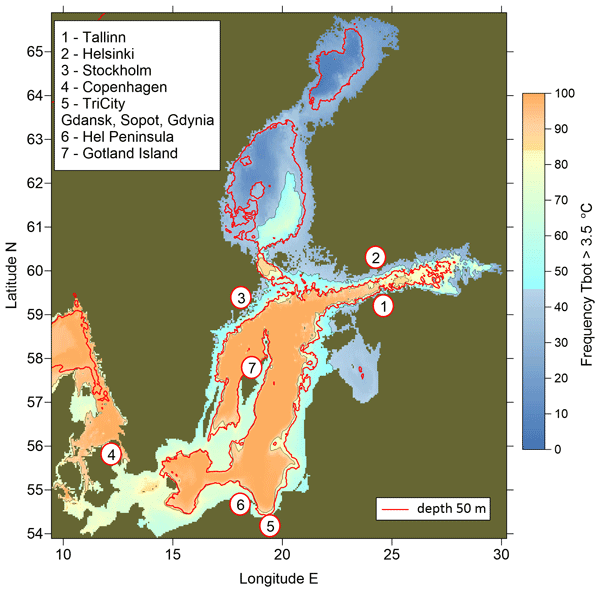
Baltic deep water is generally warmer than surface water during winter when district heating is required. Depending on the location, depth, and oceanographic situation, bottom water of Tallinn Bay can be used as an energy source for seawater heat pumps until the end of February, covering the major time interval when heating is needed. Episodically, there are colder-water events when seawater heat extraction has to be complemented by other sources of heating energy.
Anja Lindenthal, Claudia Hinrichs, Simon Jandt-Scheelke, Tim Kruschke, Priidik Lagemaa, Eefke M. van der Lee, Ilja Maljutenko, Helen E. Morrison, Tabea R. Panteleit, and Urmas Raudsepp
State Planet, 4-osr8, 16, https://doi.org/10.5194/sp-4-osr8-16-2024, https://doi.org/10.5194/sp-4-osr8-16-2024, 2024
Short summary
Short summary
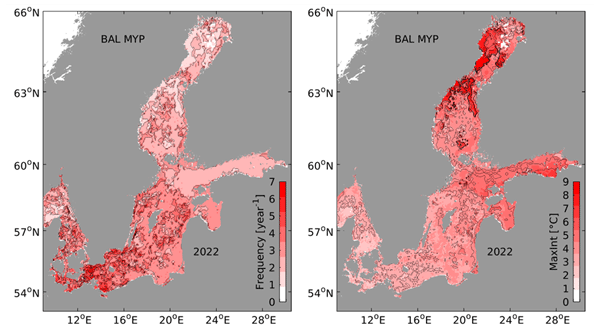
In 2022, large parts of the Baltic Sea experienced the third-warmest to warmest summer and autumn temperatures since 1997 and several marine heatwaves (MHWs). Using remote sensing, reanalysis, and in situ data, this study characterizes regional differences in MHW properties in the Baltic Sea in 2022. Furthermore, it presents an analysis of long-term trends and the relationship between atmospheric warming and MHW occurrences, including their propagation into deeper layers.
Karina von Schuckmann, Lorena Moreira, Mathilde Cancet, Flora Gues, Emmanuelle Autret, Ali Aydogdu, Lluis Castrillo, Daniele Ciani, Andrea Cipollone, Emanuela Clementi, Gianpiero Cossarini, Alvaro de Pascual-Collar, Vincenzo De Toma, Marion Gehlen, Rianne Giesen, Marie Drevillon, Claudia Fanelli, Kevin Hodges, Simon Jandt-Scheelke, Eric Jansen, Melanie Juza, Ioanna Karagali, Priidik Lagemaa, Vidar Lien, Leonardo Lima, Vladyslav Lyubartsev, Ilja Maljutenko, Simona Masina, Ronan McAdam, Pietro Miraglio, Helen Morrison, Tabea Rebekka Panteleit, Andrea Pisano, Marie-Isabelle Pujol, Urmas Raudsepp, Roshin Raj, Ad Stoffelen, Simon Van Gennip, Pierre Veillard, and Chunxue Yang
State Planet, 4-osr8, 2, https://doi.org/10.5194/sp-4-osr8-2-2024, https://doi.org/10.5194/sp-4-osr8-2-2024, 2024
Urmas Raudsepp, Ilja Maljutenko, Amirhossein Barzandeh, Rivo Uiboupin, and Priidik Lagemaa
State Planet, 1-osr7, 7, https://doi.org/10.5194/sp-1-osr7-7-2023, https://doi.org/10.5194/sp-1-osr7-7-2023, 2023
Short summary
Short summary
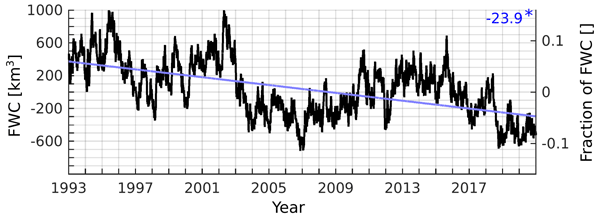
The freshwater content in the Baltic Sea has wide sub-regional variability characterized by the local climate dynamics. The total freshwater content trend is negative due to the recent increased inflows of saltwater, but there are also regions where the increase in runoff and decrease in ice content have led to an increase in the freshwater content.
Urmas Raudsepp and Ilja Maljutenko
Geosci. Model Dev., 15, 535–551, https://doi.org/10.5194/gmd-15-535-2022, https://doi.org/10.5194/gmd-15-535-2022, 2022
Short summary
Short summary
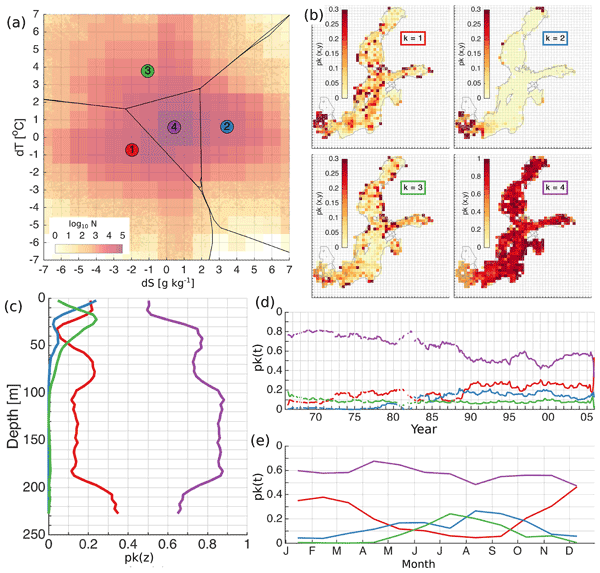
A model's ability to reproduce the state of a simulated object is always a subject of discussion. A new method for the multivariate assessment of numerical model skills uses the K-means algorithm for clustering model errors. All available data that fall into the model domain and simulation period are incorporated into the skill assessment. The clustered errors are used for spatial and temporal analysis of the model accuracy. The method can be applied to different types of geoscientific models.
Laura Tuomi, Milla M. Johansson, Andrew Twelves, Mika Rantanen, Priidik Lagemaa, Hedi Kanarik, Jani Särkkä, Urmas Raudsepp, and Antti Westerlund
State Planet, 7-osr10, 16, https://doi.org/10.5194/sp-7-osr10-16-2026, https://doi.org/10.5194/sp-7-osr10-16-2026, 2026
Short summary
Short summary
A record low sea level of −153 cm, 34 cm below the previous minimum, was measured in the Bothnian Bay on 21 November 2024. This extreme event was caused by a strong and long-lasting windstorm that followed an unusual track. The Copernicus Marine Service Baltic Sea forecast system accurately predicted the event 3–4 days in advance. However, forecasts with longer lead times failed to predict the record low sea level, although they did indicate a significant drop in sea levels during the storm.
Urmas Raudsepp, Ulvi Ahmadov, Ilja Maljutenko, Amirhossein Barzandeh, Mariliis Kõuts, and Priidik Lagemaa
State Planet, 7-osr10, 11, https://doi.org/10.5194/sp-7-osr10-11-2026, https://doi.org/10.5194/sp-7-osr10-11-2026, 2026
Short summary
Short summary
Over the past 30 years, the Baltic Sea's surface mixed layer has changed unevenly: it is shoaling in the southwest due to warming and increased stratification, while deepening in the northeast as ice loss allows more winter mixing. These shifts may affect ecosystems by reducing deep-water ventilation and worsening hypoxia in the south, while enhancing nutrient redistribution and spring bloom potential in the north. The Baltic Sea's climate response is strongly regional.
Paul Alexander Nemeth, Amirhossein Barzandeh, Ilja Maljutenko, Priidik Lagemaa, and Urmas Raudsepp
State Planet Discuss., https://doi.org/10.5194/sp-2026-3, https://doi.org/10.5194/sp-2026-3, 2026
Preprint under review for SP
Short summary
Short summary
Using the Copernicus Marine Baltic Sea Physics Reanalysis, this study quantifies water, heat, and salt transports across the Baltic Sea–North Sea transition zone. It shows that transport estimates depend strongly on diagnostic section placement and temporal resolution, especially for salt transport, highlighting the need to consider these sensitivities in Baltic Sea budget analyses.
Ali Hayatijozani, Amirhossein Barzandeh, Ilja Maljutenko, Priidik Lagemaa, and Urmas Raudsepp
State Planet Discuss., https://doi.org/10.5194/sp-2026-4, https://doi.org/10.5194/sp-2026-4, 2026
Preprint under review for SP
Short summary
Short summary
Using long-term regional reanalysis, this study shows that Baltic Sea warming is spatially organized rather than basin-uniform. Heat content anomalies form recurrent regimes, including basin-wide warm/cold states and contrasted patterns with opposite anomalies across regions. Positive regimes increase after the mid-2010s, while regional contrasts persist, highlighting the limits of basin-mean heat metrics.
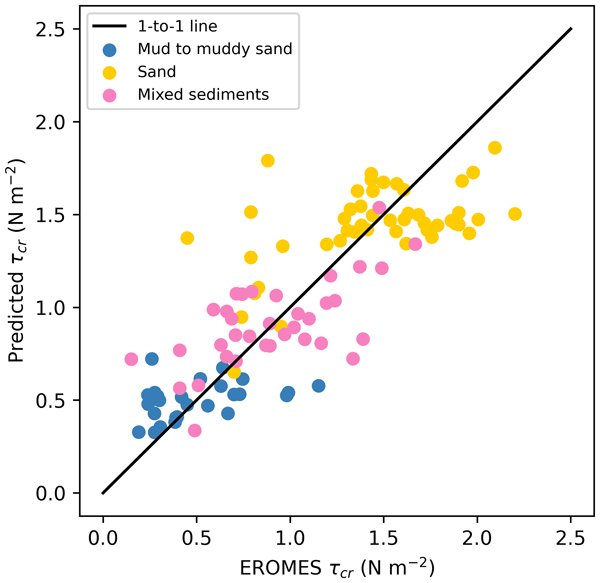
Jan-Victor Björkqvist, Mari Savela, Heidi Pettersson, Victor Alari, and Alf Norkko
Ocean Sci., 22, 2123–2141, https://doi.org/10.5194/os-22-2123-2026, https://doi.org/10.5194/os-22-2123-2026, 2026
Short summary
Short summary
Strong motions caused by surface waves can set the material at the bottom in motion. How strong the wave motions need to be depends on the bottom type, for example mud or sand. We estimated how often waves can lift particles from the bottom by comparing wave model results to sea floor samples in the laboratory. We included the effect of seasonal biological activity, which was found to be significant.
Yee Chun Tsoi, Aarne Männik, and Sander Rikka
EGUsphere, https://doi.org/10.5194/egusphere-2026-2031, https://doi.org/10.5194/egusphere-2026-2031, 2026
Short summary
Short summary
We studied how rainfall patterns over Estonia change when rain is measured over different time scales, seasons, and data sources. Using weather radar and rain gauge data, we found that rainfall variability changes with these factors. This shows that rainfall statistics cannot be treated as fixed, and it helps improving applications like rainfall estimation, downscaling, and short-term forecasting.
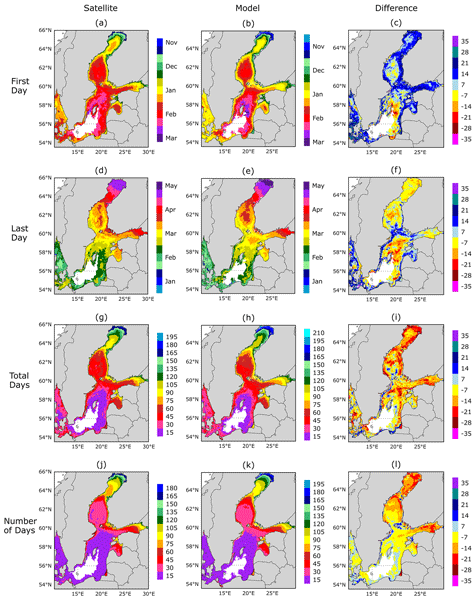
Shakti Singh, Ilja Maljutenko, and Rivo Uiboupin
The Cryosphere, 19, 4741–4758, https://doi.org/10.5194/tc-19-4741-2025, https://doi.org/10.5194/tc-19-4741-2025, 2025
Short summary
Short summary
The sea ice statistics study highlights the bias in model estimations compared to satellite data and provides a simple approach to minimise that. During the study period, the model estimates sea ice forming slightly earlier but aligns well with the satellite data for ice season's end. Rapid decrease in the sea ice parameters is observed across the Baltic Sea, especially the ice thickness in the Bothnian Bay sub-basin. These statistics could be crucial for regional adaptation strategies.
Urmas Raudsepp, Ilja Maljutenko, Priidik Lagemaa, and Karina von Schuckmann
State Planet, 6-osr9, 6, https://doi.org/10.5194/sp-6-osr9-6-2025, https://doi.org/10.5194/sp-6-osr9-6-2025, 2025
Short summary
Short summary
Over the past 3 decades, the Baltic Sea has warmed and become saltier, reflecting broader atmospheric trends. Heat content changes are mainly driven by subsurface temperature variations in the upper 100 m, influenced by air temperature, evaporation, and wind stress. Freshwater content changes are largely controlled by salinity shifts in the halocline (40–120 m), with key drivers being saline inflows, precipitation, and zonal wind stress.
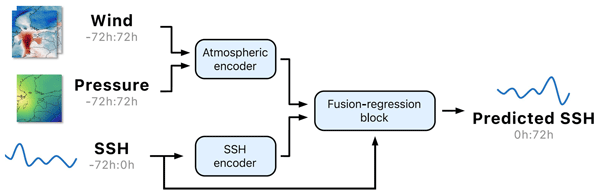
Amirhossein Barzandeh, Matjaž Ličer, Marko Rus, Matej Kristan, Ilja Maljutenko, Jüri Elken, Priidik Lagemaa, and Rivo Uiboupin
Ocean Sci., 21, 1315–1327, https://doi.org/10.5194/os-21-1315-2025, https://doi.org/10.5194/os-21-1315-2025, 2025
Short summary
Short summary
We evaluated a deep-learning model, HIDRA2, for predicting sea levels along the Estonian coast and compared it to traditional numerical models. HIDRA2 performed better overall, offering faster forecasts and valuable uncertainty estimates using ensemble predictions.
Jan-Victor Björkqvist and Victor Alari
EGUsphere, https://doi.org/10.5194/egusphere-2024-3477, https://doi.org/10.5194/egusphere-2024-3477, 2024
Preprint archived
Short summary
Short summary
Surface waves are generated by the wind and wave measurements can also be used to estimate the wind speed. This is beneficial in the open ocean where direct measurements of the wind are difficult. The wind speed deduced from wave measurements serve as a third estimate of the wind speed in addition to satellite measurements or numerical model results. We implemented such and algorithm to be used with wave data from a small buoy and validated it against direct wind measurements and model results.
Karina von Schuckmann, Lorena Moreira, Mathilde Cancet, Flora Gues, Emmanuelle Autret, Ali Aydogdu, Lluis Castrillo, Daniele Ciani, Andrea Cipollone, Emanuela Clementi, Gianpiero Cossarini, Alvaro de Pascual-Collar, Vincenzo De Toma, Marion Gehlen, Rianne Giesen, Marie Drevillon, Claudia Fanelli, Kevin Hodges, Simon Jandt-Scheelke, Eric Jansen, Melanie Juza, Ioanna Karagali, Priidik Lagemaa, Vidar Lien, Leonardo Lima, Vladyslav Lyubartsev, Ilja Maljutenko, Simona Masina, Ronan McAdam, Pietro Miraglio, Helen Morrison, Tabea Rebekka Panteleit, Andrea Pisano, Marie-Isabelle Pujol, Urmas Raudsepp, Roshin Raj, Ad Stoffelen, Simon Van Gennip, Pierre Veillard, and Chunxue Yang
State Planet, 4-osr8, 2, https://doi.org/10.5194/sp-4-osr8-2-2024, https://doi.org/10.5194/sp-4-osr8-2-2024, 2024
Anja Lindenthal, Claudia Hinrichs, Simon Jandt-Scheelke, Tim Kruschke, Priidik Lagemaa, Eefke M. van der Lee, Ilja Maljutenko, Helen E. Morrison, Tabea R. Panteleit, and Urmas Raudsepp
State Planet, 4-osr8, 16, https://doi.org/10.5194/sp-4-osr8-16-2024, https://doi.org/10.5194/sp-4-osr8-16-2024, 2024
Short summary
Short summary
In 2022, large parts of the Baltic Sea experienced the third-warmest to warmest summer and autumn temperatures since 1997 and several marine heatwaves (MHWs). Using remote sensing, reanalysis, and in situ data, this study characterizes regional differences in MHW properties in the Baltic Sea in 2022. Furthermore, it presents an analysis of long-term trends and the relationship between atmospheric warming and MHW occurrences, including their propagation into deeper layers.
Jüri Elken, Ilja Maljutenko, Priidik Lagemaa, Rivo Uiboupin, and Urmas Raudsepp
State Planet, 4-osr8, 9, https://doi.org/10.5194/sp-4-osr8-9-2024, https://doi.org/10.5194/sp-4-osr8-9-2024, 2024
Short summary
Short summary
Baltic deep water is generally warmer than surface water during winter when district heating is required. Depending on the location, depth, and oceanographic situation, bottom water of Tallinn Bay can be used as an energy source for seawater heat pumps until the end of February, covering the major time interval when heating is needed. Episodically, there are colder-water events when seawater heat extraction has to be complemented by other sources of heating energy.
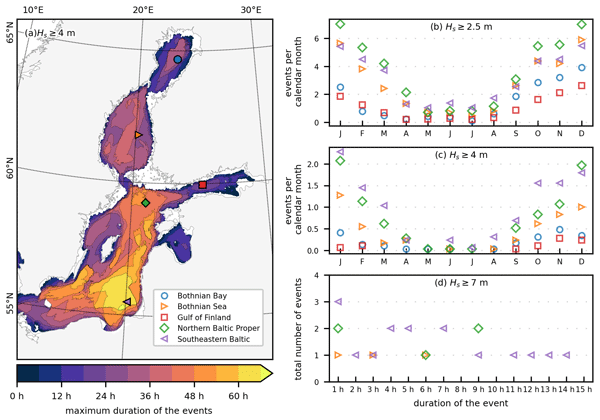
Jan-Victor Björkqvist, Hedi Kanarik, Laura Tuomi, Lauri Niskanen, and Markus Kankainen
State Planet, 4-osr8, 10, https://doi.org/10.5194/sp-4-osr8-10-2024, https://doi.org/10.5194/sp-4-osr8-10-2024, 2024
Short summary
Short summary
Typical wave statistics do not provide information on how often certain wave heights are exceeded and the length of such events. Our study found a strong seasonal dependence for 2.5 and 4 m wave events in the Baltic Sea. Wave heights of over 7 m occurred less than once per year. The number of 1 m wave events can double within 20 km in nearshore areas. Our results are important for all operations at sea, including ship traffic and fish farming.

Jan Åström, Fredrik Robertsen, Jari Haapala, Arttu Polojärvi, Rivo Uiboupin, and Ilja Maljutenko
The Cryosphere, 18, 2429–2442, https://doi.org/10.5194/tc-18-2429-2024, https://doi.org/10.5194/tc-18-2429-2024, 2024
Short summary
Short summary
The HiDEM code has been developed for analyzing the fracture and fragmentation of brittle materials and has been extensively applied to glacier calving. Here, we report on the adaptation of the code to sea-ice dynamics and breakup. The code demonstrates the capability to simulate sea-ice dynamics on a 100 km scale with an unprecedented resolution. We argue that codes of this type may become useful for improving forecasts of sea-ice dynamics.
Urmas Raudsepp, Ilja Maljutenko, Amirhossein Barzandeh, Rivo Uiboupin, and Priidik Lagemaa
State Planet, 1-osr7, 7, https://doi.org/10.5194/sp-1-osr7-7-2023, https://doi.org/10.5194/sp-1-osr7-7-2023, 2023
Short summary
Short summary
The freshwater content in the Baltic Sea has wide sub-regional variability characterized by the local climate dynamics. The total freshwater content trend is negative due to the recent increased inflows of saltwater, but there are also regions where the increase in runoff and decrease in ice content have led to an increase in the freshwater content.

Milla M. Johansson, Jan-Victor Björkqvist, Jani Särkkä, Ulpu Leijala, and Kimmo K. Kahma
Nat. Hazards Earth Syst. Sci., 22, 813–829, https://doi.org/10.5194/nhess-22-813-2022, https://doi.org/10.5194/nhess-22-813-2022, 2022
Short summary
Short summary
We analysed the correlation of sea level and wind waves at a coastal location in the Gulf of Finland using tide gauge data, wave measurements, and wave simulations. The correlation was positive for southwesterly winds and negative for northeasterly winds. Probabilities of high total water levels (sea level + wave crest) are underestimated if sea level and waves are considered independent. Suitably chosen copula functions can account for the dependence.
Urmas Raudsepp and Ilja Maljutenko
Geosci. Model Dev., 15, 535–551, https://doi.org/10.5194/gmd-15-535-2022, https://doi.org/10.5194/gmd-15-535-2022, 2022
Short summary
Short summary
A model's ability to reproduce the state of a simulated object is always a subject of discussion. A new method for the multivariate assessment of numerical model skills uses the K-means algorithm for clustering model errors. All available data that fall into the model domain and simulation period are incorporated into the skill assessment. The clustered errors are used for spatial and temporal analysis of the model accuracy. The method can be applied to different types of geoscientific models.
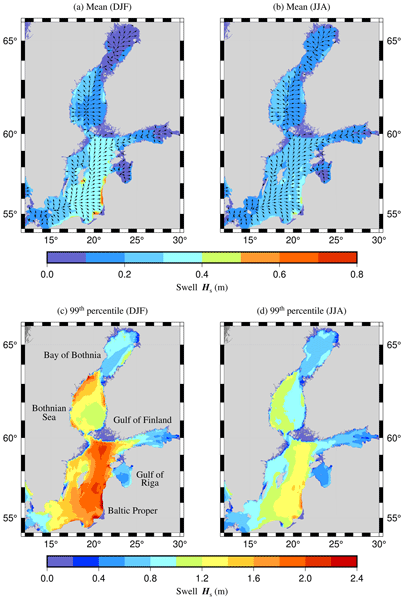
Jan-Victor Björkqvist, Siim Pärt, Victor Alari, Sander Rikka, Elisa Lindgren, and Laura Tuomi
Ocean Sci., 17, 1815–1829, https://doi.org/10.5194/os-17-1815-2021, https://doi.org/10.5194/os-17-1815-2021, 2021
Short summary
Short summary
Waves that travel faster than the wind are called swell. Our study presents wave model statistics of swell waves in the Baltic Sea, since such statistics have not yet been reliably compiled. Our results confirm that long, high, and persistent swell is absent in the Baltic Sea. We found that the dependency between swell and wind waves differs in the open sea compared to nearshore areas. These distinctions are important for studies on how waves interact with the atmosphere and the sea floor.
Cited articles
Alari, V., Björkqvist, J.-V., Kaldvee, V., Mölder, K., Rikka, S., Kask-Korb, A., Vahter, K., Pärt, S., Vidjajev, N., and Tõnisson, H.: LainePoiss® – A Lightweight and Ice-Resistant Wave Buoy, J. Atmos. Ocean. Tech., 39, 573–594, https://doi.org/10.1175/JTECH-D-21-0091.1, 2022.
Alenius, P., Myrberg, K., and Nekrasov, A.: The physical oceanography of the Gulf of Finland: a review, Boreal Environ. Res, 3, 97–125, 1998.
Allen, T. R., McLeod, G., and Hutt, S.: Sea level rise exposure assessment of US East Coast cargo container terminals, Marit. Policy Manag., 49, 577–599, https://doi.org/10.1080/03088839.2021.1903597, 2022.
Bailey, B. H. and Freedman, J. M.: Developments in metocean information in support of US offshore wind energy and the ocean sciences, Oceanography, 37, 30–41, https://doi.org/10.5670/oceanog.2024.503, 2024.
Ballarotta, M., Pujol, M.-I., and SL-TAC team: EU Copernicus Marine Service Quality Information Document for European Seas Gridded L4 Sea Surface Heights and Derived Variables Reprocessed (1993–ongoing), SEALEVEL_EUR_PHY_L4_MY_008_068, Issue 13.0, Mercator Ocean International, https://documentation.marine.copernicus.eu/QUID/CMEMS-SL-QUID-008-032-068.pdf (last access: 15 July 2025), 2025a.
Ballarotta, M., Pujol, M.-I., and SL-TAC team: EU Copernicus Marine Service Quality Information Document for European Seas Along Track L 3 Sea Surface Heights Reprocessed 1993 Ongoing Tailored For Data Assimilation, SEALEVEL_EUR_PHY_L3_MY_008_061, Issue 13.0, Mercator Ocean International, https://documentation.marine.copernicus.eu/QUID/CMEMS-SL-QUID-008-032-068.pdf (last access: 15 July 2025), 2025b
Barzandeh, A., Maljutenko, I., Rikka, S., Lagemaa, P., Männik, A., Uiboupin, R., and Raudsepp, U.: Sea surface circulation in the Baltic Sea: decomposed components and pattern recognition, Scientific Reports, 14, 18649, https://doi.org/10.1038/s41598-024-69463-8, 2024.
Barzandeh, A., Maljutenko, I., Rikka, S., and Raudsepp, U.: sciCUN: A deep learning model for daily sea surface current fields inference – A case study of the Gulf of Riga, Ocean Model., 201, 102693, https://doi.org/10.1016/j.ocemod.2026.102693, 2026a.
Barzandeh, A., Manss, C., Stahl, F., Maljutenko, I., Rikka, S., and Raudsepp, U.: Data-Driven Emulation of Numerically Simulated Baltic Sea Surface Currents With a Deep Convolutional U-Net: Explainability and Potential Forecast Skill, J. Geophys. Res. Mach. Learn. Comput., 3, e2026JH001321, https://doi.org/10.1029/2026JH001321, 2026b.
Barzandeh, A., Ličer, M., Rus, M., Kristan, M., Maljutenko, I., Elken, J., Lagemaa, P., and Uiboupin, R.: Application of the HIDRA2 deep-learning model for sea level forecasting along the Estonian coast of the Baltic Sea, Ocean Sci., 21, 1315–1327, https://doi.org/10.5194/os-21-1315-2025, 2025.
Bitner-Gregersen, E. M.: Joint met-ocean description for design and operations of marine structures, Appl. Ocean Res., 51, 279–292, https://doi.org/10.1016/j.apor.2015.01.007, 2015.
Björkqvist, J.-V., Tuomi, L., Fortelius, C., Pettersson, H., Tikka, K., and Kahma, K. K.: Improved estimates of nearshore wave conditions in the Gulf of Finland, J. Mar. Syst., 171, 43–53, https://doi.org/10.1016/j.jmarsys.2016.07.005, 2017.
Björkqvist, J.-V., Lukas, I., Alari, V., van Vledder, G. Ph., Hulst, S., Pettersson, H., Behrens, A., and Männik, A.: Comparing a 41-year model hindcast with decades of wave measurements from the Baltic Sea, Ocean Eng., 152, 57-71, https://doi.org/10.1016/j.oceaneng.2018.01.048, 2018.
Björkqvist, J.-V., Rikka, S., Alari, V., Männik, A., Tuomi, L., and Pettersson, H.: Wave height return periods from combined measurement–model data: a Baltic Sea case study, Nat. Hazards Earth Syst. Sci., 20, 3593–3609, https://doi.org/10.5194/nhess-20-3593-2020, 2020.
Björkqvist, J.-V., Pärt, S., Alari, V., Rikka, S., Lindgren, E., and Tuomi, L.: Swell hindcast statistics for the Baltic Sea, Ocean Sci., 17, 1815–1829, https://doi.org/10.5194/os-17-1815-2021, 2021.
Björkqvist, J.-V., Kanarik, H., Tuomi, L., Niskanen, L., and Kankainen, M.: Event-based wave statistics for the Baltic Sea, in: 8th edition of the Copernicus Ocean State Report (OSR8), edited by: von Schuckmann, K., Moreira, L., Grégoire, M., Marcos, M., Staneva, J., Brasseur, P., Garric, G., Lionello, P., Karstensen, J., and Neukermans, G., Copernicus Publications, State Planet, 4-osr8, 10, https://doi.org/10.5194/sp-4-osr8-10-2024, 2024.
Bollmeyer, C., Keller, J. D., Ohlwein, C., Wahl, S., Crewell, S., Friederichs, P., Hense, A., Keune, J., Kneifel, S., Pscheidt, I., Redl, S., and Steinke, S.: Towards a high-resolution regional reanalysis for the European CORDEX domain, Q. J. Roy. Meteor. Soc., 141, 1–15, https://doi.org/10.1002/qj.2486, 2015.
Booij, N., Ris, R. C., and Holthuijsen, L. H.: A third-generation wave model for coastal regions: 1. Model description and validation, J. Geophys. Res.-Oceans, 104, 7649–7666; https://doi.org/10.1029/98JC02622, 1999.
Burchard, H. and Bolding, K. K.: GETM, a General Estuarine Transport Model, Technical Report, European Commission, Joint Research Centre, Institute for Environment and Sustainability, https://publications.jrc.ec.europa.eu/repository/handle/JRC23237 (last access: 22 September 2026), 2002.
Caruso, M. F. and Marani, M.: Extreme-coastal-water-level estimation and projection: a comparison of statistical methods, Nat. Hazards Earth Syst. Sci., 22, 1109–1128, https://doi.org/10.5194/nhess-22-1109-2022, 2022.
Charles, E. and Ollivier, A.: EU Copernicus Marine Service Quality Information Document for the Global Ocean L3 Significant Wave Height From Reprocessed Satellite Measurements, WAVE_GLO_PHY_SWH_L3_MY_014_005, Issue 2.0, Mercator Ocean International, https://documentation.marine.copernicus.eu/QUID/CMEMS-WAVE-QUID-014-005.pdf (last access: 15 September 2026), 2026.
Cheynet, E., Li, L., and Jiang, Z.: Metocean conditions at two Norwegian sites for development of offshore wind farms, Renew. Energy, 224, 120184, https://doi.org/10.1016/j.renene.2024.120184, 2024.
CLS, IFREMER, OCEANSCOPE, De Carlo, M., Piollé, J.-F., and Husson, R.: EU Copernicus Marine Service Product User Manual for the High-resolution L3 Sea Surface Wind from MY Satellite Measurements over the Baltic Sea, WIND_BAL_PHY_HR_L3_MY_012_107, Issue 1.2, Mercator Ocean International, https://documentation.marine.copernicus.eu/PUM/CMEMS-WIND-PUM-012-100to109.pdf (last access: 15 July 2025), 2025.
Copernicus Climate Change Service: Complete ERA5 global atmospheric reanalysis, Copernicus Climate Change Service (C3S) Climate Data Store (CDS) [data set], https://doi.org/10.24381/cds.143582cf, 2023.
D'Agostini, A., Campos, R. M., and Soares, C. G.: Assessments of multiple metocean forecasts in the North Atlantic Ocean, Ocean Eng., 312, 119199, https://doi.org/10.1016/j.oceaneng.2024.119199, 2024.
Driesenaar, T., de Kloe, J., Belmonte Rivas, M., Giesen, R., Stoffelen, A., Bentamy, A., Hackett, B., and Garcia Hermosa, I.: EU Copernicus Marine Service Quality Information Document for Global Ocean Daily Gridded Reprocessed L3 Sea Surface Winds from Scatterometer, WIND_GLO_PHY_L3_MY_012_005, Issue 1.19, Mercator Ocean International, https://documentation.marine.copernicus.eu/QUID/CMEMS-WIND-QUID-012-002-005.pdf (last access: 15 July 2025), 2024a.
Driesenaar, T., de Kloe, J., Belmonte Rivas, M., Stoffelen, A., Forneris, V., van Zadelhoff, G.-J., and Giesen, R.: EU Copernicus Marine Service Product User Manual for the Global Ocean Daily Gridded Reprocessed L3 Sea Surface Winds from Scatterometer, WIND_GLO_PHY_L3_MY_012_005, Issue 2.26, Mercator Ocean International, https://documentation.marine.copernicus.eu/PUM/CMEMS-WIND-PUM-012-002-005.pdf (last access: 15 July 2025), 2024b.
EMODnet: Centro Tecnológico del Mar – Fundación CETMAR: EMODnet Human Activities – Energy – Offshore Wind Farms, EMODNET_HA_ENERGY_WINDFARMS, Version 2024, European Marine Observation and Data Network, https://emodnet.ec.europa.eu/geonetwork/srv/eng/catalog.search#/metadata/8201070b-4b0b-4d54-8910-abcea5dce57f (last access: 15 July 2025), 2024a.
EMODnet: Eurofish International Organisation and Cogea Srl: EMODnet Human Activities – Main Ports, Goods-Passengers-Vessels Traffic (annual aggregation, 1997–2024), EMODNET_HA_MainPorts_Traffic_20241112, Version 2024, European Marine Observation and Data Network, https://emodnet.ec.europa.eu/geonetwork/srv/eng/catalog.search#/metadata/379d0425-8924-4a41-a088-1a002d2ea748 (last access: 15 July 2025), 2024b.
EMODnet: Falco, L. and Adnams, W.: EMODnet Human Activities – Vessel Density Map (EU waters, 2017–2023), EMODNET_HA_Vessel_Density_Map_20240304, Version 2024, European Marine Observation and Data Network, https://emodnet.ec.europa.eu/geonetwork/srv/eng/catalog.search#/metadata/0f2f3ff1-30ef-49e1-96e7-8ca78d58a07c (last access: 15 July 2025), 2024c.
EU Copernicus Marine Service Product: Baltic Sea Wave Hindcast, Marine Data Store (MDS) [data set], https://doi.org/10.48670/moi-00014, 2024a.
EU Copernicus Marine Service Product: Global Ocean Daily Gridded Reprocessed L3 Sea Surface Winds from Scatterometer, Marine Data Store (MDS) [data set], https://doi.org/10.48670/moi-00183, 2024b.
EU Copernicus Marine Service Product: Baltic Sea Physics Reanalysis, Marine Data Store (MDS) [data set], https://doi.org/10.48670/moi-00013, 2025a.
EU Copernicus Marine Service Product: High-resolution L3 Sea Surface Wind from MY Satellite Measurements over the Baltic Sea, Marine Data Store (MDS) [data set], https://doi.org/10.48670/mds-00340, 2025b.
EU Copernicus Marine Service Product: European Seas Gridded L 4 Sea Surface Heights And Derived Variables Reprocessed 1993 Ongoing, Marine Data Store (MDS) [data set], https://doi.org/10.48670/moi-00141, 2025c.
EU Copernicus Marine Service Product: European Seas Along Track L3 Sea Surface Heights Reprocessed 1993 Ongoing Tailored For Data Assimilation, Marine Data Store (MDS) [data set], https://doi.org/10.48670/moi-00139, 2025d.
EU Copernicus Marine Service Product: Global Ocean L3 Significant Wave Height from Reprocessed Satellite Measurements, Marine Data Store (MDS) [data set], https://doi.org/10.48670/moi-00176, 2025e.
Global Energy Monitor (GEM): Global Gas Infrastructure Tracker – Pipelines (Release: December 2024) and LNG Terminals (Release: September 2024), https://globalenergymonitor.org/projects/global-gas-infrastructure-tracker (last access: 15 July 2025), 2024.
Gas Infrastructure Europe (GIE): GIE LNG Map 2019 existing, under construction, planned, and proposed LNG terminals across Europe, Version: May 2019, https://www.gie.eu/download/maps/2019/GIE_LNG_2019_A0_1189x841_FULL_Final3.pdf (last access: 15 July 2025), 2019.
Giudici, A., Jankowski, M. Z., Männikus, R., Najafzadeh, F., Suursaar, Ü., and Soomere, T.: A comparison of Baltic Sea wave properties simulated using two modelled wind data sets, Estuar. Coast. Shelf Sci., 290, 108401, https://doi.org/10.1016/j.ecss.2023.108401, 2023
Haapaniemi, V., Tuomi, L., Björkqvist, J.-V., Twelves, A., Murawski, J., Kanarik, H., Falahat, S., Westerlund, A., and Nummelin, A.: Surface wave impacts on turbulent roughness length parameterization, Ocean Model., 202, 102742, https://doi.org/10.1016/j.ocemod.2026.102742, 2026.
Hersbach, H., Bell, B., Berrisford, P., Hirahara, S., Horányi, A., Muñoz‐Sabater, J., Nicolas, J., Peubey, C., Radu, R., Schepers, D., Simmons, A., Soci, C., Abdalla, S., Abellan, X., Balsamo, G., Bechtold, P., Biavati, G., Bidlot, J., Bonavita, M., De Chiara, G., Dahlgren, P., Dee, D., Diamantakis, M., Dragani, R., Flemming, J., Forbes, R., Fuentes, M., Geer, A., Haimberger, L., Healy, S., Hogan, R.J., Hólm, E., Janisková, M., Keeley, S., Laloyaux, P., Lopez, P., Lupu, C., Radnoti, G., de Rosnay, P., Rozum, I., Vamborg, F., Villaume S., and Thépaut, J.-N.: The ERA5 global reanalysis, Q. J. Roy. Meteor. Soc., 146, 1999–2049, https://doi.org/10.1002/qj.3803, 2020.
Ho, R.-T.: Engineering Considerations for Offshore FSRU LNG Receiving Terminals, in: Offshore Technology Conference, Houston, Texas, USA, May 2008, https://doi.org/10.4043/19439-MS, 2008.
Husson, R., De Carlo, M., Colin, A., Peureux, C., Singhoff, H., Nedellec, M., Mouche, A., Piolle, J.-F., and Cevaer, T.: EU Copernicus Marine Service Quality Information Document for High-resolution L3 Sea Surface Wind from MY Satellite Measurements over the Baltic Sea, WIND_BAL_PHY_HR_L3_MY_012_107, Issue 1.2, Mercator Ocean International, https://documentation.marine.copernicus.eu/QUID/CMEMS-WIND-QUID-012-100to109.pdf (last access: 15 July 2025), 2025.
Janušaitė, R., Jarmalavičius, D., Pupienis, D., Žilinskas, G., and Jukna, L.: Nearshore sandbar switching episodes and their relationship with coastal erosion at the Curonian Spit, Baltic Sea, Oceanologia, 65, 71–85, https://doi.org/10.1016/j.oceano.2021.11.004, 2023.
Jonathan, P. and Ewans, K.: Statistical modelling of extreme ocean environments for marine design: A review, Ocean Eng., 62, 91–109, https://doi.org/10.1016/j.oceaneng.2013.01.004, 2013.
Jonathan, P., Randell, D., Wadsworth, J., and Tawn, J.: Uncertainties in return values from extreme value analysis of peaks over threshold using the generalised Pareto distribution, Ocean Eng., 220, 107725, https://doi.org/10.1016/j.oceaneng.2020.107725, 2021.
Kanarik, H., Tuomi, L., Björkqvist, J.-V., and Kärnä, T.: Improving Baltic Sea wave forecasts using modelled surface currents, Ocean Dynam., 71, 635–653, https://doi.org/10.1007/s10236-021-01455-y, 2021.
Kanarik, H., Tuomi, L., and Lindgren, E..: EU Copernicus Marine Service Quality Information Document for the Baltic Sea Wave Hindcast Product, BALTICSEA_REANALYSIS_WAV_003_015, Issue 2.0, Mercator Ocean International, https://documentation.marine.copernicus.eu/QUID/CMEMS-BAL-QUID-003-015.pdf (last access: 11 June 2025), 2024.
Kärnä, T., Ljungemyr, P., Falahat, S., Ringgaard, I., Axell, L., Korabel, V., Murawski, J., Maljutenko, I., Lindenthal, A., Jandt-Scheelke, S., Verjovkina, S., Lorkowski, I., Lagemaa, P., She, J., Tuomi, L., Nord, A., and Huess, V.: Nemo-Nordic 2.0: operational marine forecast model for the Baltic Sea, Geosci. Model Dev., 14, 5731–5749, https://doi.org/10.5194/gmd-14-5731-2021, 2021.
Keevallik, S. and Soomere, T.: Seasonal and diurnal variations of wind parameters at Pakri, Estonian J. Eng., 15, 227–239, https://doi.org/10.3176/eng.2009.3.06, 2009.
Lindgren, E., Tuomi, L., Kanarik, H., and Huess, V.: EU Copernicus Marine Service Product User for the Baltic Sea Wave Hindcast Product, BALTICSEA_REANALYSIS_WAV_003_015, Issue 2.0, Mercator Ocean International, https://documentation.marine.copernicus.eu/PUM/CMEMS-BAL-PUM-003-015.pdf (last access: 11 June 2025), 2024.
Lorenz, M., Viigand, K., and Gräwe, U.: Untangling the waves: decomposing extreme sea levels in a non-tidal basin, the Baltic Sea, Nat. Hazards Earth Syst. Sci., 25, 1439–1458, https://doi.org/10.5194/nhess-25-1439-2025, 2025.
Lu, L., Kondratenko, A., Kulkarni, K., Li, F., Kujala, P., and Musharraf, M.: An Investigation of Winter Navigation and Icebreaker Needs in the Ice-Infested Water: The Gulf of Finland and the Gulf of Riga, in: International Conference on Offshore Mechanics and Arctic Engineering, V006T07A006, https://doi.org/10.1115/OMAE2024-127955, 2024.
Luhamaa, A., Kimmel, K., Männik, A., and Rõõm, R.: High resolution re-analysis for the Baltic Sea region during 1965–2005 period, Clim. Dynam., 36, 727–738, https://doi.org/10.1007/s00382-010-0842-y, 2011.
Madec, G., Bourdallé-Badie, R., Bouttier, P.-A., Bricaud, C., Bruciaferri, D., Calvert, D., Chanut, J., Clementi, E., Coward, A., and Delrosso, D.: NEMO ocean engine, Zenodo, https://doi.org/10.5281/zenodo.3248739, 2017.
Maljutenko, I. and Raudsepp, U: Long-term mean, interannual and seasonal circulation in the Gulf of Finland – the wide salt wedge estuary or gulf type ROFI, J. Mar. Syst., 195, 1–19, https://doi.org/10.1016/j.jmarsys.2019.03.004, 2019.
Medvedev, I. P. and Kulikov, E. A.: Extreme Storm Surges in the Gulf of Finland: Frequency-Spectral Properties and the Influence of Low-Frequency Sea Level Oscillations, Oceanology, 61, 459–468, https://doi.org/10.1134/S0001437021040111, 2021.
Mrozowski, P.: Method for determining location of FSRU terminal, TransNav Int. J. Mar. Navig. Saf. Sea Transp., 18, https://doi.org/10.12716/1001.18.01.05, 2024.
Najafzadeh, F., Jankowski, M. Z., Giudici, A., Männikus, R., Suursaar, Ü., Viška, M., and Soomere, T.: Spatiotemporal variability of wave climate in the Gulf of Riga, Oceanologia, 66, 56–77, https://doi.org/10.1016/j.oceano.2023.11.001, 2024.
Najafzadeh, F., Kudryavtseva, N., and Soomere, T.: Effects of large-scale atmospheric circulation on the Baltic Sea wave climate: application of the EOF method on multi-mission satellite altimetry data, Clim. Dynam., 57, 3465–3478, https://doi.org/10.1007/s00382-021-05874-x, 2021.
Nigou, A. and Ollivier, A.: EU Copernicus Marine Service Product User Manual for the Global Ocean L3 Significant Wave Height From Reprocessed Satellite Measurements, WAVE_GLO_PHY_SWH_L3_MY_014_005, Issue 1.0, Mercator Ocean International, https://documentation.marine.copernicus.eu/PUM/CMEMS-WAVE-PUM-014-005.pdf (last access: 15 September 2026), 2026.
Ostrowski, W.: The twenty years' crisis of European energy security: Central and Eastern Europe and the US, Geopolitics, 27, 875–897, https://doi.org/10.1080/14650045.2020.1835863, 2022.
Panteleit, T., Verjovkina, S., Jandt-Scheelke, S., Spruch, L., and Huess, V.: EU Copernicus Marine Service Quality Information Document for the Baltic Sea Physics Reanalysis Product, BALTICSEA_MULTIYEAR_PHY_003_011, Issue 4.1, Mercator Ocean International, https://documentation.marine.copernicus.eu/QUID/CMEMS-BAL-QUID-003-011.pdf (last access: 11 June 2025), 2025.
Pärt, S., Björkqvist, J. V., Alari, V., Maljutenko, I., and Uiboupin, R.: An ocean–wave–trajectory forecasting system for the eastern Baltic Sea: Validation against drifting buoys and implementation for oil spill modeling, Mar. Pollut. Bull., 195, 115497, https://doi.org/10.1016/j.marpolbul.2023.115497, 2023.
Pellikka, H., Johansson, M. M., Nordman, M., and Ruosteenoja, K.: Probabilistic projections and past trends of sea level rise in Finland, Nat. Hazards Earth Syst. Sci., 23, 1613–1630, https://doi.org/10.5194/nhess-23-1613-2023, 2023.
Penalba, M., Aizpurua, J. I., Martinez-Perurena, A., and Iglesias, G.: A data-driven long-term metocean data forecasting approach for the design of marine renewable energy systems, Renew. Sustain. Energy Rev., 167, 112751, https://doi.org/10.1016/j.rser.2022.112751, 2022.
Pujol, M.-I.: EU Copernicus Marine Service Product User Manual for European Seas Gridded L4 Sea Surface Heights and Derived Variables Reprocessed (1993–ongoing), SEALEVEL_EUR_PHY_L4_MY_008_068, Issue 10.0, Mercator Ocean International, https://documentation.marine.copernicus.eu/PUM/CMEMS-SL-PUM-008-032-068.pdf (last access: 15 July 2025), 2025a.
Pujol, M.-I.: EU Copernicus Marine Service Product User Manual for European Seas Along-Track L3 Sea Surface Heights Reprocessed (1993–ongoing) Tailored For Data Assimilation, SEALEVEL_EUR_PHY_L3_MY_008_061, Issue 10.0, Mercator Ocean International, https://documentation.marine.copernicus.eu/PUM/CMEMS-SL-PUM-008-032-068.pdf (last access: 15 July 2025), 2025b
Raudsepp, U. and Maljutenko, I.: A method for assessment of the general circulation model quality using the K-means clustering algorithm: a case study with GETM v2.5, Geosci. Model Dev., 15, 535–551, https://doi.org/10.5194/gmd-15-535-2022, 2022.
Raudsepp, U., Maljutenko, I., Björkqvist, J.-V., Barzandeh, A., Rikka, S., Männik, A., Pärt, S., Alari, V., Vahter, K., and Uiboupin, R.: 50-Year return level datasets for the Baltic Sea, Version v1, Zenodo [data set], https://doi.org/10.5281/zenodo.20378599, 2026a
Raudsepp, U., Maljutenko, I., Björkqvist, J.-V., Barzandeh, A., Rikka, S., Männik, A., Pärt, S., Lagemaa, P., Alari, V., Vahter, K., and Uiboupin, R.: Metocean Data and Analysis Scripts for FSRU Terminal Planning on the Estonian Coast of the Gulf of Finland, Zenodo [data set], https://doi.org/10.5281/zenodo.20356006, 2026b
Ridal, M., Bazile, E., Le Moigne, P., Randriamampianina, R., Schimanke, S., Andrae, U., Berggren, L., Brousseau, P., Dahlgren, P., Edvinsson, L., El-Said, A., Glinton, M., Hagelin, S., Hopsch, S., Isaksson, L., Medeiros, P., Olsson, E., Unden, P., and Wang, Z. Q.: CERRA, the CopernicusEuropean Regional Reanalysis system, Q. J. Roy. Meteor. Soc., 150, 3385–3411, https://doi.org/10.1002/qj.4764, 2024.
Ringgaard, I., Korabel, V., Spruch, L., Lindenthal, A., and Huess, V.: EU Copernicus Marine Service Product User Manual for the Baltic Sea Physics Reanalysis Product, BALTICSEA_MULTIYEAR_PHY_003_011, Issue 1.0, Mercator Ocean International, https://documentation.marine.copernicus.eu/PUM/CMEMS-BAL-PUM-003-011-012.pdf (last access: 11 June 2025), 2024.
Robertson, B., Dunkle, G., Gadasi, J., Garcia-Medina, G., and Yang, Z.: Holistic marine energy resource assessments: A wave and offshore wind perspective of metocean conditions, Renew. Energy, 170, 286–301, https://doi.org/10.1016/j.renene.2021.01.136, 2021.
Ross, E., Astrup, O. C., Bitner-Gregersen, E., Bunn, N., Feld, G., Gouldby, B., Huseby, A., Liu, Y., Randell, D., Vanem, E., and Jonathan, P.: On environmental contours for marine and coastal design, Ocean Eng., 195, 106194, https://doi.org/10.1016/j.oceaneng.2019.106194, 2020.
Rymut, K. and Mihaylov, V.: Spatial aspects of natural gas supply diversification in the context of energy security in the countries of the European Union, Environ. Socio-Economic Stud., 13, 28–40, https://doi.org/10.2478/environ-2025-0003, 2025.
Slakaityte, V., Surwillo, I., and Berling, T. V.: Energy Security in the Baltic Sea Region, Danish Inst. Int. Stud., no. 8, Copenhagen, Denmark, ISBN 9788772360966, 2022.
Solbrekke, I. M., Sorteberg, A., and Haakenstad, H.: The 3 km Norwegian reanalysis (NORA3) – a validation of offshore wind resources in the North Sea and the Norwegian Sea, Wind Energ. Sci., 6, 1501–1519, https://doi.org/10.5194/wes-6-1501-2021, 2021.
Soomere, T.: Wind wave statistics in Tallinn Bay, Boreal Environ. Res., 10, 103–118, 2005.
Suursaar, Ü. and Sooäär, J.: Decadal variations in mean and extreme sea level values along the Estonian coast of the Baltic Sea, Tellus A, 59, 249–260, https://doi.org/10.1111/j.1600-0870.2006.00220.x, 2007.
The Wamdi Group: The WAM model – A third generation ocean wave prediction model, J. Phys. Oceanogr., 18, 1775–1810, 1988.
Valamanesh, V., Myers, A. T., and Arwade, S. R.: Multivariate analysis of extreme metocean conditions for offshore wind turbines, Struct. Saf., 55, 60–69, https://doi.org/10.1016/j.strusafe.2015.03.002, 2015.
Voogt, A., Wilde, J. de, and Dekker, J.: Integrating hydrodynamic and nautical studies for offshore LNG operations, in: Offshore Technology Conference, Houston, Texas, May 2014, https://doi.org/10.4043/25383-MS, 5 May 2014.
Weisse, R., Dailidienė, I., Hünicke, B., Kahma, K., Madsen, K., Omstedt, A., Parnell, K., Schöne, T., Soomere, T., Zhang, W., and Zorita, E.: Sea level dynamics and coastal erosion in the Baltic Sea region, Earth Syst. Dynam., 12, 871–898, https://doi.org/10.5194/esd-12-871-2021, 2021.
Westerlund, A., Tuomi, L., Alenius, P., Myrberg, K., Miettunen, E., Vankevich, R. E., and Hordoir, R.: Circulation patterns in the Gulf of Finland from daily to seasonal timescales, Tellus A, 71, 1627149, https://doi.org/10.1080/16000870.2019.1627149, 2019.
Short summary
This study estimates extreme metocean conditions for the planned Floating Storage and Regasification Unit (FSRU) terminal on the Estonian coast of the Gulf of Finland. Observations, satellite products, reanalyses, and site-specific model data are used to derive 50-year return levels for wind, sea level, waves, and currents. The results support site-specific engineering assessments and place local extremes within the wider Baltic Sea context.
This study estimates extreme metocean conditions for the planned Floating Storage and...


Altmetrics
Final-revised paper
Preprint