Articles | Volume 7-osr10
https://doi.org/10.5194/sp-7-osr10-11-2026
© Author(s) 2026. This work is distributed under
the Creative Commons Attribution 4.0 License.
the Creative Commons Attribution 4.0 License.
https://doi.org/10.5194/sp-7-osr10-11-2026
© Author(s) 2026. This work is distributed under
the Creative Commons Attribution 4.0 License.
the Creative Commons Attribution 4.0 License.

30 Sep 2026
| OSR10 | Chapter 2.8
| 30 Sep 2026 | OSR10 | Chapter 2.8
Long term trends and variability of the mixed layer depth in the Baltic Sea
Urmas Raudsepp
Tallinn University of Technology, Ehitajate tee 5, 19086, Tallinn, Estonia
Ulvi Ahmadov
Tallinn University of Technology, Ehitajate tee 5, 19086, Tallinn, Estonia
Ilja Maljutenko
CORRESPONDING AUTHOR

Tallinn University of Technology, Ehitajate tee 5, 19086, Tallinn, Estonia
Amirhossein Barzandeh
Tallinn University of Technology, Ehitajate tee 5, 19086, Tallinn, Estonia
Mariliis Kõuts
Tallinn University of Technology, Ehitajate tee 5, 19086, Tallinn, Estonia
Priidik Lagemaa
Tallinn University of Technology, Ehitajate tee 5, 19086, Tallinn, Estonia
Related authors
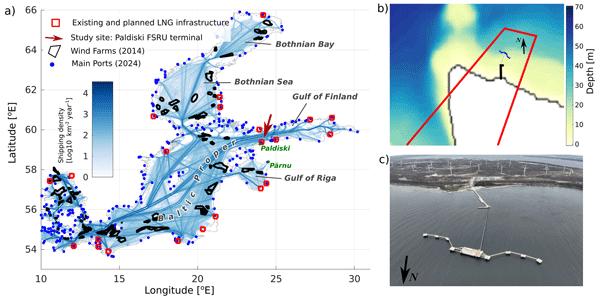
Urmas Raudsepp, Ilja Maljutenko, Jan-Victor Björkqvist, Amirhossein Barzandeh, Sander Rikka, Aarne Männik, Siim Pärt, Priidik Lagemaa, Victor Alari, Kaimo Vahter, and Rivo Uiboupin
State Planet, 7-osr10, 14, https://doi.org/10.5194/sp-7-osr10-14-2026, https://doi.org/10.5194/sp-7-osr10-14-2026, 2026
Short summary
Short summary
This study estimates extreme metocean conditions for the planned Floating Storage and Regasification Unit (FSRU) terminal on the Estonian coast of the Gulf of Finland. Observations, satellite products, reanalyses, and site-specific model data are used to derive 50-year return levels for wind, sea level, waves, and currents. The results support site-specific engineering assessments and place local extremes within the wider Baltic Sea context.
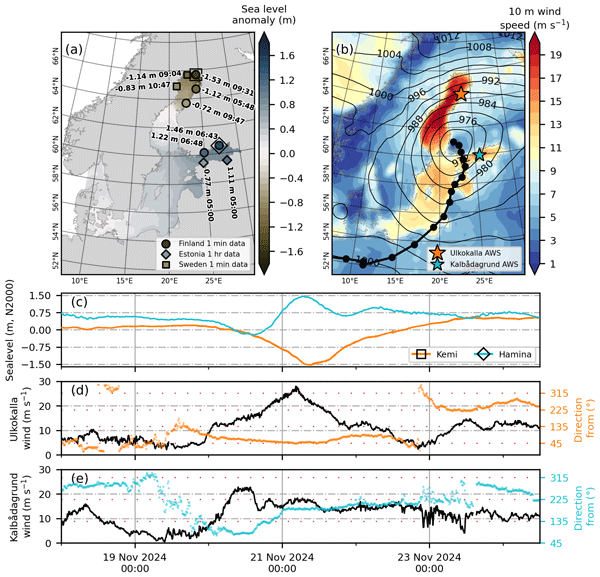
Laura Tuomi, Milla M. Johansson, Andrew Twelves, Mika Rantanen, Priidik Lagemaa, Hedi Kanarik, Jani Särkkä, Urmas Raudsepp, and Antti Westerlund
State Planet, 7-osr10, 16, https://doi.org/10.5194/sp-7-osr10-16-2026, https://doi.org/10.5194/sp-7-osr10-16-2026, 2026
Short summary
Short summary
A record low sea level of −153 cm, 34 cm below the previous minimum, was measured in the Bothnian Bay on 21 November 2024. This extreme event was caused by a strong and long-lasting windstorm that followed an unusual track. The Copernicus Marine Service Baltic Sea forecast system accurately predicted the event 3–4 days in advance. However, forecasts with longer lead times failed to predict the record low sea level, although they did indicate a significant drop in sea levels during the storm.
Paul Alexander Nemeth, Amirhossein Barzandeh, Ilja Maljutenko, Priidik Lagemaa, and Urmas Raudsepp
State Planet Discuss., https://doi.org/10.5194/sp-2026-3, https://doi.org/10.5194/sp-2026-3, 2026
Preprint under review for SP
Short summary
Short summary
Using the Copernicus Marine Baltic Sea Physics Reanalysis, this study quantifies water, heat, and salt transports across the Baltic Sea–North Sea transition zone. It shows that transport estimates depend strongly on diagnostic section placement and temporal resolution, especially for salt transport, highlighting the need to consider these sensitivities in Baltic Sea budget analyses.
Ali Hayatijozani, Amirhossein Barzandeh, Ilja Maljutenko, Priidik Lagemaa, and Urmas Raudsepp
State Planet Discuss., https://doi.org/10.5194/sp-2026-4, https://doi.org/10.5194/sp-2026-4, 2026
Preprint under review for SP
Short summary
Short summary
Using long-term regional reanalysis, this study shows that Baltic Sea warming is spatially organized rather than basin-uniform. Heat content anomalies form recurrent regimes, including basin-wide warm/cold states and contrasted patterns with opposite anomalies across regions. Positive regimes increase after the mid-2010s, while regional contrasts persist, highlighting the limits of basin-mean heat metrics.
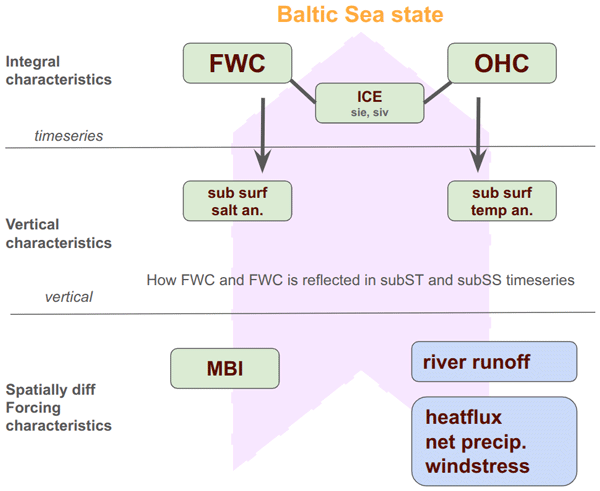
Urmas Raudsepp, Ilja Maljutenko, Priidik Lagemaa, and Karina von Schuckmann
State Planet, 6-osr9, 6, https://doi.org/10.5194/sp-6-osr9-6-2025, https://doi.org/10.5194/sp-6-osr9-6-2025, 2025
Short summary
Short summary
Over the past 3 decades, the Baltic Sea has warmed and become saltier, reflecting broader atmospheric trends. Heat content changes are mainly driven by subsurface temperature variations in the upper 100 m, influenced by air temperature, evaporation, and wind stress. Freshwater content changes are largely controlled by salinity shifts in the halocline (40–120 m), with key drivers being saline inflows, precipitation, and zonal wind stress.
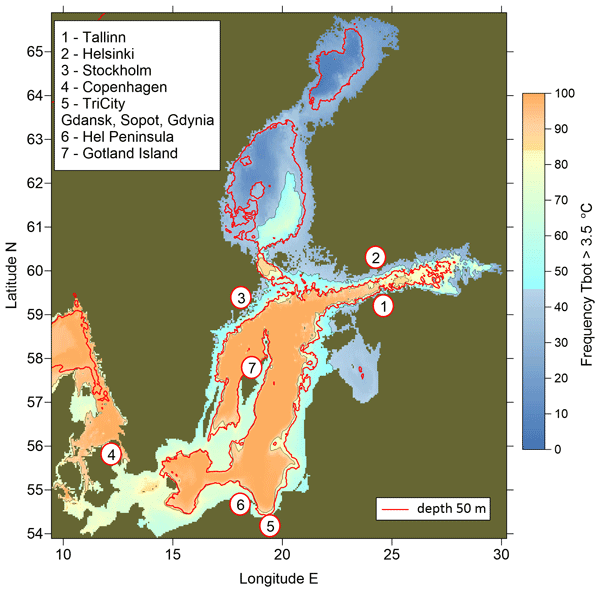
Jüri Elken, Ilja Maljutenko, Priidik Lagemaa, Rivo Uiboupin, and Urmas Raudsepp
State Planet, 4-osr8, 9, https://doi.org/10.5194/sp-4-osr8-9-2024, https://doi.org/10.5194/sp-4-osr8-9-2024, 2024
Short summary
Short summary
Baltic deep water is generally warmer than surface water during winter when district heating is required. Depending on the location, depth, and oceanographic situation, bottom water of Tallinn Bay can be used as an energy source for seawater heat pumps until the end of February, covering the major time interval when heating is needed. Episodically, there are colder-water events when seawater heat extraction has to be complemented by other sources of heating energy.
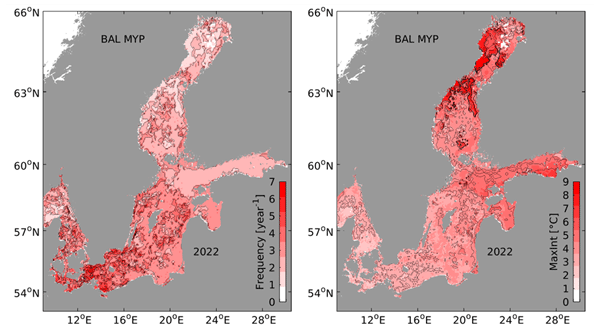
Anja Lindenthal, Claudia Hinrichs, Simon Jandt-Scheelke, Tim Kruschke, Priidik Lagemaa, Eefke M. van der Lee, Ilja Maljutenko, Helen E. Morrison, Tabea R. Panteleit, and Urmas Raudsepp
State Planet, 4-osr8, 16, https://doi.org/10.5194/sp-4-osr8-16-2024, https://doi.org/10.5194/sp-4-osr8-16-2024, 2024
Short summary
Short summary
In 2022, large parts of the Baltic Sea experienced the third-warmest to warmest summer and autumn temperatures since 1997 and several marine heatwaves (MHWs). Using remote sensing, reanalysis, and in situ data, this study characterizes regional differences in MHW properties in the Baltic Sea in 2022. Furthermore, it presents an analysis of long-term trends and the relationship between atmospheric warming and MHW occurrences, including their propagation into deeper layers.
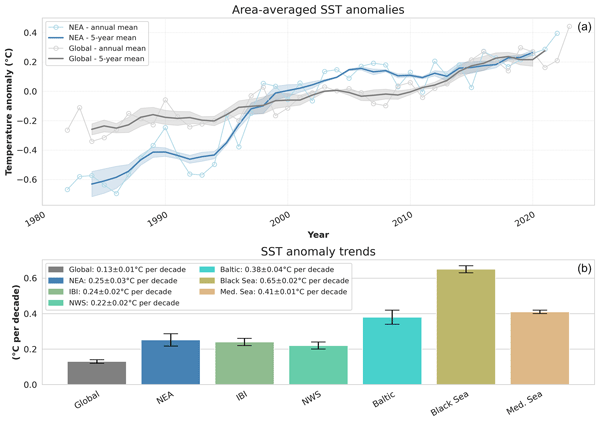
Karina von Schuckmann, Lorena Moreira, Mathilde Cancet, Flora Gues, Emmanuelle Autret, Ali Aydogdu, Lluis Castrillo, Daniele Ciani, Andrea Cipollone, Emanuela Clementi, Gianpiero Cossarini, Alvaro de Pascual-Collar, Vincenzo De Toma, Marion Gehlen, Rianne Giesen, Marie Drevillon, Claudia Fanelli, Kevin Hodges, Simon Jandt-Scheelke, Eric Jansen, Melanie Juza, Ioanna Karagali, Priidik Lagemaa, Vidar Lien, Leonardo Lima, Vladyslav Lyubartsev, Ilja Maljutenko, Simona Masina, Ronan McAdam, Pietro Miraglio, Helen Morrison, Tabea Rebekka Panteleit, Andrea Pisano, Marie-Isabelle Pujol, Urmas Raudsepp, Roshin Raj, Ad Stoffelen, Simon Van Gennip, Pierre Veillard, and Chunxue Yang
State Planet, 4-osr8, 2, https://doi.org/10.5194/sp-4-osr8-2-2024, https://doi.org/10.5194/sp-4-osr8-2-2024, 2024
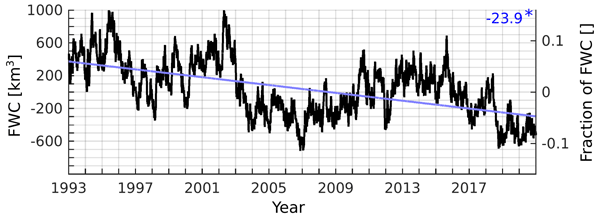
Urmas Raudsepp, Ilja Maljutenko, Amirhossein Barzandeh, Rivo Uiboupin, and Priidik Lagemaa
State Planet, 1-osr7, 7, https://doi.org/10.5194/sp-1-osr7-7-2023, https://doi.org/10.5194/sp-1-osr7-7-2023, 2023
Short summary
Short summary
The freshwater content in the Baltic Sea has wide sub-regional variability characterized by the local climate dynamics. The total freshwater content trend is negative due to the recent increased inflows of saltwater, but there are also regions where the increase in runoff and decrease in ice content have led to an increase in the freshwater content.
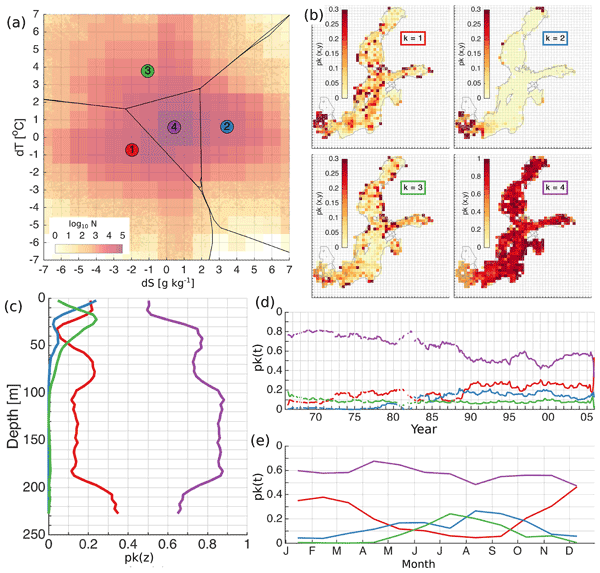
Urmas Raudsepp and Ilja Maljutenko
Geosci. Model Dev., 15, 535–551, https://doi.org/10.5194/gmd-15-535-2022, https://doi.org/10.5194/gmd-15-535-2022, 2022
Short summary
Short summary
A model's ability to reproduce the state of a simulated object is always a subject of discussion. A new method for the multivariate assessment of numerical model skills uses the K-means algorithm for clustering model errors. All available data that fall into the model domain and simulation period are incorporated into the skill assessment. The clustered errors are used for spatial and temporal analysis of the model accuracy. The method can be applied to different types of geoscientific models.
Urmas Raudsepp, Ilja Maljutenko, Jan-Victor Björkqvist, Amirhossein Barzandeh, Sander Rikka, Aarne Männik, Siim Pärt, Priidik Lagemaa, Victor Alari, Kaimo Vahter, and Rivo Uiboupin
State Planet, 7-osr10, 14, https://doi.org/10.5194/sp-7-osr10-14-2026, https://doi.org/10.5194/sp-7-osr10-14-2026, 2026
Short summary
Short summary
This study estimates extreme metocean conditions for the planned Floating Storage and Regasification Unit (FSRU) terminal on the Estonian coast of the Gulf of Finland. Observations, satellite products, reanalyses, and site-specific model data are used to derive 50-year return levels for wind, sea level, waves, and currents. The results support site-specific engineering assessments and place local extremes within the wider Baltic Sea context.
Laura Tuomi, Milla M. Johansson, Andrew Twelves, Mika Rantanen, Priidik Lagemaa, Hedi Kanarik, Jani Särkkä, Urmas Raudsepp, and Antti Westerlund
State Planet, 7-osr10, 16, https://doi.org/10.5194/sp-7-osr10-16-2026, https://doi.org/10.5194/sp-7-osr10-16-2026, 2026
Short summary
Short summary
A record low sea level of −153 cm, 34 cm below the previous minimum, was measured in the Bothnian Bay on 21 November 2024. This extreme event was caused by a strong and long-lasting windstorm that followed an unusual track. The Copernicus Marine Service Baltic Sea forecast system accurately predicted the event 3–4 days in advance. However, forecasts with longer lead times failed to predict the record low sea level, although they did indicate a significant drop in sea levels during the storm.
Paul Alexander Nemeth, Amirhossein Barzandeh, Ilja Maljutenko, Priidik Lagemaa, and Urmas Raudsepp
State Planet Discuss., https://doi.org/10.5194/sp-2026-3, https://doi.org/10.5194/sp-2026-3, 2026
Preprint under review for SP
Short summary
Short summary
Using the Copernicus Marine Baltic Sea Physics Reanalysis, this study quantifies water, heat, and salt transports across the Baltic Sea–North Sea transition zone. It shows that transport estimates depend strongly on diagnostic section placement and temporal resolution, especially for salt transport, highlighting the need to consider these sensitivities in Baltic Sea budget analyses.
Ali Hayatijozani, Amirhossein Barzandeh, Ilja Maljutenko, Priidik Lagemaa, and Urmas Raudsepp
State Planet Discuss., https://doi.org/10.5194/sp-2026-4, https://doi.org/10.5194/sp-2026-4, 2026
Preprint under review for SP
Short summary
Short summary
Using long-term regional reanalysis, this study shows that Baltic Sea warming is spatially organized rather than basin-uniform. Heat content anomalies form recurrent regimes, including basin-wide warm/cold states and contrasted patterns with opposite anomalies across regions. Positive regimes increase after the mid-2010s, while regional contrasts persist, highlighting the limits of basin-mean heat metrics.
Shakti Singh, Ilja Maljutenko, and Rivo Uiboupin
The Cryosphere, 19, 4741–4758, https://doi.org/10.5194/tc-19-4741-2025, https://doi.org/10.5194/tc-19-4741-2025, 2025
Short summary
Short summary
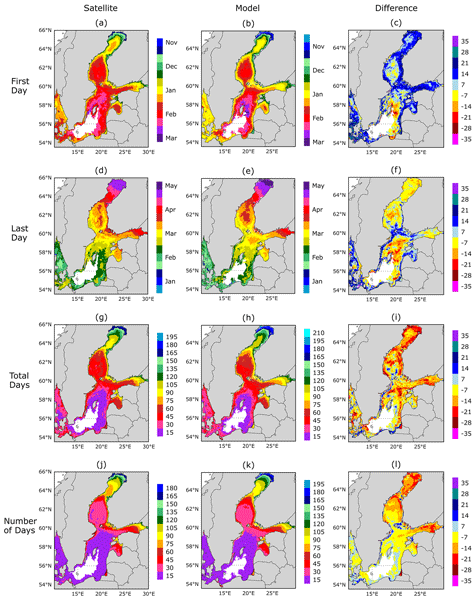
The sea ice statistics study highlights the bias in model estimations compared to satellite data and provides a simple approach to minimise that. During the study period, the model estimates sea ice forming slightly earlier but aligns well with the satellite data for ice season's end. Rapid decrease in the sea ice parameters is observed across the Baltic Sea, especially the ice thickness in the Bothnian Bay sub-basin. These statistics could be crucial for regional adaptation strategies.
Urmas Raudsepp, Ilja Maljutenko, Priidik Lagemaa, and Karina von Schuckmann
State Planet, 6-osr9, 6, https://doi.org/10.5194/sp-6-osr9-6-2025, https://doi.org/10.5194/sp-6-osr9-6-2025, 2025
Short summary
Short summary
Over the past 3 decades, the Baltic Sea has warmed and become saltier, reflecting broader atmospheric trends. Heat content changes are mainly driven by subsurface temperature variations in the upper 100 m, influenced by air temperature, evaporation, and wind stress. Freshwater content changes are largely controlled by salinity shifts in the halocline (40–120 m), with key drivers being saline inflows, precipitation, and zonal wind stress.
Amirhossein Barzandeh, Matjaž Ličer, Marko Rus, Matej Kristan, Ilja Maljutenko, Jüri Elken, Priidik Lagemaa, and Rivo Uiboupin
Ocean Sci., 21, 1315–1327, https://doi.org/10.5194/os-21-1315-2025, https://doi.org/10.5194/os-21-1315-2025, 2025
Short summary
Short summary
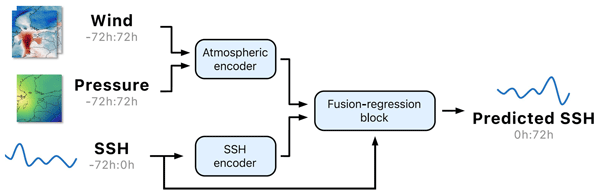
We evaluated a deep-learning model, HIDRA2, for predicting sea levels along the Estonian coast and compared it to traditional numerical models. HIDRA2 performed better overall, offering faster forecasts and valuable uncertainty estimates using ensemble predictions.
Jüri Elken, Ilja Maljutenko, Priidik Lagemaa, Rivo Uiboupin, and Urmas Raudsepp
State Planet, 4-osr8, 9, https://doi.org/10.5194/sp-4-osr8-9-2024, https://doi.org/10.5194/sp-4-osr8-9-2024, 2024
Short summary
Short summary
Baltic deep water is generally warmer than surface water during winter when district heating is required. Depending on the location, depth, and oceanographic situation, bottom water of Tallinn Bay can be used as an energy source for seawater heat pumps until the end of February, covering the major time interval when heating is needed. Episodically, there are colder-water events when seawater heat extraction has to be complemented by other sources of heating energy.
Anja Lindenthal, Claudia Hinrichs, Simon Jandt-Scheelke, Tim Kruschke, Priidik Lagemaa, Eefke M. van der Lee, Ilja Maljutenko, Helen E. Morrison, Tabea R. Panteleit, and Urmas Raudsepp
State Planet, 4-osr8, 16, https://doi.org/10.5194/sp-4-osr8-16-2024, https://doi.org/10.5194/sp-4-osr8-16-2024, 2024
Short summary
Short summary
In 2022, large parts of the Baltic Sea experienced the third-warmest to warmest summer and autumn temperatures since 1997 and several marine heatwaves (MHWs). Using remote sensing, reanalysis, and in situ data, this study characterizes regional differences in MHW properties in the Baltic Sea in 2022. Furthermore, it presents an analysis of long-term trends and the relationship between atmospheric warming and MHW occurrences, including their propagation into deeper layers.
Karina von Schuckmann, Lorena Moreira, Mathilde Cancet, Flora Gues, Emmanuelle Autret, Ali Aydogdu, Lluis Castrillo, Daniele Ciani, Andrea Cipollone, Emanuela Clementi, Gianpiero Cossarini, Alvaro de Pascual-Collar, Vincenzo De Toma, Marion Gehlen, Rianne Giesen, Marie Drevillon, Claudia Fanelli, Kevin Hodges, Simon Jandt-Scheelke, Eric Jansen, Melanie Juza, Ioanna Karagali, Priidik Lagemaa, Vidar Lien, Leonardo Lima, Vladyslav Lyubartsev, Ilja Maljutenko, Simona Masina, Ronan McAdam, Pietro Miraglio, Helen Morrison, Tabea Rebekka Panteleit, Andrea Pisano, Marie-Isabelle Pujol, Urmas Raudsepp, Roshin Raj, Ad Stoffelen, Simon Van Gennip, Pierre Veillard, and Chunxue Yang
State Planet, 4-osr8, 2, https://doi.org/10.5194/sp-4-osr8-2-2024, https://doi.org/10.5194/sp-4-osr8-2-2024, 2024

Jan Åström, Fredrik Robertsen, Jari Haapala, Arttu Polojärvi, Rivo Uiboupin, and Ilja Maljutenko
The Cryosphere, 18, 2429–2442, https://doi.org/10.5194/tc-18-2429-2024, https://doi.org/10.5194/tc-18-2429-2024, 2024
Short summary
Short summary
The HiDEM code has been developed for analyzing the fracture and fragmentation of brittle materials and has been extensively applied to glacier calving. Here, we report on the adaptation of the code to sea-ice dynamics and breakup. The code demonstrates the capability to simulate sea-ice dynamics on a 100 km scale with an unprecedented resolution. We argue that codes of this type may become useful for improving forecasts of sea-ice dynamics.
Urmas Raudsepp, Ilja Maljutenko, Amirhossein Barzandeh, Rivo Uiboupin, and Priidik Lagemaa
State Planet, 1-osr7, 7, https://doi.org/10.5194/sp-1-osr7-7-2023, https://doi.org/10.5194/sp-1-osr7-7-2023, 2023
Short summary
Short summary
The freshwater content in the Baltic Sea has wide sub-regional variability characterized by the local climate dynamics. The total freshwater content trend is negative due to the recent increased inflows of saltwater, but there are also regions where the increase in runoff and decrease in ice content have led to an increase in the freshwater content.
Urmas Raudsepp and Ilja Maljutenko
Geosci. Model Dev., 15, 535–551, https://doi.org/10.5194/gmd-15-535-2022, https://doi.org/10.5194/gmd-15-535-2022, 2022
Short summary
Short summary
A model's ability to reproduce the state of a simulated object is always a subject of discussion. A new method for the multivariate assessment of numerical model skills uses the K-means algorithm for clustering model errors. All available data that fall into the model domain and simulation period are incorporated into the skill assessment. The clustered errors are used for spatial and temporal analysis of the model accuracy. The method can be applied to different types of geoscientific models.
Cited articles
Amaya, D. J., Alexander, M. A., Capotondi, A., Deser, C., Karnauskas, K. B., Miller, A. J., and Mantua, N. J.: Are long-term changes in mixed layer depth influencing North Pacific marine heatwaves?, B. Am. Meteorol. Soc., 102, S59–S66, https://doi.org/10.1175/BAMS-D-20-0144.1, 2021.
Barghorn, L., Meier, H. E. M., Radtke, H., Neumann, T., and Naumov, L.: Warm saltwater inflows strengthen oxygen depletion in the western Baltic Sea, Clim. Dyn., 63, 29, https://doi.org/10.1007/s00382-024-07501-x, 2025.
Barzandeh, A., Maljutenko, I., Rikka, S., Lagemaa, P., Männik, A., Uiboupin, R., and Raudsepp, U.: Sea surface circulation in the Baltic Sea: decomposed components and pattern recognition, Sci. Rep., 14, 18649, https://doi.org/10.1038/s41598-024-69463-8, 2024.
Bashiri, B., Barzandeh, A., Männik, A., and Raudsepp, U.: Variability of marine heatwaves' characteristics and assessment of their potential drivers in the Baltic Sea over the last 42 years, Sci. Rep., 14, 22419, https://doi.org/10.1038/s41598-024-74173-2, 2024.
Bonaglia, S., Deutsch, B., Bartoli, M., Marchant, H. K., and Brüchert, V.: Seasonal oxygen, nitrogen and phosphorus benthic cycling along an impacted Baltic Sea estuary: regulation and spatial patterns, Biogeochemistry, 119, 139–160, https://doi.org/10.1007/s10533-014-9953-6, 2014.
Bulczak, A. I., Nowak, K., Jakacki, J., Muzyka, M., Rak, D., and Walczowski, W.: Seasonal variability and long-term winter shoaling of the upper mixed layer in the southern Baltic Sea, Cont. Shelf Res., 276, 105232, https://doi.org/10.1016/j.csr.2024.105232, 2024.
Carstensen, J., Andersen, J. H., Gustafsson, B. G., and Conley, D. J.: Deoxygenation of the Baltic Sea during the last century, P. Natl. Acad. Sci. USA, 111, 5628–5633, 2014.
Chrysagi, E., Umlauf, L., Holtermann, P., Klingbeil, K., and Burchard, H.: High‐resolution simulations of submesoscale processes in the Baltic Sea: The role of storm events, J. Geophys. Res.-Oceans, 126, e2020JC016411, https://doi.org/10.1029/2020JC016411, 2021.
Copernicus Climate Change Service, Climate Data Store: ERA5 hourly data on single levels from 1940 to present, Copernicus Climate Change Service (C3S) Climate Data Store (CDS) [data set], https://doi.org/10.24381/cds.adbb2d47, 2023.
de Boyer Montégut, C., Madec, G., Fischer, A. S., Lazar, A., and Iudicone, D.: Mixed layer depth over the global ocean: An examination of profile data and a profile-based climatology, J. Geophys. Res.-Oceans, 109, https://doi.org/10.1029/2004JC002378, 2004.
Degerholm, J., Gundersen, K., Bergman, B., and Söderbäck, E.: Phosphorus-limited growth dynamics in two Baltic Sea cyanobacteria, Nodularia sp. and Aphanizomenon sp., FEMS Microbiol. Ecol., 58, 323–332, https://doi.org/10.1111/j.1574-6941.2006.00180.x, 2006.
Droste, E. S., Bakker, D. C. E., Venables, H. J., Jones, E. M., Meredith, M. P., Dall'Olmo, G., Hoppema, M., Legge, O. J., Lee, G. A., and Queste, B. Y.: Sea ice controls net ocean uptake of carbon dioxide by regulating wintertime stratification, Commun. Earth Environ., 6, 457, https://doi.org/10.1038/s43247-025-02395-x, 2025.
Dutheil, C., Meier, H. E. M., Gröger, M., and Börgel, F.: Warming of Baltic Sea water masses since 1850, Clim. Dynam., 61, 1311–1331, https://doi.org/10.1007/s00382-022-06628-z, 2023.
EU Copernicus Marine Service Product: Baltic Sea Physics Reanalysis, Mercator Ocean international [data set], https://doi.org/10.48670/moi-00013, 2025.
Fu, W., She, J., and Dobrynin, M.: A 20-year reanalysis experiment in the Baltic Sea using three-dimensional variational (3DVAR) method, Ocean Sci., 8, 827–844, https://doi.org/10.5194/os-8-827-2012, 2012.
Gao, Z., Long, S.-M., Shi, J.-R., Cheng, L., Li, G., and Ying, J.: Indian Ocean mixed layer depth changes under global warming, Front. Clim., 5, 1112713, https://doi.org/10.3389/fclim.2023.1112713, 2023.
Madec, G., Bourdallé-Badie, R., Chanut, J., Clementi, E., Coward, A., Ethé, C., Iovino, D., Lea, D., Lévy, C., Lovato, T., Martin, N., Masson, S., Mocavero, S., Rousset, C., Storkey, D., Vancoppenolle, M., Müller, S., Nurser, G., Bell, M., and Samson, G.: NEMO ocean engine. Notes du Pôle de modélisation de l'Institut Pierre-Simon Laplace (IPSL), v4.0, Number 27, Zenodo, https://doi.org/10.5281/zenodo.3878122, 2019.
Hepach, H., Piontek, J., Bange, H. W., Barthelmeß, T., von Jackowski, A., and Engel, A.: Enhanced warming and bacterial biomass production as key factors for coastal hypoxia in the southwestern Baltic Sea, Sci. Rep., 14, 29442, https://doi.org/10.1038/s41598-024-80451-w, 2024.
Hersbach, H., Bell, B., Berrisford, P., Hirahara, S., Horányi, A., Muñoz‐Sabater, J., Nicolas, J., Peubey, C., Radu, R., Schepers, D., Simmons, A., Soci, C., Abdalla, S., Abellan, X., Balsamo, G., Bechtold, P., Biavati, G., Bidlot, J., Bonavita, M., De Chiara, G., Dahlgren, P., Dee, D., Diamantakis, M., Dragani, R., Flemming, J., Forbes, R., Fuentes, M., Geer, A., Haimberger, L., Healy, S., Hogan, R.J., Hólm, E., Janisková, M., Keeley, S., Laloyaux, P., Lopez, P., Lupu, C., Radnoti, G., de Rosnay, P., Rozum, I., Vamborg, F., Villaume S., and Thépaut, J.-N.: The ERA5 global reanalysis, Q. J. Roy. Meteor. Soc., 146, 1999–2049, https://doi.org/10.1002/qj.3803, 2020.
Hersbach, H., Bell, B., Berrisford, P., Biavati, G., Horányi, A., Muñoz Sabater, J., Nicolas, J., Peubey, C., Radu, R., Rozum, I., Schepers, D., Simmons, A., Soci, C., Dee, D., and Thépaut, J.-N.: ERA5 hourly data on single levels from 1940 to present, Copernicus Climate Change Service (C3S) Climate Data Store (CDS) [data set], https://doi.org/10.24381/cds.adbb2d47, 2023.
Hieronymus, J., Eilola, K., Hieronymus, M., Meier, H. E. M., Saraiva, S., and Karlson, B.: Causes of simulated long-term changes in phytoplankton biomass in the Baltic proper: a wavelet analysis, Biogeosciences, 15, 5113–5129, https://doi.org/10.5194/bg-15-5113-2018, 2018.
Hordoir, R. and Meier, H. E. M.: Effect of climate change on the thermal stratification of the Baltic Sea: A sensitivity experiment, Clim. Dynam., 38, 1703–1713, https://doi.org/10.1007/s00382-011-1036-y, 2012.
Hordoir, R., Axell, L., Höglund, A., Dieterich, C., Fransner, F., Gröger, M., Liu, Y., Pemberton, P., Schimanke, S., Andersson, H., Ljungemyr, P., Nygren, P., Falahat, S., Nord, A., Jönsson, A., Lake, I., Döös, K., Hieronymus, M., Dietze, H., Löptien, U., Kuznetsov, I., Westerlund, A., Tuomi, L., and Haapala, J.: Nemo-Nordic 1.0: a NEMO-based ocean model for the Baltic and North seas – research and operational applications, Geosci. Model Dev., 12, 363–386, https://doi.org/10.5194/gmd-12-363-2019, 2019.
Kahru, M. and Elmgren, R.: Multidecadal time series of satellite-detected accumulations of cyanobacteria in the Baltic Sea, Biogeosciences, 11, 3619–3633, https://doi.org/10.5194/bg-11-3619-2014, 2014.
Kahru, M., Cahill, B., Elmgren, R., and Rehder, G.: What initiates cyanobacterial blooms in the Baltic Sea?, Harmful Algae, 148, 102924, https://doi.org/10.1016/j.hal.2025.102924, 2025.
Kõuts, T. and Omstedt, A.: Deep water exchange in the Baltic Proper, Tellus A, 45, 311–324, 1993.
Kõuts, M., Maljutenko, I., Elken, J., Liu, Y., Hansson, M., Viktorsson, L., and Raudsepp, U.: Recent regime of persistent hypoxia in the Baltic Sea, Environ. Res. Commun., 3, 075004, https://doi.org/10.1088/2515-7620/ac0cc4, 2021a.
Kõuts, M., Maljutenko, I., Liu, Y., and Raudsepp, U.: Nitrate, ammonium and phosphate pools in the Baltic Sea, in: Copernicus Marine Service Ocean State Report, Issue 5, J. Oper. Oceanogr., 14, s37–s48, https://doi.org/10.1080/1755876X.2021.1946240, 2021b.
Krapf, K., Naumann, M., Dutheil, C., and Meier, H. E. M.: Investigating hypoxic and euxinic area changes based on various datasets from the Baltic Sea, Front. Mar. Sci., 9, 823476, https://doi.org/10.3389/fmars.2022.823476, 2022.
Lass, H. U. and Matthäus, W.: On temporal wind variations forcing salt water inflows into the Baltic Sea, Tellus A, 48, 663–671, https://doi.org/10.1034/j.1600-0870.1996.t01-4-00005.x, 1996.
Lehmann, A., Myrberg, K., Post, P., Chubarenko, I., Dailidiene, I., Hinrichsen, H.-H., Hüssy, K., Liblik, T., Meier, H. E. M., Lips, U., and Bukanova, T.: Salinity dynamics of the Baltic Sea, Earth Syst. Dynam., 13, 373–392, https://doi.org/10.5194/esd-13-373-2022, 2022.
Leppäranta, M. and Myrberg, K.: Physical oceanography of the Baltic Sea, Springer Science & Business Media, https://doi.org/10.1007/978-3-540-79703-6, 2009.
Li, G., Cheng, L., Zhu, J., Trenberth, K. E., Mann, M. E., and Abraham, J. P.: Increasing ocean stratification over the past half-century, Nat. Clim. Chang., 10, 1116–1123, https://doi.org/10.1038/s41558-020-00918-2, 2020.
Liblik, T. and Lips, U.: Variability of synoptic-scale quasi-stationary thermohaline stratification patterns in the Gulf of Finland in summer 2009, Ocean Sci., 8, 603–614, https://doi.org/10.5194/os-8-603-2012, 2012.
Liblik, T. and Lips, U.: Stratification Has Strengthened in the Baltic Sea – An Analysis of 35 Years of Observational Data, Front. Earth Sci., 7, 174, https://doi.org/10.3389/feart.2019.00174, 2019.
Liblik, T., Skudra, M., and Lips, U.: On the buoyant sub-surface salinity maxima in the Gulf of Riga, Oceanologia, 59, 113–128, https://doi.org/10.1016/j.oceano.2016.10.001, 2017.
Liblik, T., Väli, G., Lips, I., Lilover, M.-J., Kikas, V., and Laanemets, J.: The winter stratification phenomenon and its consequences in the Gulf of Finland, Baltic Sea, Ocean Sci., 16, 1475–1490, https://doi.org/10.5194/os-16-1475-2020, 2020.
Liblik, T., Siht, E., Buschmann, F., Kaljumäe, M., Kikas, V., Lips, U., Luik, S. T., Maslova, D., Pärt, K., Salm, K., and Samlas, O.: Recent stagnation period and unprecedented deoxygenation in the Baltic Sea: causes and consequences, Front. Earth Sci., 13, 1638978, https://doi.org/10.3389/feart.2025.1638978, 2025.
Lindenthal, A., Hinrichs, C., Jandt-Scheelke, S., Kruschke, T., Lagemaa, P., van der Lee, E. M., Maljutenko, I., Morrison, H. E., Panteleit, T. R., and Raudsepp, U.: Baltic Sea surface temperature analysis 2022: a study of marine heatwaves and overall high seasonal temperatures, in: 8th edition of the Copernicus Ocean State Report (OSR8), edited by: von Schuckmann, K., Moreira, L., Grégoire, M., Marcos, M., Staneva, J., Brasseur, P., Garric, G., Lionello, P., Karstensen, J., and Neukermans, G., Copernicus Publications, State Planet, 4-osr8, 16, https://doi.org/10.5194/sp-4-osr8-16-2024, 2024.
Lorbacher, K., Dommenget, D., Niiler, P. P., and Köhl, A.: Ocean mixed layer depth: A subsurface proxy of ocean‐atmosphere variability, J. Geophys. Res.-Oceans, 111, https://doi.org/10.1029/2003JC002157, 2006.
Meier, H. E. M., Edman, M., Eilola, K., Placke, M., Neumann, T., Andersson, H. C., Brunnabend, S.-E., Dieterich, C., Frauen, C., Friedland, R., Gröger, M., Gustafsson, B. G., Gustafsson, E., Isaev, A., Kniebusch, M., Kuznetsov, I., Müller-Karulis, B., Naumann, M., Omstedt, A., Ryabchenko, V., Saraiva, S., and Savchuk, O. P.: Assessment of uncertainties in scenario simulations of biogeochemical cycles in the Baltic Sea, Front. Mar. Sci., 6, 46, https://doi.org/10.3389/fmars.2019.00046, 2019.
Meier, H. E. M., Dieterich, C., Gröger, M., Dutheil, C., Börgel, F., Safonova, K., Christensen, O. B., and Kjellström, E.: Oceanographic regional climate projections for the Baltic Sea until 2100, Earth Syst. Dynam., 13, 159–199, https://doi.org/10.5194/esd-13-159-2022, 2022a.
Meier, H. E. M., Kniebusch, M., Dieterich, C., Gröger, M., Zorita, E., Elmgren, R., Myrberg, K., Ahola, M. P., Bartosova, A., Bonsdorff, E., Börgel, F., Capell, R., Carlén, I., Carlund, T., Carstensen, J., Christensen, O. B., Dierschke, V., Frauen, C., Frederiksen, M., Gaget, E., Galatius, A., Haapala, J. J., Halkka, A., Hugelius, G., Hünicke, B., Jaagus, J., Jüssi, M., Käyhkö, J., Kirchner, N., Kjellström, E., Kulinski, K., Lehmann, A., Lindström, G., May, W., Miller, P. A., Mohrholz, V., Müller-Karulis, B., Pavón-Jordán, D., Quante, M., Reckermann, M., Rutgersson, A., Savchuk, O. P., Stendel, M., Tuomi, L., Viitasalo, M., Weisse, R., and Zhang, W.: Climate change in the Baltic Sea region: a summary, Earth Syst. Dynam., 13, 457–593, https://doi.org/10.5194/esd-13-457-2022, 2022b.
Miettunen, E., Tuomi, L., Westerlund, A., Kanarik, H., and Myrberg, K.: Transport dynamics in a complex coastal archipelago, Ocean Sci., 20, 69–83, https://doi.org/10.5194/os-20-69-2024, 2024.
Mohlin, M., Roleda, M. Y., Pattanaik, B., Tenne, S. J., and Wulff, A.: Interspecific resource competition – combined effects of radiation and nutrient limitation on two diazotrophic filamentous cyanobacteria, Microb. Ecol., 63, 736–750, https://doi.org/10.1007/s00248-011-9964-y, 2012.
Munkes, B., Löptien, U., and Dietze, H.: Cyanobacteria blooms in the Baltic Sea: a review of models and facts, Biogeosciences, 18, 2347–2378, https://doi.org/10.5194/bg-18-2347-2021, 2021.
Olofsson, M., Suikkanen, S., Kobos, J., Wasmund, N., and Karlson, B.: Basin-specific changes in filamentous cyanobacteria community composition across four decades in the Baltic Sea, Harmful Algae, 91, 101685, https://doi.org/10.1016/j.hal.2019.101685, 2020.
Omstedt, A., Elken, J., Lehmann, A., and Piechura, J.: Knowledge of the Baltic Sea physics gained during the BALTEX and related programmes, Prog. Oceanogr., 63, 1–28, https://doi.org/10.1016/j.pocean.2004.09.001, 2004.
Panteleit, T., Verjovkina, S., Jandt-Scheelke, S., Spruch, L., and Huess, V.: EU Copernicus Marine Service Quality Information Document for the Baltic Sea Physics Reanalysis Product, BALTICSEA_MULTIYEAR_PHY_003_011, Issue 4.1, Mercator Ocean International, https://documentation.marine.copernicus.eu/QUID/CMEMS-BAL-QUID-003-011.pdf (last access: 11 June 2025), 2025.
Raudsepp, U. and Maljutenko, I.: A method for assessment of the general circulation model quality using the K-means clustering algorithm: a case study with GETM v2.5, Geosci. Model Dev., 15, 535–551, https://doi.org/10.5194/gmd-15-535-2022, 2022.
Raudsepp, U., Uiboupin, R., Laanemäe, K., and Maljutenko, I.: Geographical and seasonal coverage of sea ice in the Baltic Sea, J. Oper. Oceanogr., 13, S1–S172, https://doi.org/10.1080/1755876X.2020.1785097, 2020.
Reissmann, J. H., Burchard, H., Feistel, R., Hagen, E., Lass, H. U., Mohrholz, V., Nausch, G., Umlauf, L., and Wieczorek, G.: Vertical mixing in the Baltic Sea and consequences for eutrophication – A review, Prog. Oceanogr., 82, 47–80, 2009.
Ringgaard, I., Korabel, V., Spruch, L., Lindenthal, A., and Huess, V.: EU Copernicus Marine Service Product User Manual for the Baltic Sea Physics Reanalysis Product, BALTICSEA_MULTIYEAR_PHY_003_011, Issue 1.0, Mercator Ocean International, https://documentation.marine.copernicus.eu/PUM/CMEMS-BAL-PUM-003-011-012.pdf (last access: 11 June 2025), 2024.
Rolff, C., Walve, J., Larsson, U., and Elmgren, R.: How oxygen deficiency in the Baltic Sea proper has spread and worsened: The role of ammonium and hydrogen sulphide, Ambio, 51, 2308–2324, https://doi.org/10.1007/s13280-022-01738-8, 2022.
Rutgersson, A., Omstedt, A., and Räisänen, J.: Net precipitation over the Baltic Sea during present and future climate conditions, Clim. Res., 22, 27–39, https://doi.org/10.3354/cr022027, 2002.
Sallée, J.-B., Pellichero, V., Akhoudas, C., Pauthenet, E., Vignes, L., Schmidtko, S., Naveira Garabato, A., Sutherland, P., and Kuusela, M.: Summertime increases in upper-ocean stratification and mixed-layer depth, Nature, 591, 592–598, https://doi.org/10.1038/s41586-021-03303-x, 2021.
Shi, J., Tang, C., Liu, Q., Zhang, Y., Yang, H., and Li, C.: Role of mixed layer depth in the location and development of the Northeast Pacific warm blobs, Geophys. Res. Lett., https://doi.org/10.1029/2022GL098849, 2022.
Singh, S., Maljutenko, I., and Uiboupin, R.: Sea ice in the Baltic Sea during 1993/94–2020/21 ice seasons from satellite observations and model reanalysis, The Cryosphere, 19, 4741–4758, https://doi.org/10.5194/tc-19-4741-2025, 2025.
Somavilla, R., González-Pola, C., and Fernández-Diaz, J.: The warmer the ocean surface, the shallower the mixed layer. How much of this is true? J. Geophys. Res.-Oceans, 122, 7698–7716, https://doi.org/10.1002/2017JC013125, 2017.
Spilling, K., Vanharanta, M., Santoro, M., Villena‐Alemany, C., Labrenz, M., Grossart, H. P., and Piwosz, K.: Picophytoplankton act as the primary consumers of excess phosphorus after the spring bloom in the eutrophic Baltic Sea, Limnol. Oceanogr., https://doi.org/10.1002/lno.70027, 2025.
Stockmayer, V. and Lehmann, A:. Variations of temperature, salinity and oxygen of the Baltic Sea for the period 1950 to 2020, Oceanologia, 65, 466–483, https://doi.org/10.1016/j.oceano.2023.02.002, 2023.
Stoń-Egiert, J. and Ostrowska, M.: Long-term changes in phytoplankton pigment contents in the Baltic Sea: Trends and spatial variability during 20 years of investigations, Cont. Shelf Res., 236, 104666, https://doi.org/10.1016/j.csr.2022.104666, 2022.
Treguier, A. M., de Boyer Montégut, C., Bozec, A., Chassignet, E. P., Fox-Kemper, B., McC. Hogg, A., Iovino, D., Kiss, A. E., Le Sommer, J., Li, Y., Lin, P., Lique, C., Liu, H., Serazin, G., Sidorenko, D., Wang, Q., Xu, X., and Yeager, S.: The mixed-layer depth in the Ocean Model Intercomparison Project (OMIP): impact of resolving mesoscale eddies, Geosci. Model Dev., 16, 3849–3872, https://doi.org/10.5194/gmd-16-3849-2023, 2023.
Umlauf, L., Holtermann, P. L., Gillner, C. A., Prien, R. D., Merckelbach, L., and Carpenter, J. R.: Diffusive convection under rapidly varying conditions, J. Phys. Oceanogr., 48, 1731–1747, https://doi.org/10.1175/JPO-D-18-0018.1, 2018.
Uotila, P., Vihma, T., and Haapala, J.: Atmospheric and oceanic conditions and the extremely low Bothnian Bay sea ice extent in 2014/2015, Geophys. Res. Lett., 42, 7740–7749, https://doi.org/10.1002/2015GL064901, 2015.
Väli, G., Meier, H. E. M., and Elken, J.: Simulated halocline variability in the Baltic Sea and its impact on hypoxia during 1961–2007, J. Geophys. Res.-Oceans, 118, 6982–7000, https://doi.org/10.1002/2013JC009192, 2013.
Vihma, T. and Haapala, J.: Geophysics of sea ice in the Baltic Sea: A review, Prog. Oceanogr., 80, 129–148, 2009.
Viktorsson, L., Ekeroth, N., Nilsson, M., Kononets, M., and Hall, P. O. J.: Phosphorus recycling in sediments of the central Baltic Sea, Biogeosciences, 10, 3901–3916, https://doi.org/10.5194/bg-10-3901-2013, 2013.
Wang, Z., Garcia, H. E., Boyer, T. P., Reagan, J., and Cebrian, J.: Controlling factors of the climatological annual cycle of the surface mixed layer oxygen content: A global view, Front. Mar. Sci., 9, 1001095, https://doi.org/10.3389/fmars.2022.1001095, 2022.
Wasmund, N., Nausch, G., and Matthäus, W.: Phytoplankton Spring Blooms in the Southern Baltic Sea – Spatio-Temporal Development and Long-Term Trends, J. Plankton Res., 20, 1099–1117, https://doi.org/10.1093/plankt/20.6.1099, 1998.
Short summary
Over the past 30 years, the Baltic Sea's surface mixed layer has changed unevenly: it is shoaling in the southwest due to warming and increased stratification, while deepening in the northeast as ice loss allows more winter mixing. These shifts may affect ecosystems by reducing deep-water ventilation and worsening hypoxia in the south, while enhancing nutrient redistribution and spring bloom potential in the north. The Baltic Sea's climate response is strongly regional.
Over the past 30 years, the Baltic Sea's surface mixed layer has changed unevenly: it is...


Altmetrics
Final-revised paper
Preprint