the Creative Commons Attribution 4.0 License.
the Creative Commons Attribution 4.0 License.
 | 30 Sep 2026 | OSR10 | Chapter 2.8
Long term trends and variability of the mixed layer depth in the Baltic Sea
Urmas Raudsepp
Ulvi Ahmadov
Ilja Maljutenko

Amirhossein Barzandeh
Mariliis Kõuts
Priidik Lagemaa
The depth of the upper mixed layer (MLD) in the Baltic Sea is a critical physical parameter that influences heat exchange, nutrient cycling, and oxygenation in this semi-enclosed basin. Variations in MLD have significant ecological consequences: a shallower mixed layer restricts the supply of oxygen and nutrients to deeper waters, potentially exacerbating hypoxia, whereas deeper mixing in previously ice-covered areas can enhance ventilation and nutrient entrainment.
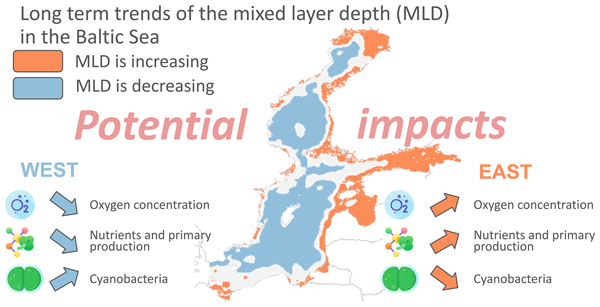
To investigate long-term MLD variability, we analyzed a 30-year (1993–2023) high-resolution ocean reanalysis data set across the Baltic Sea. The results reveal pronounced spatial heterogeneity in MLD trends. In the western and southern Baltic, the MLD has become shallower, driven by surface warming and intensified stratification that stabilizes the upper layer. Conversely, in the eastern and northern Baltic, MLD has deepened, coinciding with reduced winter sea-ice cover and increasing wind speeds that promote wind-driven mixing – despite concurrent warming, increased precipitation, and enhanced stratification.
These region-specific trends highlight the complex interplay among warming, ice loss, and stratification in shaping upper-ocean dynamics. Our findings provide a baseline for understanding mixed-layer variability in the Baltic Sea under climate change and emphasize the need to consider regional differences in future projections.
- Article
(5828 KB) - Full-text XML
- BibTeX
- EndNote


The oceanic upper Mixed Layer Depth (MLD) is a fundamental physical parameter governing the exchange of heat, momentum, and gases between the ocean and atmosphere. It plays a central role in modulating climate variability, regulating marine biogeochemical processes, and influencing the structure and productivity of marine ecosystems (Lorbacher et al., 2006; Wang et al., 2022). Variability in MLD is driven by atmospheric forcing (wind stress, air temperature, radiation, and precipitation), surface buoyancy fluxes, and oceanic dynamics, such as eddies and currents, with pronounced seasonal and regional differences (de Boyer Montégut et al., 2004; Treguier et al., 2023).
Globally, the MLD responds to climatic shifts by altering the vertical structure and stratification of the upper ocean (Li et al., 2020; Sallée et al., 2021). In equatorial regions, persistent heating and weak wind stress maintain a shallow MLD, whereas in mid- and high latitudes, stronger winds and surface cooling during winter promote deepening through enhanced vertical mixing and convective processes (Somavilla et al., 2017; Gao et al., 2023; Sallée et al., 2021). The response of the MLD to climate change is not uniform: increasing stratification from surface warming tends to shoal the MLD (Li et al., 2020), whereas intensified wind stress or buoyancy loss can promote deeper mixing (Sallée et al., 2021; Gao et al., 2023; Amaya et al., 2021). These changes have far-reaching implications for heat storage, ocean carbon uptake, and nutrient fluxes, particularly under scenarios of continued global warming (Li et al., 2020; Sallée et al., 2021; Shi et al., 2022).
In semi-enclosed marginal seas like the Baltic Sea, MLD variability reflects a complex interplay of atmospheric forcing (Liblik et al., 2020; Liblik and Lips, 2019; Bulczak et al., 2024), bathymetric constraints (Liblik et al., 2020; Bulczak et al., 2024), freshwater inflows (Hordoir and Meier, 2012; Väli et al., 2013), and permanent haline stratification (Väli et al., 2013; Liblik and Lips, 2019). The Baltic Sea, with its strong horizontal salinity gradients and seasonal ice cover in the northern basins, presents a unique environment for studying MLD dynamics in a high-latitude coastal setting. Seasonal patterns dominate, with deep wintertime MLDs driven by wind mixing and surface cooling, and shallow summertime MLDs resulting from thermal stratification (Bulczak et al., 2024). Spatial heterogeneity is also prominent: the Baltic Proper often exhibit deeper mixed layers due to enhanced wind exposure and reduced freshwater influence, whereas coastal and ice-covered regions display shallower MLDs (Panteleit et al., 2025).
Recent studies using high-resolution reanalysis datasets and model simulations have begun to reveal long-term trends in MLD across the Baltic Sea (Meier at al., 2022a; Dutheil et al., 2023). These analyses suggest spatially variable responses to climate forcing, with evidence of deepening MLDs in the northern and eastern sub-basins – potentially linked to reduced winter ice cover – and shoaling trends in southern and central areas, possibly related to increased stratification and changes in halocline dynamics.
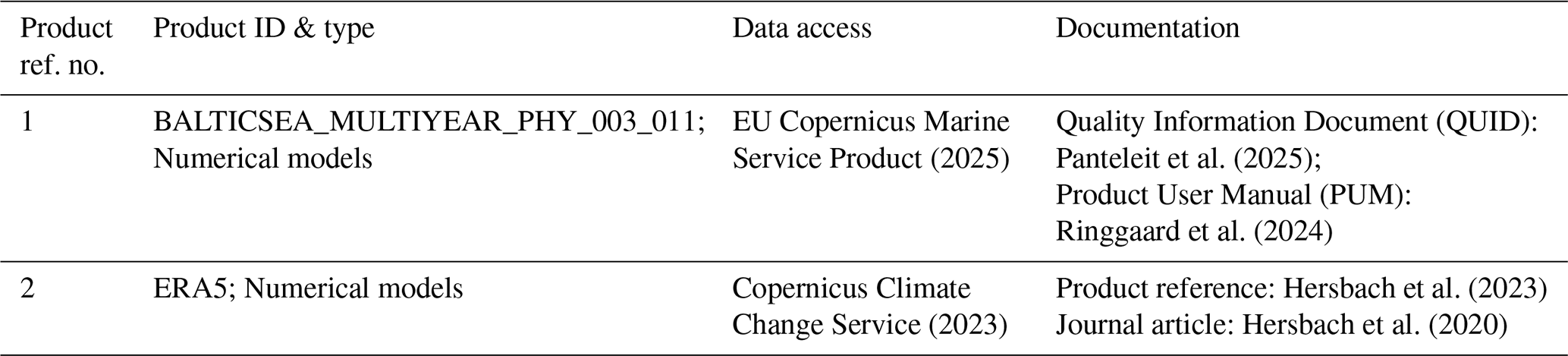
Given the MLD's pivotal role in modulating biological productivity, carbon cycling, and hypoxia development, understanding its long-term variability is essential for predicting future changes in the Baltic Sea ecosystem. This study aims to assess the spatial and temporal variability of MLD across the Baltic Sea from 1993 to 2023, utilizing state-of-the-art reanalysis products (Table 1, product ref. no. 1). Specifically, we investigate the trends, regional differences, and potential climate forcings of the trends in MLD, with the goal of providing a robust basis for evaluating the ecological and biogeochemical consequences of mixed-layer variability in a warming world.
The Baltic Sea physics reanalysis multi-year product (BAL-MYP; product ref. no. 1) is derived from the ocean model NEMO v4.0 (Madec et al., 2019). It assimilates satellite observations of sea surface temperature (SST) (EU Copernicus Marine Service Product, 2025) and in-situ temperature and salinity profiles from the ICES database (ICES Bottle and low-resolution CTD dataset, 2022). The model data is provided on a grid with a horizontal resolution of 1 nmi, including 56 vertical layers, covering the entire Baltic Sea and the transition zone to the North Sea. The dataset covers the period from 1993 to 2023, with the model setup detailed in the Product User Manual (Ringgaard et al., 2024).
The BAL-MYP has been extensively validated, as documented in the Quality Information Document (QuID; Panteleit et al., 2025), focusing on the period from 1 January 1993 to 31 December 2018. Additionally, the BAL-MYP data were evaluated using a clustering method with the K-means algorithm (Raudsepp and Maljutenko, 2022), which provided insights into the reanalysis accuracy by categorising errors (Lindenthal et al., 2024). 57 % of the data are clustered with a bias of dS = −0.40 g kg−1 and dT = −0.02 °C, encompassing 57 % of all data points with RMSE S = 0.92 g kg−1 and T = 0.54 °C (Lindenthal et al., 2024). These points are distributed throughout the Baltic Sea. Clusters with high positive and negative temperature biases account for 11 % and 8 % of total points, respectively, with marginal salinity biases and relatively even spatial distributions across the Baltic Sea. 26 % of the points have low temperature but high salinity errors, both negative and positive, predominantly located in the southwestern Baltic Sea, indicating occasional underestimation or overestimation of the inflow/outflow salinity (Lindenthal et al., 2024).
The MLD, also referred to as the Upper Mixed Layer (UML), was included in the analysis using data from a multi-year reanalysis product (product ref. no. 1). The MLD was calculated based on density stratification following the method of de Boyer Montégut et al. (2004), which defines MLD as the depth at which seawater density deviates from the reference density at 10 m depth by a specified threshold. For the Baltic Sea, this threshold was adjusted to 0.03 kg m−3 to better represent the characteristics of the regional UML (Panteleit et al., 2025).
Panteleit et al. (2025) has performed validation of the reanalysis product of the MLD (product ref. no. 1) with comparison to the observations at eight stations. From observations, the MLD is derived from salinity and temperature profiles of ICES-HELCOM observations that are located over the open parts of the Baltic Sea. The cRMSD of MLD for the reanalysis product (product ref. no. 1) is 11.34 m and correlation coefficient is 0.69 for the whole reanalysis period 1993–2019 in the bulk comparison of MLD product with observations. On average the reanalysis product underestimates MLD by 7 m.
The annual cycle of the MLD of the products follows the MLD calculated from observations for the whole reanalysis period (Panteleit et al., 2025). It is possible to observe the seasonal variability of the MLD product in summer and winter. During the summer, the MLD is lower, and during the winter, the MLD is deeper. In the Baltic Proper the MLD is small from late spring until end of summer reaching values of 10–20 m during the period 1 January 1993–30 December 2019. In autumn and winter, MLD increases considerably with a maximum MLD of 70 m. In the Gulf of Bothnia, the MLD varies from 10 to 80 m deep during the reanalysis period. The MLD is small from late spring until the end of summer reaching values of 10–15 m, and in autumn and winter, MLD increases considerably with a maximum MLD of 80 m.
Atmospheric data were sourced from the ERA5 hourly dataset on single levels, available from 1940 to the present (product ref. no. 2), and accessed via the Copernicus Climate Data Store. For this study, based on the availability of MLD data, the analysis focuses on the period 1993–2023. Daily means were calculated for the following parameters: 2 m air temperature, total precipitation, and the wind speed, estimated from the daily averaged zonal (u) and meridional (v) components of 10 m wind.
Higher potential energy anomaly (PEA) corresponds to a more stratified water column, i.e. more energy is required to mix the water column uniformly. The PEA below the MLD was computed to quantify stratification in the Baltic Sea. Daily temperature and salinity profiles obtained from the CMEMS dataset were initially subsetted within a defined geographic region and vertical extent (0.5–250 m). Absolute Salinity and Conservative Temperature were calculated from Practical Salinity and potential temperature using the Gibbs SeaWater (GSW) Oceanographic Toolbox. These derived quantities were subsequently used to compute seawater density (ρ) across pressure levels determined from depth and latitude. To isolate stratification effects, density profiles were masked above the daily MLD, with layers below this depth considered for PEA calculation. The calculation of PEA follows the formula:
where g is gravitational acceleration, ρ(z) is the density at depth z, is the mean density below the MLD (from depth h to bottom depth H) and z is the depth. The integral of density deviations from the layer-wise mean density, weighted by gravitational acceleration and depth increments, was performed to yield daily PEA fields. These fields were normalized by local bathymetric depth, thus enabling robust spatial comparison. Subsequently, a linear trend analysis was executed on normalized daily PEA over the 1993–2023 period.
The climatological mean MLD exhibits pronounced regional differences across the Baltic Sea (Fig. 1a). The presented fields (Fig. 1) were computed from monthly averaged data derived from the high-resolution oceanographic reanalysis. Deeper mixed layers occur in the central and southern Baltic basins (e.g., Gotland Basin), while shallower layers dominate in coastal areas and the northern basins, such as the Gulf of Finland and Bothnian Bay. These differences reflect the influence of bathymetry, wind exposure, and surface buoyancy forcing (Lass and Matthäus, 1996; Liblik and Lips, 2012; Liblik et al., 2020).
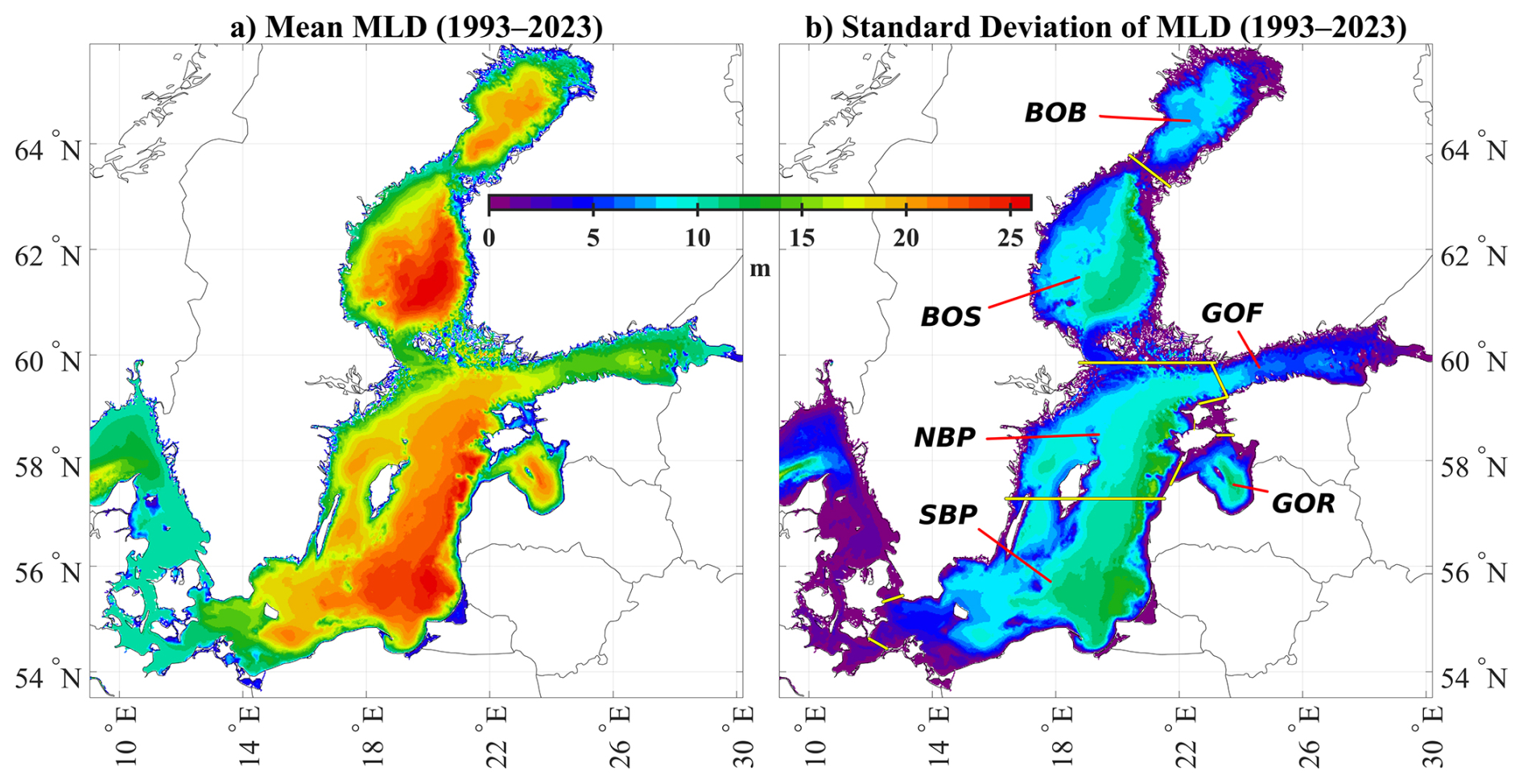
Figure 1Spatial distribution of the long-term mean (a) and standard deviation (b) of MLD in the Baltic Sea over the period 1993–2023 (Table 1, product ref. no. 1). Boundaries of major Baltic Sea sub-basins are shown with yellow lines (IHO 2012): the Bothnian Bay (BOB), Bothnian Sea (BOS), Gulf of Finland (GOF), Northern Baltic Proper (NBP), Gulf of Riga (GOR), and Southern Baltic Proper (SBP).
Figure 1b shows the spatial distribution of the standard deviation of MLD across the Baltic Sea, based on daily-averaged data over the period 1993–2023. This metric represents the statistical dispersion of MLD values at each location – that is, how far individual daily MLD values deviate from the long-term average at that point. Since the standard deviation is derived from daily MLD values over multiple years, it represents how strongly MLD values tend to deviate from their long-term average on a daily basis. The resulting spatial pattern shows clearly defined gradients in standard deviation across the basin. Higher values, ranging from approximately 5 to 15 m, are observed in deeper areas such as eastern parts of BOS, NBP, and SBP. In contrast, much lower standard deviations – typically below 5 m – are found in shallower and more enclosed regions such as the BOB, GOF.
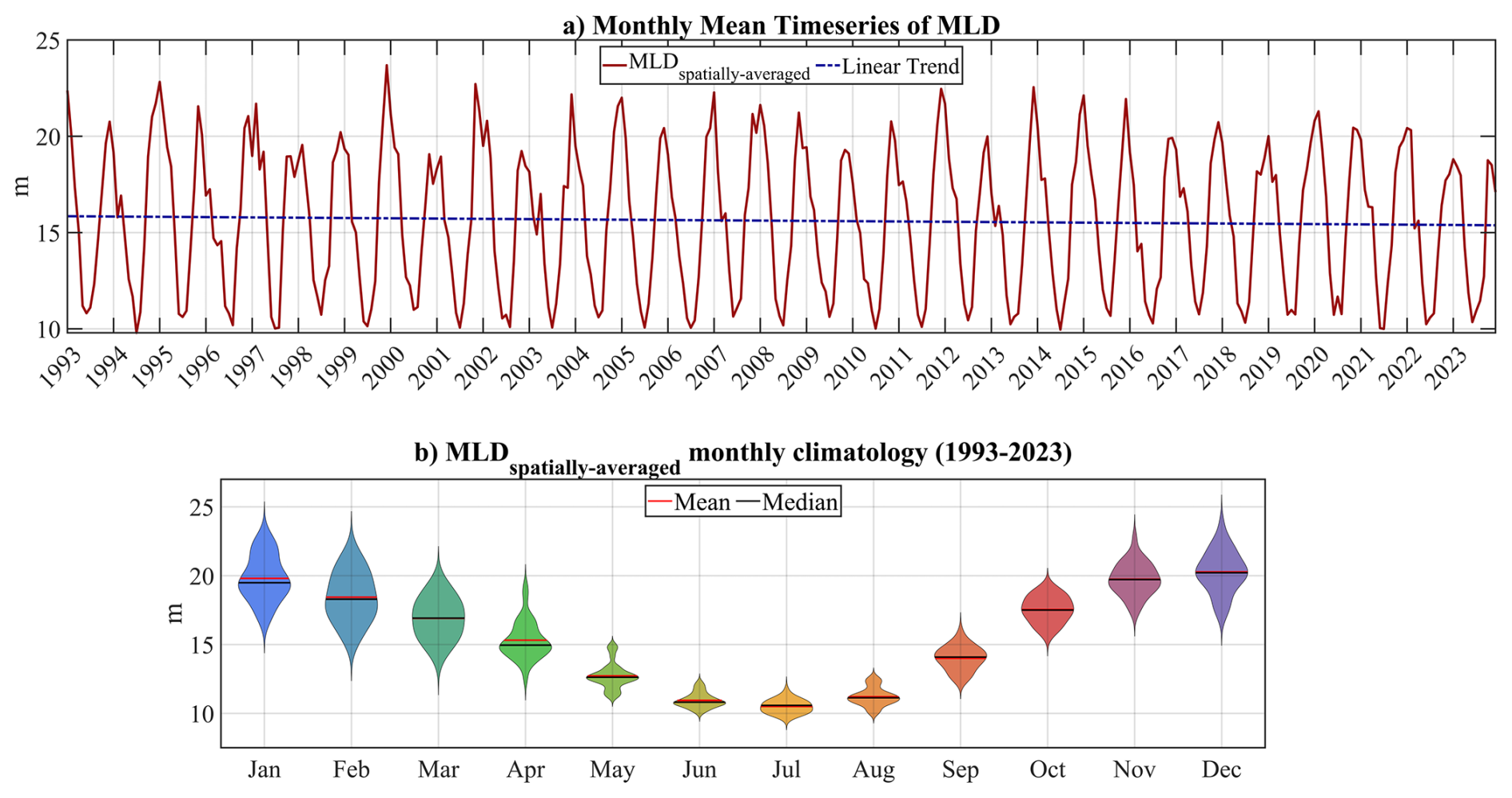
Figure 2Monthly mean MLD variability in the Baltic Sea over the 29-year period from 1993 to 2023 (Table 1, product ref. no. 1). (a) Monthly mean MLD time series alongside a linear trend (red dashed line), highlighting pronounced seasonal variability but minimal overall long-term trend. (b) Violin plots illustrating statistical distributions of monthly MLD values, clearly distinguishing deeper, more variable winter mixed layers (December–February), caused by enhanced vertical mixing and cooling events, from shallower, stable summer conditions (June–August) associated with surface warming and increased stratification.
The spatially averaged time series of MLD from 1993 to 2023 (Fig. 2a) shows strong seasonal fluctuations superimposed on a non-significant long-term trend. While individual years exhibit pronounced peaks and troughs, there is an overall shoaling tendency, particularly in winter months, which is consistent with previous studies in the southern Baltic Sea (Bulczak et al., 2024). Such reductions are attributed to increasing thermal stratification and warmer surface waters, both of which inhibit vertical mixing (Bulczak et al., 2024).
The MLD follows a clear seasonal cycle, as illustrated by the monthly climatology (Fig. 2b). Maximum depths are typically observed during winter (October–March), driven by convective mixing under cold air temperatures. Minimum MLDs occur in summer (June–August), when surface heating leads to strong stratification and shallow mixing layers. The transitional periods in spring and autumn are characterized by rapid changes in MLD, reflecting the formation and erosion of seasonal thermoclines. These patterns are consistent with prior studies (e.g., Fu et al., 2012; Bulczak et al., 2024) documenting deep winter mixing and shallow summer layers across the Baltic.
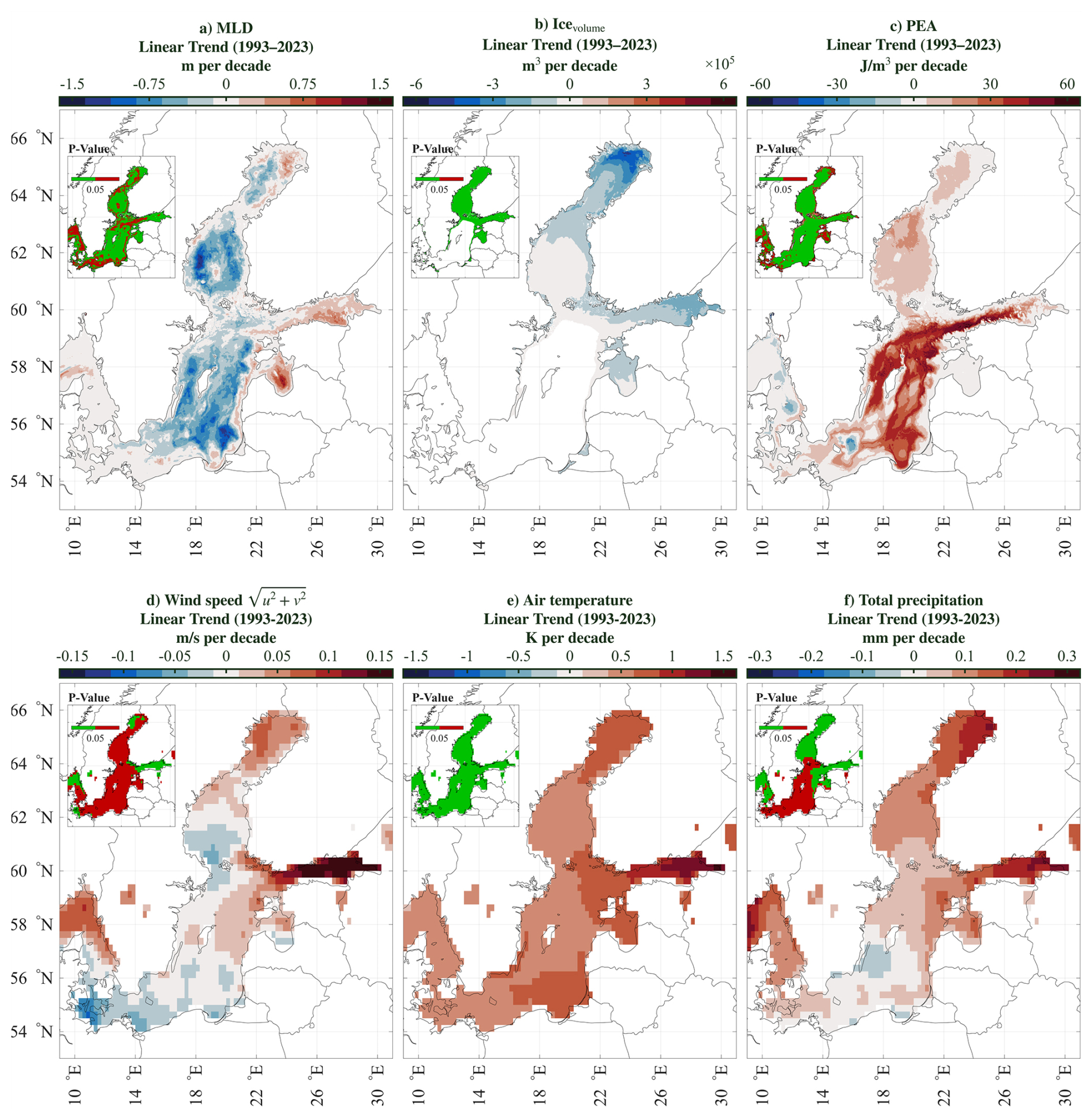
Figure 3Linear trends (1993–2023) of oceanic and atmospheric parameters in the Baltic Sea region. (a) Mixed layer depth (MLD) Eq. (1), (b) sea ice volume trend during the ice season (November–May), (c) potential energy anomaly (PEA), (d) wind speed, (e) air temperature, and (f) total precipitation (panels a–c from product ref. no. 1; panels d–f from product ref. no. 2). Inset maps in each panel display p-values associated with the linear trends at each grid point. Areas with p < 0.05 (shaded in green) indicate statistically significant trends at the 95 % confidence level, while red areas denote non-significant trends. These p-value maps provide an uncertainty metric for the estimated trends and help to distinguish robust regional changes from areas of high variability or low confidence.
The spatial pattern of MLD linear trends (Fig. 3a) reveals a striking west–east dipole: MLD has shoaled in the western Baltic (e.g., western Baltic Proper, Bothnian Sea), while deepening trends are observed in the eastern basins (e.g., eastern coasts of the Baltic Sea, Gulf of Finland, Gulf of Riga, and Eastern Bothnian Bay). This feature is repeated on seasonal trends except for summer (Fig. 4). The spatial contrast suggests region-specific responses to environmental changes. Sea ice volume trends (Fig. 3b), computed for the ice season (November–May), show significant declines. Reduced ice cover extends the open-water period and permits more wind-driven mixing, which likely contributes to the observed deepening of MLD in the eastern/northern regions (Raudsepp et al., 2020). This interpretation is consistent with Singh et al. (2025), who found significant reductions in ice thickness and extent throughout the Baltic.
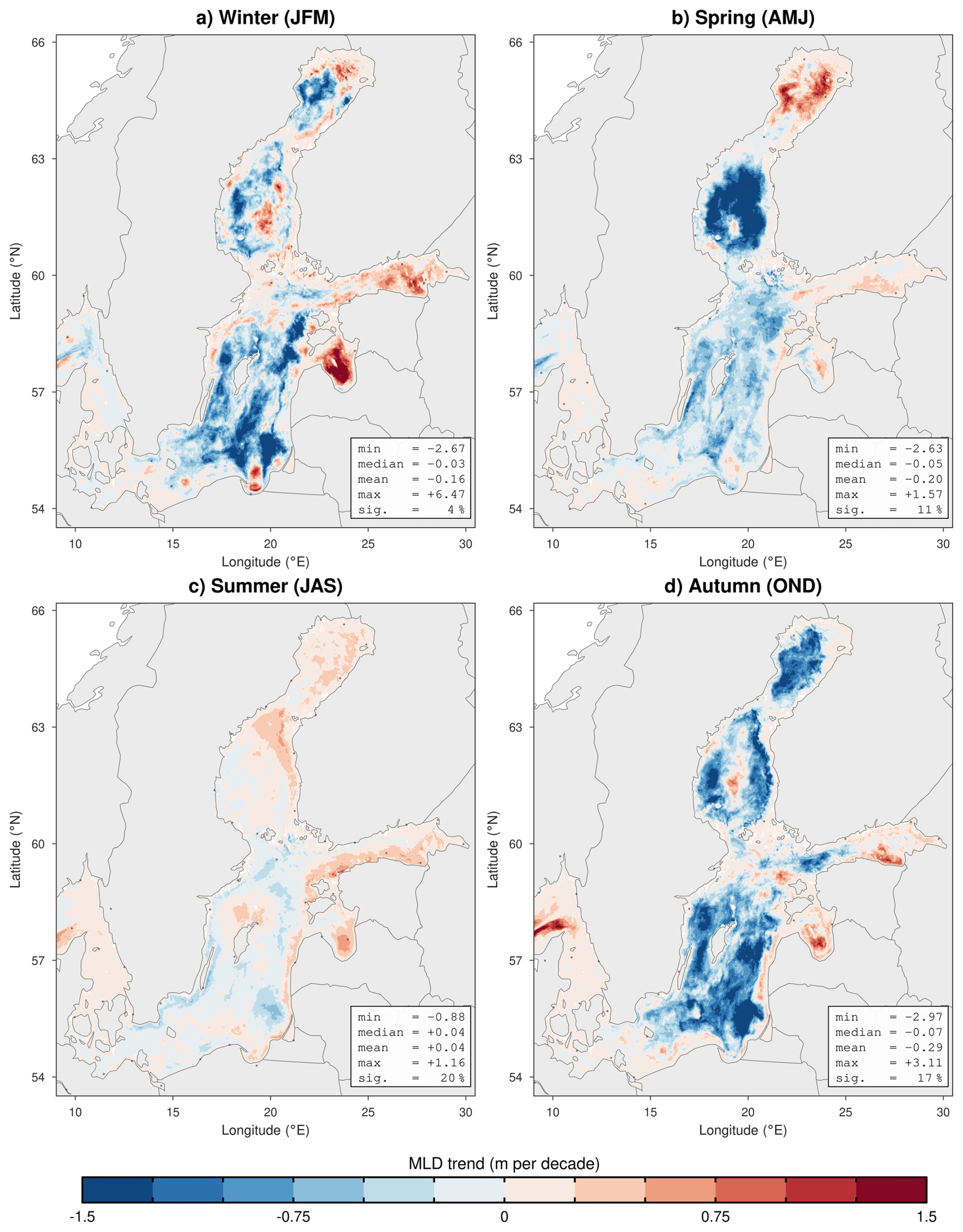
Figure 4Seasonal linear trends (1993–2023) of mixed layer depth (MLD) in the Baltic Sea region. (a) Winter (JFM), (b) Spring (AMJ), (c) Summer (JAS), and (d) Autumn (OND) trends derived from product ref. no. 1. The summary box in the lower-right of each panel reports basin-wide statistics of the underlying slope field – minimum, median, mean, and maximum values (m per decade) – together with the fraction of grid cells (sig.) where the trend is statistically significant. The colorbar is saturated at ±1.5 m per decade; reported minimum and maximum values may therefore exceed the displayed range.
The PEA trends shown in Fig. 3c provide a diagnostic of the stratification barrier relevant to mixed-layer evolution. Positive trends indicate that the water column has become more resistant to further vertical mixing, which favors shallower MLDs where atmospheric forcing is not sufficient to overcome this barrier. Areas with positive PEA trends correspond broadly to regions of MLD shoaling. Conversely, weaker or negative PEA trends indicate a reduced stratification barrier and are consistent with deeper mixing in parts of the eastern and northern Baltic, where reduced sea ice cover increases the exposure of the water column to wind-driven mixing. As defined in the Methods, the PEA diagnostic used here is evaluated beneath the diagnosed MLD. This formulation is used because the mixed layer itself is already approximately homogeneous, while the density structure below the MLD controls the resistance to further deepening. The diagnostic therefore does not represent the external energy available for mixing, but rather the internal oceanic stratification barrier that must be overcome by mixing processes such as wind-driven turbulence and convective cooling. The MLD trend should therefore be interpreted as the outcome of a balance between stabilizing stratification and mixing supplied by other drivers.
Wind speed trends (Fig. 3d) are spatially heterogeneous and generally weak. Although some localized increases are evident, there is no basin-wide pattern suggesting wind changes as the primary driver of MLD trends. This aligns with previous assessments indicating no clear overall trend in regional wind speed over recent decades (Meier et al., 2022b). In contrast, air temperature trends (Fig. 3e) are uniformly positive, with strongest warming observed in the western Baltic. Warmer air temperatures reduce wintertime surface heat loss, weakening convective mixing and enhancing stratification. This likely contributes to the observed shoaling of MLD in the southwestern basins. Meanwhile, in the eastern Baltic, the concurrent retreat of ice cover may counteract some warming effects, allowing for deeper winter mixing. Precipitation trends (Fig. 3f) are also positive across most of the basin, particularly in the northeastern catchments. Increased rainfall enhances surface freshwater input, which strengthens stratification and supports MLD shoaling. The alignment of increasing precipitation and positive PEA trends in the western Baltic reinforces the role of freshwater in inhibiting mixing.
The pronounced spatial heterogeneity in mean MLD, with deeper layers in the central/southern basins (e.g., Gotland Basin) and shallower layers in coastal zones and northern basins (e.g., Gulf of Finland, Bothnian Bay), aligns well with established knowledge. Bathymetry sets fundamental limits (Omstedt et al., 2004; Leppäranta and Myrberg, 2009), while greater wind exposure over the open central basins promotes deeper mixing compared to the more sheltered coastal and archipelago regions (Kõuts and Omstedt, 1993; Miettunen et al., 2024). Surface buoyancy forcing, particularly the strong haline stratification prevalent in the Baltic (Reissmann et al., 2009; Liblik et al., 2017), is a dominant factor suppressing MLD, especially in areas with significant freshwater inflow like the northern gulfs and nearshore zones. The higher temporal variability (standard deviation) observed in deeper basins (Fig. 1b) reflects their greater responsiveness to synoptic-scale wind events and seasonal buoyancy changes compared to the persistently stratified and shallow regions (Umlauf et al., 2018).
In the western subbasins, the overall shoaling is mechanistically linked to increasing thermal stratification driven by rising air temperatures (Lehmann et al., 2022; Meier et al., 2022a, b) and enhanced precipitation (Rutgersson et al., 2002), both contributing to increased PEA, which stabilizes the water column and impedes vertical mixing.
For the eastern subbasins, the observed deepening trends in the Gulf of Finland, Eastern Gotland Basin, and Eastern Bothnian Bay appear counterintuitive in a warming climate. However, the dramatic decline in sea ice volume (Singh et al., 2025) offers a key mechanistic explanation. Reduced ice cover extends the open-water season – especially during autumn to spring when wind energy is highest – allowing significantly more wind-driven mixing (Vihma and Haapala, 2009; Uotila et al., 2015). This region also exhibits weaker positive or slightly negative PEA trends (Fig. 3c), indicating reduced stratification. The retreat of ice likely counteracts expected thermal stratification from warming by enhancing wind mixing and reducing the freshwater lens effect from melting ice (Hordoir et al., 2019).
Enhanced ageostrophic currents (Barzandeh et al., 2024), driven by increased wind stress over newly ice-free areas (Fig. 3b), may further contribute to deeper mixing due to the loss of the ice damping effect. Our observed MLD deepening (Fig. 3a) aligns with these dynamics (Fig. 3d) and is supported by reduced ice cover (Fig. 3b), which increases wind stress impact and vertical shear at density interfaces. This weakens stratification via Ekman pumping, submeso/mesoscale instabilities, and inertial oscillations (Umlauf et al., 2018; Chrysagi et al., 2021), contributing to deeper mixed layers.
The accompanying weak or negative PEA trends (Fig. 3c) further reflect this stratification reduction. Additionally, Bashiri et al. (2024) report intensified marine heatwaves (MHWs) in the eastern Baltic: atmospheric blocking in summer leads to surface-intensified warming and temporary MLD shoaling, while wintertime advection promotes subsurface warming and suppressed convection. Although both western and eastern Baltic regions exhibit air temperature increases, the influence of atmospheric warming on MLD deepening appears less significant in the east, where oceanic and dynamic atmospheric processes likely dominate stratification and MLD variability.
The observed changes in MLD have significant implications for the Baltic Sea's physical and ecological state. A deeper winter mixed layer in previously ice-covered regions (e.g. northern gulfs) can lead to greater ventilation of the water column (Meier et al., 2019; Droste et al., 2025). This may be a positive outcome in terms of oxygen distribution: deeper mixing in winter helps transport oxygen from the surface to intermediate depths, which can alleviate oxygen depletion that often develops below the halocline (Kõuts et al., 2021a). However, the flip side is that shallower mixing in the central and southern Baltic can exacerbate oxygen stress in those areas. These processes, combined with episodic inflows of warm saline water that strengthen stratification, have been shown to exacerbate oxygen depletion in the western Baltic (Barghorn et al., 2025). When the mixed layer no longer reaches as deep into the halocline, less oxygen is injected into the deep layer each winter. Over time, this contributes to more severe or persistent hypoxia in the deeper basins (Krapf et al., 2022). The Baltic Sea is already well known for its extensive oxygen-depleted bottom areas, often referred to as “dead zones” (Carstensen et al., 2014; Kõuts et al., 2021a), and stronger stratification only worsens this issue by further isolating the deep water. Recent studies have indeed reported an increasing frequency of hypoxic events in the Baltic Proper, correlating with intensifying stratification and warming (Rolff et al., 2022; Hepach et al., 2024; Liblik et al., 2025; Stockmayer and Lehmann, 2023). Our findings of MLD shoaling in the main basins are thus a warning sign of potentially deteriorating deep-water oxygen conditions if these trends persist.
Another important consideration is the impact on nutrient cycling and biological productivity. The MLD forms the interface between the deep layer and the euphotic zone, thereby controlling growing conditions and nutrient availability for phytoplankton (Wasmund et al., 1998; Hieronymus et al., 2018). A shallower winter mixed layer in the central Baltic means that come spring, a smaller reservoir of deep nutrient-rich water has been entrained to the surface layer (Kõuts et al., 2021b). This could limit the amount of nutrients (like nitrate and phosphate) available for the spring phytoplankton bloom, possibly reducing the magnitude and duration of the bloom (Reissmann et al., 2009). Areas with deepening MLD (e.g. the northern and eastern Baltic) might see enhanced nutrient entrainment, potentially hampering the effect of nutrient input reductions in coastal areas. It should be noted, however, that oxygen conditions strongly influence nutrient fluxes from sediments. Improved bottom-water oxygenation in coastal areas promotes nutrient retention within sediments, whereas increasing oxygen deficiency enhances the release of nutrients, particularly phosphorus, into the water column (Viktorsson et al., 2013; Bonaglia et al., 2014). Consequently, these opposing processes may partially offset the effects of changing stratification and could help explain why corresponding long-term ecosystem trends have not been consistently reported in recent Baltic Sea observations (Olofsson et al., 2020; Stoń-Egiert and Ostrowska, 2022).
Additionally, as shallow summer mixed layer (driven by increased stratification) prolongs periods of nutrient depletion in surface waters, organisms that can utilize alternate nutrient sources or fix nitrogen (e.g. cyanobacteria in summer) have an advantage (Munkes et al., 2021). Cyanobacteria can fix N2 and thus dominate when nitrate is low and the water is stably stratified (Munkes et al., 2021; Spilling et al., 2025). A trend toward stronger stratification (Fig. 3c) could facilitate cyanobacteria blooms in the long term, since vertical mixing is less available to disrupt their suitable living conditions or to bring up nitrate. This is relevant because the Baltic Sea already experiences extensive cyanobacterial blooms in summer when stratification is strong (Kahru and Elmgren, 2014). We emphasize that MLD represents only one of several interacting factors influencing phytoplankton and cyanobacterial bloom dynamics in the Baltic Sea, alongside variables such as irradiance, and interspecific competition (Olofsson et al., 2020; Degerholm et al., 2006; Mohlin et al., 2012; Kahru et al., 2025). Consequently, the relationship between MLD and bloom development is unlikely to be linear, but can play an important role within the broader set of environmental drivers, especially in a longer time scale.
The physical changes we document are likely to have complex ecosystem effects, from altering the timing and composition of phytoplankton blooms to influencing higher-trophic-level processes that depend on the distribution of nutrients and oxygen. Our results also align with the emerging consensus from Baltic Sea climate assessments, which state that air and water temperatures are rising, and ice extent is decreasing (Meier et al., 2022b). These changes in turn modify physical oceanographic processes such as stratification and vertical mixing. The Baltic Sea is often cited as an amplified case of climate-driven change, reacting faster or more intensely than the global ocean due to its shallowness and restricted exchange (Hepach et al., 2024). The mixed layer trends we observe can thus be seen as part of this larger picture of a system in transition. In particular, the long-term shoaling of the winter mixed layer in the central Baltic is a strong indicator of how increased heat content and salt stratification are altering the fundamental vertical structure of the sea.
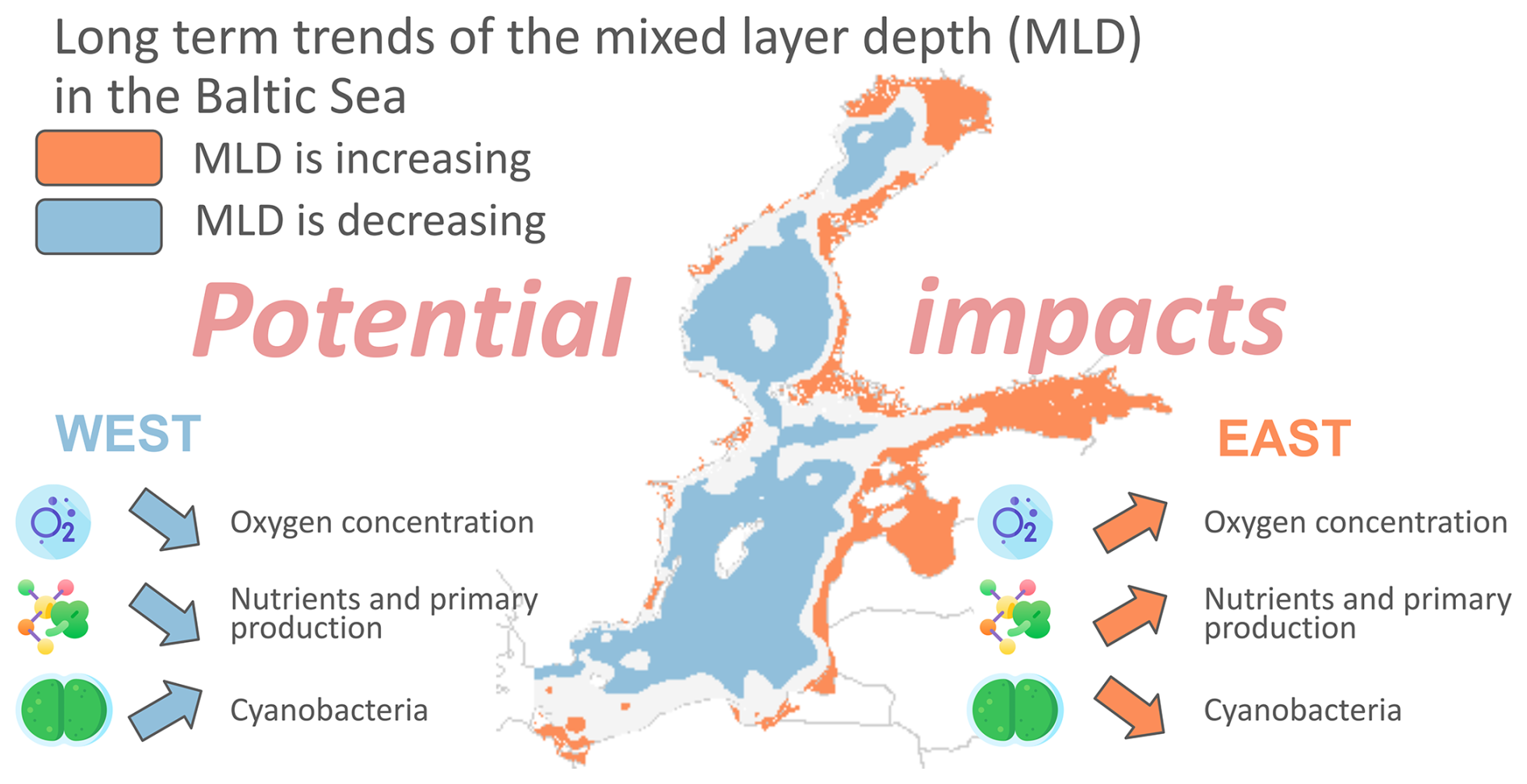
Figure 5Infographic illustrating the potential relationship between mixed layer depth (MLD) trends and changes in the ecological state of the Baltic Sea, including various eutrophication indicators.
The changes in MLD carry important implications for the Baltic Sea ecosystem and biogeochemistry (Fig. 5). In areas where the winter mixed layer has shoaled, likely less oxygen is being delivered to the deep waters each year, which could exacerbate hypoxia and alter nutrient availability. Conversely, deeper winter mixing in the northern and eastern Baltic could improve water column ventilation, nutrient retention in the sediments and nutrient redistribution in those regions. Additionally, a trend toward stronger stratification and shallower summer mixed layers could benefit, in favourable combination with other factors, cyanobacterial blooms by prolonging surface nutrient depletion and stable conditions. These potential changes are obscured by the counteracting influence of oxygen conditions on nutrient dynamics and the complex set of additional factors influencing phytoplankton and cyanobacteria blooms in general.
Overall, the contrasting MLD trends suggest that different parts of the Baltic Sea will face distinct ecological challenges and feedback under continued climate change. Looking ahead, sustained observations and high-resolution modeling will be critical to track and predict how the Baltic Sea's mixed layer evolves under future warming scenarios – especially as winters with little or no ice and more intense summer stratification become increasingly common. By recognizing the region-specific nature of MLD responses, future efforts can better anticipate the impacts of climate change on Baltic Sea conditions and ecosystem services.
Our study demonstrates that climate-driven changes in the Baltic Sea have led to divergent trends in MLD across different regions. Climate warming emerges as a fundamental driver: higher air and water temperatures, together with feedbacks like reduced ice cover and altered freshwater input, have created conditions for the mixed layer to shoal in some areas and deepen in others. The Baltic Sea's response to this global forcing is highly nuanced – regional differences (such as whether an area is seasonally ice-covered or influenced by strong haline stratification) modulate how the mixed layer responds. We found that from 1993 to 2023, Baltic Sea MLDs exhibit significant spatial and temporal variability, with clear trends linked to atmospheric warming, declining ice extent, and changing stratification patterns. The southern parts of the Baltic are shifting toward a more stratified state with generally shallower winter mixed layers, while the northern sub-basins are experiencing enhanced winter mixing due to the loss of ice cover.
The model products used in this study from both the Copernicus Marine Service and other sources are listed in Table 1.
UR designed the concept of this study, interpreted the results, and wrote the initial manuscript. UA performed the calculations and prepared the figures. AB and IM contributed to the manuscript development. MK contributed to the study of the variations of MLD on the biogeochemistry and ecology of the Baltic Sea. PL was responsible for the funding. All authors contributed to writing and revising the manuscript.
The contact author has declared that none of the authors has any competing interests.
The Copernicus Marine Service offering is regularly updated to ensure it remains at the forefront of user requirements. In this process, some products may undergo replacement or renaming, leading to the removal of certain product IDs from the catalogue. If readers have any questions or require assistance regarding these modifications, please feel free to reach out to the Copernicus Marine Service user support team for further guidance. They will be able to provide the necessary information to address concerns and find suitable alternatives.
Publisher's note: Copernicus Publications remains neutral with regard to jurisdictional claims made in the text, published maps, institutional affiliations, or any other geographical representation in this paper. The authors bear the ultimate responsibility for providing appropriate place names. Views expressed in the text are those of the authors and do not necessarily reflect the views of the publisher.
OpenAI's GPT-5.x model was used to assist with drafting sections of the manuscript. All content was reviewed, verified, and approved by the authors.
This paper was edited by Joanna Staneva and reviewed by two anonymous referees.
Amaya, D. J., Alexander, M. A., Capotondi, A., Deser, C., Karnauskas, K. B., Miller, A. J., and Mantua, N. J.: Are long-term changes in mixed layer depth influencing North Pacific marine heatwaves?, B. Am. Meteorol. Soc., 102, S59–S66, https://doi.org/10.1175/BAMS-D-20-0144.1, 2021.
Barghorn, L., Meier, H. E. M., Radtke, H., Neumann, T., and Naumov, L.: Warm saltwater inflows strengthen oxygen depletion in the western Baltic Sea, Clim. Dyn., 63, 29, https://doi.org/10.1007/s00382-024-07501-x, 2025.
Barzandeh, A., Maljutenko, I., Rikka, S., Lagemaa, P., Männik, A., Uiboupin, R., and Raudsepp, U.: Sea surface circulation in the Baltic Sea: decomposed components and pattern recognition, Sci. Rep., 14, 18649, https://doi.org/10.1038/s41598-024-69463-8, 2024.
Bashiri, B., Barzandeh, A., Männik, A., and Raudsepp, U.: Variability of marine heatwaves' characteristics and assessment of their potential drivers in the Baltic Sea over the last 42 years, Sci. Rep., 14, 22419, https://doi.org/10.1038/s41598-024-74173-2, 2024.
Bonaglia, S., Deutsch, B., Bartoli, M., Marchant, H. K., and Brüchert, V.: Seasonal oxygen, nitrogen and phosphorus benthic cycling along an impacted Baltic Sea estuary: regulation and spatial patterns, Biogeochemistry, 119, 139–160, https://doi.org/10.1007/s10533-014-9953-6, 2014.
Bulczak, A. I., Nowak, K., Jakacki, J., Muzyka, M., Rak, D., and Walczowski, W.: Seasonal variability and long-term winter shoaling of the upper mixed layer in the southern Baltic Sea, Cont. Shelf Res., 276, 105232, https://doi.org/10.1016/j.csr.2024.105232, 2024.
Carstensen, J., Andersen, J. H., Gustafsson, B. G., and Conley, D. J.: Deoxygenation of the Baltic Sea during the last century, P. Natl. Acad. Sci. USA, 111, 5628–5633, 2014.
Chrysagi, E., Umlauf, L., Holtermann, P., Klingbeil, K., and Burchard, H.: High‐resolution simulations of submesoscale processes in the Baltic Sea: The role of storm events, J. Geophys. Res.-Oceans, 126, e2020JC016411, https://doi.org/10.1029/2020JC016411, 2021.
Copernicus Climate Change Service, Climate Data Store: ERA5 hourly data on single levels from 1940 to present, Copernicus Climate Change Service (C3S) Climate Data Store (CDS) [data set], https://doi.org/10.24381/cds.adbb2d47, 2023.
de Boyer Montégut, C., Madec, G., Fischer, A. S., Lazar, A., and Iudicone, D.: Mixed layer depth over the global ocean: An examination of profile data and a profile-based climatology, J. Geophys. Res.-Oceans, 109, https://doi.org/10.1029/2004JC002378, 2004.
Degerholm, J., Gundersen, K., Bergman, B., and Söderbäck, E.: Phosphorus-limited growth dynamics in two Baltic Sea cyanobacteria, Nodularia sp. and Aphanizomenon sp., FEMS Microbiol. Ecol., 58, 323–332, https://doi.org/10.1111/j.1574-6941.2006.00180.x, 2006.
Droste, E. S., Bakker, D. C. E., Venables, H. J., Jones, E. M., Meredith, M. P., Dall'Olmo, G., Hoppema, M., Legge, O. J., Lee, G. A., and Queste, B. Y.: Sea ice controls net ocean uptake of carbon dioxide by regulating wintertime stratification, Commun. Earth Environ., 6, 457, https://doi.org/10.1038/s43247-025-02395-x, 2025.
Dutheil, C., Meier, H. E. M., Gröger, M., and Börgel, F.: Warming of Baltic Sea water masses since 1850, Clim. Dynam., 61, 1311–1331, https://doi.org/10.1007/s00382-022-06628-z, 2023.
EU Copernicus Marine Service Product: Baltic Sea Physics Reanalysis, Mercator Ocean international [data set], https://doi.org/10.48670/moi-00013, 2025.
Fu, W., She, J., and Dobrynin, M.: A 20-year reanalysis experiment in the Baltic Sea using three-dimensional variational (3DVAR) method, Ocean Sci., 8, 827–844, https://doi.org/10.5194/os-8-827-2012, 2012.
Gao, Z., Long, S.-M., Shi, J.-R., Cheng, L., Li, G., and Ying, J.: Indian Ocean mixed layer depth changes under global warming, Front. Clim., 5, 1112713, https://doi.org/10.3389/fclim.2023.1112713, 2023.
Madec, G., Bourdallé-Badie, R., Chanut, J., Clementi, E., Coward, A., Ethé, C., Iovino, D., Lea, D., Lévy, C., Lovato, T., Martin, N., Masson, S., Mocavero, S., Rousset, C., Storkey, D., Vancoppenolle, M., Müller, S., Nurser, G., Bell, M., and Samson, G.: NEMO ocean engine. Notes du Pôle de modélisation de l'Institut Pierre-Simon Laplace (IPSL), v4.0, Number 27, Zenodo, https://doi.org/10.5281/zenodo.3878122, 2019.
Hepach, H., Piontek, J., Bange, H. W., Barthelmeß, T., von Jackowski, A., and Engel, A.: Enhanced warming and bacterial biomass production as key factors for coastal hypoxia in the southwestern Baltic Sea, Sci. Rep., 14, 29442, https://doi.org/10.1038/s41598-024-80451-w, 2024.
Hersbach, H., Bell, B., Berrisford, P., Hirahara, S., Horányi, A., Muñoz‐Sabater, J., Nicolas, J., Peubey, C., Radu, R., Schepers, D., Simmons, A., Soci, C., Abdalla, S., Abellan, X., Balsamo, G., Bechtold, P., Biavati, G., Bidlot, J., Bonavita, M., De Chiara, G., Dahlgren, P., Dee, D., Diamantakis, M., Dragani, R., Flemming, J., Forbes, R., Fuentes, M., Geer, A., Haimberger, L., Healy, S., Hogan, R.J., Hólm, E., Janisková, M., Keeley, S., Laloyaux, P., Lopez, P., Lupu, C., Radnoti, G., de Rosnay, P., Rozum, I., Vamborg, F., Villaume S., and Thépaut, J.-N.: The ERA5 global reanalysis, Q. J. Roy. Meteor. Soc., 146, 1999–2049, https://doi.org/10.1002/qj.3803, 2020.
Hersbach, H., Bell, B., Berrisford, P., Biavati, G., Horányi, A., Muñoz Sabater, J., Nicolas, J., Peubey, C., Radu, R., Rozum, I., Schepers, D., Simmons, A., Soci, C., Dee, D., and Thépaut, J.-N.: ERA5 hourly data on single levels from 1940 to present, Copernicus Climate Change Service (C3S) Climate Data Store (CDS) [data set], https://doi.org/10.24381/cds.adbb2d47, 2023.
Hieronymus, J., Eilola, K., Hieronymus, M., Meier, H. E. M., Saraiva, S., and Karlson, B.: Causes of simulated long-term changes in phytoplankton biomass in the Baltic proper: a wavelet analysis, Biogeosciences, 15, 5113–5129, https://doi.org/10.5194/bg-15-5113-2018, 2018.
Hordoir, R. and Meier, H. E. M.: Effect of climate change on the thermal stratification of the Baltic Sea: A sensitivity experiment, Clim. Dynam., 38, 1703–1713, https://doi.org/10.1007/s00382-011-1036-y, 2012.
Hordoir, R., Axell, L., Höglund, A., Dieterich, C., Fransner, F., Gröger, M., Liu, Y., Pemberton, P., Schimanke, S., Andersson, H., Ljungemyr, P., Nygren, P., Falahat, S., Nord, A., Jönsson, A., Lake, I., Döös, K., Hieronymus, M., Dietze, H., Löptien, U., Kuznetsov, I., Westerlund, A., Tuomi, L., and Haapala, J.: Nemo-Nordic 1.0: a NEMO-based ocean model for the Baltic and North seas – research and operational applications, Geosci. Model Dev., 12, 363–386, https://doi.org/10.5194/gmd-12-363-2019, 2019.
Kahru, M. and Elmgren, R.: Multidecadal time series of satellite-detected accumulations of cyanobacteria in the Baltic Sea, Biogeosciences, 11, 3619–3633, https://doi.org/10.5194/bg-11-3619-2014, 2014.
Kahru, M., Cahill, B., Elmgren, R., and Rehder, G.: What initiates cyanobacterial blooms in the Baltic Sea?, Harmful Algae, 148, 102924, https://doi.org/10.1016/j.hal.2025.102924, 2025.
Kõuts, T. and Omstedt, A.: Deep water exchange in the Baltic Proper, Tellus A, 45, 311–324, 1993.
Kõuts, M., Maljutenko, I., Elken, J., Liu, Y., Hansson, M., Viktorsson, L., and Raudsepp, U.: Recent regime of persistent hypoxia in the Baltic Sea, Environ. Res. Commun., 3, 075004, https://doi.org/10.1088/2515-7620/ac0cc4, 2021a.
Kõuts, M., Maljutenko, I., Liu, Y., and Raudsepp, U.: Nitrate, ammonium and phosphate pools in the Baltic Sea, in: Copernicus Marine Service Ocean State Report, Issue 5, J. Oper. Oceanogr., 14, s37–s48, https://doi.org/10.1080/1755876X.2021.1946240, 2021b.
Krapf, K., Naumann, M., Dutheil, C., and Meier, H. E. M.: Investigating hypoxic and euxinic area changes based on various datasets from the Baltic Sea, Front. Mar. Sci., 9, 823476, https://doi.org/10.3389/fmars.2022.823476, 2022.
Lass, H. U. and Matthäus, W.: On temporal wind variations forcing salt water inflows into the Baltic Sea, Tellus A, 48, 663–671, https://doi.org/10.1034/j.1600-0870.1996.t01-4-00005.x, 1996.
Lehmann, A., Myrberg, K., Post, P., Chubarenko, I., Dailidiene, I., Hinrichsen, H.-H., Hüssy, K., Liblik, T., Meier, H. E. M., Lips, U., and Bukanova, T.: Salinity dynamics of the Baltic Sea, Earth Syst. Dynam., 13, 373–392, https://doi.org/10.5194/esd-13-373-2022, 2022.
Leppäranta, M. and Myrberg, K.: Physical oceanography of the Baltic Sea, Springer Science & Business Media, https://doi.org/10.1007/978-3-540-79703-6, 2009.
Li, G., Cheng, L., Zhu, J., Trenberth, K. E., Mann, M. E., and Abraham, J. P.: Increasing ocean stratification over the past half-century, Nat. Clim. Chang., 10, 1116–1123, https://doi.org/10.1038/s41558-020-00918-2, 2020.
Liblik, T. and Lips, U.: Variability of synoptic-scale quasi-stationary thermohaline stratification patterns in the Gulf of Finland in summer 2009, Ocean Sci., 8, 603–614, https://doi.org/10.5194/os-8-603-2012, 2012.
Liblik, T. and Lips, U.: Stratification Has Strengthened in the Baltic Sea – An Analysis of 35 Years of Observational Data, Front. Earth Sci., 7, 174, https://doi.org/10.3389/feart.2019.00174, 2019.
Liblik, T., Skudra, M., and Lips, U.: On the buoyant sub-surface salinity maxima in the Gulf of Riga, Oceanologia, 59, 113–128, https://doi.org/10.1016/j.oceano.2016.10.001, 2017.
Liblik, T., Väli, G., Lips, I., Lilover, M.-J., Kikas, V., and Laanemets, J.: The winter stratification phenomenon and its consequences in the Gulf of Finland, Baltic Sea, Ocean Sci., 16, 1475–1490, https://doi.org/10.5194/os-16-1475-2020, 2020.
Liblik, T., Siht, E., Buschmann, F., Kaljumäe, M., Kikas, V., Lips, U., Luik, S. T., Maslova, D., Pärt, K., Salm, K., and Samlas, O.: Recent stagnation period and unprecedented deoxygenation in the Baltic Sea: causes and consequences, Front. Earth Sci., 13, 1638978, https://doi.org/10.3389/feart.2025.1638978, 2025.
Lindenthal, A., Hinrichs, C., Jandt-Scheelke, S., Kruschke, T., Lagemaa, P., van der Lee, E. M., Maljutenko, I., Morrison, H. E., Panteleit, T. R., and Raudsepp, U.: Baltic Sea surface temperature analysis 2022: a study of marine heatwaves and overall high seasonal temperatures, in: 8th edition of the Copernicus Ocean State Report (OSR8), edited by: von Schuckmann, K., Moreira, L., Grégoire, M., Marcos, M., Staneva, J., Brasseur, P., Garric, G., Lionello, P., Karstensen, J., and Neukermans, G., Copernicus Publications, State Planet, 4-osr8, 16, https://doi.org/10.5194/sp-4-osr8-16-2024, 2024.
Lorbacher, K., Dommenget, D., Niiler, P. P., and Köhl, A.: Ocean mixed layer depth: A subsurface proxy of ocean‐atmosphere variability, J. Geophys. Res.-Oceans, 111, https://doi.org/10.1029/2003JC002157, 2006.
Meier, H. E. M., Edman, M., Eilola, K., Placke, M., Neumann, T., Andersson, H. C., Brunnabend, S.-E., Dieterich, C., Frauen, C., Friedland, R., Gröger, M., Gustafsson, B. G., Gustafsson, E., Isaev, A., Kniebusch, M., Kuznetsov, I., Müller-Karulis, B., Naumann, M., Omstedt, A., Ryabchenko, V., Saraiva, S., and Savchuk, O. P.: Assessment of uncertainties in scenario simulations of biogeochemical cycles in the Baltic Sea, Front. Mar. Sci., 6, 46, https://doi.org/10.3389/fmars.2019.00046, 2019.
Meier, H. E. M., Dieterich, C., Gröger, M., Dutheil, C., Börgel, F., Safonova, K., Christensen, O. B., and Kjellström, E.: Oceanographic regional climate projections for the Baltic Sea until 2100, Earth Syst. Dynam., 13, 159–199, https://doi.org/10.5194/esd-13-159-2022, 2022a.
Meier, H. E. M., Kniebusch, M., Dieterich, C., Gröger, M., Zorita, E., Elmgren, R., Myrberg, K., Ahola, M. P., Bartosova, A., Bonsdorff, E., Börgel, F., Capell, R., Carlén, I., Carlund, T., Carstensen, J., Christensen, O. B., Dierschke, V., Frauen, C., Frederiksen, M., Gaget, E., Galatius, A., Haapala, J. J., Halkka, A., Hugelius, G., Hünicke, B., Jaagus, J., Jüssi, M., Käyhkö, J., Kirchner, N., Kjellström, E., Kulinski, K., Lehmann, A., Lindström, G., May, W., Miller, P. A., Mohrholz, V., Müller-Karulis, B., Pavón-Jordán, D., Quante, M., Reckermann, M., Rutgersson, A., Savchuk, O. P., Stendel, M., Tuomi, L., Viitasalo, M., Weisse, R., and Zhang, W.: Climate change in the Baltic Sea region: a summary, Earth Syst. Dynam., 13, 457–593, https://doi.org/10.5194/esd-13-457-2022, 2022b.
Miettunen, E., Tuomi, L., Westerlund, A., Kanarik, H., and Myrberg, K.: Transport dynamics in a complex coastal archipelago, Ocean Sci., 20, 69–83, https://doi.org/10.5194/os-20-69-2024, 2024.
Mohlin, M., Roleda, M. Y., Pattanaik, B., Tenne, S. J., and Wulff, A.: Interspecific resource competition – combined effects of radiation and nutrient limitation on two diazotrophic filamentous cyanobacteria, Microb. Ecol., 63, 736–750, https://doi.org/10.1007/s00248-011-9964-y, 2012.
Munkes, B., Löptien, U., and Dietze, H.: Cyanobacteria blooms in the Baltic Sea: a review of models and facts, Biogeosciences, 18, 2347–2378, https://doi.org/10.5194/bg-18-2347-2021, 2021.
Olofsson, M., Suikkanen, S., Kobos, J., Wasmund, N., and Karlson, B.: Basin-specific changes in filamentous cyanobacteria community composition across four decades in the Baltic Sea, Harmful Algae, 91, 101685, https://doi.org/10.1016/j.hal.2019.101685, 2020.
Omstedt, A., Elken, J., Lehmann, A., and Piechura, J.: Knowledge of the Baltic Sea physics gained during the BALTEX and related programmes, Prog. Oceanogr., 63, 1–28, https://doi.org/10.1016/j.pocean.2004.09.001, 2004.
Panteleit, T., Verjovkina, S., Jandt-Scheelke, S., Spruch, L., and Huess, V.: EU Copernicus Marine Service Quality Information Document for the Baltic Sea Physics Reanalysis Product, BALTICSEA_MULTIYEAR_PHY_003_011, Issue 4.1, Mercator Ocean International, https://documentation.marine.copernicus.eu/QUID/CMEMS-BAL-QUID-003-011.pdf (last access: 11 June 2025), 2025.
Raudsepp, U. and Maljutenko, I.: A method for assessment of the general circulation model quality using the K-means clustering algorithm: a case study with GETM v2.5, Geosci. Model Dev., 15, 535–551, https://doi.org/10.5194/gmd-15-535-2022, 2022.
Raudsepp, U., Uiboupin, R., Laanemäe, K., and Maljutenko, I.: Geographical and seasonal coverage of sea ice in the Baltic Sea, J. Oper. Oceanogr., 13, S1–S172, https://doi.org/10.1080/1755876X.2020.1785097, 2020.
Reissmann, J. H., Burchard, H., Feistel, R., Hagen, E., Lass, H. U., Mohrholz, V., Nausch, G., Umlauf, L., and Wieczorek, G.: Vertical mixing in the Baltic Sea and consequences for eutrophication – A review, Prog. Oceanogr., 82, 47–80, 2009.
Ringgaard, I., Korabel, V., Spruch, L., Lindenthal, A., and Huess, V.: EU Copernicus Marine Service Product User Manual for the Baltic Sea Physics Reanalysis Product, BALTICSEA_MULTIYEAR_PHY_003_011, Issue 1.0, Mercator Ocean International, https://documentation.marine.copernicus.eu/PUM/CMEMS-BAL-PUM-003-011-012.pdf (last access: 11 June 2025), 2024.
Rolff, C., Walve, J., Larsson, U., and Elmgren, R.: How oxygen deficiency in the Baltic Sea proper has spread and worsened: The role of ammonium and hydrogen sulphide, Ambio, 51, 2308–2324, https://doi.org/10.1007/s13280-022-01738-8, 2022.
Rutgersson, A., Omstedt, A., and Räisänen, J.: Net precipitation over the Baltic Sea during present and future climate conditions, Clim. Res., 22, 27–39, https://doi.org/10.3354/cr022027, 2002.
Sallée, J.-B., Pellichero, V., Akhoudas, C., Pauthenet, E., Vignes, L., Schmidtko, S., Naveira Garabato, A., Sutherland, P., and Kuusela, M.: Summertime increases in upper-ocean stratification and mixed-layer depth, Nature, 591, 592–598, https://doi.org/10.1038/s41586-021-03303-x, 2021.
Shi, J., Tang, C., Liu, Q., Zhang, Y., Yang, H., and Li, C.: Role of mixed layer depth in the location and development of the Northeast Pacific warm blobs, Geophys. Res. Lett., https://doi.org/10.1029/2022GL098849, 2022.
Singh, S., Maljutenko, I., and Uiboupin, R.: Sea ice in the Baltic Sea during 1993/94–2020/21 ice seasons from satellite observations and model reanalysis, The Cryosphere, 19, 4741–4758, https://doi.org/10.5194/tc-19-4741-2025, 2025.
Somavilla, R., González-Pola, C., and Fernández-Diaz, J.: The warmer the ocean surface, the shallower the mixed layer. How much of this is true? J. Geophys. Res.-Oceans, 122, 7698–7716, https://doi.org/10.1002/2017JC013125, 2017.
Spilling, K., Vanharanta, M., Santoro, M., Villena‐Alemany, C., Labrenz, M., Grossart, H. P., and Piwosz, K.: Picophytoplankton act as the primary consumers of excess phosphorus after the spring bloom in the eutrophic Baltic Sea, Limnol. Oceanogr., https://doi.org/10.1002/lno.70027, 2025.
Stockmayer, V. and Lehmann, A:. Variations of temperature, salinity and oxygen of the Baltic Sea for the period 1950 to 2020, Oceanologia, 65, 466–483, https://doi.org/10.1016/j.oceano.2023.02.002, 2023.
Stoń-Egiert, J. and Ostrowska, M.: Long-term changes in phytoplankton pigment contents in the Baltic Sea: Trends and spatial variability during 20 years of investigations, Cont. Shelf Res., 236, 104666, https://doi.org/10.1016/j.csr.2022.104666, 2022.
Treguier, A. M., de Boyer Montégut, C., Bozec, A., Chassignet, E. P., Fox-Kemper, B., McC. Hogg, A., Iovino, D., Kiss, A. E., Le Sommer, J., Li, Y., Lin, P., Lique, C., Liu, H., Serazin, G., Sidorenko, D., Wang, Q., Xu, X., and Yeager, S.: The mixed-layer depth in the Ocean Model Intercomparison Project (OMIP): impact of resolving mesoscale eddies, Geosci. Model Dev., 16, 3849–3872, https://doi.org/10.5194/gmd-16-3849-2023, 2023.
Umlauf, L., Holtermann, P. L., Gillner, C. A., Prien, R. D., Merckelbach, L., and Carpenter, J. R.: Diffusive convection under rapidly varying conditions, J. Phys. Oceanogr., 48, 1731–1747, https://doi.org/10.1175/JPO-D-18-0018.1, 2018.
Uotila, P., Vihma, T., and Haapala, J.: Atmospheric and oceanic conditions and the extremely low Bothnian Bay sea ice extent in 2014/2015, Geophys. Res. Lett., 42, 7740–7749, https://doi.org/10.1002/2015GL064901, 2015.
Väli, G., Meier, H. E. M., and Elken, J.: Simulated halocline variability in the Baltic Sea and its impact on hypoxia during 1961–2007, J. Geophys. Res.-Oceans, 118, 6982–7000, https://doi.org/10.1002/2013JC009192, 2013.
Vihma, T. and Haapala, J.: Geophysics of sea ice in the Baltic Sea: A review, Prog. Oceanogr., 80, 129–148, 2009.
Viktorsson, L., Ekeroth, N., Nilsson, M., Kononets, M., and Hall, P. O. J.: Phosphorus recycling in sediments of the central Baltic Sea, Biogeosciences, 10, 3901–3916, https://doi.org/10.5194/bg-10-3901-2013, 2013.
Wang, Z., Garcia, H. E., Boyer, T. P., Reagan, J., and Cebrian, J.: Controlling factors of the climatological annual cycle of the surface mixed layer oxygen content: A global view, Front. Mar. Sci., 9, 1001095, https://doi.org/10.3389/fmars.2022.1001095, 2022.
Wasmund, N., Nausch, G., and Matthäus, W.: Phytoplankton Spring Blooms in the Southern Baltic Sea – Spatio-Temporal Development and Long-Term Trends, J. Plankton Res., 20, 1099–1117, https://doi.org/10.1093/plankt/20.6.1099, 1998.