Articles | Volume 7-osr10
https://doi.org/10.5194/sp-7-osr10-7-2026
© Author(s) 2026. This work is distributed under
the Creative Commons Attribution 4.0 License.
the Creative Commons Attribution 4.0 License.
https://doi.org/10.5194/sp-7-osr10-7-2026
© Author(s) 2026. This work is distributed under
the Creative Commons Attribution 4.0 License.
the Creative Commons Attribution 4.0 License.

30 Sep 2026
| OSR10 | Chapter 2.4
| 30 Sep 2026 | OSR10 | Chapter 2.4
Towards a multi-product methodology for calculating the ocean monitoring indicator of SST extremes in the IBI region
Álvaro de Pascual Collar
CORRESPONDING AUTHOR
Nologin Oceanic Weather Systems, Madrid, 28045, Spain
Axel Alonso Valle
Nologin Oceanic Weather Systems, Madrid, 28045, Spain
Alex Gallardo
Nologin Oceanic Weather Systems, Madrid, 28045, Spain
Marta de Alfonso Alonso-Muñoyerro
Puertos del Estado, Madrid, 28042, Spain
Begoña Pérez Gómez
Puertos del Estado, Madrid, 28042, Spain
Stefania Ciliberti
Nologin Oceanic Weather Systems, Madrid, 28045, Spain
Marcos G. Sotillo
Nologin Oceanic Weather Systems, Madrid, 28045, Spain
Related authors
Flora Gues, Karina von Schuckmann, Mahé Butel, Samantha Hallam, Alvaro de Pascual, Axel Alonso Valle, Aurélien Liné, and Lorena Moreira Mendez
State Planet, 7-osr10, 3, https://doi.org/10.5194/sp-7-osr10-3-2026, https://doi.org/10.5194/sp-7-osr10-3-2026, 2026
Short summary
Short summary
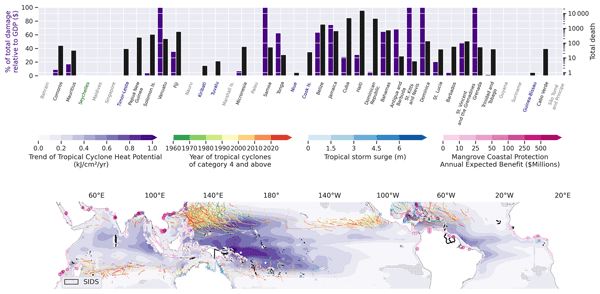
Small Island Developing States (SIDS) depend on the ocean for their societies, economies and livelihoods, addressed here with an ocean narrative using a suite of integrated ocean indicators. Their Exclusive Economic Zones govern 8 % of the global ocean and hold global biodiversity hotspots. SIDS are also among the regions most exposed to ocean and climate change, facing sea-level rise, ocean warming, tropical cyclone risks, and growing impacts on marine ecosystems and SIDS communities.
Karina von Schuckmann, Flora Gues, Mahé Butel, Gilles Garric, Alvaro de Pascual, Axel Alonso Valle, Aurélien Liné, and Lorena Moreira Mendez
State Planet, 7-osr10, 2, https://doi.org/10.5194/sp-7-osr10-2-2026, https://doi.org/10.5194/sp-7-osr10-2-2026, 2026
Short summary
Short summary
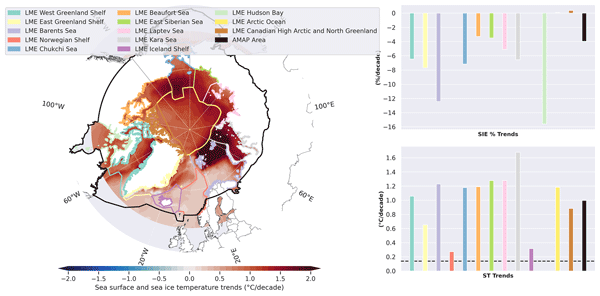
The polar ocean narrative integrates physical, ecological, and societal indicators and shows amplified warming, sea ice loss, and compound change for coastal erosion in the Arctic. Indicators in the Antarctic illustrate an international governance challenge, where biodiversity protection requires both conservation and global mitigation. Together, these examples show that polar ocean change is not a collection of isolated environmental trends, but undergoes an interconnected transformation.
Karina von Schuckmann, Flora Gues, Lorena Moreira, Aurélien Liné, and Álvaro de Pascual Collar
State Planet, 6-osr9, 2, https://doi.org/10.5194/sp-6-osr9-2-2025, https://doi.org/10.5194/sp-6-osr9-2-2025, 2025
Short summary
Short summary
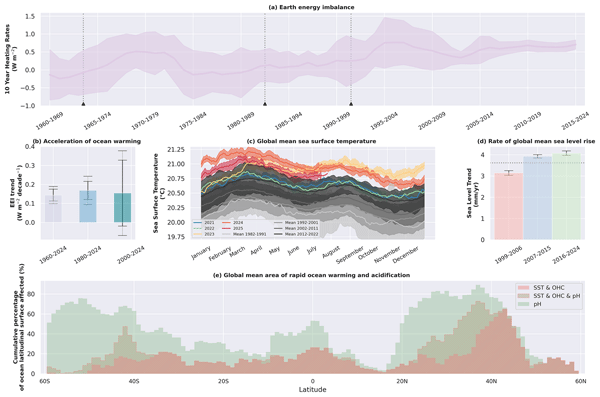
In 2024, global ocean heat content, sea surface temperatures, and sea level rise reached record levels. The triple planetary crisis affects all oceans, where pollution, biodiversity loss, and climate change pressure marine systems, threatening key species, ecosystems, and the ocean’s role in climate stability. This ocean narrative calls for reinforced ocean observing systems, improved uncertainties, and robust science-based information for ocean protection policies and actions.
Karina von Schuckmann, Flora Gues, Lorena Moreira, Aurélien Liné, and Álvaro de Pascual Collar
State Planet, 6-osr9, 3, https://doi.org/10.5194/sp-6-osr9-3-2025, https://doi.org/10.5194/sp-6-osr9-3-2025, 2025
Short summary
Short summary
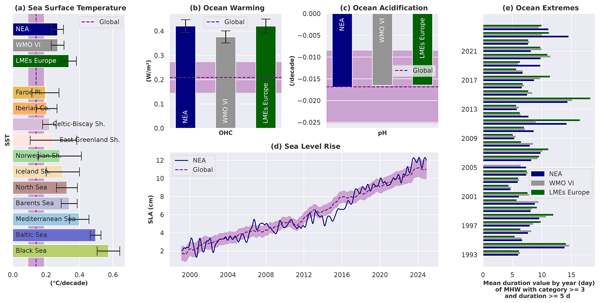
The northeastern Atlantic and adjacent seas are warming and acidifying at rates exceeding the global average, with rising sea levels and record severe marine heatwaves. These changes threaten marine ecosystems, biodiversity, cultural heritage, and key economic sectors that depend on a healthy ocean. This ocean narrative emphasizes the importance of regional ocean indicators, tailored local action, and stronger knowledge transfer between science and policy to support informed decisions.
Álvaro de Pascual Collar, Roland Aznar, Bruno Levier, and Marcos García Sotillo
State Planet, 4-osr8, 5, https://doi.org/10.5194/sp-4-osr8-5-2024, https://doi.org/10.5194/sp-4-osr8-5-2024, 2024
Short summary
Short summary
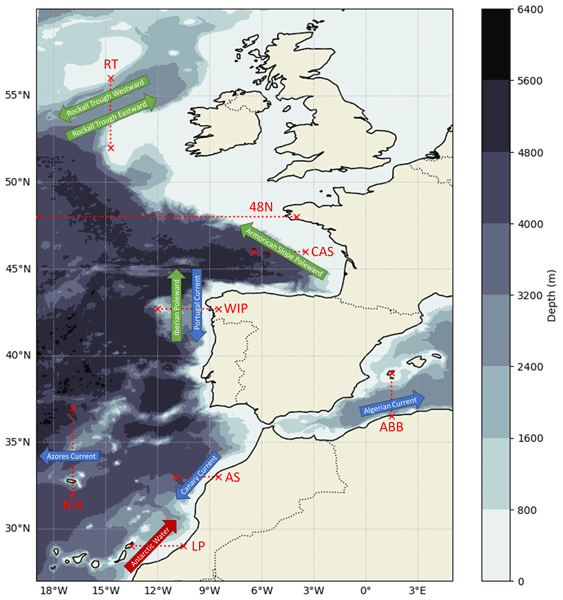
The Iberia–Biscay–Ireland region in the North Atlantic has diverse ocean currents impacting upper and deeper layers. These currents are vital for heat transport, species dispersion, and sediment and pollutant movement. Monitoring them is crucial for informed decision-making in ocean-related activities, including the blue economy sector. This study introduces an indicator to track these currents, covering main ones like the Azores, Canary, Portugal, and poleward slope currents.
Karina von Schuckmann, Flora Gues, Mahé Butel, Gilles Garric, Alvaro de Pascual, Axel Alonso Valle, Aurélien Liné, and Lorena Moreira Mendez
State Planet, 7-osr10, 2, https://doi.org/10.5194/sp-7-osr10-2-2026, https://doi.org/10.5194/sp-7-osr10-2-2026, 2026
Short summary
Short summary
The polar ocean narrative integrates physical, ecological, and societal indicators and shows amplified warming, sea ice loss, and compound change for coastal erosion in the Arctic. Indicators in the Antarctic illustrate an international governance challenge, where biodiversity protection requires both conservation and global mitigation. Together, these examples show that polar ocean change is not a collection of isolated environmental trends, but undergoes an interconnected transformation.
Flora Gues, Karina von Schuckmann, Mahé Butel, Samantha Hallam, Alvaro de Pascual, Axel Alonso Valle, Aurélien Liné, and Lorena Moreira Mendez
State Planet, 7-osr10, 3, https://doi.org/10.5194/sp-7-osr10-3-2026, https://doi.org/10.5194/sp-7-osr10-3-2026, 2026
Short summary
Short summary
Small Island Developing States (SIDS) depend on the ocean for their societies, economies and livelihoods, addressed here with an ocean narrative using a suite of integrated ocean indicators. Their Exclusive Economic Zones govern 8 % of the global ocean and hold global biodiversity hotspots. SIDS are also among the regions most exposed to ocean and climate change, facing sea-level rise, ocean warming, tropical cyclone risks, and growing impacts on marine ecosystems and SIDS communities.
Pablo Lorente, Garbiñe Ayensa, Marta De Alfonso, Samuel Galán, Pilar Gil, Fernando Manzano, Anna Magdalena Matulka, Pedro Montero, Verónica Morales-Márquez, Begoña Pérez-Gómez, Cristina Pérez-Íñigo, Susana Pérez-Rubio, and M. Isabel Ruiz
State Planet, 7-osr10, 15, https://doi.org/10.5194/sp-7-osr10-15-2026, https://doi.org/10.5194/sp-7-osr10-15-2026, 2026
Short summary
Short summary
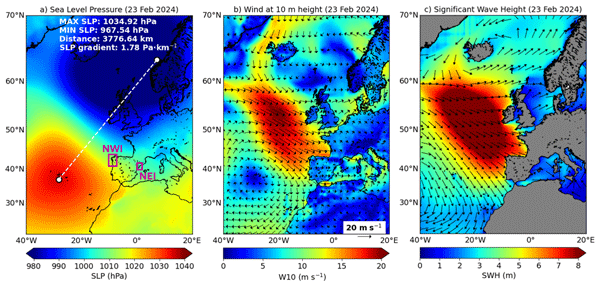
Storm Louis hit southwestern Europe in February 2024, causing major transport disruptions, power outages, and one death. Powerful winds and high waves struck two Spanish ports, with wave heights over 8 m. Despite similar conditions offshore, the ports reacted differently due to their layouts. One saw long-lasting, moderate impacts, while the other faced a shorter, more intense event. The study highlights the need for better storm monitoring to protect coastal infrastructure.
Federica Borile, Vladyslav Lyubartsev, Begoña Pérez Gómez, Jue Lin-Ye, Anna Mangilli, Emanuela Clementi, and Paolo Oddo
State Planet, 7-osr10, 13, https://doi.org/10.5194/sp-7-osr10-13-2026, https://doi.org/10.5194/sp-7-osr10-13-2026, 2026
Short summary
Short summary
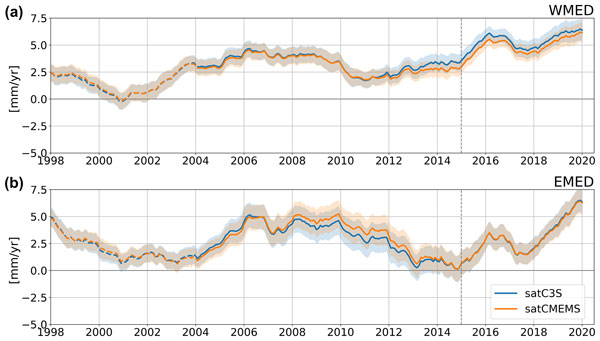
Sea level decadal trends are analysed in the Western and Eastern Mediterranean Sea using satellite and in-situ data. We found that sea level rise is not constant but varies over decades and differs between regions. These changes are influenced by temperature, salinity, and local land movements. Understanding this variability helps improve coastal planning and prepares communities for changing sea levels in the near future.
Anna Chiara Goglio, Lorenzo Mentaschi, Begoña Pérez Gómez, Paolo Oddo, Emanuela Clementi, and Federica Borile
State Planet Discuss., https://doi.org/10.5194/sp-2026-7, https://doi.org/10.5194/sp-2026-7, 2026
Preprint under review for SP
Short summary
Short summary
Mediterranean coastal communities are increasingly threatened by extreme sea level events. We built an indicator combining model and observed data to summarize their changes. The analysis of their evolution revealed that the associated hazard is rising along the entire coastline, especially in the northern Adriatic, the Aegean Sea, and along Turkish and Cypriot coasts. This trend is mostly driven by sea level rise, except for the Adriatic Sea, where strong storm effects play a bigger role.
Manuel Vargas-Yáñez, Orens Pasqueron de Fommervault, Emanuela Clementi, Christian Ferrarin, Svitlana Liubertseva, Diego Álvarez-Berastegui, Baptiste Mourre, Salvatore Aronica, Rosa Balbin, Joaquín Ballabrera-Poy, Sana Ben Ismail, Nathaniel Benssousan, Ismail Bessa, Alicia Blanco, Anthony Bosse, Evi Bourma, François Bourrin, Carlo Brandini, Fulvio Capodici, Clara Casals-Baixas, Branko Cermelj, Giuseppe Ciraolo, Pascal Conan, Laurent Coppola, Lorenzo Corgnati, Joaquín del Río, Emilie Diamond Riquier, Lara Diaz-Barroso, Bartolomeo Doronzo, Xavier Durrieu de Madron, Milad Fakhri, Costantine Frangoulis, Claudia Fratianni, Emilio García-Ladona, Jesus García-Lafuente, M. Carmen García-Martínez, Joaquín Garrabou, Josep Gasol, Adam Gauci, Frédéric Gazeau, Gerard Gregory, Abed El Raman Hassoun, Jordi Isern-Fontanet, Dominique Lefevre, Nadia Lo Bue, Guiomar López, Pablo Lorente, Deny Malengros, Ramon Massana, Sinan Mavruk, Stefano Miserocchi, Behzad Mostajir, Laure Mousseau, Francina Moya, Antonio Novellino, Arianna Orasi, Emanuele Organelli, Vicent Ouisse, Tal Ozer, Begoña Pérez-Gómez, Susana Pérez-Rubio, Leonidas Perivoliotis, Georges Petihakis, Anne Petrenko, Sebastien Pinel, Xavier Pitarch, Angela Pomaro, Lucía Quirós-Collazos, Emma Reyes, Simone Sammartino, Anna Sánchez-Vidal, Katrin Schroeder, Stefano Taddei, Elena Tel, Pierre Testor, Marco Torri, Daniela Turk, Laura Ursella, Dimitris Velaoras, Francesca Vidussi, Ivica Vilivić, Enrico Zambiachi, D. Nikolaos Zarokanellos, George Zodiatis, and Vanessa Cardin
EGUsphere, https://doi.org/10.5194/egusphere-2026-2632, https://doi.org/10.5194/egusphere-2026-2632, 2026
Short summary
Short summary
This work compiles current marine observation capabilities in the Mediterranean Sea, making this information accessible to scientists, organizations, stakeholders, and environmental policymakers. It supports initiatives such as Copernicus Marine Service, EMODNet, the European Ocean Pact, and EU directives. It is intended as a living resource to be updated, identifying strengths and gaps in Mediterranean observation systems.
Simona Masina, Andrea Cipollone, Doroteaciro Iovino, Stefania Ciliberti, Rita Lecci, Sergio Cretí, Vladyslav Lyubartsev, Giovanni Coppini, and Emanuela Clementi
EGUsphere, https://doi.org/10.5194/egusphere-2026-887, https://doi.org/10.5194/egusphere-2026-887, 2026
Short summary
Short summary
The paper presents GOFS16, an eddy-resolving global operational ocean and sea ice forecasting system which provides 6-day forecasts of three-dimensional temperature, salinity, currents, sea level, and sea ice properties. The system assimilates satellite and in situ observations using a 3D variational data assimilation scheme. Validation is conducted routinely using global and regional metrics. Results indicate that GOFS16 performs within the expected range of skill for current global systems.
Manuel García-León, José María García-Valdecasas, Lotfi Aouf, Alice Dalphinet, Juan Asensio, Stefania Angela Ciliberti, Breogán Gómez, Víctor Aquino, Roland Aznar, and Marcos Sotillo
Ocean Sci., 21, 3265–3290, https://doi.org/10.5194/os-21-3265-2025, https://doi.org/10.5194/os-21-3265-2025, 2025
Short summary
Short summary
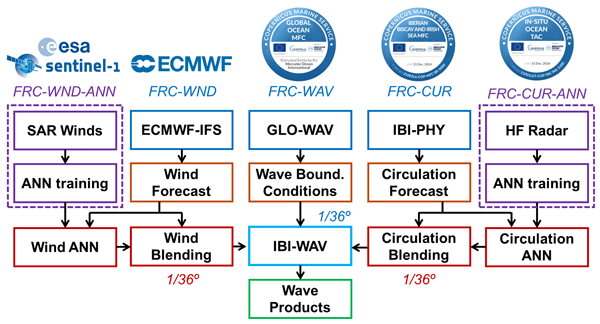
Accurate short-term wave forecasts are key for coastal activities. These forecasts rely on wind and currents as forcing, which in this work were both enhanced using neural networks (NNs) trained with satellite and radar data. Tested at three European sites, the NN-corrected winds were 35 % more accurate, and currents also improved. This led to improved IBI (Iberian–Biscay–Ireland) wave model predictions of wave height and period by 10 % and 17 %, respectively; even correcting under extreme events.
Karina von Schuckmann, Flora Gues, Lorena Moreira, Aurélien Liné, and Álvaro de Pascual Collar
State Planet, 6-osr9, 3, https://doi.org/10.5194/sp-6-osr9-3-2025, https://doi.org/10.5194/sp-6-osr9-3-2025, 2025
Short summary
Short summary
The northeastern Atlantic and adjacent seas are warming and acidifying at rates exceeding the global average, with rising sea levels and record severe marine heatwaves. These changes threaten marine ecosystems, biodiversity, cultural heritage, and key economic sectors that depend on a healthy ocean. This ocean narrative emphasizes the importance of regional ocean indicators, tailored local action, and stronger knowledge transfer between science and policy to support informed decisions.
Karina von Schuckmann, Flora Gues, Lorena Moreira, Aurélien Liné, and Álvaro de Pascual Collar
State Planet, 6-osr9, 2, https://doi.org/10.5194/sp-6-osr9-2-2025, https://doi.org/10.5194/sp-6-osr9-2-2025, 2025
Short summary
Short summary
In 2024, global ocean heat content, sea surface temperatures, and sea level rise reached record levels. The triple planetary crisis affects all oceans, where pollution, biodiversity loss, and climate change pressure marine systems, threatening key species, ecosystems, and the ocean’s role in climate stability. This ocean narrative calls for reinforced ocean observing systems, improved uncertainties, and robust science-based information for ocean protection policies and actions.
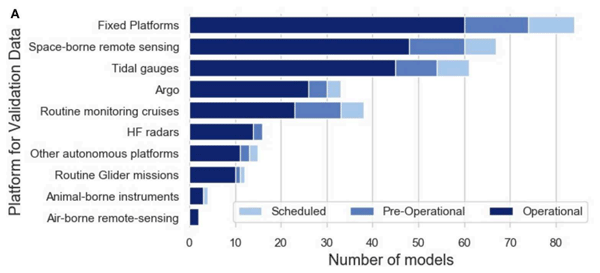
Marcos Garcia Sotillo, Marie Drevillon, and Fabrice Hernandez
State Planet, 5-opsr, 16, https://doi.org/10.5194/sp-5-opsr-16-2025, https://doi.org/10.5194/sp-5-opsr-16-2025, 2025
Short summary
Short summary
Operational forecasting systems require best practices for assessing the quality of ocean products. The authors discuss the role of the observing network in performing validation of ocean models, identifying current gaps but also emphasizing the need of new metrics. An analysis on the level of maturity of validation processes from global to regional systems is provided. A rich variety of approaches exists. An example is provided of how the Copernicus Marine Service organizes product quality information.
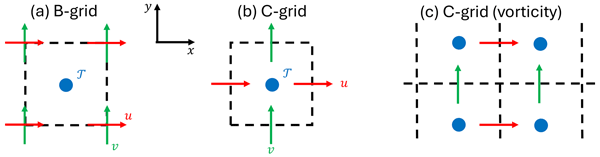
Michael J. Bell, Andreas Schiller, and Stefania Ciliberti
State Planet, 5-opsr, 10, https://doi.org/10.5194/sp-5-opsr-10-2025, https://doi.org/10.5194/sp-5-opsr-10-2025, 2025
Short summary
Short summary
We provide an introduction to physical ocean models, at elementary and intermediate levels, describing the properties they represent, the principles and equations they use to evolve these properties, the physical phenomena they simulate, and the wider context and prospects for their further development. We also outline, at a more technical level, the methods and approximations that they use and the difficulties that limit their accuracy or reliability.
Fabrice Hernandez, Marcos Garcia Sotillo, and Angélique Melet
State Planet, 5-opsr, 17, https://doi.org/10.5194/sp-5-opsr-17-2025, https://doi.org/10.5194/sp-5-opsr-17-2025, 2025
Short summary
Short summary
An historical review over the last 3 decades on intercomparison projects of ocean numerical reanalysis or forecast is first proposed. From this, main issues and lessons learned are discussed in order to propose an overview of best practices and key considerations to facilitate intercomparison activities in operational oceanography.
Yann Drillet, Matthew Martin, Yosuke Fujii, Eric Chassignet, and Stefania Ciliberti
State Planet, 5-opsr, 2, https://doi.org/10.5194/sp-5-opsr-2-2025, https://doi.org/10.5194/sp-5-opsr-2-2025, 2025
Short summary
Short summary
This article describes the various stages of research and development that have been carried out over the last few decades to produce an operational reference service for global ocean monitoring and forecasting.
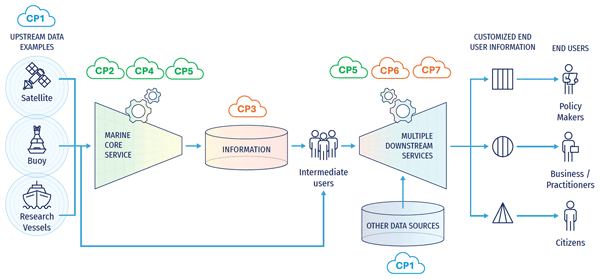
Stefania Ciliberti and Gianpaolo Coro
State Planet, 5-opsr, 24, https://doi.org/10.5194/sp-5-opsr-24-2025, https://doi.org/10.5194/sp-5-opsr-24-2025, 2025
Short summary
Short summary
This review explores how cloud computing technology and its foundational concepts can enhance operational forecasting with scalable, flexible, and measurable resources. It highlights its benefits for the ocean value chain in support of ocean data management, forecasting system infrastructure, data analysis, visualization of ocean forecasts, dissemination, and outreach, showcasing real-world initiatives from the weather and ocean community.
Marina Tonani, Eric Chassignet, Mauro Cirano, Yasumasa Miyazawa, and Begoña Pérez Gómez
State Planet, 5-opsr, 3, https://doi.org/10.5194/sp-5-opsr-3-2025, https://doi.org/10.5194/sp-5-opsr-3-2025, 2025
Short summary
Short summary
This article provides an overview of the main characteristics of ocean forecast systems covering a limited region of the ocean. Their main components are described, as well as the spatial and temporal scales they resolve. The oceanic variables that these systems are able to predict are also explained. An overview of the main forecasting systems currently in operation is also provided.
Angelique Melet, Begoña Pérez Gómez, and Pascal Matte
State Planet, 5-opsr, 11, https://doi.org/10.5194/sp-5-opsr-11-2025, https://doi.org/10.5194/sp-5-opsr-11-2025, 2025
Short summary
Short summary
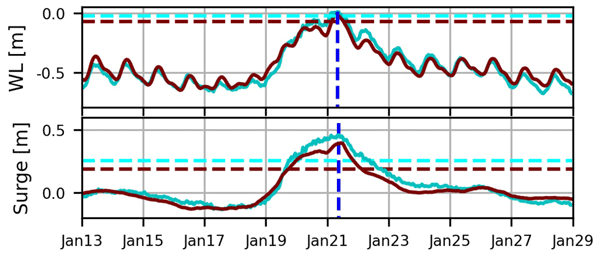
Forecasting the sea level is crucial for supporting coastal management through early warning systems and for adopting adaptation strategies to mitigate climate change impacts. We provide here an overview on models commonly used for sea level forecasting, which can be based on storm surge models or ocean circulation ones, integrated on structured or unstructured grids, including an outlook on new approaches based on ensemble methods.
Mauro Cirano, Enrique Alvarez-Fanjul, Arthur Capet, Stefania Ciliberti, Emanuela Clementi, Boris Dewitte, Matias Dinápoli, Ghada El Serafy, Patrick Hogan, Sudheer Joseph, Yasumasa Miyazawa, Ivonne Montes, Diego A. Narvaez, Heather Regan, Claudia G. Simionato, Gregory C. Smith, Joanna Staneva, Clemente A. S. Tanajura, Pramod Thupaki, Claudia Urbano-Latorre, Jennifer Veitch, and Jorge Zavala Hidalgo
State Planet, 5-opsr, 5, https://doi.org/10.5194/sp-5-opsr-5-2025, https://doi.org/10.5194/sp-5-opsr-5-2025, 2025
Short summary
Short summary
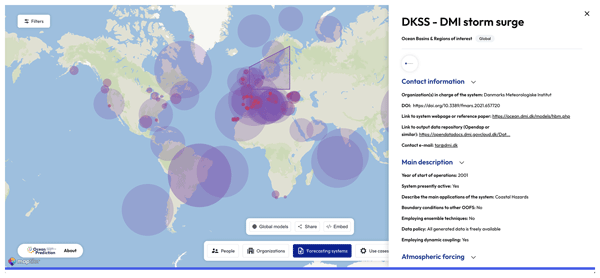
Operational ocean forecasting systems (OOFSs) are crucial for human activities, environmental monitoring, and policymaking. An assessment across eight key regions highlights strengths and gaps, particularly in coastal and biogeochemical forecasting. AI offers improvements, but collaboration, knowledge sharing, and initiatives like the OceanPrediction Decade Collaborative Centre (DCC) are key to enhancing accuracy, accessibility, and global forecasting capabilities.

Jennifer Veitch, Enrique Alvarez-Fanjul, Arthur Capet, Stefania Ciliberti, Mauro Cirano, Emanuela Clementi, Fraser Davidson, Ghada el Serafy, Guilherme Franz, Patrick Hogan, Sudheer Joseph, Svitlana Liubartseva, Yasumasa Miyazawa, Heather Regan, and Katerina Spanoudaki
State Planet, 5-opsr, 6, https://doi.org/10.5194/sp-5-opsr-6-2025, https://doi.org/10.5194/sp-5-opsr-6-2025, 2025
Short summary
Short summary
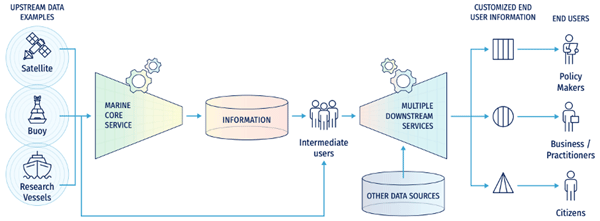
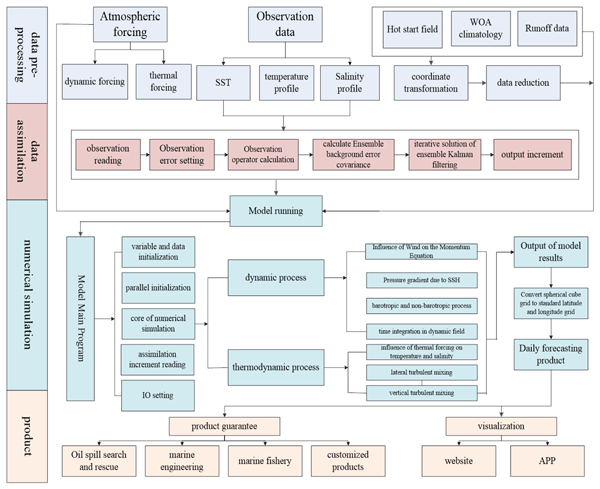
Ocean forecast systems provide information about a future state of the ocean. This information is provided in the form of decision support tools, or downstream applications, that can be accessed by various stakeholders to support livelihoods, coastal resilience and the good governance of the marine environment. This paper provides an overview of the various downstream applications of ocean forecast systems that are utilized around the world.
Liying Wan, Marcos Garcia Sotillo, Mike Bell, Yann Drillet, Roland Aznar, and Stefania Ciliberti
State Planet, 5-opsr, 15, https://doi.org/10.5194/sp-5-opsr-15-2025, https://doi.org/10.5194/sp-5-opsr-15-2025, 2025
Short summary
Short summary
Operating the ocean value chain requires the implementation of steps that must work systematically and automatically to generate ocean predictions and deliver this information. The paper illustrates the main challenges foreseen by operational chains in integrating complex numerical frameworks from the global to coastal scale and discusses existing tools that facilitate orchestration, including examples of existing systems and their capacity to provide high-quality and timely ocean forecasts.
Alexander Bisaro, Giulia Galluccio, Elisa Fiorini Beckhauser, Fulvio Biddau, Ruben David, Floortje d'Hont, Antonio Góngora Zurro, Gonéri Le Cozannet, Sadie McEvoy, Begoña Pérez Gómez, Claudia Romagnoli, Eugenio Sini, and Jill Slinger
State Planet, 3-slre1, 7, https://doi.org/10.5194/sp-3-slre1-7-2024, https://doi.org/10.5194/sp-3-slre1-7-2024, 2024
Short summary
Short summary
This paper assesses coastal adaptation governance by examining socio-economic and political contexts, reviewing policy frameworks, and identifying challenges. Results show that regional and basin-scale frameworks lack sea level rise provisions, but significant national progress is observed. The main governance challenges are time horizons and uncertainty, coordination, and social vulnerability. These, however, can be addressed if flexible planning and nature-based solutions are implemented.
Pablo Lorente, Marta de Alfonso, Pilar Gil, Fernando Manzano, Anna Magdalena Matulka, Begoña Pérez-Gómez, Susana Pérez-Rubio, and M. Isabel Ruiz
State Planet, 4-osr8, 19, https://doi.org/10.5194/sp-4-osr8-19-2024, https://doi.org/10.5194/sp-4-osr8-19-2024, 2024
Short summary
Short summary
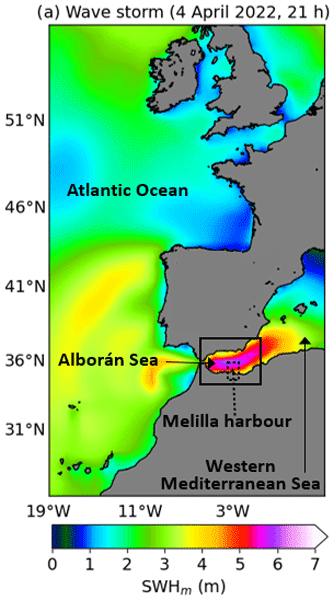
Over recent decades, extreme weather events have attracted growing public concern due to their widespread impact on the environment and human well-being. Their comprehensive monitoring is crucial to adopt prevention strategies and reduce coastal vulnerability. In this work, the record-breaking wave event that hit Melilla harbour (SW Mediterranean Sea) during early April 2022 was investigated to elucidate the meteorological drivers and evaluate the energetic response of Melilla harbour basins.
Lluís Castrillo-Acuña, Axel Alonso-Valle, and Álvaro de Pascual-Collar
State Planet, 4-osr8, 17, https://doi.org/10.5194/sp-4-osr8-17-2024, https://doi.org/10.5194/sp-4-osr8-17-2024, 2024
Short summary
Short summary
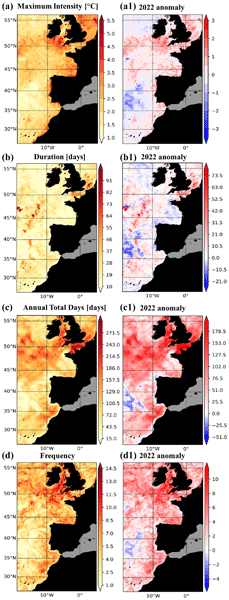
In this research we analyzed the marine heat waves (MHWs) that occurred in the IBI domain during the year 2022. Also, we shed light on the first steps of learning how MHWs behave under the ocean surface through the 2022 Bay of Biscay events. Our results show at least two extreme MHW events for the Bay of Biscay and the Celtic Sea for the year 2022. Moreover, we found that there is a seasonal modulation in mean MHW depth for the Bay of Biscay.
Álvaro de Pascual Collar, Roland Aznar, Bruno Levier, and Marcos García Sotillo
State Planet, 4-osr8, 5, https://doi.org/10.5194/sp-4-osr8-5-2024, https://doi.org/10.5194/sp-4-osr8-5-2024, 2024
Short summary
Short summary
The Iberia–Biscay–Ireland region in the North Atlantic has diverse ocean currents impacting upper and deeper layers. These currents are vital for heat transport, species dispersion, and sediment and pollutant movement. Monitoring them is crucial for informed decision-making in ocean-related activities, including the blue economy sector. This study introduces an indicator to track these currents, covering main ones like the Azores, Canary, Portugal, and poleward slope currents.
Mélanie Juza, Marta de Alfonso, and Ángels Fernández-Mora
State Planet, 4-osr8, 14, https://doi.org/10.5194/sp-4-osr8-14-2024, https://doi.org/10.5194/sp-4-osr8-14-2024, 2024
Short summary
Short summary
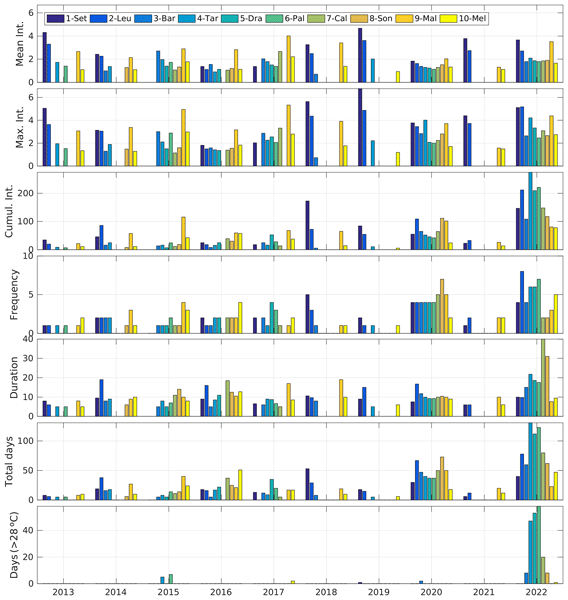
The western Mediterranean suffered unprecedented marine heatwaves in 2022. We focus on the coastal ocean, which is highly vulnerable to global warming and extreme events. Using satellite and in situ observations, strong spatiotemporal variations in the marine heatwave characteristics have been observed in 2022 and over the last decade. Differences between datasets also invite us to continue with efforts to sustain multi-platform observing systems from open-ocean to coastal ocean waters.
Jue Lin-Ye, Begoña Pérez Gómez, Alejandro Gallardo, Fernando Manzano, Marta de Alfonso, Elizabeth Bradshaw, and Angela Hibbert
Ocean Sci., 19, 1743–1751, https://doi.org/10.5194/os-19-1743-2023, https://doi.org/10.5194/os-19-1743-2023, 2023
Short summary
Short summary
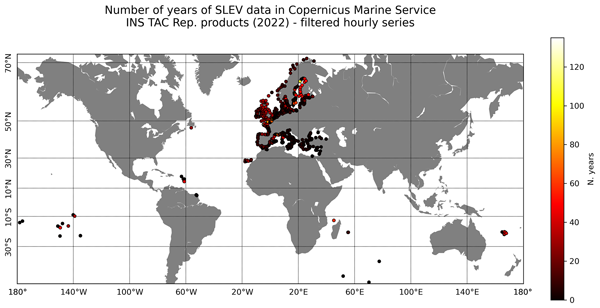
The historical sea level measurements in the Copernicus Marine Service have been machine flagged and visually inspected. The existing software for the near-real-time product has been adapted. The new product was launched in November of 2022 and is readily available to the general public.
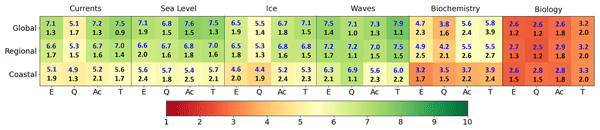
Stefania A. Ciliberti, Enrique Alvarez Fanjul, Jay Pearlman, Kirsten Wilmer-Becker, Pierre Bahurel, Fabrice Ardhuin, Alain Arnaud, Mike Bell, Segolene Berthou, Laurent Bertino, Arthur Capet, Eric Chassignet, Stefano Ciavatta, Mauro Cirano, Emanuela Clementi, Gianpiero Cossarini, Gianpaolo Coro, Stuart Corney, Fraser Davidson, Marie Drevillon, Yann Drillet, Renaud Dussurget, Ghada El Serafy, Katja Fennel, Marcos Garcia Sotillo, Patrick Heimbach, Fabrice Hernandez, Patrick Hogan, Ibrahim Hoteit, Sudheer Joseph, Simon Josey, Pierre-Yves Le Traon, Simone Libralato, Marco Mancini, Pascal Matte, Angelique Melet, Yasumasa Miyazawa, Andrew M. Moore, Antonio Novellino, Andrew Porter, Heather Regan, Laia Romero, Andreas Schiller, John Siddorn, Joanna Staneva, Cecile Thomas-Courcoux, Marina Tonani, Jose Maria Garcia-Valdecasas, Jennifer Veitch, Karina von Schuckmann, Liying Wan, John Wilkin, and Romane Zufic
State Planet, 1-osr7, 2, https://doi.org/10.5194/sp-1-osr7-2-2023, https://doi.org/10.5194/sp-1-osr7-2-2023, 2023
Álvaro de Pascual-Collar, Roland Aznar, Bruno Levier, and Marcos García-Sotillo
State Planet, 1-osr7, 9, https://doi.org/10.5194/sp-1-osr7-9-2023, https://doi.org/10.5194/sp-1-osr7-9-2023, 2023
Short summary
Short summary
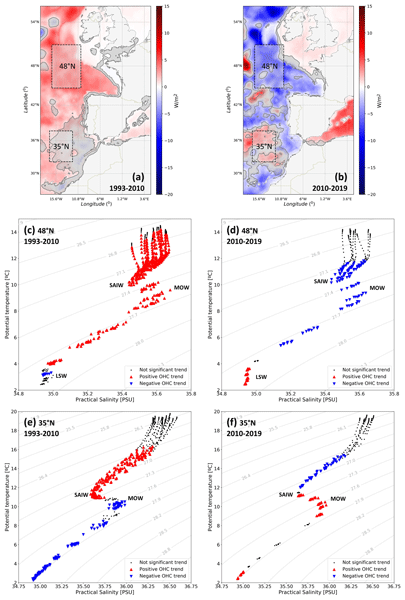
The article comprises the analysis of the ocean heat content in the northeastern Atlantic Iberian–Biscay–Ireland (IBI) region. The variability of ocean heat content is studied, and results are linked with the variability of the main water masses found in the region. Results show how the coupled interannual variability of water masses accounts for an important part of the total ocean heat content variability in the region.
Begoña Pérez Gómez, Ivica Vilibić, Jadranka Šepić, Iva Međugorac, Matjaž Ličer, Laurent Testut, Claire Fraboul, Marta Marcos, Hassen Abdellaoui, Enrique Álvarez Fanjul, Darko Barbalić, Benjamín Casas, Antonio Castaño-Tierno, Srđan Čupić, Aldo Drago, María Angeles Fraile, Daniele A. Galliano, Adam Gauci, Branislav Gloginja, Víctor Martín Guijarro, Maja Jeromel, Marcos Larrad Revuelto, Ayah Lazar, Ibrahim Haktan Keskin, Igor Medvedev, Abdelkader Menassri, Mohamed Aïssa Meslem, Hrvoje Mihanović, Sara Morucci, Dragos Niculescu, José Manuel Quijano de Benito, Josep Pascual, Atanas Palazov, Marco Picone, Fabio Raicich, Mohamed Said, Jordi Salat, Erdinc Sezen, Mehmet Simav, Georgios Sylaios, Elena Tel, Joaquín Tintoré, Klodian Zaimi, and George Zodiatis
Ocean Sci., 18, 997–1053, https://doi.org/10.5194/os-18-997-2022, https://doi.org/10.5194/os-18-997-2022, 2022
Short summary
Short summary
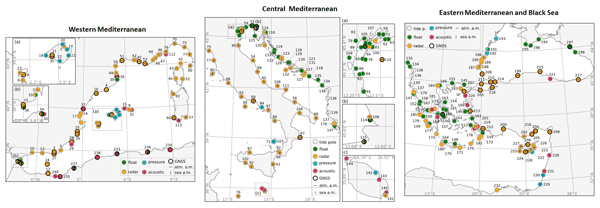
This description and mapping of coastal sea level monitoring networks in the Mediterranean and Black seas reveals the existence of 240 presently operational tide gauges. Information is provided about the type of sensor, time sampling, data availability, and ancillary measurements. An assessment of the fit-for-purpose status of the network is also included, along with recommendations to mitigate existing bottlenecks and improve the network, in a context of sea level rise and increasing extremes.
Cited articles
Álvarez Fanjul, E., de Pascual Collar, A., Pérez Gómez, B., de Alfonso, M., García Sotillo, M., Staneva, J., Clementi, E., Grandi, A., Zacharioudaki, A., Korres, G., Ravdas, M., Renshaw, R., Tinker, J., Raudsepp, U., Lagemaa, P., Maljutenko, I., Geyer, G., Müller, M., and Çağlar Yumruktepe, V.: Sea level, sea surface temperature and SWH extreme percentiles: combined analysis from model results and in situ observations, Section 2.7, S31, in: Copernicus Marine Service Ocean State Report, Issue 3, edited by: von Schuckmann, K., Le Traon, P.-Y., Smith, N., Pascual, A., Djavidnia, S., Gattuso, J.-P., Grégoire, M., and Nolan, G., J. Oper. Oceanogr., 12, S1–S123, https://doi.org/10.1080/1755876X.2019.1633075, 2019.
Autret, E., Tandéo, P., and Piollé, J.-F.: EU Copernicus Marine Service Product User Manual for the European North West Shelf/Iberia Biscay Irish Seas - High Resolution L4 Sea Surface Temperature Reprocessed, SST_ATL_SST_L4_REP_OBSERVATIONS_010_026, Issue 1.5, Mercator Ocean International, https://documentation.marine.copernicus.eu/PUM/CMEMS-SST-PUM-010-026.pdf (last access: 9 April 2025), 2023.
Autret, E., Piollé, J.-F., and Tandéo, P.: EU Copernicus Marine Service Quality Information Document for the European North West Shelf/Iberia Biscay Irish Seas - High Resolution L4 Sea Surface Temperature Reprocessed, SST_ATL_SST_L4_REP_OBSERVATIONS_010_026, Issue 1.0, Mercator Ocean International, https://documentation.marine.copernicus.eu/QUID/CMEMS-SST-QUID-010_026_038_039_044.pdf (last access: 9 April 2025), 2024.
Barton, E. D., Arístegui, J., Tett, P., and Navarro-Pérez, E.: Variability in the Canary Islands area of filament-eddy exchanges, Prog. Oceanogr., 62, 71–94, https://doi.org/10.1016/j.pocean.2004.07.003, 2004.
Calim Costa, M.: Taylor diagram in python based on Taylor (2001), GitHub [code], https://github.com/mabelcalim/Taylor_diagram, 2021.
Castrillo-Acuña, L., Levier, B., Aznar, R., and Sotillo, M. G.: EU Copernicus Marine Service Product User Manual for the Atlantic-Iberian Biscay Irish-Ocean Physics Reanalysis, IBI_MULTIYEAR_PHY_005_002, Issue 4.2, Mercator Ocean International, https://documentation.marine.copernicus.eu/PUM/CMEMS-IBI-PUM-005-002.pdf (last access: 18 March 2025), 2024a.
Castrillo-Acuña, L., Reffray, G., Levier, B., Escudier, R., Gutknecht, E., Aznar, R., Sotillo, M. G., and Cailleau, S.: EU Copernicus Marine Service Product User Manual for the Atlantic-Iberian Biscay Irish-Ocean Physics Analysis and Forecast, IBI_ANALYSISFORECAST_PHY_005_001, Issue 8.2, Mercator Ocean International, https://documentation.marine.copernicus.eu/PUM/CMEMS-IBI-PUM-005-001.pdf (last access: 18 March 2025), 2024b.
de Alfonso, M., Gallardo, A., Manzano, F., and Pérez Gómez, B.: EU Copernicus Marine Service Quality Information Document for the Iberia Biscay Ireland sea surface temperature extreme variability mean and anomaly (observations), OMI_EXTREME_SST_IBI_sst_mean_and_anomaly_obs, Issue 2.0, Mercator Ocean International, https://documentation.marine.copernicus.eu/QUID/CMEMS-OMI-QUID-EXTREME-SST-OBS.pdf (last access: 5 June 2025), 2022a.
de Alfonso, M., Gallardo, A., Manzano, F., and Pérez Gómez, B.: EU Copernicus Marine Service Product User Manual for the Iberia Biscay Ireland sea surface temperature extreme variability mean and anomaly (observations), OMI_EXTREME_SST_IBI_sst_mean_and_anomaly_obs, Issue 2.0, Mercator Ocean International, https://documentation.marine.copernicus.eu/PUM/CMEMS-OMI-PUM-EXTREME-SST-OBS.pdf (last access: 5 June 2025), 2022b.
de Pascual Collar, A., Sotillo, M. G., De Alfonso, M., Pérez Gómez, B., and Álvarez Fanjul, E.: EU Copernicus Marine Service Quality Information Document for the Iberia Biscay Ireland Sea Surface Temperature extreme from Reanalysis, IBI_OMI_TEMPSAL_extreme_var_temp_mean_and_anomaly, Issue 1.2, Mercator Ocean International, https://documentation.marine.copernicus.eu/QUID/CMEMS-OMI-QUID-TEMPSAL-EXTREME-VAR-TEMP.pdf (last access: 16 June 2025), 2021a.
de Pascual Collar, A., Sotillo, M. G., De Alfonso, M., Pérez Gómez, B., and Álvarez Fanjul, E.: EU Copernicus Marine Service Product User Manual for the Iberia Biscay Ireland Sea Surface Temperature extreme from Reanalysis, IBI_OMI_TEMPSAL_extreme_var_temp_mean_and_anomaly, Issue 1.2, Mercator Ocean International, https://documentation.marine.copernicus.eu/PUM/CMEMS-OMI-PUM-TEMPSAL-EXTREME-VAR-TEMP.pdf (last access: 5 June 2025), 2021b.
Desbiolles, F., Blanke, B., and Bentamy, A.: Short-term upwelling events at the western African coast related to synoptic atmospheric structures as derived from satellite observations. J. Geophys. Res.-Oceans, 119, 461–483, https://doi.org/10.1002/2013JC009278, 2014.
Drévillon, M., Lellouche, J. M., Régnier, C., Garric, G., Bricaud, C., Hernandez, O., and Bourdallé-Badie, R.: EU Copernicus Marine Service Quality Information Document for the Global Ocean Physics Reanalysis, GLOBAL_MULTIYEAR_PHY_001_030, Issue 1.6, Mercator Ocean International, https://documentation.marine.copernicus.eu/QUID/CMEMS-GLO-QUID-001-030.pdf (last access: 18 March 2025), 2023.
Drévillon, M., Fernandez, E., and Lellouche, J. M.: EU Copernicus Marine Service Product User Manual for the Global Ocean Physics Reanalysis, GLOBAL_MULTIYEAR_PHY_001_030, Issue 1.6, Mercator Ocean International, https://documentation.marine.copernicus.eu/PUM/CMEMS-GLO-PUM-001-030.pdf (last access: 18 March 2025), 2024.
EU Copernicus Marine Service Product: Iberia Biscay Ireland Sea Surface Temperature extreme from Reanalysis, Mercator Ocean International [data set], https://doi.org/10.48670/moi-00254, 2021.
EU Copernicus Marine Service Product: European North West Shelf/Iberia Biscay Irish Seas – High Resolution ODYSSEA L4 Sea Surface Temperature Analysis, Mercator Ocean International [data set], https://doi.org/10.48670/moi-00152, 2022a.
EU Copernicus Marine Service Product: Iberia Biscay Ireland sea surface temperature extreme variability mean and anomaly (observations), Mercator Ocean International [data set], https://doi.org/10.48670/moi-00255, 2022b.
EU Copernicus Marine Service Product: Global Ocean Physics Reanalysis, Mercator Ocean International [data set], https://doi.org/10.48670/moi-00021, 2023.
EU Copernicus Marine Service Product: Atlantic-Iberian Biscay Irish-Ocean Physics Reanalysis, Mercator Ocean International [data set], https://doi.org/10.48670/moi-00029, 2024a.
EU Copernicus Marine Service Product: Atlantic-Iberian Biscay Irish-Ocean Physics Analysis and Forecast, Mercator Ocean International [data set], https://doi.org/10.48670/moi-00027, 2024b.
EU Copernicus Marine Service Product: Global Ocean Physics Analysis and Forecast, Mercator Ocean International [data set], https://doi.org/10.48670/moi-00016, 2024c.
EU Copernicus Marine Service Product: European North West Shelf/Iberia Biscay Irish Seas – High Resolution L4 Sea Surface Temperature Reprocessed, Mercator Ocean International [data set], https://doi.org/10.48670/moi-00153, 2024d.
Le Galloudec, O., Law Chune, S., Nouel, L., Fernandez, E., Derval, C., Tressol, M., Dussurget, R., Biardeau, A., and Tonani, M.: EU Copernicus Marine Service Product User Manual for the Global Ocean Physics Analysis and Forecast, GLOBAL_ANALYSISFORECAST_PHY_001_024, Issue 2.1, Mercator Ocean International, https://documentation.marine.copernicus.eu/PUM/CMEMS-GLO-PUM-001-024.pdf (last access: 18 March 2025), 2024.
Lellouche, J. M., Le Galloudec, O., Regnier, C., Van Gennip, S., Law Chune, S., Levier, B., Greiner, E., Drevillon, M., and Szczypta, C.: EU Copernicus Marine Service Quality Information Document for the Global Ocean Physics Analysis and Forecast, GLOBAL_ANALYSISFORECAST_PHY_001_024, Issue 1.1, Mercator Ocean International, https://documentation.marine.copernicus.eu/QUID/CMEMS-GLO-QUID-001-024.pdf (last access: 18 March 2025), 2024.
Levier, B., Reffray, G., Aznar, R., Ciliberti, S., Sotillo, M. G., and Cailleau, S.: EU Copernicus Marine Service Quality Information Document for the Atlantic-Iberian Biscay Irish-Ocean Physics Reanalysis, IBI_MULTIYEAR_PHY_005_002, Issue 5.2, Mercator Ocean International, https://documentation.marine.copernicus.eu/QUID/CMEMS-IBI-QUID-005-002.pdf (last access: 18 March 2025), 2024a.
Levier, B., Reffray, G., Escudier, R., Gutknecht, E., Amo-Baladrón, A., Ciliberti, S., Aznar, R., and Sotillo, M. G.: EU Copernicus Marine Service Quality Information Document for the Atlantic-Iberian Biscay Irish-Ocean Physics Analysis and Forecast, IBI_ANALYSISFORECAST_PHY_005_001, Issue 6.2, Mercator Ocean International, https://documentation.marine.copernicus.eu/QUID/CMEMS-IBI-QUID-005-001.pdf (last access: 18 March 2025), 2024b.
Macias, D., Garcia-Gorriz, E., and Stips, A.: The seasonal cycle of the Atlantic Jet dynamics in the Alboran Sea: direct atmospheric forcing versus Mediterranean thermohaline circulation, Ocean Dynam., 66, 137–151, https://doi.org/10.1007/s10236-015-0914-y, 2016.
Oliver, E. C. J., Benthuysen, J. A., Darmaraki, S., Donat, M. G., Hobday, A. J., Holbrook, N. J., Schlegel, R. W., and Sen Gupta, A.: Marine heatwaves, Annu. Rev. Mar. Sci., 13, 313–342, https://doi.org/10.1146/annurev-marine-032720-095144, 2021.
Pérez Gómez, B., de Alfonso, M., Zacharioudaki, A., Pérez González, I., Álvarez Fanjul, E., Müller, M., Marcos, M., Manzano, F., Korres, G., Ravdas, M., and Tamm, S.: Sea level, SST and waves: extremes variability, Chap. 3.1, in: Copernicus Marine Service Ocean State Report, Issue 2, J. Oper. Oceanogr., 11, s79–s88, https://doi.org/10.1080/1755876X.2018.1489208, 2018.
Piollé, J.-F., Autret, E., and Briand, D.: EU Copernicus Marine Service Quality Information Document for the European North West Shelf/Iberia Biscay Irish Seas – High Resolution ODYSSEA L4 Sea Surface Temperature Analysis, SST_ATL_SST_L4_NRT_OBSERVATIONS_010_025, Issue 2.0, Mercator Ocean International, https://documentation.marine.copernicus.eu/QUID/CMEMS-SST-QUID-010-025.pdf (last access: 9 April 2025), 2022a.
Piollé, J.-F., Autret, E., Prévost, C., and Briand, D.: EU Copernicus Marine Service Product User Manual for the European North West Shelf/Iberia Biscay Irish Seas – High Resolution ODYSSEA L4 Sea Surface Temperature Analysis, SST_ATL_SST_L4_NRT_OBSERVATIONS_010_025, Issue 2.0, Mercator Ocean International, https://documentation.marine.copernicus.eu/PUM/CMEMS-SST-PUM-010-025.pdf (last access: 9 April 2025), 2022b.
Smith, K. E., Burrows, M. T., Hobday, A. J., Sen Gupta, A., Moore, P. J., Thomsen, M., Wernberg, T., and Smale, D. A.: Socioeconomic impacts of marine heatwaves: Global issues and opportunities, Science, 374, eabj3593, https://doi.org/10.1126/science.abj3593, 2021.
Taylor, K. E.: Summarizing multiple aspects of model performance in a single diagram, J. Geophys. Res.-Atmos., 106, 7183–7192, https://doi.org/10.1029/2000JD900719, 2001.
von Schuckmann, K., Godoy-Faundez, A., Garçon, V., Muller-Karger, F. E., Evans, K., Appeltans, W., Bax, N., Benedetti Cecchi, L., Bernard, A., Bernard, K., Byrnes, J., Canonico, G., Chapuis, L., Clark, M. R., Darnaude, A. M., Davies, C., Englyst, P., Fransson, A., Hallam, S., Heslop, E., Holland, E., Hood, M., Kern, S., Liné, A., Lara-Lopez, A., Loose, N., Martín Míguez, B., McMahon, C. R., Nordlund, L. M., Post, J., Speich, S., Sutton, A., Tanhua, T., Telszewski, M., Poursanidis, D., and Yu, W.: Global ocean indicators: Marking pathways at the science-policy nexus, Mar. Policy, 184, 106922, https://doi.org/10.1016/j.marpol.2025.106922, 2026.
Short summary
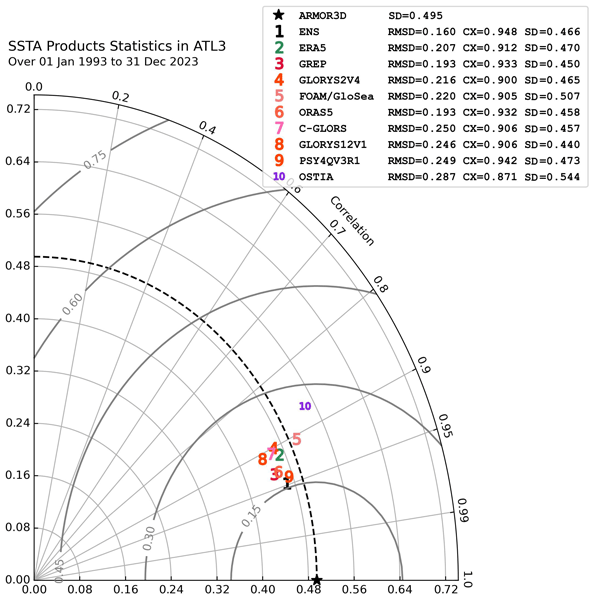
This study improves the monitoring of extreme sea surface temperature events in the Iberia–Biscay–Ireland region. We tested new data sources and combined information from different models and satellites to provide more consistent results and characterize inter-product spread. The findings show that these methods make the indicator more reliable and useful for supporting climate and ocean management decisions.
This study improves the monitoring of extreme sea surface temperature events in the...


Altmetrics
Final-revised paper
Preprint