Articles | Volume 7-osr10
https://doi.org/10.5194/sp-7-osr10-6-2026
© Author(s) 2026. This work is distributed under
the Creative Commons Attribution 4.0 License.

https://doi.org/10.5194/sp-7-osr10-6-2026
© Author(s) 2026. This work is distributed under
the Creative Commons Attribution 4.0 License.
Freshening of the Barents Sea during the recent decade and its impact on the outflow of dense waters

Nansen Environmental and Remote Sensing Center, Bergen, Norway
Bjerknes Center for Climate Research, Bergen, Norway
Vidar S. Lien
Institute of Marine Research, Bergen, Norway
Sourav Chatterjee
National Centre for Polar and Ocean Research, Ministry of Earth Sciences, Goa, India
Centre for Climate Change Research, Indian Institute of Tropical Meteorology, Ministry of Earth Sciences, Pune, India
Saradhy Surendran
Nansen Environmental Research Center, Cochin, India
Antonio Bonaduce
Nansen Environmental and Remote Sensing Center, Bergen, Norway
Bjerknes Center for Climate Research, Bergen, Norway
Laurent Bertino
Nansen Environmental and Remote Sensing Center, Bergen, Norway
Bjerknes Center for Climate Research, Bergen, Norway
Related authors
Alex Hayward, Nishka Dasgupta, Ronan McAdam, Mark R. Payne, Roshin P. Raj, Giulia Bonino, Sourav Chatterjee, Vincent Combes, Dimitra Denaxa, Francesco De Rovere, Pia Englyst, Veera Haapaniemi, Paul Hargous, Jacob Høyer, K. Ajith Joseph, Beatriz Lopes, Ana Oliveira, João Paixão, Fabiola Silva, Saradhy Surendran, Artemis Zegna-Rata, and Steffen M. Olsen
Earth Syst. Sci. Data, 18, 7181–7197, https://doi.org/10.5194/essd-18-7181-2026, https://doi.org/10.5194/essd-18-7181-2026, 2026
Short summary
Short summary
We present a global marine heatwave and cold spell dataset (1982–2024) based on satellite sea surface temperature. The dataset applies multiple definitions in parallel, varying baselines, thresholds, detrending, and event durations. It enables consistent comparisons of marine heatwave characterisation across methods and supports climate monitoring, and ecological impact studies.
Alejandro Blazquez, Benoit Meyssignac, Robin Fraudeau, Michael Ablain, Jonathan Bamber, Antonio Bonaduce, Marie Bouih, Anny Cazenave, Thorben Döhne, Ines Dussaillant, Ramiro Ferrari, Martin Horwath, Nicolas Kolodziejczyk, Hugo Lecomte, Stephanie Leroux, William Llovel, Daniele Melini, Erwan Oulhen, Thierry Penduff, Roshin P. Raj, Giorgio Spada, Marius Schlaak, Papasarafianou Stamatia, Andrea Storto, Chunxue Yang, and Sarah Connors
Earth Syst. Sci. Data Discuss., https://doi.org/10.5194/essd-2026-627, https://doi.org/10.5194/essd-2026-627, 2026
Preprint under review for ESSD
Short summary
Short summary
Closing the sea‑level budget on annual and longer time scales is a cornerstone of physical oceanography because sea‑level rise is one of the best indicators of climate change, and a closed budget shows we have identified and quantified all major drivers. We examined it from 1993 to 2022, finding an accelerated rise that matched ice melt and warm water until 2015. Afterwards an unexplained gap appears. Better deep‑ocean observations and refined gravity processing are needed to close the budget.
Achref Othmani, Annette Samuelsen, Jiping Xie, Laurent Bertino, Fabio Mangini, and Roshin Pappukutty Raj
EGUsphere, https://doi.org/10.5194/egusphere-2026-1520, https://doi.org/10.5194/egusphere-2026-1520, 2026
Short summary
Short summary
We developed a high-resolution (6–10 km) HYCOM-CICE configuration to better understand ocean and sea ice conditions in the Arctic and North Atlantic from 2009 to 2019. By comparing the model with available datasets, we found it reliably captures major patterns and seasonal changes. This can support forecasting, helping improve environmental monitoring and decision-making in regions sensitive to climate change.
Solène Jousset, Sandrine Mulet, Eric Greiner, John Wilkin, Lien Vidar, Léon Chafik, Roshin Raj, Antonio Bonaduce, Nicolas Picot, and Gérald Dibarboure
Earth Syst. Sci. Data, 18, 2285–2303, https://doi.org/10.5194/essd-18-2285-2026, https://doi.org/10.5194/essd-18-2285-2026, 2026
Short summary
Short summary
Satellite altimetry has revolutionized ocean observation, making it possible to track sea level with very good spatio-temporal coverage. However, only sea level anomalies are retrieved; to monitor the entire ocean signal, mean dynamic topography (MDT) must be added to these anomalies. In this study, an evaluation of the CNES-CLS22 MDT shows significant improvements in the Arctic. Over the globe, this new solution represents an incremental update to previous CNES-CLS18 MDT.
Franck Eitel Kemgang Ghomsi, Muharrem Hilmi Erkoç, Roshin P. Raj, Atinç Pirti, Antonio Bonaduce, Babatunde J. Abiodun, and Julienne Stroeve
Int. Arch. Photogramm. Remote Sens. Spatial Inf. Sci., XLVIII-M-6-2025, 393–397, https://doi.org/10.5194/isprs-archives-XLVIII-M-6-2025-393-2025, https://doi.org/10.5194/isprs-archives-XLVIII-M-6-2025-393-2025, 2025
Vidar S. Lien, Roshin P. Raj, and Sourav Chatterjee
State Planet, 4-osr8, 8, https://doi.org/10.5194/sp-4-osr8-8-2024, https://doi.org/10.5194/sp-4-osr8-8-2024, 2024
Short summary
Short summary
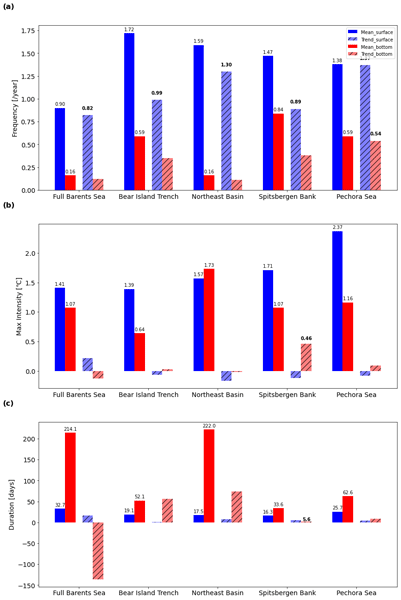
We find that major marine heatwaves are rather coherent throughout the Barents Sea, but surface marine heatwaves occur more frequently while heatwaves on the ocean floor have a longer duration. Moreover, we investigate the sensitivity to the choice of climatological average length when calculating marine heatwave statistics. Our results indicate that severe marine heatwaves may become more frequent in the future Barents Sea due to ongoing climate change.
Karina von Schuckmann, Lorena Moreira, Mathilde Cancet, Flora Gues, Emmanuelle Autret, Ali Aydogdu, Lluis Castrillo, Daniele Ciani, Andrea Cipollone, Emanuela Clementi, Gianpiero Cossarini, Alvaro de Pascual-Collar, Vincenzo De Toma, Marion Gehlen, Rianne Giesen, Marie Drevillon, Claudia Fanelli, Kevin Hodges, Simon Jandt-Scheelke, Eric Jansen, Melanie Juza, Ioanna Karagali, Priidik Lagemaa, Vidar Lien, Leonardo Lima, Vladyslav Lyubartsev, Ilja Maljutenko, Simona Masina, Ronan McAdam, Pietro Miraglio, Helen Morrison, Tabea Rebekka Panteleit, Andrea Pisano, Marie-Isabelle Pujol, Urmas Raudsepp, Roshin Raj, Ad Stoffelen, Simon Van Gennip, Pierre Veillard, and Chunxue Yang
State Planet, 4-osr8, 2, https://doi.org/10.5194/sp-4-osr8-2-2024, https://doi.org/10.5194/sp-4-osr8-2-2024, 2024
Marta Umbert, Eva De Andrés, Maria Sánchez, Carolina Gabarró, Nina Hoareau, Veronica González-Gambau, Aina García-Espriu, Estrella Olmedo, Roshin P. Raj, Jiping Xie, and Rafael Catany
Ocean Sci., 20, 279–291, https://doi.org/10.5194/os-20-279-2024, https://doi.org/10.5194/os-20-279-2024, 2024
Short summary
Short summary
Satellite retrievals of sea surface salinity (SSS) offer insights into freshwater changes in the Arctic Ocean. This study evaluates freshwater content in the Beaufort Gyre using SMOS and reanalysis data, revealing underestimation with reanalysis alone. Incorporating satellite SSS measurements improves freshwater content estimation, especially near ice-melting areas. Adding remotely sensed salinity aids in monitoring Arctic freshwater content and in understanding its impact on global climate.
Jiping Xie, Roshin P. Raj, Laurent Bertino, Justino Martínez, Carolina Gabarró, and Rafael Catany
Ocean Sci., 19, 269–287, https://doi.org/10.5194/os-19-269-2023, https://doi.org/10.5194/os-19-269-2023, 2023
Short summary
Short summary
Sea ice melt, together with other freshwater sources, has effects on the Arctic environment. Sea surface salinity (SSS) plays a key role in representing water mixing. Recently the satellite SSS from SMOS was developed in the Arctic region. In this study, we first evaluate the impact of assimilating these satellite data in an Arctic reanalysis system. It shows that SSS errors are reduced by 10–50 % depending on areas, encouraging its use in a long-time reanalysis to monitor the Arctic water cycle.
Vidar S. Lien and Roshin P. Raj
State Planet Discuss., https://doi.org/10.5194/sp-2022-13, https://doi.org/10.5194/sp-2022-13, 2022
Preprint withdrawn
Short summary
Short summary
Dense overflow water entering the North Atlantic from the Nordic Seas forms the northern limb of the Atlantic Meridional Overturning Circulation. The formation of dense water in the Nordic Seas is sensitive to the properties of the northward flowing Atlantic Water entering the Nordic Seas to the south. We find that the unprecedented freshwater anomaly in the North Atlantic recent years caused the dense water formed in the Barents Sea to have the lowest density in recorded history.
Martin Horwath, Benjamin D. Gutknecht, Anny Cazenave, Hindumathi Kulaiappan Palanisamy, Florence Marti, Ben Marzeion, Frank Paul, Raymond Le Bris, Anna E. Hogg, Inès Otosaka, Andrew Shepherd, Petra Döll, Denise Cáceres, Hannes Müller Schmied, Johnny A. Johannessen, Jan Even Øie Nilsen, Roshin P. Raj, René Forsberg, Louise Sandberg Sørensen, Valentina R. Barletta, Sebastian B. Simonsen, Per Knudsen, Ole Baltazar Andersen, Heidi Ranndal, Stine K. Rose, Christopher J. Merchant, Claire R. Macintosh, Karina von Schuckmann, Kristin Novotny, Andreas Groh, Marco Restano, and Jérôme Benveniste
Earth Syst. Sci. Data, 14, 411–447, https://doi.org/10.5194/essd-14-411-2022, https://doi.org/10.5194/essd-14-411-2022, 2022
Short summary
Short summary
Global mean sea-level change observed from 1993 to 2016 (mean rate of 3.05 mm yr−1) matches the combined effect of changes in water density (thermal expansion) and ocean mass. Ocean-mass change has been assessed through the contributions from glaciers, ice sheets, and land water storage or directly from satellite data since 2003. Our budget assessments of linear trends and monthly anomalies utilise new datasets and uncertainty characterisations developed within ESA's Climate Change Initiative.
Justino Martínez, Carolina Gabarró, Antonio Turiel, Verónica González-Gambau, Marta Umbert, Nina Hoareau, Cristina González-Haro, Estrella Olmedo, Manuel Arias, Rafael Catany, Laurent Bertino, Roshin P. Raj, Jiping Xie, Roberto Sabia, and Diego Fernández
Earth Syst. Sci. Data, 14, 307–323, https://doi.org/10.5194/essd-14-307-2022, https://doi.org/10.5194/essd-14-307-2022, 2022
Short summary
Short summary
Measuring salinity from space is challenging since the sensitivity of the brightness temperature to sea surface salinity is low, but the retrieval of SSS in cold waters is even more challenging. In 2019, the ESA launched a specific initiative called Arctic+Salinity to produce an enhanced Arctic SSS product with better quality and resolution than the available products. This paper presents the methodologies used to produce the new enhanced Arctic SMOS SSS product.
Alex Hayward, Nishka Dasgupta, Ronan McAdam, Mark R. Payne, Roshin P. Raj, Giulia Bonino, Sourav Chatterjee, Vincent Combes, Dimitra Denaxa, Francesco De Rovere, Pia Englyst, Veera Haapaniemi, Paul Hargous, Jacob Høyer, K. Ajith Joseph, Beatriz Lopes, Ana Oliveira, João Paixão, Fabiola Silva, Saradhy Surendran, Artemis Zegna-Rata, and Steffen M. Olsen
Earth Syst. Sci. Data, 18, 7181–7197, https://doi.org/10.5194/essd-18-7181-2026, https://doi.org/10.5194/essd-18-7181-2026, 2026
Short summary
Short summary
We present a global marine heatwave and cold spell dataset (1982–2024) based on satellite sea surface temperature. The dataset applies multiple definitions in parallel, varying baselines, thresholds, detrending, and event durations. It enables consistent comparisons of marine heatwave characterisation across methods and supports climate monitoring, and ecological impact studies.
Michael G. Hart-Davis, Blanca E. Torunski, Antonio Bonaduce, Torbjørn Taskjelle, and Johnny A. Johannessen
EGUsphere, https://doi.org/10.5194/egusphere-2026-5493, https://doi.org/10.5194/egusphere-2026-5493, 2026
This preprint is open for discussion and under review for Ocean Science (OS).
Short summary
Short summary
Observations are of fundamental importance for researching ocean variability. For tidal research, tide gauges have enabled a deep understanding of the physical mechanisms driving tides, as well as how they vary across the coastal oceans. In this manuscript, we assess the tides of Norway from a dense network of tide gauges that have been deployed by the Norwegian Mapping Authority. We dive into tidal components, tidal datums, and validation of global ocean tide models.
Alejandro Blazquez, Benoit Meyssignac, Robin Fraudeau, Michael Ablain, Jonathan Bamber, Antonio Bonaduce, Marie Bouih, Anny Cazenave, Thorben Döhne, Ines Dussaillant, Ramiro Ferrari, Martin Horwath, Nicolas Kolodziejczyk, Hugo Lecomte, Stephanie Leroux, William Llovel, Daniele Melini, Erwan Oulhen, Thierry Penduff, Roshin P. Raj, Giorgio Spada, Marius Schlaak, Papasarafianou Stamatia, Andrea Storto, Chunxue Yang, and Sarah Connors
Earth Syst. Sci. Data Discuss., https://doi.org/10.5194/essd-2026-627, https://doi.org/10.5194/essd-2026-627, 2026
Preprint under review for ESSD
Short summary
Short summary
Closing the sea‑level budget on annual and longer time scales is a cornerstone of physical oceanography because sea‑level rise is one of the best indicators of climate change, and a closed budget shows we have identified and quantified all major drivers. We examined it from 1993 to 2022, finding an accelerated rise that matched ice melt and warm water until 2015. Afterwards an unexplained gap appears. Better deep‑ocean observations and refined gravity processing are needed to close the budget.
Silvana Gonzalez, Mari F. Jensen, Ingrid A. Johnsen, Randi Ingvaldsen, Jon Albretsen, Lars Asplin, Anne Sandvik, Vidar S. Lien, Solfrid Sætre Hjøllo, and Anne Britt Sandø
State Planet Discuss., https://doi.org/10.5194/sp-2026-2, https://doi.org/10.5194/sp-2026-2, 2026
Revised manuscript accepted for SP
Short summary
Short summary
Marine heatwaves occurrence is increasing, especially in northern oceans. In summer 2025, western/central Norway had the most intense event on record, with sea temperatures up to 22 °C. This event was shallow and developed quickly. It was mainly driven by unusual weather: strong solar radiation, weak winds, warm air, and persistent high pressure over Scandinavia. The occurrence of these rapid-forming events has important implications for predictability and adaptation.
Achref Othmani, Annette Samuelsen, Jiping Xie, Laurent Bertino, Fabio Mangini, and Roshin Pappukutty Raj
EGUsphere, https://doi.org/10.5194/egusphere-2026-1520, https://doi.org/10.5194/egusphere-2026-1520, 2026
Short summary
Short summary
We developed a high-resolution (6–10 km) HYCOM-CICE configuration to better understand ocean and sea ice conditions in the Arctic and North Atlantic from 2009 to 2019. By comparing the model with available datasets, we found it reliably captures major patterns and seasonal changes. This can support forecasting, helping improve environmental monitoring and decision-making in regions sensitive to climate change.
Solène Jousset, Sandrine Mulet, Eric Greiner, John Wilkin, Lien Vidar, Léon Chafik, Roshin Raj, Antonio Bonaduce, Nicolas Picot, and Gérald Dibarboure
Earth Syst. Sci. Data, 18, 2285–2303, https://doi.org/10.5194/essd-18-2285-2026, https://doi.org/10.5194/essd-18-2285-2026, 2026
Short summary
Short summary
Satellite altimetry has revolutionized ocean observation, making it possible to track sea level with very good spatio-temporal coverage. However, only sea level anomalies are retrieved; to monitor the entire ocean signal, mean dynamic topography (MDT) must be added to these anomalies. In this study, an evaluation of the CNES-CLS22 MDT shows significant improvements in the Arctic. Over the globe, this new solution represents an incremental update to previous CNES-CLS18 MDT.
Charlotte Durand, Tobias Sebastian Finn, Alban Farchi, Marc Bocquet, Julien Brajard, and Laurent Bertino
The Cryosphere, 19, 5613–5637, https://doi.org/10.5194/tc-19-5613-2025, https://doi.org/10.5194/tc-19-5613-2025, 2025
Short summary
Short summary
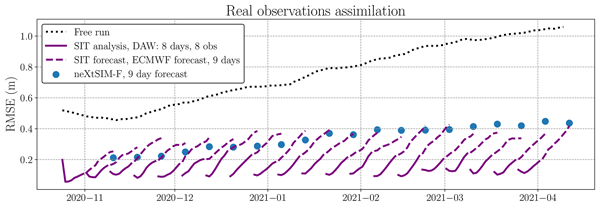
This paper presents a four-dimensional variational data assimilation system based on a neural network emulator for sea-ice thickness, learned from neXtSIM (neXt generation Sea Ice Model) simulation outputs. Testing with simulated and real observation retrievals, the system improves forecasts and bias error, performing comparably to operational methods, demonstrating the promise of sea-ice data-driven data assimilation systems.
Laurent Bertino, Patrick Heimbach, Ed Blockley, and Einar Ólason
State Planet, 5-opsr, 14, https://doi.org/10.5194/sp-5-opsr-14-2025, https://doi.org/10.5194/sp-5-opsr-14-2025, 2025
Short summary
Short summary
Forecasts of sea ice are in high demand in the polar regions, and they are also quickly improving and becoming more easily accessible to non-experts. We provide here a brief status of the short-term forecasting services – typically 10 d ahead – and an outlook of their upcoming developments.
Matthew J. Martin, Ibrahim Hoteit, Laurent Bertino, and Andrew M. Moore
State Planet, 5-opsr, 9, https://doi.org/10.5194/sp-5-opsr-9-2025, https://doi.org/10.5194/sp-5-opsr-9-2025, 2025
Short summary
Short summary
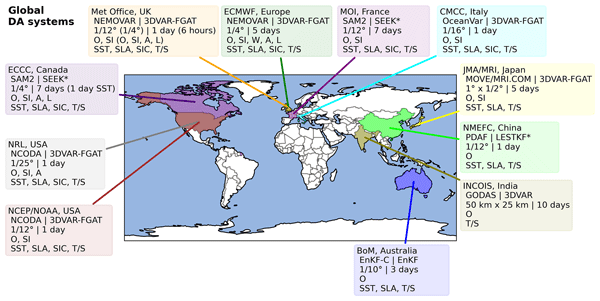
Observations of the ocean from satellites and platforms in the ocean are combined with information from computer models to produce predictions of how the ocean temperature, salinity, and currents will evolve over the coming days and weeks and to describe how the ocean has evolved in the past. This paper summarises the methods used to produce these ocean forecasts at various centres around the world and outlines the practical considerations for implementing such forecasting systems.
Franck Eitel Kemgang Ghomsi, Muharrem Hilmi Erkoç, Roshin P. Raj, Atinç Pirti, Antonio Bonaduce, Babatunde J. Abiodun, and Julienne Stroeve
Int. Arch. Photogramm. Remote Sens. Spatial Inf. Sci., XLVIII-M-6-2025, 393–397, https://doi.org/10.5194/isprs-archives-XLVIII-M-6-2025-393-2025, https://doi.org/10.5194/isprs-archives-XLVIII-M-6-2025-393-2025, 2025
Léo Edel, Jiping Xie, Anton Korosov, Julien Brajard, and Laurent Bertino
The Cryosphere, 19, 731–752, https://doi.org/10.5194/tc-19-731-2025, https://doi.org/10.5194/tc-19-731-2025, 2025
Short summary
Short summary
This study developed a new method to estimate Arctic sea ice thickness from 1992 to 2010 using a combination of machine learning and data assimilation. By training a machine learning model on data from 2011 to 2022, past errors in sea ice thickness can be corrected, leading to improved estimations. This approach provides insights into historical changes in sea ice thickness, showing a notable decline from 1992 to 2022, and offers a valuable resource for future studies.
José A. Jiménez, Gundula Winter, Antonio Bonaduce, Michael Depuydt, Giulia Galluccio, Bart van den Hurk, H. E. Markus Meier, Nadia Pinardi, Lavinia G. Pomarico, and Natalia Vazquez Riveiros
State Planet, 3-slre1, 3, https://doi.org/10.5194/sp-3-slre1-3-2024, https://doi.org/10.5194/sp-3-slre1-3-2024, 2024
Short summary
Short summary
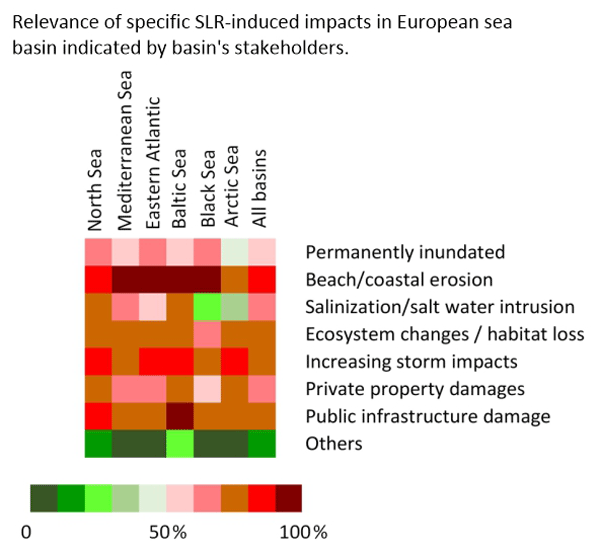
The Knowledge Hub on Sea Level Rise (SLR) has done a scoping study involving stakeholders from government and academia to identify gaps and needs in SLR information, impacts, and policies across Europe. Gaps in regional SLR projections and uncertainties were found, while concerns were raised about shoreline erosion and emerging problems like saltwater intrusion and ineffective adaptation plans. The need for improved communication to make better decisions on SLR adaptation was highlighted.
Simon Driscoll, Alberto Carrassi, Julien Brajard, Laurent Bertino, Einar Ólason, Marc Bocquet, and Amos Lawless
EGUsphere, https://doi.org/10.5194/egusphere-2024-2476, https://doi.org/10.5194/egusphere-2024-2476, 2024
Preprint archived
Short summary
Short summary
The formation and evolution of sea ice melt ponds (ponds of melted water) are complex, insufficiently understood and represented in models with considerable uncertainty. These uncertain representations are not traditionally included in climate models potentially causing the known underestimation of sea ice loss in climate models. Our work creates the first observationally based machine learning model of melt ponds that is also a ready and viable candidate to be included in climate models.
Karina von Schuckmann, Lorena Moreira, Mathilde Cancet, Flora Gues, Emmanuelle Autret, Ali Aydogdu, Lluis Castrillo, Daniele Ciani, Andrea Cipollone, Emanuela Clementi, Gianpiero Cossarini, Alvaro de Pascual-Collar, Vincenzo De Toma, Marion Gehlen, Rianne Giesen, Marie Drevillon, Claudia Fanelli, Kevin Hodges, Simon Jandt-Scheelke, Eric Jansen, Melanie Juza, Ioanna Karagali, Priidik Lagemaa, Vidar Lien, Leonardo Lima, Vladyslav Lyubartsev, Ilja Maljutenko, Simona Masina, Ronan McAdam, Pietro Miraglio, Helen Morrison, Tabea Rebekka Panteleit, Andrea Pisano, Marie-Isabelle Pujol, Urmas Raudsepp, Roshin Raj, Ad Stoffelen, Simon Van Gennip, Pierre Veillard, and Chunxue Yang
State Planet, 4-osr8, 2, https://doi.org/10.5194/sp-4-osr8-2-2024, https://doi.org/10.5194/sp-4-osr8-2-2024, 2024
Vidar S. Lien, Roshin P. Raj, and Sourav Chatterjee
State Planet, 4-osr8, 8, https://doi.org/10.5194/sp-4-osr8-8-2024, https://doi.org/10.5194/sp-4-osr8-8-2024, 2024
Short summary
Short summary
We find that major marine heatwaves are rather coherent throughout the Barents Sea, but surface marine heatwaves occur more frequently while heatwaves on the ocean floor have a longer duration. Moreover, we investigate the sensitivity to the choice of climatological average length when calculating marine heatwave statistics. Our results indicate that severe marine heatwaves may become more frequent in the future Barents Sea due to ongoing climate change.
Yumeng Chen, Polly Smith, Alberto Carrassi, Ivo Pasmans, Laurent Bertino, Marc Bocquet, Tobias Sebastian Finn, Pierre Rampal, and Véronique Dansereau
The Cryosphere, 18, 2381–2406, https://doi.org/10.5194/tc-18-2381-2024, https://doi.org/10.5194/tc-18-2381-2024, 2024
Short summary
Short summary
We explore multivariate state and parameter estimation using a data assimilation approach through idealised simulations in a dynamics-only sea-ice model based on novel rheology. We identify various potential issues that can arise in complex operational sea-ice models when model parameters are estimated. Even though further investigation will be needed for such complex sea-ice models, we show possibilities of improving the observed and the unobserved model state forecast and parameter accuracy.
Cyril Palerme, Thomas Lavergne, Jozef Rusin, Arne Melsom, Julien Brajard, Are Frode Kvanum, Atle Macdonald Sørensen, Laurent Bertino, and Malte Müller
The Cryosphere, 18, 2161–2176, https://doi.org/10.5194/tc-18-2161-2024, https://doi.org/10.5194/tc-18-2161-2024, 2024
Short summary
Short summary
Sea ice forecasts are operationally produced using physically based models, but these forecasts are often not accurate enough for maritime operations. In this study, we developed a statistical correction technique using machine learning in order to improve the skill of short-term (up to 10 d) sea ice concentration forecasts produced by the TOPAZ4 model. This technique allows for the reduction of errors from the TOPAZ4 sea ice concentration forecasts by 41 % on average.
Marina Durán Moro, Ann Kristin Sperrevik, Thomas Lavergne, Laurent Bertino, Yvonne Gusdal, Silje Christine Iversen, and Jozef Rusin
The Cryosphere, 18, 1597–1619, https://doi.org/10.5194/tc-18-1597-2024, https://doi.org/10.5194/tc-18-1597-2024, 2024
Short summary
Short summary
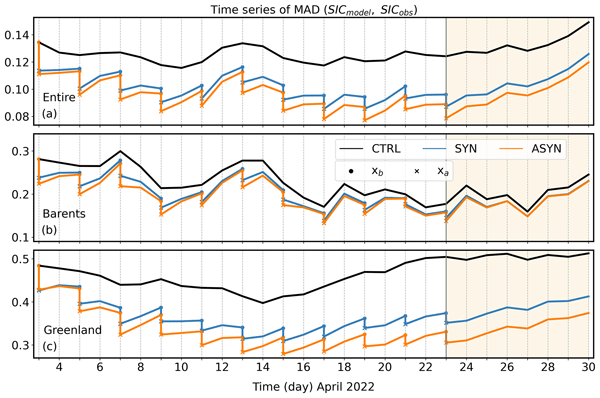
Individual satellite passes instead of daily means of sea ice concentration are used to correct the sea ice model forecast in the Barents Sea. The use of passes provides a significantly larger improvement of the forecasts even after a 7 d period due to the more precise information on temporal and spatial variability contained in the passes. One major advantage of the use of satellite passes is that there is no need to wait for the daily mean availability in order to update the forecast.
Marta Umbert, Eva De Andrés, Maria Sánchez, Carolina Gabarró, Nina Hoareau, Veronica González-Gambau, Aina García-Espriu, Estrella Olmedo, Roshin P. Raj, Jiping Xie, and Rafael Catany
Ocean Sci., 20, 279–291, https://doi.org/10.5194/os-20-279-2024, https://doi.org/10.5194/os-20-279-2024, 2024
Short summary
Short summary
Satellite retrievals of sea surface salinity (SSS) offer insights into freshwater changes in the Arctic Ocean. This study evaluates freshwater content in the Beaufort Gyre using SMOS and reanalysis data, revealing underestimation with reanalysis alone. Incorporating satellite SSS measurements improves freshwater content estimation, especially near ice-melting areas. Adding remotely sensed salinity aids in monitoring Arctic freshwater content and in understanding its impact on global climate.
Stefania A. Ciliberti, Enrique Alvarez Fanjul, Jay Pearlman, Kirsten Wilmer-Becker, Pierre Bahurel, Fabrice Ardhuin, Alain Arnaud, Mike Bell, Segolene Berthou, Laurent Bertino, Arthur Capet, Eric Chassignet, Stefano Ciavatta, Mauro Cirano, Emanuela Clementi, Gianpiero Cossarini, Gianpaolo Coro, Stuart Corney, Fraser Davidson, Marie Drevillon, Yann Drillet, Renaud Dussurget, Ghada El Serafy, Katja Fennel, Marcos Garcia Sotillo, Patrick Heimbach, Fabrice Hernandez, Patrick Hogan, Ibrahim Hoteit, Sudheer Joseph, Simon Josey, Pierre-Yves Le Traon, Simone Libralato, Marco Mancini, Pascal Matte, Angelique Melet, Yasumasa Miyazawa, Andrew M. Moore, Antonio Novellino, Andrew Porter, Heather Regan, Laia Romero, Andreas Schiller, John Siddorn, Joanna Staneva, Cecile Thomas-Courcoux, Marina Tonani, Jose Maria Garcia-Valdecasas, Jennifer Veitch, Karina von Schuckmann, Liying Wan, John Wilkin, and Romane Zufic
State Planet, 1-osr7, 2, https://doi.org/10.5194/sp-1-osr7-2-2023, https://doi.org/10.5194/sp-1-osr7-2-2023, 2023
Sheila Kirkwood, Evgenia Belova, Peter Voelger, Sourav Chatterjee, and Karathazhiyath Satheesan
Atmos. Meas. Tech., 16, 4215–4227, https://doi.org/10.5194/amt-16-4215-2023, https://doi.org/10.5194/amt-16-4215-2023, 2023
Short summary
Short summary
We compared 2 years of wind measurements by the Aeolus satellite with winds from two wind-profiler radars in Arctic Sweden and coastal Antarctica. Biases are similar in magnitude to results from other locations. They are smaller than in earlier studies due to more comparison points and improved criteria for data rejection. On the other hand, the standard deviation is somewhat higher because of degradation of the Aeolus lidar.
Sukun Cheng, Yumeng Chen, Ali Aydoğdu, Laurent Bertino, Alberto Carrassi, Pierre Rampal, and Christopher K. R. T. Jones
The Cryosphere, 17, 1735–1754, https://doi.org/10.5194/tc-17-1735-2023, https://doi.org/10.5194/tc-17-1735-2023, 2023
Short summary
Short summary
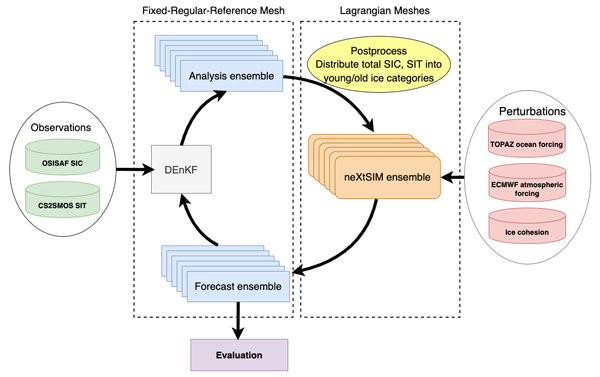
This work studies a novel application of combining a Lagrangian sea ice model, neXtSIM, and data assimilation. It uses a deterministic ensemble Kalman filter to incorporate satellite-observed ice concentration and thickness in simulations. The neXtSIM Lagrangian nature is handled using a remapping strategy on a common homogeneous mesh. The ensemble is formed by perturbing air–ocean boundary conditions and ice cohesion. Thanks to data assimilation, winter Arctic sea ice forecasting is enhanced.
Jiping Xie, Roshin P. Raj, Laurent Bertino, Justino Martínez, Carolina Gabarró, and Rafael Catany
Ocean Sci., 19, 269–287, https://doi.org/10.5194/os-19-269-2023, https://doi.org/10.5194/os-19-269-2023, 2023
Short summary
Short summary
Sea ice melt, together with other freshwater sources, has effects on the Arctic environment. Sea surface salinity (SSS) plays a key role in representing water mixing. Recently the satellite SSS from SMOS was developed in the Arctic region. In this study, we first evaluate the impact of assimilating these satellite data in an Arctic reanalysis system. It shows that SSS errors are reduced by 10–50 % depending on areas, encouraging its use in a long-time reanalysis to monitor the Arctic water cycle.
Vidar S. Lien, Angelika H. H. Renner, Mari S. Myksvoll, Johnny A. Johannessen, Jeremy Cook, Helene Spurkeland, and Ronald Toppe
State Planet Discuss., https://doi.org/10.5194/sp-2022-12, https://doi.org/10.5194/sp-2022-12, 2022
Preprint withdrawn
Short summary
Short summary
The One Ocean Expedition, a part of the United Nations Ocean Decade, is a sailing voyage where a traditional tall ship equipped with state-of-the-art ocean observation technology is circumnavigating the globe with a crew consisting of students, scientists, trainees and professionals. The focus for the expedition is awareness raising and education through showcasing ocean science using a traditional tall ship as a platform.
Vidar S. Lien and Roshin P. Raj
State Planet Discuss., https://doi.org/10.5194/sp-2022-13, https://doi.org/10.5194/sp-2022-13, 2022
Preprint withdrawn
Short summary
Short summary
Dense overflow water entering the North Atlantic from the Nordic Seas forms the northern limb of the Atlantic Meridional Overturning Circulation. The formation of dense water in the Nordic Seas is sensitive to the properties of the northward flowing Atlantic Water entering the Nordic Seas to the south. We find that the unprecedented freshwater anomaly in the North Atlantic recent years caused the dense water formed in the Barents Sea to have the lowest density in recorded history.
Fabio Mangini, Léon Chafik, Antonio Bonaduce, Laurent Bertino, and Jan Even Ø. Nilsen
Ocean Sci., 18, 331–359, https://doi.org/10.5194/os-18-331-2022, https://doi.org/10.5194/os-18-331-2022, 2022
Short summary
Short summary
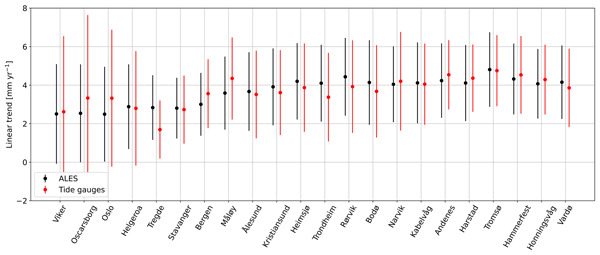
We validate the recent ALES-reprocessed coastal satellite altimetry dataset along the Norwegian coast between 2003 and 2018. We find that coastal altimetry and conventional altimetry products perform similarly along the Norwegian coast. However, the agreement with tide gauges slightly increases in terms of trends when we use the ALES coastal altimetry data. We then use the ALES dataset and hydrographic stations to explore the steric contribution to the Norwegian sea-level anomaly.
Martin Horwath, Benjamin D. Gutknecht, Anny Cazenave, Hindumathi Kulaiappan Palanisamy, Florence Marti, Ben Marzeion, Frank Paul, Raymond Le Bris, Anna E. Hogg, Inès Otosaka, Andrew Shepherd, Petra Döll, Denise Cáceres, Hannes Müller Schmied, Johnny A. Johannessen, Jan Even Øie Nilsen, Roshin P. Raj, René Forsberg, Louise Sandberg Sørensen, Valentina R. Barletta, Sebastian B. Simonsen, Per Knudsen, Ole Baltazar Andersen, Heidi Ranndal, Stine K. Rose, Christopher J. Merchant, Claire R. Macintosh, Karina von Schuckmann, Kristin Novotny, Andreas Groh, Marco Restano, and Jérôme Benveniste
Earth Syst. Sci. Data, 14, 411–447, https://doi.org/10.5194/essd-14-411-2022, https://doi.org/10.5194/essd-14-411-2022, 2022
Short summary
Short summary
Global mean sea-level change observed from 1993 to 2016 (mean rate of 3.05 mm yr−1) matches the combined effect of changes in water density (thermal expansion) and ocean mass. Ocean-mass change has been assessed through the contributions from glaciers, ice sheets, and land water storage or directly from satellite data since 2003. Our budget assessments of linear trends and monthly anomalies utilise new datasets and uncertainty characterisations developed within ESA's Climate Change Initiative.
Justino Martínez, Carolina Gabarró, Antonio Turiel, Verónica González-Gambau, Marta Umbert, Nina Hoareau, Cristina González-Haro, Estrella Olmedo, Manuel Arias, Rafael Catany, Laurent Bertino, Roshin P. Raj, Jiping Xie, Roberto Sabia, and Diego Fernández
Earth Syst. Sci. Data, 14, 307–323, https://doi.org/10.5194/essd-14-307-2022, https://doi.org/10.5194/essd-14-307-2022, 2022
Short summary
Short summary
Measuring salinity from space is challenging since the sensitivity of the brightness temperature to sea surface salinity is low, but the retrieval of SSS in cold waters is even more challenging. In 2019, the ESA launched a specific initiative called Arctic+Salinity to produce an enhanced Arctic SSS product with better quality and resolution than the available products. This paper presents the methodologies used to produce the new enhanced Arctic SMOS SSS product.
Cited articles
Aagaard, K.: On the deep circulation of the Arctic Ocean, Deep-Sea Res., 28, 251–268, https://doi.org/10.1016/0198-0149(81)90066-2, 1981.
Aagaard, K., Coachman, L. K., and Carmack, E.: On the halocline of the Arctic Ocean, Deep-Sea Res. Pt. A, 28, 529–545, https://doi.org/10.1016/0198-0149(81)90115-1, 1981.
Ali, A., Christensen, K. H., Breivik, Ø., Malila, M., Raj, R. P., Bertino, L., Chassignet, E. P., and Bakhoday-Paskyabi, M.: A comparison of Langmuir turbulence parameterizations and key wave effects in a numerical model of the North Atlantic and Arctic Oceans, Ocean Model., 137, 76–97, https://doi.org/10.1016/j.ocemod.2019.02.005, 2019.
Ali, A., Burud, A., Williams, T., Xie, J., Yumruktepe, C., Wakamatsu, T., Melsom, A., Bertino, L., and Gao, S.: EU Copernicus Marine Service Product User Manual for the Arctic Ocean Physics Reanalysis, ARCTIC_MULTIYEAR_PHY_002_003, issue 5.20, Mercator Ocean International, https://documentation.marine.copernicus.eu/PUM/CMEMS-ARC-PUM-002-ALL.pdf (last access: August 2025), 2025.
Årthun, M. and Eldevik, T.: On Anomalous ocean heat transport toward the Arctic and associated climate predictability, J. Clim., 29, 689–704, https://doi.org/10.1175/JCLI-D-15-0448.1, 2016.
Årthun, M., Eldevik, T., Smedsrud, L. H., Skagseth, Ø., and Ingvaldsen, R. B.: Quantifying the Influence of Atlantic Heat on Barents sea ice variability and retreat, J. Climate, 25, 4736–4743, https://doi.org/10.1175/JCLI-D-11-00466.1, 2012.
Barton, B. I., Lenn, Y., and Lique, C.: Observed Atlantification of the Barents Sea Causes the Polar Front to Limit the Expansion of Winter Sea Ice, J. Phys. Oceanogr., 48, 1849–1866, https://doi.org/10.1175/JPO-D-18-0003.1, 2018.
Bashmachnikov, I. L., Raj, R. P., Golubkin, P., and Kozlov, I. E.: Heat Transport by mesoscale eddies in the Norwegian and Greenland Seas, J. Geophys. Res.-Oceans, 128, e2022JC018987, https://doi.org/10.1029/2022JC018987, 2023.
Blindheim, J. and Loeng, H.: On the variability of Atlantic influence in the Norwegian and Barents Seas, Fiskeridirektoratets Skrevne Serie for Havundersøkelser, 17, 161–189, 1981.
Boutin, J., Vergely, J. L., Reul, N., Catany, R., Jouanno, J., Martin, A., Rouffi, F., Bertino, L., Bonjean, F., Corato, G., Gévaudan, M., Guimbard, S., Khvorostyanov, D., Kolodziejczyk, N., Matthews, M., Olivier, L., Raj, R., Rémy, E., Reverdin, G., Supply, A., Thouvenin-Masson, C., Vialard, J., Sabia, R., and Mecklenburg, S.: ESA Sea Surface Salinity Climate Change Initiative (Sea_Surface_Salinity_cci): Monthly sea surface salinity product for the Southern Hemisphere on a 25km EASE grid, v5.5, for 2010 to 2023, NERC EDS Centre for Environmental Data Analysis [data set], https://catalogue.ceda.ac.uk/uuid/0397ca6f625e47f489684bad2bd533bb (last access: August 2025), 2025.
Broomé, S. and Nilsson, J.: Shear dispersion and delayed propagation of temperature anomalies along the Norwegian Atlantic Slope Current, Tellus, 70, 1453215, https://doi.org/10.1080/16000870.2018.1453215, 2018.
Chafik, L., Nilsen, J. E. Ø., Dangendorf, S., Reverdin, G., and Frederikse, T.: North Atlantic Ocean Circulation and Decadal Sea Level Change During the Altimetry Era, Sci. Rep., 9, 1041, https://doi.org/10.1038/s41598-018-37603-6, 2019.
Challet, F., Raj, R. P., Chatterjee, S., Herbaut, C., and Bonaduce, A.: Weakening of the Arctic water outflow from the Barents Sea and consequences on the Fram Strait warming, J. Geophys. Res.-Oceans, 130, e2024JC021054, https://doi.org/10.1029/2024JC021054, 2025.
Chatterjee, S., Semmler, T., Screen, J. A., Furevik, T., Selivanova, J., Raj, R. P., Murukesh, N., and Ravichandran, M.: Atmosphere–Ocean–Sea Ice Feedbacks Sustain Recent Barents Sea Ice Loss despite Cooler Atlantic Water Inflow, J. Clim., 37, 6519–6532, https://doi.org/10.1175/JCLI-D-24-0020.1, 2024.
Coachman, L. K. and Barnes, C. A.: Surface waters in the Eurasian Basin of the Arctic Ocean, Arctic, 15, 251–277, https://doi.org/10.14430/arctic3581, 1963.
EU Copernicus Marine Service Product: Arctic Ocean Physics Reanalysis, Mercator Ocean International [data set], https://doi.org/10.48670/moi-00007, 2025.
Evensen, G.: The Ensemble Kalman Filter: theoretical formulation and practical implementation, Ocean Dynam., 53, 343–367, 2003.
Furevik, T.: Annual and interannual variability of Atlantic Water temperatures in the Norwegian and Barents Seas: 1980–1996, Deep-Sea Res. Pt.I, 48, 383–404, https://doi.org/10.1016/S0967-0637(00)00050-9, 2001.
González-Pola, C., Larsen, K. M. H., Fratantoni, P., and Beszczynska-Möller, A.: ICES Report on Ocean Climate 2019, ICES Cooperative Research Reports (CRR), https://doi.org/10.17895/ices.pub.7537, 2020.
González-Pola, C., Larsen, K. M. H., Fratantoni, P., and Beszczynska-Möller, A.: ICES Report on ocean climate, ICES Cooperative Research Reports (CRR), Vol. 358, https://doi.org/10.17895/ices.pub.24755574, 2023.
Hatun, H., Sandø, A. B., Drange, H., Hansen, B., and Valdimarsson, H.: Influence of the Atlantic subpolar gyre on the thermohaline circulation, Science, 309, 1841–1844, https://doi.org/10.1126/science.1114777, 2005.
Hersbach, H., Bell, B., Berrisford, P., Hirahara, S., Horányi, A., Muñoz-Sabater, J., Nicolas, J., Peubey, C., Radu, R., Schepers, D., Simmons, A., Soci, C., Abdalla, S., Abellan, X., Balsamo, G., Bechtold, P., Biavati, G., Bidlot, J., Bonavita, M., De Chiara, G., Dahlgren, P., Dee, D., Diamantakis, M., Dragani, R., Flemming, J., Forbes, R., Fuentes, M., Geer, A., Haimberger, L., Healy, S., Hogan, R. J., Hólm, E., Janisková, M., Keeley, S., Laloyaux, P., Lopez, P., Lupu, C., Radnoti, G., de Rosnay, P., Rozum, I., Vamborg, F., Villaume, S., and Thépaut, J.-N.: The ERA5 global reanalysis, Q. J. R. Meteorol. Soc., 146, 1999–2049, https://doi.org/10.1002/qj.3803, 2020.
Holliday, N. P., Bersch, M., Berx, B., Chafik, L., Cunningham, S., Florindo-López, C., Hátún, H., Johns, W., Josey, S. A., Larsen, K. M. H., Mulet, S., Oltmanns, M., Reverdin, G., Rossby, T., Thierry, V., Valdimarsson, H., and Yashayaev, I.: Ocean circulation causes the largest freshening event for 120 years in eastern subpolar North Atlantic, Nat. Commun., 11, 585, https://doi.org/10.1038/s41467-020-14474-y, 2020.
Jones, E. P., Rudels, B., and Anderson, L. G.: Deep waters of the Arctic Ocean: origins and circulation, Deep-Sea Res. Part I, 42, 737–760, https://doi.org/10.1016/0967-0637(95)00013-V, 1995.
Kenigson, J. S. and Timmermans, M.: Nordic Seas Hydrography in the Context of Arctic and North Atlantic Ocean Dynamics, J. Phys. Oceanogr., 51, 101–114, https://doi.org/10.1175/JPO-D-20-0071.1, 2021.
Lien, V. S. and Trofimov, A. G.: Formation of Barents Sea Branch Water in the north-eastern Barents Sea, Polar Res., 32, https://doi.org/10.3402/polar.v32i0.18905, 2013.
Lien, V. S., Raj, R. P., and Chatterjee, S.: Surface and bottom marine heatwave characteristics in the Barents Sea: a model study, in: 8th edition of the Copernicus Ocean State Report (OSR8), edited by: von Schuckmann, K., Moreira, L., Grégoire, M., Marcos, M., Staneva, J., Brasseur, P., Garric, G., Lionello, P., Karstensen, J., and Neukermans, G., Copernicus Publications, State Planet, 4-osr8, 8, https://doi.org/10.5194/sp-4-osr8-8-2024, 2024.
Lind, S. and Ingvaldsen, R. B.: Variability and Impacts of Atlantic Water Entering the Barents Sea from the North, Deep-Sea Res. Pt. I, 62, 70–88, https://doi.org/10.1016/j.dsr.2011.12.007, 2012.
Lind, S., Ingvaldsen, R. B., and Furevik, T.: Arctic warming hotspot in the northern Barents Sea linked to declining sea-ice import, Nat. Clim. Change, 8, 634–639, https://doi.org/10.1038/s41558-018-0205-y, 2018.
Lundesgaard, Ø., Sundfjord, A., Lind, S., Nilsen, F., and Renner, A. H. H.: Import of Atlantic Water and sea ice controls the ocean environment in the northern Barents Sea, Ocean Sci., 18, 1389–1418, https://doi.org/10.5194/os-18-1389-2022, 2022.
Martin, S. and Cavalieri, D. J.: Contributions of the Siberian shelf polynyas to the Arctic Ocean Intermediate and Deep Water, J. Geophys. Res.-Oceans, 94, 12725–12738, https://doi.org/10.1029/JC094iC09p12725, 1989.
Midttun, L.: Formation of dense bottom water in the Barents Sea, Deep-Sea Res Pt. A, 32, 1233–1241, https://doi.org/10.1016/0198-0149(85)90006-8, 1985.
Mork, K. A., Skagseth, Ø., and Søiland, H.: Recent warming and freshening of the Norwegian Sea observed by Argo data, J. Clim., 32, 3695–3705, https://doi.org/10.1175/JCLI-D-18-0591.1, 2019.
Nansen, F.: Northern Waters: Captain Roald Amundsen's Oceanographic Observations in the Arctic Seas in 1901, with a Discussion of the Origin of the Bottom Waters of the Northern Seas, Jacob Dybwad, Christiania, Norway, ISBN 9781107281035, https://doi.org/10.1017/CBO9781107281035, 1906.
Orvik, K. A., Skagseth, Ø., and Mork, M.: Atlantic in inflow to the Nordic Seas: current structure and volume fluxes from moored current meters, VM-ADCP and SeaSoar-CTD observations, 1995–1999, Deep-Sea Res. Pt. I, 48, 937–957, https://doi.org/10.1016/S0967-0637(00)00038-8, 2001.
Ozhigin, V. K. and Ivshin, V. A.: Water masses of the Barents Sea, PINRO Press, Murmansk, Russia, 48 pp., ISBN 5-86349-064-0, 1999 (in Russian).
Parkinson, C. L. and Comiso, J. C.: On the 2012 record low Arctic sea ice cover: Combined impact of preconditioning and an August storm, Geophys. Res. Lett., 40, 1356–1361, https://doi.org/10.1002/grl.50349, 2013.
Pfirman, S. L., Bauch, D., and Gammelsrød, T.: The Northern Barents Sea: Water Mass Distribution and Modification, in: The Role of the Polar Oceans in Shaping the Global Environment, edited by: Johannessen, O. M., Muench, R. D., and Overland, J. E., Geophys. Monogr. Ser., 85, 77–94, https://doi.org/10.1029/GM085p0077, 1994.
Raj, R. P. and Halo, I.: Monitoring the mesoscale eddies of the Lofoten Basin: Importance, progress, and challenges, Int. J. Remote Sens., 37, 3712–3728,https://doi.org/10.1080/01431161.2016.1201234, 2016.
Raj, R. P., Nilsen, J. E. Ø., Johannessen, J. A., Furevik, T., Andersen, O. B., and Bertino, L.: Quantifying Atlantic Water transport to the Nordic Seas by remote sensing, Remote Sens. Environ., 216, 758–769, https://doi.org/10.1016/j.rse.2018.04.055, 2018.
Raj, R. P., Chatterjee, S., Bertino, L., Turiel, A., and Portabella, M.: The Arctic Front and its variability in the Norwegian Sea, Ocean Sci., 15, 1729–1744, https://doi.org/10.5194/os-15-1729-2019, 2019.
Raj, R. P., Halo, I., Chatterjee, S., Belonenko, T., Bakhoday‐Paskyabi, M., Bashmachnikov, I., Fedorov, A., and Xie, J.: Interaction between mesoscale eddies and the gyre circulation in the Lofoten Basin, J. Geophys. Res.-Oceans, 125, e2020JC016102, https://doi.org/10.1029/2020JC016102, 2020.
Rudels, B., Jones, E. P., Anderson, L. G., and Kattner, G.: On the Intermediate depth waters of the Arctic Ocean, in: The Role of the Polar Oceans in Shaping the Global Environment, edited by: Johannessen, O. M., Muench, R. D., and Overland, J. E., Geophys. Monogr. Ser., 85, 33–46, https://doi.org/10.1029/GM085p0033, 1994.
Rudels, B., Muench, R. D., Gunn, J., Schauer, U., and Friedrich, H. J.: Evolution of the Arctic boundary current north of the Siberian shelves. J. Mar. Sys., 25, 77–99, https://doi.org/10.1016/S0924-7963(00)00009-9, 2000.
Rudels, B., Jones, E. P., Schauer, U., and Eriksson, P.: Atlantic sources of the Arctic Ocean surface and halocline waters, Polar Res., 23, 181–208, https://doi.org/10.1111/j.1751-8369.2004.tb00007.x, 2004.
Rudels, B., Korhonen, M., Schauer, U., Pisarev, S., Rabe, B., and Wisotzki, A.: Circulation and transformation of Atlantic water in the Eurasian Basin and the contribution of the Fram Strait inflow branch to the Arctic Ocean heat budget, Prog. Oceanogr., 132, 128–152, https://doi.org/10.1016/j.pocean.2014.04.003, 2015.
Sakov, P., Counillon, F., Bertino, L., Lisæter, K. A., Oke, P. R., and Korablev, A.: TOPAZ4: an ocean-sea ice data assimilation system for the North Atlantic and Arctic, Ocean Sci., 8, 633–656, https://doi.org/10.5194/os-8-633-2012, 2012.
Schauer, U., Loeng, H., Rudels, B., Ozhigin, V. K., and Dieck, W.: Atlantic water inflow through the Barents and Kara Seas, Deep-Sea Res. Pt. I, 49, 2281–2298, https://doi.org/10.1016/S0967-0637(02)00125-5, 2002.
Serreze, M. C., Holland, M. M., and Stroeve, J.: Perspectives on the Arctic's shrinking sea-ice cover, Science, 315, 1533–1536, https://doi.org/10.1126/science.1139426, 2007.
Skagseth, Ø., Eldevik, T., Årthun, M., Asbjørnsen, H., Lien, V. S., and Smedsrud, L. H.: Reduced efficiency of the Barents Sea cooling machine, Nat. Clim. Change, 10, 661–666, https://doi.org/10.1038/s41558-020-0772-6, 2020.
Smedsrud, L. H., Ingvaldsen, R., Nilsen, J. E. Ø., and Skagseth, Ø.: Heat in the Barents Sea: transport, storage, and surface fluxes, Ocean Sci., 6, 219–234, https://doi.org/10.5194/os-6-219-2010, 2010.
Smedsrud, L. H., Esau, I., Ingvaldsen, R. B., Eldevik, T., Haugan, P. M., Li, C., Lien, V. S., Olsen, A., Omar, A. M., Otterå, O. H., Risebrobakken, B., Sandø, A. B., Semenov, V. A., and Sorokina, S. A.: The role of the Barents Sea in the climate system, Rev. Geophys., 51, 415–449, https://doi.org/10.1002/rog.20017, 2013.
Steele, M., Morison, J. H., and Curtin, T. B.: Halocline water formation in the Barents Sea, J. Geophys. Res., 100, 881–894, https://doi.org/10.1029/94JC02310, 1995.
Sundby, S. and Drinkwater, K.: On the mechanisms behind salinity anomaly signals of the northern North Atlantic, Prog. Oceanogr., 73, 190–202, https://doi.org/10.1016/j.pocean.2007.02.002, 2007.
Sundfjord, A., Fer, I., Kasajima, Y., and Svendsen, H.: Observations of turbulent mixing and hydrography in the marginal ice zone of the Barents Sea, J. Geophys. Res., 112, C05008, https://doi.org/10.1029/2006JC003524, 2007.
Xie, J. and Bertino, L.: EU Copernicus Marine Service Quality Information Document for the Arctic Ocean Physics Reanalysis, ARCTIC_MULTIYEAR_PHY_002_003, issue 1.5, Mercator Ocean International, https://documentation.marine.copernicus.eu/QUID/CMEMS-ARC-QUID-002-003.pdf (last access: 5 August 2025), 2025.
Xie, J., Counillon, F., Bertino, L., Tian-Kunze, X., and Kaleschke, L.: Benefits of assimilating thin sea ice thickness from SMOS into the TOPAZ system, The Cryosphere, 10, 2745–2761, https://doi.org/10.5194/tc-10-2745-2016, 2016.
Xie, J., Raj, R. P., Bertino, L., Samuelsen, A., and Wakamatsu, T.: Evaluation of Arctic Ocean surface salinities from the Soil Moisture and Ocean Salinity (SMOS) mission against a regional reanalysis and in situ data, Ocean Sci., 15, 1191–1206, https://doi.org/10.5194/os-15-1191-2019, 2019.
Xie, J., Raj, R. P., Bertino, L., Martínez, J., Gabarró, C., and Catany, R.: Assimilation of sea surface salinities from SMOS in an Arctic coupled ocean and sea ice reanalysis, Ocean Sci., 19, 269–287, https://doi.org/10.5194/os-19-269-2023, 2023.
Zabudkina, Z., Osadchiev, A., Ivanov, V., Makhotin, M., and Merkulov, V.: Interannual variability of the Barents Sea branch water in the northeastern part of the Barents Sea and the St. Anna Trough, Front. Mar. Sci., 12, 1569186, https://doi.org/10.3389/fmars.2025.1569186, 2025.
Short summary
Dense water formed and exiting from the Barents Sea constitutes an important part of the global ocean circulation. Considering the significant impact of salinity changes in dense water formation, we investigate the salinity changes in the Barents Sea during the past 3 decades. Our results highlight the recent freshening and its drivers in the northern and southern Barents Sea and show its impact on the density of the waters exiting the Barents Sea.
Dense water formed and exiting from the Barents Sea constitutes an important part of the global...
Altmetrics
Final-revised paper
Preprint