Articles | Volume 7-osr10
https://doi.org/10.5194/sp-7-osr10-2-2026
© Author(s) 2026. This work is distributed under
the Creative Commons Attribution 4.0 License.
the Creative Commons Attribution 4.0 License.
https://doi.org/10.5194/sp-7-osr10-2-2026
© Author(s) 2026. This work is distributed under
the Creative Commons Attribution 4.0 License.
the Creative Commons Attribution 4.0 License.

30 Sep 2026
| OSR10 | Chapter 1.1
| 30 Sep 2026 | OSR10 | Chapter 1.1
Ocean changes and the impacts in the Polar Regions
Karina von Schuckmann
CORRESPONDING AUTHOR

Mercator Ocean international, Toulouse, France
Flora Gues
CELAD, Toulouse, France
Mercator Ocean international, Toulouse, France
Mahé Butel
Mercator Ocean international, Toulouse, France
Gilles Garric
Mercator Ocean international, Toulouse, France
Alvaro de Pascual
Nologin Oceanic Weather Systems, Madrid, Spain
Axel Alonso Valle
Nologin Oceanic Weather Systems, Madrid, Spain
Aurélien Liné
Mercator Ocean international, Toulouse, France
Lorena Moreira Mendez
Nologin Oceanic Weather Systems, Madrid, Spain
Related authors
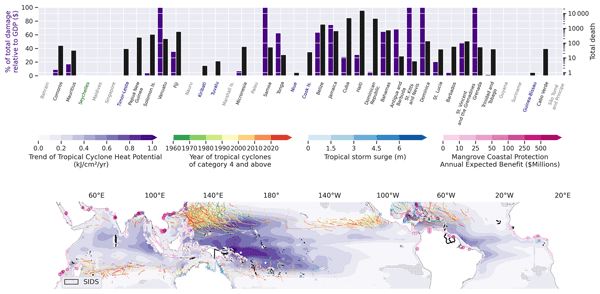
Flora Gues, Karina von Schuckmann, Mahé Butel, Samantha Hallam, Alvaro de Pascual, Axel Alonso Valle, Aurélien Liné, and Lorena Moreira Mendez
State Planet, 7-osr10, 3, https://doi.org/10.5194/sp-7-osr10-3-2026, https://doi.org/10.5194/sp-7-osr10-3-2026, 2026
Short summary
Short summary
Small Island Developing States (SIDS) depend on the ocean for their societies, economies and livelihoods, addressed here with an ocean narrative using a suite of integrated ocean indicators. Their Exclusive Economic Zones govern 8 % of the global ocean and hold global biodiversity hotspots. SIDS are also among the regions most exposed to ocean and climate change, facing sea-level rise, ocean warming, tropical cyclone risks, and growing impacts on marine ecosystems and SIDS communities.
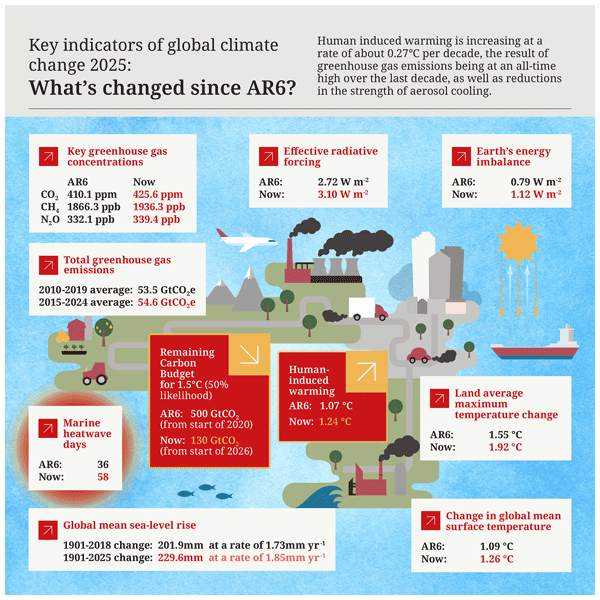
Piers M. Forster, Tristram Walsh, Chris Smith, William F. Lamb, Robin Lamboll, Christophe Cassou, Mathias Hauser, Zeke Hausfather, June-Yi Lee, Matthew D. Palmer, Karina von Schuckmann, Aimée B. A. Slangen, Sophie Szopa, Blair Trewin, Jeongeun Yun, Nathan P. Gillett, Stuart Jenkins, H. Damon Matthews, Krishnan Raghavan, Aurélien Ribes, Joeri Rogelj, Debbie Rosen, Xuebin Zhang, Myles Allen, Robbie M. Andrew, Chris Atkinson, Richard A. Betts, Antonio Bombelli, Samantha N. Burgess, Lijing Cheng, Helen E. Claxton, Pierre Friedlingstein, Thomas L. Frölicher, Catia M. Domingues, Thomas Gasser, Catherine H. Gregory, Rachel M. Hoesly, Daniel Huppmann, Masayoshi Ishii, Christopher Kadow, Alexia Karwat, John Kennedy, Rachel E. Killick, Mahesh V. M. Kovilakam, Paul B. Krummel, Xin Lan, Jean-François Lamarque, Aurélien Liné, Belén Martín-Míguez, Didier P. Monselesan, Colin Morice, Jens Mühle, Pino Mussak, Glen P. Peters, Anna Pirani, Julia Pongratz, Matthew Rigby, Robert Rohde, Abhishek Savita, Sonia I. Seneviratne, Steven J. Smith, Ghassan Taha, Caterina Tassone, Peter Thorne, Christopher Wells, Luke M. Western, Guido R. van der Werf, Susan E. Wijffels, Marco Zecchetto, Junting Zhong, Xiao-Ye Zhang, Valérie Masson-Delmotte, and Panmao Zhai
Earth Syst. Sci. Data, 18, 3889–3933, https://doi.org/10.5194/essd-18-3889-2026, https://doi.org/10.5194/essd-18-3889-2026, 2026
Short summary
Short summary
We give our annual update of key climate indicators. Our work quantifies the human contribution to global warming and the pace of climate change. This represents a large effort by the international community akin to an Intergovernmental Panel on Climate Change (IPCC) report.
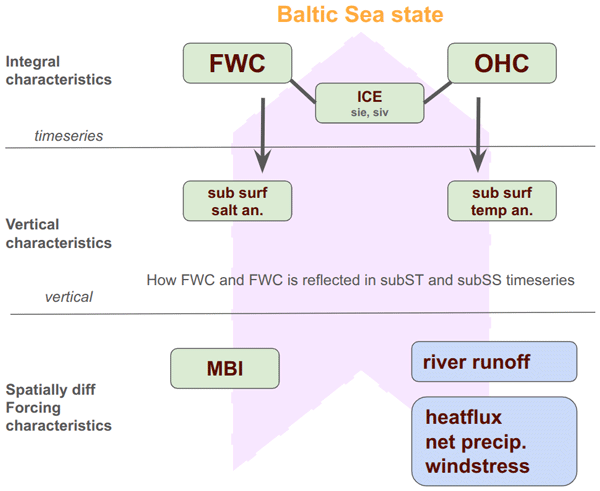
Urmas Raudsepp, Ilja Maljutenko, Priidik Lagemaa, and Karina von Schuckmann
State Planet, 6-osr9, 6, https://doi.org/10.5194/sp-6-osr9-6-2025, https://doi.org/10.5194/sp-6-osr9-6-2025, 2025
Short summary
Short summary
Over the past 3 decades, the Baltic Sea has warmed and become saltier, reflecting broader atmospheric trends. Heat content changes are mainly driven by subsurface temperature variations in the upper 100 m, influenced by air temperature, evaporation, and wind stress. Freshwater content changes are largely controlled by salinity shifts in the halocline (40–120 m), with key drivers being saline inflows, precipitation, and zonal wind stress.
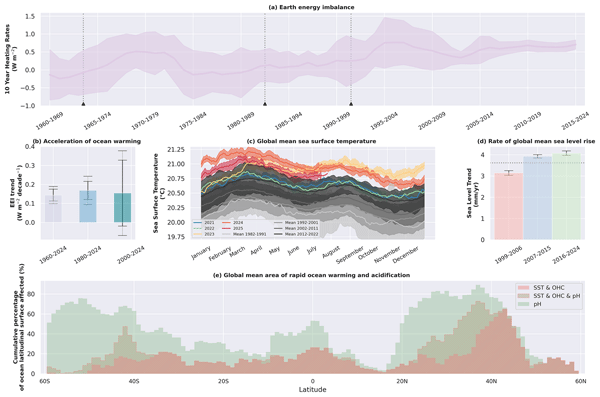
Karina von Schuckmann, Flora Gues, Lorena Moreira, Aurélien Liné, and Álvaro de Pascual Collar
State Planet, 6-osr9, 2, https://doi.org/10.5194/sp-6-osr9-2-2025, https://doi.org/10.5194/sp-6-osr9-2-2025, 2025
Short summary
Short summary
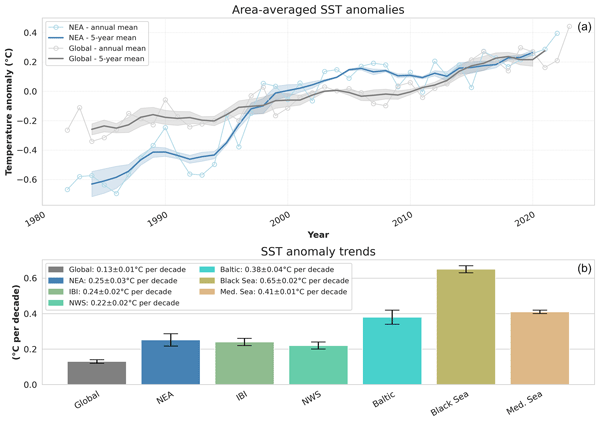
In 2024, global ocean heat content, sea surface temperatures, and sea level rise reached record levels. The triple planetary crisis affects all oceans, where pollution, biodiversity loss, and climate change pressure marine systems, threatening key species, ecosystems, and the ocean’s role in climate stability. This ocean narrative calls for reinforced ocean observing systems, improved uncertainties, and robust science-based information for ocean protection policies and actions.
Karina von Schuckmann, Flora Gues, Lorena Moreira, Aurélien Liné, and Álvaro de Pascual Collar
State Planet, 6-osr9, 3, https://doi.org/10.5194/sp-6-osr9-3-2025, https://doi.org/10.5194/sp-6-osr9-3-2025, 2025
Short summary
Short summary
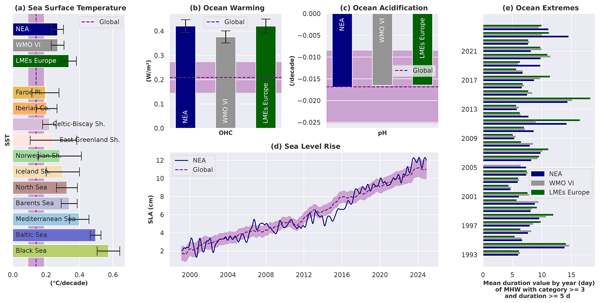
The northeastern Atlantic and adjacent seas are warming and acidifying at rates exceeding the global average, with rising sea levels and record severe marine heatwaves. These changes threaten marine ecosystems, biodiversity, cultural heritage, and key economic sectors that depend on a healthy ocean. This ocean narrative emphasizes the importance of regional ocean indicators, tailored local action, and stronger knowledge transfer between science and policy to support informed decisions.
Marina Lévy, Karina von Schuckmann, Patrick Vincent, Bruno Blanke, Joachim Claudet, Patrice Guillotreau, Audrey Hasson, Claire Jolly, Yunne Shin, Olivier Thébaud, Adrien Vincent, and Pierre Bahurel
State Planet, 6-osr9, 1, https://doi.org/10.5194/sp-6-osr9-1-2025, https://doi.org/10.5194/sp-6-osr9-1-2025, 2025
Short summary
Short summary
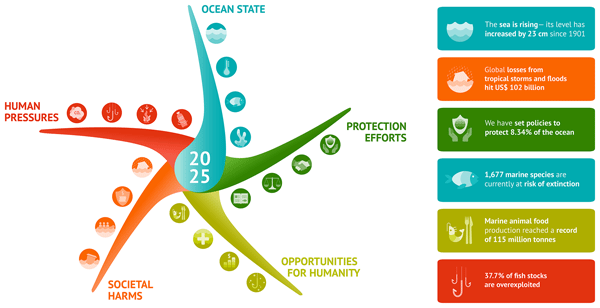
The Ocean is vital to humanity, but humans are putting it at risk. The Starfish Barometer is a new yearly civic rendezvous that shows how people and the Ocean affect each other. Using science-based facts, it highlights major trends in ocean health, the pressures it faces, the harm to people, and current protection efforts and opportunities. The goal is to raise awareness to secure a better future for the Ocean and humanity.
Karina von Schuckmann, Lorena Moreira, Mathilde Cancet, Flora Gues, Emmanuelle Autret, Jonathan Baker, Clément Bricaud, Romain Bourdalle-Badie, Lluis Castrillo, Lijing Cheng, Frederic Chevallier, Daniele Ciani, Alvaro de Pascual-Collar, Vincenzo De Toma, Marie Drevillon, Claudia Fanelli, Gilles Garric, Marion Gehlen, Rianne Giesen, Kevin Hodges, Doroteaciro Iovino, Simon Jandt-Scheelke, Eric Jansen, Melanie Juza, Ioanna Karagali, Thomas Lavergne, Simona Masina, Ronan McAdam, Audrey Minière, Helen Morrison, Tabea Rebekka Panteleit, Andrea Pisano, Marie-Isabelle Pujol, Ad Stoffelen, Sulian Thual, Simon Van Gennip, Pierre Veillard, Chunxue Yang, and Hao Zuo
State Planet, 4-osr8, 1, https://doi.org/10.5194/sp-4-osr8-1-2024, https://doi.org/10.5194/sp-4-osr8-1-2024, 2024
Karina von Schuckmann, Lorena Moreira, Mathilde Cancet, Flora Gues, Emmanuelle Autret, Ali Aydogdu, Lluis Castrillo, Daniele Ciani, Andrea Cipollone, Emanuela Clementi, Gianpiero Cossarini, Alvaro de Pascual-Collar, Vincenzo De Toma, Marion Gehlen, Rianne Giesen, Marie Drevillon, Claudia Fanelli, Kevin Hodges, Simon Jandt-Scheelke, Eric Jansen, Melanie Juza, Ioanna Karagali, Priidik Lagemaa, Vidar Lien, Leonardo Lima, Vladyslav Lyubartsev, Ilja Maljutenko, Simona Masina, Ronan McAdam, Pietro Miraglio, Helen Morrison, Tabea Rebekka Panteleit, Andrea Pisano, Marie-Isabelle Pujol, Urmas Raudsepp, Roshin Raj, Ad Stoffelen, Simon Van Gennip, Pierre Veillard, and Chunxue Yang
State Planet, 4-osr8, 2, https://doi.org/10.5194/sp-4-osr8-2-2024, https://doi.org/10.5194/sp-4-osr8-2-2024, 2024
Piers M. Forster, Chris Smith, Tristram Walsh, William F. Lamb, Robin Lamboll, Bradley Hall, Mathias Hauser, Aurélien Ribes, Debbie Rosen, Nathan P. Gillett, Matthew D. Palmer, Joeri Rogelj, Karina von Schuckmann, Blair Trewin, Myles Allen, Robbie Andrew, Richard A. Betts, Alex Borger, Tim Boyer, Jiddu A. Broersma, Carlo Buontempo, Samantha Burgess, Chiara Cagnazzo, Lijing Cheng, Pierre Friedlingstein, Andrew Gettelman, Johannes Gütschow, Masayoshi Ishii, Stuart Jenkins, Xin Lan, Colin Morice, Jens Mühle, Christopher Kadow, John Kennedy, Rachel E. Killick, Paul B. Krummel, Jan C. Minx, Gunnar Myhre, Vaishali Naik, Glen P. Peters, Anna Pirani, Julia Pongratz, Carl-Friedrich Schleussner, Sonia I. Seneviratne, Sophie Szopa, Peter Thorne, Mahesh V. M. Kovilakam, Elisa Majamäki, Jukka-Pekka Jalkanen, Margreet van Marle, Rachel M. Hoesly, Robert Rohde, Dominik Schumacher, Guido van der Werf, Russell Vose, Kirsten Zickfeld, Xuebin Zhang, Valérie Masson-Delmotte, and Panmao Zhai
Earth Syst. Sci. Data, 16, 2625–2658, https://doi.org/10.5194/essd-16-2625-2024, https://doi.org/10.5194/essd-16-2625-2024, 2024
Short summary
Short summary
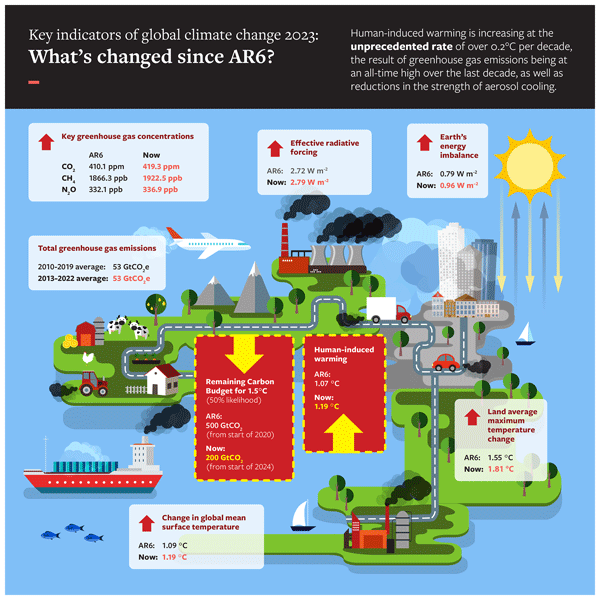
This paper tracks some key indicators of global warming through time, from 1850 through to the end of 2023. It is designed to give an authoritative estimate of global warming to date and its causes. We find that in 2023, global warming reached 1.3 °C and is increasing at over 0.2 °C per decade. This is caused by all-time-high greenhouse gas emissions.
Karina von Schuckmann, Lorena Moreira, and Pierre-Yves Le Traon
State Planet, 1-osr7, 1, https://doi.org/10.5194/sp-1-osr7-1-2023, https://doi.org/10.5194/sp-1-osr7-1-2023, 2023
Stefania A. Ciliberti, Enrique Alvarez Fanjul, Jay Pearlman, Kirsten Wilmer-Becker, Pierre Bahurel, Fabrice Ardhuin, Alain Arnaud, Mike Bell, Segolene Berthou, Laurent Bertino, Arthur Capet, Eric Chassignet, Stefano Ciavatta, Mauro Cirano, Emanuela Clementi, Gianpiero Cossarini, Gianpaolo Coro, Stuart Corney, Fraser Davidson, Marie Drevillon, Yann Drillet, Renaud Dussurget, Ghada El Serafy, Katja Fennel, Marcos Garcia Sotillo, Patrick Heimbach, Fabrice Hernandez, Patrick Hogan, Ibrahim Hoteit, Sudheer Joseph, Simon Josey, Pierre-Yves Le Traon, Simone Libralato, Marco Mancini, Pascal Matte, Angelique Melet, Yasumasa Miyazawa, Andrew M. Moore, Antonio Novellino, Andrew Porter, Heather Regan, Laia Romero, Andreas Schiller, John Siddorn, Joanna Staneva, Cecile Thomas-Courcoux, Marina Tonani, Jose Maria Garcia-Valdecasas, Jennifer Veitch, Karina von Schuckmann, Liying Wan, John Wilkin, and Romane Zufic
State Planet, 1-osr7, 2, https://doi.org/10.5194/sp-1-osr7-2-2023, https://doi.org/10.5194/sp-1-osr7-2-2023, 2023
Piers M. Forster, Christopher J. Smith, Tristram Walsh, William F. Lamb, Robin Lamboll, Mathias Hauser, Aurélien Ribes, Debbie Rosen, Nathan Gillett, Matthew D. Palmer, Joeri Rogelj, Karina von Schuckmann, Sonia I. Seneviratne, Blair Trewin, Xuebin Zhang, Myles Allen, Robbie Andrew, Arlene Birt, Alex Borger, Tim Boyer, Jiddu A. Broersma, Lijing Cheng, Frank Dentener, Pierre Friedlingstein, José M. Gutiérrez, Johannes Gütschow, Bradley Hall, Masayoshi Ishii, Stuart Jenkins, Xin Lan, June-Yi Lee, Colin Morice, Christopher Kadow, John Kennedy, Rachel Killick, Jan C. Minx, Vaishali Naik, Glen P. Peters, Anna Pirani, Julia Pongratz, Carl-Friedrich Schleussner, Sophie Szopa, Peter Thorne, Robert Rohde, Maisa Rojas Corradi, Dominik Schumacher, Russell Vose, Kirsten Zickfeld, Valérie Masson-Delmotte, and Panmao Zhai
Earth Syst. Sci. Data, 15, 2295–2327, https://doi.org/10.5194/essd-15-2295-2023, https://doi.org/10.5194/essd-15-2295-2023, 2023
Short summary
Short summary
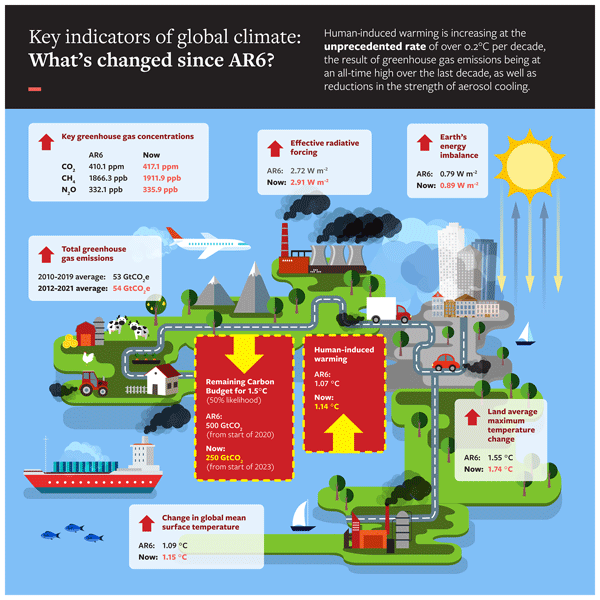
This is a critical decade for climate action, but there is no annual tracking of the level of human-induced warming. We build on the Intergovernmental Panel on Climate Change assessment reports that are authoritative but published infrequently to create a set of key global climate indicators that can be tracked through time. Our hope is that this becomes an important annual publication that policymakers, media, scientists and the public can refer to.
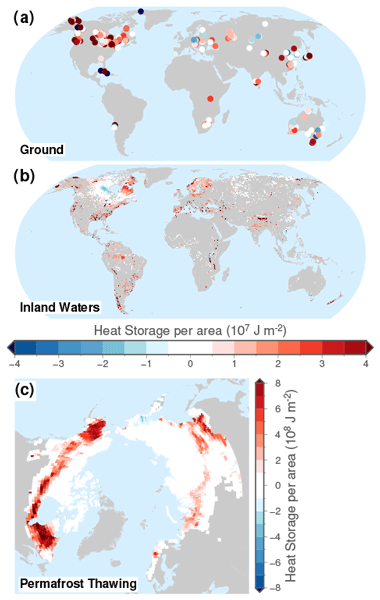
Francisco José Cuesta-Valero, Hugo Beltrami, Almudena García-García, Gerhard Krinner, Moritz Langer, Andrew H. MacDougall, Jan Nitzbon, Jian Peng, Karina von Schuckmann, Sonia I. Seneviratne, Wim Thiery, Inne Vanderkelen, and Tonghua Wu
Earth Syst. Dynam., 14, 609–627, https://doi.org/10.5194/esd-14-609-2023, https://doi.org/10.5194/esd-14-609-2023, 2023
Short summary
Short summary
Climate change is caused by the accumulated heat in the Earth system, with the land storing the second largest amount of this extra heat. Here, new estimates of continental heat storage are obtained, including changes in inland-water heat storage and permafrost heat storage in addition to changes in ground heat storage. We also argue that heat gains in all three components should be monitored independently of their magnitude due to heat-dependent processes affecting society and ecosystems.
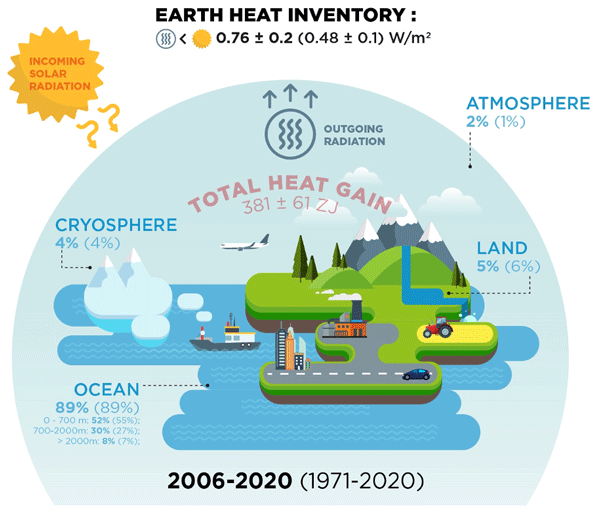
Karina von Schuckmann, Audrey Minière, Flora Gues, Francisco José Cuesta-Valero, Gottfried Kirchengast, Susheel Adusumilli, Fiammetta Straneo, Michaël Ablain, Richard P. Allan, Paul M. Barker, Hugo Beltrami, Alejandro Blazquez, Tim Boyer, Lijing Cheng, John Church, Damien Desbruyeres, Han Dolman, Catia M. Domingues, Almudena García-García, Donata Giglio, John E. Gilson, Maximilian Gorfer, Leopold Haimberger, Maria Z. Hakuba, Stefan Hendricks, Shigeki Hosoda, Gregory C. Johnson, Rachel Killick, Brian King, Nicolas Kolodziejczyk, Anton Korosov, Gerhard Krinner, Mikael Kuusela, Felix W. Landerer, Moritz Langer, Thomas Lavergne, Isobel Lawrence, Yuehua Li, John Lyman, Florence Marti, Ben Marzeion, Michael Mayer, Andrew H. MacDougall, Trevor McDougall, Didier Paolo Monselesan, Jan Nitzbon, Inès Otosaka, Jian Peng, Sarah Purkey, Dean Roemmich, Kanako Sato, Katsunari Sato, Abhishek Savita, Axel Schweiger, Andrew Shepherd, Sonia I. Seneviratne, Leon Simons, Donald A. Slater, Thomas Slater, Andrea K. Steiner, Toshio Suga, Tanguy Szekely, Wim Thiery, Mary-Louise Timmermans, Inne Vanderkelen, Susan E. Wjiffels, Tonghua Wu, and Michael Zemp
Earth Syst. Sci. Data, 15, 1675–1709, https://doi.org/10.5194/essd-15-1675-2023, https://doi.org/10.5194/essd-15-1675-2023, 2023
Short summary
Short summary
Earth's climate is out of energy balance, and this study quantifies how much heat has consequently accumulated over the past decades (ocean: 89 %, land: 6 %, cryosphere: 4 %, atmosphere: 1 %). Since 1971, this accumulated heat reached record values at an increasing pace. The Earth heat inventory provides a comprehensive view on the status and expectation of global warming, and we call for an implementation of this global climate indicator into the Paris Agreement’s Global Stocktake.
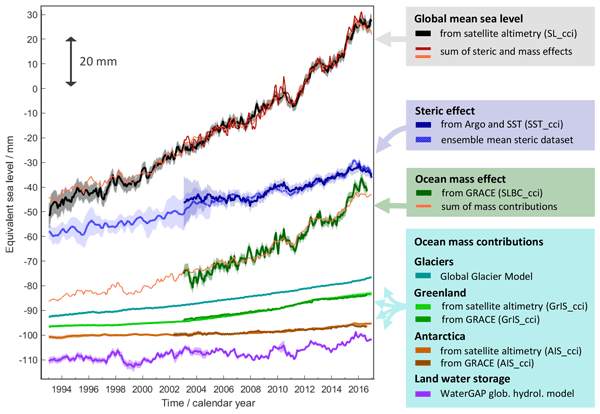
Martin Horwath, Benjamin D. Gutknecht, Anny Cazenave, Hindumathi Kulaiappan Palanisamy, Florence Marti, Ben Marzeion, Frank Paul, Raymond Le Bris, Anna E. Hogg, Inès Otosaka, Andrew Shepherd, Petra Döll, Denise Cáceres, Hannes Müller Schmied, Johnny A. Johannessen, Jan Even Øie Nilsen, Roshin P. Raj, René Forsberg, Louise Sandberg Sørensen, Valentina R. Barletta, Sebastian B. Simonsen, Per Knudsen, Ole Baltazar Andersen, Heidi Ranndal, Stine K. Rose, Christopher J. Merchant, Claire R. Macintosh, Karina von Schuckmann, Kristin Novotny, Andreas Groh, Marco Restano, and Jérôme Benveniste
Earth Syst. Sci. Data, 14, 411–447, https://doi.org/10.5194/essd-14-411-2022, https://doi.org/10.5194/essd-14-411-2022, 2022
Short summary
Short summary
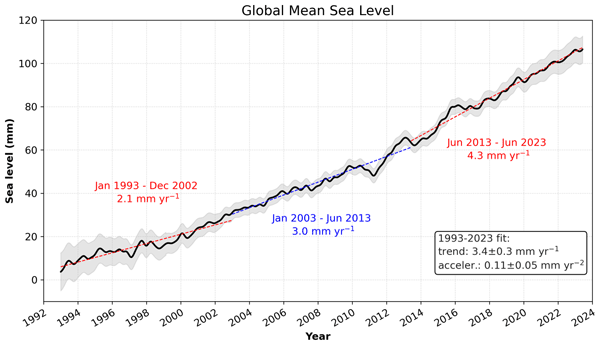
Global mean sea-level change observed from 1993 to 2016 (mean rate of 3.05 mm yr−1) matches the combined effect of changes in water density (thermal expansion) and ocean mass. Ocean-mass change has been assessed through the contributions from glaciers, ice sheets, and land water storage or directly from satellite data since 2003. Our budget assessments of linear trends and monthly anomalies utilise new datasets and uncertainty characterisations developed within ESA's Climate Change Initiative.
Flora Gues, Karina von Schuckmann, Mahé Butel, Samantha Hallam, Alvaro de Pascual, Axel Alonso Valle, Aurélien Liné, and Lorena Moreira Mendez
State Planet, 7-osr10, 3, https://doi.org/10.5194/sp-7-osr10-3-2026, https://doi.org/10.5194/sp-7-osr10-3-2026, 2026
Short summary
Short summary
Small Island Developing States (SIDS) depend on the ocean for their societies, economies and livelihoods, addressed here with an ocean narrative using a suite of integrated ocean indicators. Their Exclusive Economic Zones govern 8 % of the global ocean and hold global biodiversity hotspots. SIDS are also among the regions most exposed to ocean and climate change, facing sea-level rise, ocean warming, tropical cyclone risks, and growing impacts on marine ecosystems and SIDS communities.
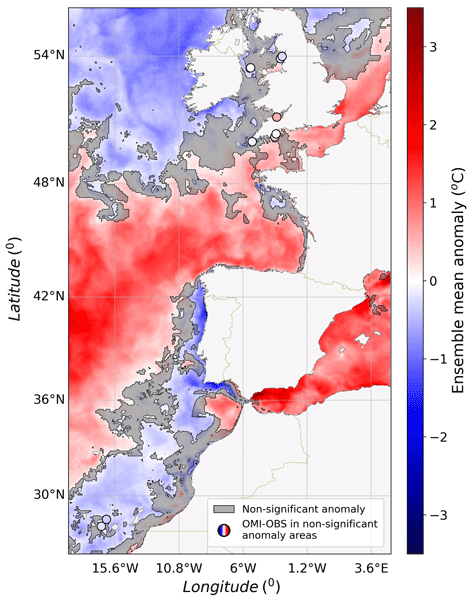
Álvaro de Pascual Collar, Axel Alonso Valle, Alex Gallardo, Marta de Alfonso Alonso-Muñoyerro, Begoña Pérez Gómez, Stefania Ciliberti, and Marcos G. Sotillo
State Planet, 7-osr10, 7, https://doi.org/10.5194/sp-7-osr10-7-2026, https://doi.org/10.5194/sp-7-osr10-7-2026, 2026
Short summary
Short summary
This study improves the monitoring of extreme sea surface temperature events in the Iberia–Biscay–Ireland region. We tested new data sources and combined information from different models and satellites to provide more consistent results and characterize inter-product spread. The findings show that these methods make the indicator more reliable and useful for supporting climate and ocean management decisions.
Youyu Lu, Li Zhai, Xianmin Hu, Chantelle Layton, David Brickman, Blair Greenan, and Gilles Garric
State Planet Discuss., https://doi.org/10.5194/sp-2026-26, https://doi.org/10.5194/sp-2026-26, 2026
Preprint under review for SP
Short summary
Short summary
Ocean temperature is a key factor influencing marine ecosystem. On Scotian Shelf, the observed ocean bottom temperatures show strong year-to-year variations of 2–5 degrees in Celsius, and a decade-long warm phase ended since summer of 2023. Analysis of a numerical modelling product revealed causes of warm and cool events including winter heat loss at sea surface and lateral water transport by ocean flows. The influence of complicated ocean dynamics calls for innovative methods for prediction.
Weidong Ma, Jianing Wang, Fan Wang, Gilles Garric, and Youyu Lu
State Planet Discuss., https://doi.org/10.5194/sp-2026-6, https://doi.org/10.5194/sp-2026-6, 2026
Preprint under review for SP
Short summary
Short summary
We combined long-term ocean observations with high-resolution ocean simulations to examine how deep water entering the western Pacific has changed over the past three decades. We found that this flow has steadily weakened, reducing the renewal of cold, oxygen-rich water in the deepest ocean. These results provide new evidence that climate-driven changes near Antarctica are already affecting the deep Pacific and may influence how the ocean stores heat and carbon in the future.
Piers M. Forster, Tristram Walsh, Chris Smith, William F. Lamb, Robin Lamboll, Christophe Cassou, Mathias Hauser, Zeke Hausfather, June-Yi Lee, Matthew D. Palmer, Karina von Schuckmann, Aimée B. A. Slangen, Sophie Szopa, Blair Trewin, Jeongeun Yun, Nathan P. Gillett, Stuart Jenkins, H. Damon Matthews, Krishnan Raghavan, Aurélien Ribes, Joeri Rogelj, Debbie Rosen, Xuebin Zhang, Myles Allen, Robbie M. Andrew, Chris Atkinson, Richard A. Betts, Antonio Bombelli, Samantha N. Burgess, Lijing Cheng, Helen E. Claxton, Pierre Friedlingstein, Thomas L. Frölicher, Catia M. Domingues, Thomas Gasser, Catherine H. Gregory, Rachel M. Hoesly, Daniel Huppmann, Masayoshi Ishii, Christopher Kadow, Alexia Karwat, John Kennedy, Rachel E. Killick, Mahesh V. M. Kovilakam, Paul B. Krummel, Xin Lan, Jean-François Lamarque, Aurélien Liné, Belén Martín-Míguez, Didier P. Monselesan, Colin Morice, Jens Mühle, Pino Mussak, Glen P. Peters, Anna Pirani, Julia Pongratz, Matthew Rigby, Robert Rohde, Abhishek Savita, Sonia I. Seneviratne, Steven J. Smith, Ghassan Taha, Caterina Tassone, Peter Thorne, Christopher Wells, Luke M. Western, Guido R. van der Werf, Susan E. Wijffels, Marco Zecchetto, Junting Zhong, Xiao-Ye Zhang, Valérie Masson-Delmotte, and Panmao Zhai
Earth Syst. Sci. Data, 18, 3889–3933, https://doi.org/10.5194/essd-18-3889-2026, https://doi.org/10.5194/essd-18-3889-2026, 2026
Short summary
Short summary
We give our annual update of key climate indicators. Our work quantifies the human contribution to global warming and the pace of climate change. This represents a large effort by the international community akin to an Intergovernmental Panel on Climate Change (IPCC) report.
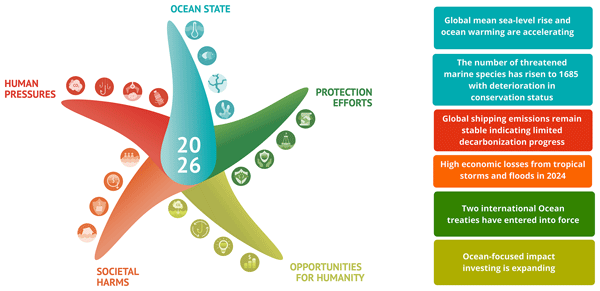
Marina Lévy, Karina von Schuckmann, Mahé Butel, William W. L. Cheung, Joachim Claudet, Thomas L. Frölicher, Patrice Guillotreau, Peter Haugan, Janine Adams, Diva Amon, Tamatoa Bambridge, Cynthia Barzuna, Bruno Blanke, Lijing Cheng, Sanae Chiba, Jorge Cortés, Pierre Friedlingstein, Jean-Pierre Gattuso, Stefan Gelcich, Jessica Gephart, Deborah Greaves, Audrey Hasson, Claire Jolly, Daoji Li, Yunne-Jai Shin, Aimée Slangen, Mere Takoko, Olivier Thébaud, Adrien Vincent, and Patrick Vincent
State Planet, 7-osr10, 1, https://doi.org/10.5194/sp-7-osr10-1-2026, https://doi.org/10.5194/sp-7-osr10-1-2026, 2026
Short summary
Short summary
The Starfish Barometer provides an annual, science-based synthesis of global Ocean-related developments, structured around five interconnected dimensions: the Ocean state, human pressures, societal harms, protection efforts, and opportunities for humanity. It is released each year on World Ocean Day. This article presents the second edition of the Barometer, which shows a growing gap between increasing human pressures on the Ocean and the efforts being made to protect it and drive change.
Louis Kern, Thomas Vaujour, Julia Pfeffer, Andrea Storto, Camille Szczypta, Gilles Garric, Claire Sirere, Gilles Larnicol, Chunxue Yang, Romain Bourdalle-Badie, and Stéphanie Guinehut
EGUsphere, https://doi.org/10.5194/egusphere-2025-6351, https://doi.org/10.5194/egusphere-2025-6351, 2026
Short summary
Short summary
Freshwater fluxes, despite their importance, are often poorly represented in ocean models. The impact of river discharge is evaluated from the Water Mass Balance approach, combining gravimetry and atmospheric reanalyses data. These estimates are assessed against river gauges, highlighting good agreement over South American rivers. Compared to climatological data, when used as inputs for ocean model simulations, this technique improves salinity and upper ocean circulation representation.
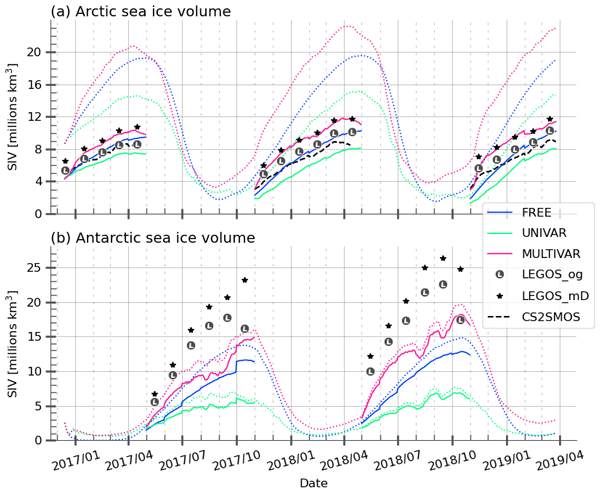
Aliette Chenal, Gilles Garric, Charles-Emmanuel Testut, Mathieu Hamon, Giovanni Ruggiero, Florent Garnier, and Pierre-Yves Le Traon
The Cryosphere, 20, 369–395, https://doi.org/10.5194/tc-20-369-2026, https://doi.org/10.5194/tc-20-369-2026, 2026
Short summary
Short summary
This study proposes to improve the representation of ice and snow volumes in the Arctic and Antarctic based on a novel multivariate assimilation method using freeboard radar and snow depth satellite data. The approach leads to an improved sea ice and snow volume representation, even during summer when satellite data is limited. The performance of the assimilated system is better in the Arctic than in Antarctica, where ocean/ice interactions play a key role.
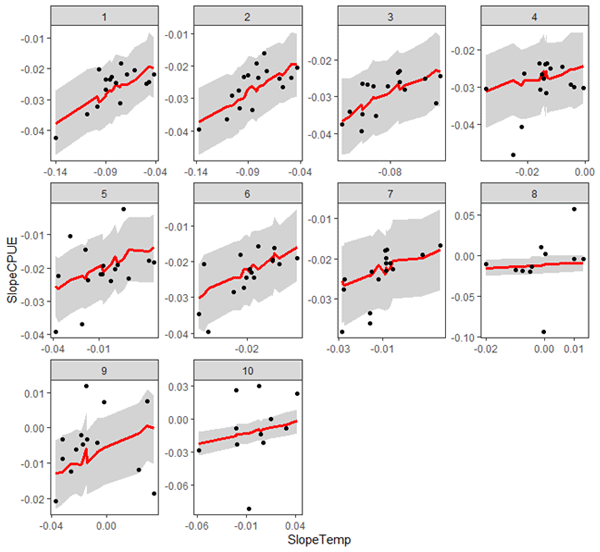
Adam M. Cook, Youyu Lu, Xianmin Hu, David Brickman, David Hebert, Chantelle Layton, and Gilles Garric
State Planet, 6-osr9, 8, https://doi.org/10.5194/sp-6-osr9-8-2025, https://doi.org/10.5194/sp-6-osr9-8-2025, 2025
Short summary
Short summary
Ocean bottom temperatures from a global ocean reanalysis product are found to be consistent with in situ observations on the Scotian Shelf. Statistical analysis reveals a positive relationship between changes in lobster catch rate and ocean bottom temperature off the southwest coast of Nova Scotia during 2008–2023. A standardized lobster catch rate index with the influence of bottom temperature included is more consistent with available stock biomass compared to the index without such an influence.
Karina von Schuckmann, Flora Gues, Lorena Moreira, Aurélien Liné, and Álvaro de Pascual Collar
State Planet, 6-osr9, 3, https://doi.org/10.5194/sp-6-osr9-3-2025, https://doi.org/10.5194/sp-6-osr9-3-2025, 2025
Short summary
Short summary
The northeastern Atlantic and adjacent seas are warming and acidifying at rates exceeding the global average, with rising sea levels and record severe marine heatwaves. These changes threaten marine ecosystems, biodiversity, cultural heritage, and key economic sectors that depend on a healthy ocean. This ocean narrative emphasizes the importance of regional ocean indicators, tailored local action, and stronger knowledge transfer between science and policy to support informed decisions.
Karina von Schuckmann, Flora Gues, Lorena Moreira, Aurélien Liné, and Álvaro de Pascual Collar
State Planet, 6-osr9, 2, https://doi.org/10.5194/sp-6-osr9-2-2025, https://doi.org/10.5194/sp-6-osr9-2-2025, 2025
Short summary
Short summary
In 2024, global ocean heat content, sea surface temperatures, and sea level rise reached record levels. The triple planetary crisis affects all oceans, where pollution, biodiversity loss, and climate change pressure marine systems, threatening key species, ecosystems, and the ocean’s role in climate stability. This ocean narrative calls for reinforced ocean observing systems, improved uncertainties, and robust science-based information for ocean protection policies and actions.
Urmas Raudsepp, Ilja Maljutenko, Priidik Lagemaa, and Karina von Schuckmann
State Planet, 6-osr9, 6, https://doi.org/10.5194/sp-6-osr9-6-2025, https://doi.org/10.5194/sp-6-osr9-6-2025, 2025
Short summary
Short summary
Over the past 3 decades, the Baltic Sea has warmed and become saltier, reflecting broader atmospheric trends. Heat content changes are mainly driven by subsurface temperature variations in the upper 100 m, influenced by air temperature, evaporation, and wind stress. Freshwater content changes are largely controlled by salinity shifts in the halocline (40–120 m), with key drivers being saline inflows, precipitation, and zonal wind stress.
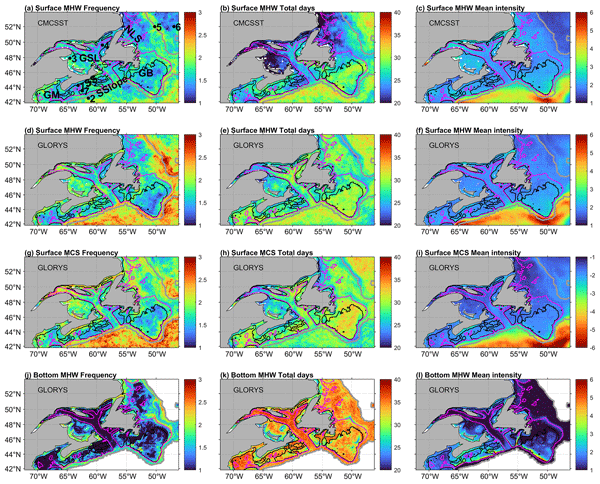
Li Zhai, Youyu Lu, Haiyan Wang, Gilles Garric, and Simon Van Gennip
State Planet, 6-osr9, 5, https://doi.org/10.5194/sp-6-osr9-5-2025, https://doi.org/10.5194/sp-6-osr9-5-2025, 2025
Short summary
Short summary
Statistics of marine heatwaves and cold spells in the water column of the Northwest Atlantic during 1993–2023 are derived using a global ocean reanalysis product. On the Scotian Shelf, temperatures and parameters of extreme events present layered structures in the water column, long-term trends, and sharp increases around 2012. Quantification of extreme warm (cold) conditions in 2012 (1998) supports previous studies on the impacts of these conditions on several marine life species.
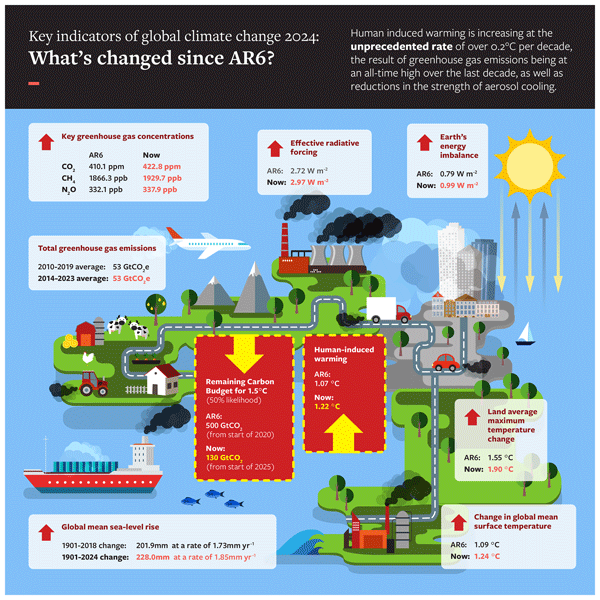
Piers M. Forster, Chris Smith, Tristram Walsh, William F. Lamb, Robin Lamboll, Christophe Cassou, Mathias Hauser, Zeke Hausfather, June-Yi Lee, Matthew D. Palmer, Karina von Schuckmann, Aimée B. A. Slangen, Sophie Szopa, Blair Trewin, Jeongeun Yun, Nathan P. Gillett, Stuart Jenkins, H. Damon Matthews, Krishnan Raghavan, Aurélien Ribes, Joeri Rogelj, Debbie Rosen, Xuebin Zhang, Myles Allen, Lara Aleluia Reis, Robbie M. Andrew, Richard A. Betts, Alex Borger, Jiddu A. Broersma, Samantha N. Burgess, Lijing Cheng, Pierre Friedlingstein, Catia M. Domingues, Marco Gambarini, Thomas Gasser, Johannes Gütschow, Masayoshi Ishii, Christopher Kadow, John Kennedy, Rachel E. Killick, Paul B. Krummel, Aurélien Liné, Didier P. Monselesan, Colin Morice, Jens Mühle, Vaishali Naik, Glen P. Peters, Anna Pirani, Julia Pongratz, Jan C. Minx, Matthew Rigby, Robert Rohde, Abhishek Savita, Sonia I. Seneviratne, Peter Thorne, Christopher Wells, Luke M. Western, Guido R. van der Werf, Susan E. Wijffels, Valérie Masson-Delmotte, and Panmao Zhai
Earth Syst. Sci. Data, 17, 2641–2680, https://doi.org/10.5194/essd-17-2641-2025, https://doi.org/10.5194/essd-17-2641-2025, 2025
Short summary
Short summary
In a rapidly changing climate, evidence-based decision-making benefits from up-to-date and timely information. Here we compile monitoring datasets to track real-world changes over time. To make our work relevant to policymakers, we follow methods from the Intergovernmental Panel on Climate Change (IPCC). Human activities are increasing the Earth's energy imbalance and driving faster sea-level rise compared to the IPCC assessment.
Marina Lévy, Karina von Schuckmann, Patrick Vincent, Bruno Blanke, Joachim Claudet, Patrice Guillotreau, Audrey Hasson, Claire Jolly, Yunne Shin, Olivier Thébaud, Adrien Vincent, and Pierre Bahurel
State Planet, 6-osr9, 1, https://doi.org/10.5194/sp-6-osr9-1-2025, https://doi.org/10.5194/sp-6-osr9-1-2025, 2025
Short summary
Short summary
The Ocean is vital to humanity, but humans are putting it at risk. The Starfish Barometer is a new yearly civic rendezvous that shows how people and the Ocean affect each other. Using science-based facts, it highlights major trends in ocean health, the pressures it faces, the harm to people, and current protection efforts and opportunities. The goal is to raise awareness to secure a better future for the Ocean and humanity.
Karina von Schuckmann, Lorena Moreira, Mathilde Cancet, Flora Gues, Emmanuelle Autret, Ali Aydogdu, Lluis Castrillo, Daniele Ciani, Andrea Cipollone, Emanuela Clementi, Gianpiero Cossarini, Alvaro de Pascual-Collar, Vincenzo De Toma, Marion Gehlen, Rianne Giesen, Marie Drevillon, Claudia Fanelli, Kevin Hodges, Simon Jandt-Scheelke, Eric Jansen, Melanie Juza, Ioanna Karagali, Priidik Lagemaa, Vidar Lien, Leonardo Lima, Vladyslav Lyubartsev, Ilja Maljutenko, Simona Masina, Ronan McAdam, Pietro Miraglio, Helen Morrison, Tabea Rebekka Panteleit, Andrea Pisano, Marie-Isabelle Pujol, Urmas Raudsepp, Roshin Raj, Ad Stoffelen, Simon Van Gennip, Pierre Veillard, and Chunxue Yang
State Planet, 4-osr8, 2, https://doi.org/10.5194/sp-4-osr8-2-2024, https://doi.org/10.5194/sp-4-osr8-2-2024, 2024
Karina von Schuckmann, Lorena Moreira, Mathilde Cancet, Flora Gues, Emmanuelle Autret, Jonathan Baker, Clément Bricaud, Romain Bourdalle-Badie, Lluis Castrillo, Lijing Cheng, Frederic Chevallier, Daniele Ciani, Alvaro de Pascual-Collar, Vincenzo De Toma, Marie Drevillon, Claudia Fanelli, Gilles Garric, Marion Gehlen, Rianne Giesen, Kevin Hodges, Doroteaciro Iovino, Simon Jandt-Scheelke, Eric Jansen, Melanie Juza, Ioanna Karagali, Thomas Lavergne, Simona Masina, Ronan McAdam, Audrey Minière, Helen Morrison, Tabea Rebekka Panteleit, Andrea Pisano, Marie-Isabelle Pujol, Ad Stoffelen, Sulian Thual, Simon Van Gennip, Pierre Veillard, Chunxue Yang, and Hao Zuo
State Planet, 4-osr8, 1, https://doi.org/10.5194/sp-4-osr8-1-2024, https://doi.org/10.5194/sp-4-osr8-1-2024, 2024
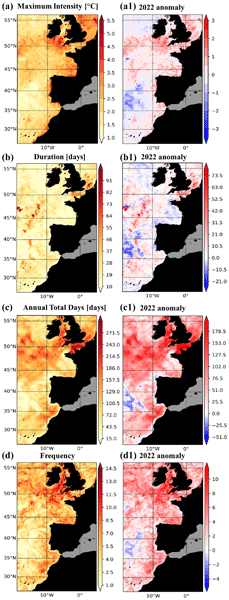
Lluís Castrillo-Acuña, Axel Alonso-Valle, and Álvaro de Pascual-Collar
State Planet, 4-osr8, 17, https://doi.org/10.5194/sp-4-osr8-17-2024, https://doi.org/10.5194/sp-4-osr8-17-2024, 2024
Short summary
Short summary
In this research we analyzed the marine heat waves (MHWs) that occurred in the IBI domain during the year 2022. Also, we shed light on the first steps of learning how MHWs behave under the ocean surface through the 2022 Bay of Biscay events. Our results show at least two extreme MHW events for the Bay of Biscay and the Celtic Sea for the year 2022. Moreover, we found that there is a seasonal modulation in mean MHW depth for the Bay of Biscay.
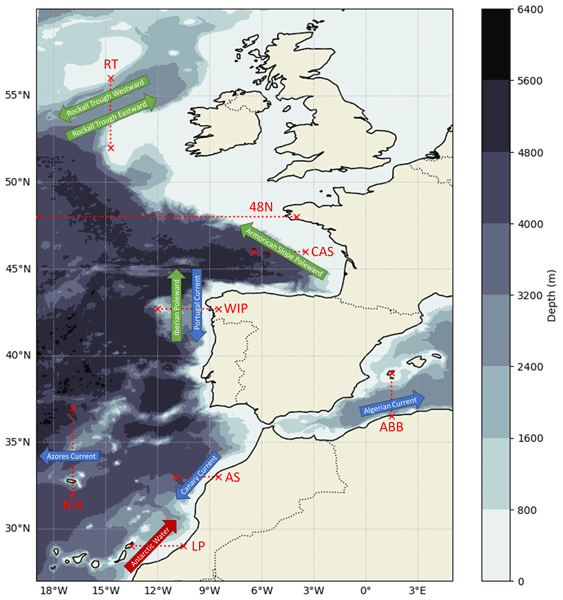
Álvaro de Pascual Collar, Roland Aznar, Bruno Levier, and Marcos García Sotillo
State Planet, 4-osr8, 5, https://doi.org/10.5194/sp-4-osr8-5-2024, https://doi.org/10.5194/sp-4-osr8-5-2024, 2024
Short summary
Short summary
The Iberia–Biscay–Ireland region in the North Atlantic has diverse ocean currents impacting upper and deeper layers. These currents are vital for heat transport, species dispersion, and sediment and pollutant movement. Monitoring them is crucial for informed decision-making in ocean-related activities, including the blue economy sector. This study introduces an indicator to track these currents, covering main ones like the Azores, Canary, Portugal, and poleward slope currents.
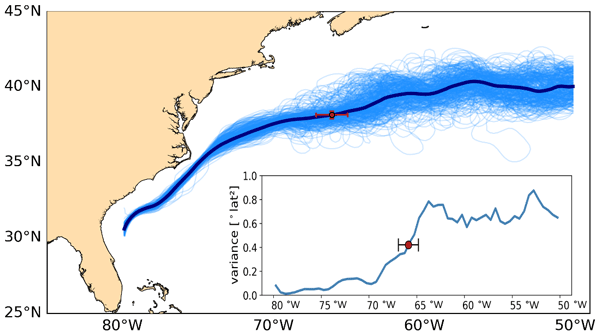
Antonio Sánchez-Román, Flora Gues, Romain Bourdalle-Badie, Marie-Isabelle Pujol, Ananda Pascual, and Marie Drévillon
State Planet, 4-osr8, 4, https://doi.org/10.5194/sp-4-osr8-4-2024, https://doi.org/10.5194/sp-4-osr8-4-2024, 2024
Short summary
Short summary
This study investigates the changing pattern of the Gulf Stream over the last 3 decades as observed in the altimetric record (1993–2022). Changes in the Gulf Stream path have an effect on its speed (and associated energy) and also on waters transported towards the subpolar North Atlantic, impacting Europe's climate. The observed shifts in the paths seem to be linked to variability in the North Atlantic Ocean during winter that may play an important role.
Piers M. Forster, Chris Smith, Tristram Walsh, William F. Lamb, Robin Lamboll, Bradley Hall, Mathias Hauser, Aurélien Ribes, Debbie Rosen, Nathan P. Gillett, Matthew D. Palmer, Joeri Rogelj, Karina von Schuckmann, Blair Trewin, Myles Allen, Robbie Andrew, Richard A. Betts, Alex Borger, Tim Boyer, Jiddu A. Broersma, Carlo Buontempo, Samantha Burgess, Chiara Cagnazzo, Lijing Cheng, Pierre Friedlingstein, Andrew Gettelman, Johannes Gütschow, Masayoshi Ishii, Stuart Jenkins, Xin Lan, Colin Morice, Jens Mühle, Christopher Kadow, John Kennedy, Rachel E. Killick, Paul B. Krummel, Jan C. Minx, Gunnar Myhre, Vaishali Naik, Glen P. Peters, Anna Pirani, Julia Pongratz, Carl-Friedrich Schleussner, Sonia I. Seneviratne, Sophie Szopa, Peter Thorne, Mahesh V. M. Kovilakam, Elisa Majamäki, Jukka-Pekka Jalkanen, Margreet van Marle, Rachel M. Hoesly, Robert Rohde, Dominik Schumacher, Guido van der Werf, Russell Vose, Kirsten Zickfeld, Xuebin Zhang, Valérie Masson-Delmotte, and Panmao Zhai
Earth Syst. Sci. Data, 16, 2625–2658, https://doi.org/10.5194/essd-16-2625-2024, https://doi.org/10.5194/essd-16-2625-2024, 2024
Short summary
Short summary
This paper tracks some key indicators of global warming through time, from 1850 through to the end of 2023. It is designed to give an authoritative estimate of global warming to date and its causes. We find that in 2023, global warming reached 1.3 °C and is increasing at over 0.2 °C per decade. This is caused by all-time-high greenhouse gas emissions.
Stefania A. Ciliberti, Enrique Alvarez Fanjul, Jay Pearlman, Kirsten Wilmer-Becker, Pierre Bahurel, Fabrice Ardhuin, Alain Arnaud, Mike Bell, Segolene Berthou, Laurent Bertino, Arthur Capet, Eric Chassignet, Stefano Ciavatta, Mauro Cirano, Emanuela Clementi, Gianpiero Cossarini, Gianpaolo Coro, Stuart Corney, Fraser Davidson, Marie Drevillon, Yann Drillet, Renaud Dussurget, Ghada El Serafy, Katja Fennel, Marcos Garcia Sotillo, Patrick Heimbach, Fabrice Hernandez, Patrick Hogan, Ibrahim Hoteit, Sudheer Joseph, Simon Josey, Pierre-Yves Le Traon, Simone Libralato, Marco Mancini, Pascal Matte, Angelique Melet, Yasumasa Miyazawa, Andrew M. Moore, Antonio Novellino, Andrew Porter, Heather Regan, Laia Romero, Andreas Schiller, John Siddorn, Joanna Staneva, Cecile Thomas-Courcoux, Marina Tonani, Jose Maria Garcia-Valdecasas, Jennifer Veitch, Karina von Schuckmann, Liying Wan, John Wilkin, and Romane Zufic
State Planet, 1-osr7, 2, https://doi.org/10.5194/sp-1-osr7-2-2023, https://doi.org/10.5194/sp-1-osr7-2-2023, 2023
Karina von Schuckmann, Lorena Moreira, and Pierre-Yves Le Traon
State Planet, 1-osr7, 1, https://doi.org/10.5194/sp-1-osr7-1-2023, https://doi.org/10.5194/sp-1-osr7-1-2023, 2023
Piers M. Forster, Christopher J. Smith, Tristram Walsh, William F. Lamb, Robin Lamboll, Mathias Hauser, Aurélien Ribes, Debbie Rosen, Nathan Gillett, Matthew D. Palmer, Joeri Rogelj, Karina von Schuckmann, Sonia I. Seneviratne, Blair Trewin, Xuebin Zhang, Myles Allen, Robbie Andrew, Arlene Birt, Alex Borger, Tim Boyer, Jiddu A. Broersma, Lijing Cheng, Frank Dentener, Pierre Friedlingstein, José M. Gutiérrez, Johannes Gütschow, Bradley Hall, Masayoshi Ishii, Stuart Jenkins, Xin Lan, June-Yi Lee, Colin Morice, Christopher Kadow, John Kennedy, Rachel Killick, Jan C. Minx, Vaishali Naik, Glen P. Peters, Anna Pirani, Julia Pongratz, Carl-Friedrich Schleussner, Sophie Szopa, Peter Thorne, Robert Rohde, Maisa Rojas Corradi, Dominik Schumacher, Russell Vose, Kirsten Zickfeld, Valérie Masson-Delmotte, and Panmao Zhai
Earth Syst. Sci. Data, 15, 2295–2327, https://doi.org/10.5194/essd-15-2295-2023, https://doi.org/10.5194/essd-15-2295-2023, 2023
Short summary
Short summary
This is a critical decade for climate action, but there is no annual tracking of the level of human-induced warming. We build on the Intergovernmental Panel on Climate Change assessment reports that are authoritative but published infrequently to create a set of key global climate indicators that can be tracked through time. Our hope is that this becomes an important annual publication that policymakers, media, scientists and the public can refer to.
Francisco José Cuesta-Valero, Hugo Beltrami, Almudena García-García, Gerhard Krinner, Moritz Langer, Andrew H. MacDougall, Jan Nitzbon, Jian Peng, Karina von Schuckmann, Sonia I. Seneviratne, Wim Thiery, Inne Vanderkelen, and Tonghua Wu
Earth Syst. Dynam., 14, 609–627, https://doi.org/10.5194/esd-14-609-2023, https://doi.org/10.5194/esd-14-609-2023, 2023
Short summary
Short summary
Climate change is caused by the accumulated heat in the Earth system, with the land storing the second largest amount of this extra heat. Here, new estimates of continental heat storage are obtained, including changes in inland-water heat storage and permafrost heat storage in addition to changes in ground heat storage. We also argue that heat gains in all three components should be monitored independently of their magnitude due to heat-dependent processes affecting society and ecosystems.
Karina von Schuckmann, Audrey Minière, Flora Gues, Francisco José Cuesta-Valero, Gottfried Kirchengast, Susheel Adusumilli, Fiammetta Straneo, Michaël Ablain, Richard P. Allan, Paul M. Barker, Hugo Beltrami, Alejandro Blazquez, Tim Boyer, Lijing Cheng, John Church, Damien Desbruyeres, Han Dolman, Catia M. Domingues, Almudena García-García, Donata Giglio, John E. Gilson, Maximilian Gorfer, Leopold Haimberger, Maria Z. Hakuba, Stefan Hendricks, Shigeki Hosoda, Gregory C. Johnson, Rachel Killick, Brian King, Nicolas Kolodziejczyk, Anton Korosov, Gerhard Krinner, Mikael Kuusela, Felix W. Landerer, Moritz Langer, Thomas Lavergne, Isobel Lawrence, Yuehua Li, John Lyman, Florence Marti, Ben Marzeion, Michael Mayer, Andrew H. MacDougall, Trevor McDougall, Didier Paolo Monselesan, Jan Nitzbon, Inès Otosaka, Jian Peng, Sarah Purkey, Dean Roemmich, Kanako Sato, Katsunari Sato, Abhishek Savita, Axel Schweiger, Andrew Shepherd, Sonia I. Seneviratne, Leon Simons, Donald A. Slater, Thomas Slater, Andrea K. Steiner, Toshio Suga, Tanguy Szekely, Wim Thiery, Mary-Louise Timmermans, Inne Vanderkelen, Susan E. Wjiffels, Tonghua Wu, and Michael Zemp
Earth Syst. Sci. Data, 15, 1675–1709, https://doi.org/10.5194/essd-15-1675-2023, https://doi.org/10.5194/essd-15-1675-2023, 2023
Short summary
Short summary
Earth's climate is out of energy balance, and this study quantifies how much heat has consequently accumulated over the past decades (ocean: 89 %, land: 6 %, cryosphere: 4 %, atmosphere: 1 %). Since 1971, this accumulated heat reached record values at an increasing pace. The Earth heat inventory provides a comprehensive view on the status and expectation of global warming, and we call for an implementation of this global climate indicator into the Paris Agreement’s Global Stocktake.
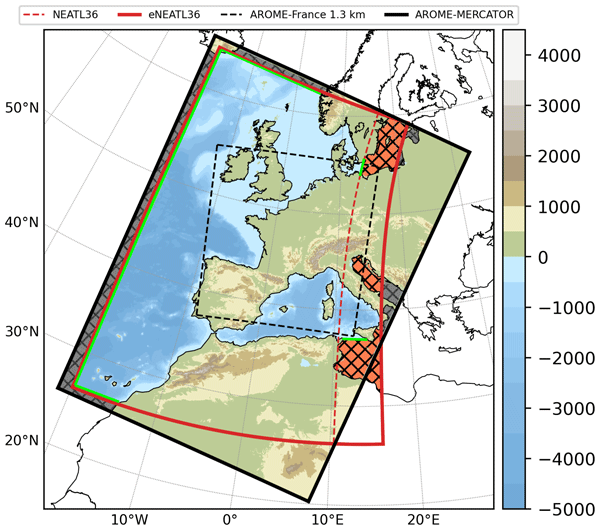
Joris Pianezze, Jonathan Beuvier, Cindy Lebeaupin Brossier, Guillaume Samson, Ghislain Faure, and Gilles Garric
Nat. Hazards Earth Syst. Sci., 22, 1301–1324, https://doi.org/10.5194/nhess-22-1301-2022, https://doi.org/10.5194/nhess-22-1301-2022, 2022
Short summary
Short summary
Most numerical weather and oceanic prediction systems do not consider ocean–atmosphere feedback during forecast, and this can lead to significant forecast errors, notably in cases of severe situations. A new high-resolution coupled ocean–atmosphere system is presented in this paper. This forecast-oriented system, based on current regional operational systems and evaluated using satellite and in situ observations, shows that the coupling improves both atmospheric and oceanic forecasts.
Martin Horwath, Benjamin D. Gutknecht, Anny Cazenave, Hindumathi Kulaiappan Palanisamy, Florence Marti, Ben Marzeion, Frank Paul, Raymond Le Bris, Anna E. Hogg, Inès Otosaka, Andrew Shepherd, Petra Döll, Denise Cáceres, Hannes Müller Schmied, Johnny A. Johannessen, Jan Even Øie Nilsen, Roshin P. Raj, René Forsberg, Louise Sandberg Sørensen, Valentina R. Barletta, Sebastian B. Simonsen, Per Knudsen, Ole Baltazar Andersen, Heidi Ranndal, Stine K. Rose, Christopher J. Merchant, Claire R. Macintosh, Karina von Schuckmann, Kristin Novotny, Andreas Groh, Marco Restano, and Jérôme Benveniste
Earth Syst. Sci. Data, 14, 411–447, https://doi.org/10.5194/essd-14-411-2022, https://doi.org/10.5194/essd-14-411-2022, 2022
Short summary
Short summary
Global mean sea-level change observed from 1993 to 2016 (mean rate of 3.05 mm yr−1) matches the combined effect of changes in water density (thermal expansion) and ocean mass. Ocean-mass change has been assessed through the contributions from glaciers, ice sheets, and land water storage or directly from satellite data since 2003. Our budget assessments of linear trends and monthly anomalies utilise new datasets and uncertainty characterisations developed within ESA's Climate Change Initiative.
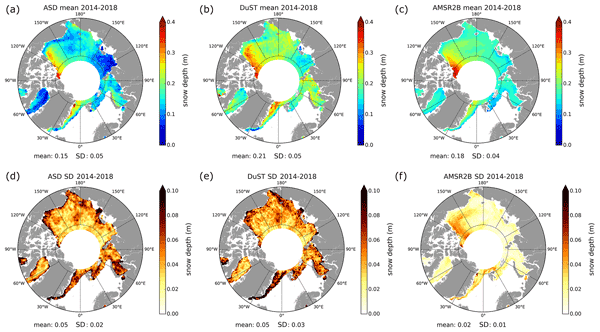
Florent Garnier, Sara Fleury, Gilles Garric, Jérôme Bouffard, Michel Tsamados, Antoine Laforge, Marion Bocquet, Renée Mie Fredensborg Hansen, and Frédérique Remy
The Cryosphere, 15, 5483–5512, https://doi.org/10.5194/tc-15-5483-2021, https://doi.org/10.5194/tc-15-5483-2021, 2021
Short summary
Short summary
Snow depth data are essential to monitor the impacts of climate change on sea ice volume variations and their impacts on the climate system. For that purpose, we present and assess the altimetric snow depth product, computed in both hemispheres from CryoSat-2 and SARAL satellite data. The use of these data instead of the common climatology reduces the sea ice thickness by about 30 cm over the 2013–2019 period. These data are also crucial to argue for the launch of the CRISTAL satellite mission.
Cited articles
Abram, N. J., Purich, A., England, M. H., McCormack, F. S., Strugnell, J. M., Bergstrom, D. M., Vance, T. R., Stål, T., Wienecke, B., Heil, P., Doddridge, E. W., Sallée, J.-B., Williams, T. J., Reading, A. M., Mackintosh, A., Reese, R., Winkelmann, R., Klose, A. K., Boyd, P. W., Chown, S. L., and Robinson, S. A.: Emerging evidence of abrupt changes in the Antarctic environment, Nature, 644, 621–633, https://doi.org/10.1038/s41586-025-09349-5, 2025.
AMAP: AMAP Assessment Report: Arctic Pollution Issues, Chapter 2 – Definitions, ISBN 82-7655-061-4, 1998.
Antarctic Treaty Environmental Protocol: Protocol on Environmental Protection to the Antarctic Treaty, https://www.ats.aq/e/protocol.html (last access: 21 September 2026), 1991.
Aoki, S.: Breakup of land-fast sea ice in Lützow-Holm Bay, East Antarctica, and its teleconnection to tropical Pacific sea surface temperatures, Geophys. Res. Lett., 44, 3219–3227, https://doi.org/10.1002/2017GL072835, 2017.
Argüello, G. and Rafaly, V.: Science diplomacy and Asian states: Transforming the governance landscape in the Arctic, Polar Rec., 59, e41, https://doi.org/10.1017/S0032247423000281, 2023.
Arouf, A., Chepfer, H., Kay, J. E., L'Ecuyer, T. S., and Lac, J.: Surface Cloud Warming Increases as Late Fall Arctic Sea Ice Cover Decreases, Geophys. Res. Lett., 51, e2023GL105805, https://doi.org/10.1029/2023GL105805, 2024.
Årthun, M., Brakstad, A., Dörr, J., Johnson, H. L., Mans, C., Semper, S., and Våge, K.: Atlantification drives recent strengthening of the Arctic overturning circulation, Sci. Adv., 11, eadu1794, https://doi.org/10.1126/sciadv.adu1794, 2025.
Baudry, J., Didier, D., Dumont, D., Jourdain-Bonneau, C., Noah, T., Hamilton, A., and Bertrand, E.: Arctic sea-ice decline amplifies extreme wave exposure for coastalInuit communities, Nature Portfolio, https://doi.org/10.21203/rs.3.rs-9011874/v1, in review, 2026.
Beaulieu, L., Arreak, A., Holwell, R., Dicker, S., Qamanirq, O., Moorman, L., Wilson, K., Segal, R., Crichton, S., and Bell, T.: Indigenous self-determination in cryospheric science: The Inuit-led Sikumik Qaujimajjuti (“tools to know how the ice is”) program in Inuit Nunangat, Canada, Front. Earth Sci., 11, 1076774, https://doi.org/10.3389/feart.2023.1076774, 2023.
Berkman, P. A.: Science diplomacy and the 5th International Polar Year (IPY-5): planetary considerations across centuries, Camb. Prisms Coast. Futures, 3, e6, https://doi.org/10.1017/cft.2025.2, 2025.
Berkman, P. A., Young, O. R., Vylegzhanin, A. N., Balton, D. A., and Øvretveit, O. R.: Introduction: Building Common Interests with Informed Decisionmaking for Sustainability, in: Building Common Interests in the Arctic Ocean with Global Inclusion, edited by: Berkman, P. A., Vylegzhanin, A. N., Young, O. R., Balton, D. A., and Øvretveit, O. R., Springer International Publishing, Cham, 3–54, https://doi.org/10.1007/978-3-030-89312-5_1, 2022.
Bishop, B., Andersen, B., Oliver, E. C. J., Aporta, C., and Anthony, K.: Co-developing a conceptual model rooted in Inuit Knowledge of the landfast sea ice season near Makkovik, Nunatsiavut, Arctic Science, 12, 1–23, https://doi.org/10.1139/as-2025-0047, 2026.
Bronen, R.: Climate-induced community relocations: using integrated social-ecological assessments to foster adaptation and resilience, Ecol. Soc., 20, 36, https://doi.org/10.5751/ES-07801-200336, 2015.
Bronen, R. and Chapin, F. S.: Adaptive governance and institutional strategies for climate-induced community relocations in Alaska, P. Natl. Acad. Sci. USA, 110, 9320–9325, https://doi.org/10.1073/pnas.1210508110, 2013.
Carroll, S. R.: Indigenous peoples breathing data back, Youtube, https://www.youtube.com/watch?v=jPS_3mZXWXw (last access: 10 September 2026), 2024.
Carroll, S. R., Garba, I., Figueroa-Rodríguez, O. L., Holbrook, J., Lovett, R., Materechera, S., Parsons, M., Raseroka, K., Rodriguez-Lonebear, D., Rowe, R., Sara, R., Walker, J. D., Anderson, J., and Hudson, M.: The CARE Principles for Indigenous Data Governance, Data Science Journal, 19, 43, https://doi.org/10.5334/dsj-2020-043, 2020.
Carvalho, K. S. and Wang, S.: Sea surface temperature variability in the Arctic Ocean and its marginal seas in a changing climate: Patterns and mechanisms, Global Planet. Change, 193, 103265, https://doi.org/10.1016/j.gloplacha.2020.103265, 2020.
CCAMLR: The Convention for the Conservation of Antarctic Marine Living Resources (CAMLR Convention), https://www.ccamlr.org/en/organisation/camlr-convention-text (last access: 10 September 2026), 1980.
CCAMLR: Map of the CAMLR Convention Area, https://www.ccamlr.org/ru/node/72742 (last access: 10 September 2026), 2017.
Commission for the Conservation of Antarctic Marine Living Resources: CCAMLR Geospatial Operations, GitHub [code], https://github.com/ccamlr/geospatial_operations, last access: 15 July 2026.
CCAMLR Secretariat: Geographical data layer: CCAMLR Statistical Areas, Subareas and Divisions (ASD) (0.6.3), https://spatial.ccamlr.org/ (last access: 10 September 2026), 2026.
Chavez-Molina, V., Nocito, E. S., Carr, E., Cavanagh, R. D., Sylvester, Z., Becker, S. L., Dorman, D. D., Wallace, B., White, C., and Brooks, C. M.: Managing for climate resilient fisheries: Applications to the Southern Ocean, Ocean Coast. Manage., 239, 106580, https://doi.org/10.1016/j.ocecoaman.2023.106580, 2023.
Che-Castaldo, C., Humphries, G., Lynch, H., and Van de Putte, A.: Antarctic Penguin Biogeography Project: Database of abundance and distribution for the Adélie, chinstrap, gentoo, emperor, macaroni, and king penguin south of 60 S. Version 2.3. SCAR – AntOBIS [data set], https://doi.org/10.48361/ZFTXKR, 2023a.
Che-Castaldo, C., Humphries, G., and Lynch, H.: Antarctic Penguin Biogeography Project: Database of abundance and distribution for the Adelie, chinstrap, gentoo, emperor, macaroni and king penguin south of 60 S, Biodiversity Data Journal, 11, e101476, https://doi.org/10.3897/BDJ.11.e101476, 2023b.
Cheng, L., Von Schuckmann, K., Abraham, J. P., Trenberth, K. E., Mann, M. E., Zanna, L., England, M. H., Zika, J. D., Fasullo, J. T., Yu, Y., Pan, Y., Zhu, J., Newsom, E. R., Bronselaer, B., and Lin, X.: Past and future ocean warming, Nat. Rev. Earth Environ., 3, 776–794, https://doi.org/10.1038/s43017-022-00345-1, 2022.
Chown, S. L., Brooks, C. M., Terauds, A., Le Bohec, C., Van Klaveren-Impagliazzo, C., Whittington, J. D., Butchart, S. H. M., Coetzee, B. W. T., Collen, B., Convey, P., Gaston, K. J., Gilbert, N., Gill, M., Höft, R., Johnston, S., Kennicutt, M. C., Kriesell, H. J., Le Maho, Y., Lynch, H. J., Palomares, M., Puig-Marcó, R., Stoett, P., and McGeoch, M. A.: Antarctica and the strategic plan for biodiversity, PLoS Biol., 15, e2001656, https://doi.org/10.1371/journal.pbio.2001656, 2017.
Claus, S., De Hauwere, N., Vanhoorne, B., Deckers, P., Souza Dias, F., Hernandez, F., and Mees, J.: Marine Regions: Towards a Global Standard for Georeferenced Marine Names and Boundaries, Mar. Geod., 37, 99–125, https://doi.org/10.1080/01490419.2014.902881, 2014.
Constable, A. J.: Imperatives for integrated science and policy in managing greenhouse gas risks to the Southern Polar Region, Glob. Change Biol., 28, 4489–4492, https://doi.org/10.1111/gcb.16219, 2022.
Constable, A. J.: Ecosystem Resilience, Fisheries and Conservation in the Southern Ocean, in: Antarctica and the Earth System, Routledge, London, 186–229, https://doi.org/10.4324/9781003406471-9, 2025.
Crate, S. A. and Nuttall, M. (Eds.): Anthropology and climate change: from transformations to worldmaking, 3rd edn., Routledge, New York, NY, ISBN 9781032150932, 2024.
Creel, R., Guimond, J., Jones, B. M., Nielsen, D. M., Bristol, E., Tweedie, C. E., and Overduin, P. P.: Permafrost thaw subsidence, sea-level rise, and erosion are transforming Alaska's Arctic coastal zone, P. Natl. Acad. Sci. USA, 121, e2409411121, https://doi.org/10.1073/pnas.2409411121, 2024.
Deb, J. C. and Bailey, S. A.: Arctic marine ecosystems face increasing climate stress, Environ. Rev., 31, 403–451, https://doi.org/10.1139/er-2022-0101, 2023.
Eastwood, S. and Wettre, C.: EU Copernicus Marine Service Quality Information Document for SEAICE_GLO_SEAICE_L4_NRT_OBSERVATIONS_011_001 SEAICE_GLO_SEAICE_L4_REP_OBSERVATIONS_011_009, Mercator Ocean International, https://documentation.marine.copernicus.eu/QUID/CMEMS-SEAICE-QUID-011-001-009.pdf (last access: 10 Spetember 2026), 2026.
Eerkes-Medrano, L. and Huntington, H. P.: Untold Stories: Indigenous Knowledge Beyond the Changing Arctic Cryosphere, Front. Clim., 3, 675805, https://doi.org/10.3389/fclim.2021.675805, 2021.
Englyst, P., Karagali, I., Olsen, I. L., Gacitúa, G., Hayward, A., Dasgupta, N., Scheller, J. H., and Høyer, J. L.: Global satellite-based sea and sea-ice surface temperatures since 1982, Sci. Data, 13, 1052, https://doi.org/10.1038/s41597-026-07363-4, 2026.
E.U. Copernicus Marine Service Information (CMEMS): Arctic Ocean – Sea and Ice Surface Temperature REPROCESSED, Marine Data Store (MDS) [data set], https://doi.org/10.48670/moi-00123, 2021.
E.U. Copernicus Marine Service Information (CMEMS): Global Ocean OSTIA Sea Surface Temperature and Sea Ice Reprocessed, Marine Data Store (MDS) [data set], https://doi.org/10.48670/moi-00168, 2025.
E.U. Copernicus Marine Service Information (CMEMS): Global Ocean Sea Ice Concentration Time Series REPROCESSED (EUMETSAT OSI-SAF), Marine Data Store (MDS) [data set], https://doi.org/10.48670/moi-00136, 2026.
Fiske, G.: Indigenous Peoples of the Arctic boundary polygons, 2021, Arctic Data Center [data set], https://doi.org/10.18739/A2Z31NQ2H, 2021.
Flanders Marine Institute (VLIZ), Belgium: Maritime Boundaries Geodatabase: High Seas, version 2, VLIZ [data set], https://doi.org/10.14284/696, 2024.
Ford, J. D., Clark, D., and Naylor, A.: Food insecurity in Nunavut: Are we going from bad to worse?, Canadian Medical Associations Journal, 191, E550–E551, https://doi.org/10.1503/cmaj.190497, 2019.
Fretwell, P. T.: A 6 year assessment of low sea-ice impacts on emperor penguins, Antarct. Sci., 36, 3–5, https://doi.org/10.1017/S0954102024000130, 2024.
Fretwell, P. T. and Trathan, P. N.: Discovery of new colonies by Sentinel2 reveals good and bad news for emperor penguins, Remote Sens. Ecol. Conserv., 7, 139–153, https://doi.org/10.1002/rse2.176, 2021.
Fretwell, P. T., Boutet, A., and Ratcliffe, N.: Record low 2022 Antarctic sea ice led to catastrophic breeding failure of emperor penguins, Commun. Earth Environ., 4, 273, https://doi.org/10.1038/s43247-023-00927-x, 2023.
Frölicher, T. L., Sarmiento, J. L., Paynter, D. J., Dunne, J. P., Krasting, J. P., and Winton, M.: Dominance of the Southern Ocean in Anthropogenic Carbon and Heat Uptake in CMIP5 Models, J. Climate, 28, 862–886, https://doi.org/10.1175/JCLI-D-14-00117.1, 2015.
Gaffey, C. B., Bax, N., Krauzig, N., and Tougeron, K.: A call to strengthen international collaboration to assess climate change effects in polar regions, PLOS Clim., 3, e0000495, https://doi.org/10.1371/journal.pclm.0000495, 2024.
Gardiner, N. B., Liggett, D., Gilbert, N., and Cvitanovic, C.: Practitioners' perspectives on the enablers and barriers to successful Antarctic science‐policy knowledge exchange, Env. Pol. Gov., 35, 362–381, https://doi.org/10.1002/eet.2143, 2025.
Goessling, H. F., Rackow, T., and Jung, T.: Recent global temperature surge intensified by record-low planetary albedo, Science, 387, 68–73, https://doi.org/10.1126/science.adq7280, 2025.
Griffiths, H. J., Cummings, V. J., Van De Putte, A., Whittle, R. J., and Waller, C. L.: Antarctic benthic ecological change, Nat. Rev. Earth Environ., 5, 645–664, https://doi.org/10.1038/s43017-024-00583-5, 2024.
Grimmer, M., Baggenstos, D., Schmitt, J., Krauss, F., Shackleton, S., Severinghaus, J. P., and Fischer, H.: AMOC Modulates Ocean Heat Content During Deglaciations, Geophys. Res. Lett., 52, e2024GL114415, https://doi.org/10.1029/2024GL114415, 2025.
Gruber, N., Gloor, M., Mikaloff Fletcher, S. E., Doney, S. C., Dutkiewicz, S., Follows, M. J., Gerber, M., Jacobson, A. R., Joos, F., Lindsay, K., Menemenlis, D., Mouchet, A., Müller, S. A., Sarmiento, J. L., and Takahashi, T.: Oceanic sources, sinks, and transport of atmospheric CO2, Global Biogeochem. Cy., 23, 2008GB003349, https://doi.org/10.1029/2008GB003349, 2009.
Haward, M.: Biodiversity in Areas Beyond National Jurisdiction (BBNJ): the Commission for the Conservation of Antarctic Marine Living Resources (CCAMLR) and the United Nations BBNJ agreement, The Polar Journal, 11, 303–316, https://doi.org/10.1080/2154896X.2021.1984658, 2021.
He, Y., Shu, Q., Wang, Q., Song, Z., Zhang, M., Wang, S., Zhang, L., Bi, H., Pan, R., and Qiao, F.: Arctic Amplification of marine heatwaves under global warming, Nat. Commun., 15, 8265, https://doi.org/10.1038/s41467-024-52760-1, 2024.
Hjort, J., Streletskiy, D., Doré, G., Wu, Q., Bjella, K., and Luoto, M.: Impacts of permafrost degradation on infrastructure, Nat. Rev. Earth Environ., 3, 24–38, https://doi.org/10.1038/s43017-021-00247-8, 2022.
Hobbs, W., Spence, P., Meyer, A., Schroeter, S., Fraser, A. D., Reid, P., Tian, T. R., Wang, Z., Liniger, G., Doddridge, E. W., and Boyd, P. W.: Observational Evidence for a Regime Shift in Summer Antarctic Sea Ice, J. Climate, 37, 2263–2275, https://doi.org/10.1175/JCLI-D-23-0479.1, 2024.
Hovelsrud, G. K., Poppel, B., Van Oort, B., and Reist, J. D.: Arctic Societies, Cultures, and Peoples in a Changing Cryosphere, AMBIO, 40, 100–110, https://doi.org/10.1007/s13280-011-0219-4, 2011.
Huntington, H. P., Quakenbush, L. T., and Nelson, M.: Effects of changing sea ice on marine mammals and subsistence hunters in northern Alaska from traditional knowledge interviews, Biol. Lett., 12, 20160198, https://doi.org/10.1098/rsbl.2016.0198, 2016.
Huntington, H. P., Zagorsky, A., Kaltenborn, B. P., Shin, H. C., Dawson, J., Lukin, M., Dahl, P. E., Guo, P., and Thomas, D. N.: Societal implications of a changing Arctic Ocean, Ambio, 51, 298–306, https://doi.org/10.1007/s13280-021-01601-2, 2022.
IPCC: The Ocean and Cryosphere in a Changing Climate: Special Report of the Intergovernmental Panel on Climate Change, 1st edn., Cambridge University Press, https://doi.org/10.1017/9781009157964, 2019.
IPCC: Climate Change 2021 – The Physical Science Basis: Working Group I Contribution to the Sixth Assessment Report of the Intergovernmental Panel on Climate Change, 1st edn., Cambridge University Press, https://doi.org/10.1017/9781009157896, 2021.
IPCC: Climate Change 2022 – Impacts, Adaptation and Vulnerability: Working Group II Contribution to the Sixth Assessment Report of the Intergovernmental Panel on Climate Change, 1st edn., Cambridge University Press, https://doi.org/10.1017/9781009325844, 2023.
IUCN: Pygoscelis adeliae (Adelie Penguin): BirdLife International: The IUCN Red List of Threatened Species 2020: e.T22697758A157660553, IUCN [data set], https://doi.org/10.2305/IUCN.UK.2020-3.RLTS.T22697758A157660553.en, 2020a.
IUCN: Aptenodytes forsteri (Emperor Penguin). The IUCN Red List of Threatened Species 2020: e.T22697752A157658053, The International Union for Conservation of Nature (IUCN) Red List of Threatened Species [data set], https://doi.org/10.2305/IUCN.UK.2020-3.RLTS.T22697752A157658053.en, 2020b.
IW-LEARN: Global Large Marine Ecosystems, International Waters Learning Exchange and Resource Network (IW-LEARN), GeoNode [data set], https://archive.iwlearn.net/lme.edc.uri.edu/lme.edc.uri.edu/lme.edc.uri.edu/index.php/digital-data.html (last access: 10 September 2026), 2020.
Jayaram, D.: Geopolitics, Environmental Change and Antarctic Governance: A Region in Need of a Transformative Approach to Science Diplomacy, in: Assessing the Antarctic Environment from a Climate Change Perspective, edited by: Khare, N., Springer International Publishing, Cham, 1–17, https://doi.org/10.1007/978-3-030-87078-2_1, 2022.
Jenouvrier, S., Che-Castaldo, J., Wolf, S., Holland, M., Labrousse, S., LaRue, M., Wienecke, B., Fretwell, P., Barbraud, C., Greenwald, N., Stroeve, J., and Trathan, P. N.: The call of the emperor penguin: Legal responses to species threatened by climate change, Glob. Change Biol., 27, 5008–5029, https://doi.org/10.1111/gcb.15806, 2021.
Karagali, I., Kolbe, W., Gacitúa, G., Englyst, P., and Høyer, J.: EU Copernicus Marine Service Quality Information Document for Arctic Sea & Sea-Ice Surface Temperature SEAICE_ARC_PHY_CLIMATE_L4_MY_011_016 SEAICE_ARC_PHY_CLIMATE_L3S_MY_011_021, https://documentation.marine.copernicus.eu/QUID/CMEMS-SEAICE-QUID-011-016-021.pdf (last access: 10 September 2026), 2025a.
Karagali, I., Englyst, P., Kolbe, W., and Høyer, J.: EU Copernicus Marine Service Product User Manual for Arctic Ocean Sea and Sea-Ice Surface Temperature Products SEAICE_ARC_PHY_CLIMATE_L4_MY_011_016 SEAICE_ARC_PHY_CLIMATE_L3S_MY_011_021, Mercator Ocean International, https://documentation.marine.copernicus.eu/PUM/CMEMS-SEAICE-PUM-011-016-021.pdf (last access: 10 September 2026), 2025b.
Khatiwala, S., Tanhua, T., Mikaloff Fletcher, S., Gerber, M., Doney, S. C., Graven, H. D., Gruber, N., McKinley, G. A., Murata, A., Ríos, A. F., and Sabine, C. L.: Global ocean storage of anthropogenic carbon, Biogeosciences, 10, 2169–2191, https://doi.org/10.5194/bg-10-2169-2013, 2013.
Kusahara, K. and Tatebe, H.: Causes of the Abrupt and Sustained 2016–2023 Antarctic Sea-Ice Decline: A Sea Ice–Ocean Model Perspective, Geophys. Res. Lett., 52, e2025GL115256, https://doi.org/10.1029/2025GL115256, 2025.
Ladd, H.-M., Padula, V. M., Bishop, A., and Robson, B.: NOAA Arctic Report Card 2025: Indigenous Sentinels Network, NOAA technical report OAR ARC; 25-13 (Arctic Report Card), NOAA, https://doi.org/10.25923/QRM7-BV68, 2025.
Laidler, G. J. and Ikummaq, T.: Human geographies of sea ice: freeze/thaw processes around Igloolik, Nunavut, Canada, Polar Rec., 44, 127–153, https://doi.org/10.1017/S0032247407007152, 2008.
Lambert, E., Le Bars, D., van der Linden, E., Jüling, A., and Drijfhout, S.: Quantifying the feedback between Antarctic meltwater release and subsurface Southern Ocean warming, Earth Syst. Dynam., 16, 1303–1323, https://doi.org/10.5194/esd-16-1303-2025, 2025.
Lantuit, H., Overduin, P. P., Couture, N., Wetterich, S., Aré, F., Atkinson, D., Brown, J., Cherkashov, G., Drozdov, D., Forbes, D. L., Graves-Gaylord, A., Grigoriev, M., Hubberten, H.-W., Jordan, J., Jorgenson, T., Ødegård, R. S., Ogorodov, S., Pollard, W. H., Rachold, V., Sedenko, S., Solomon, S., Steenhuisen, F., Streletskaya, I., and Vasiliev, A.: The Arctic Coastal Dynamics Database: A New Classification Scheme and Statistics on Arctic Permafrost Coastlines, Estuar. Coast., 35, 383–400, https://doi.org/10.1007/s12237-010-9362-6, 2012.
Lantuit, H., Overduin, P. P., Couture, N., Wetterich, S., Are, F., Atkinson, D., Brown, J., Cherkashov, G. A., Drozdov, D. S., Forbes, D. L., Graves-Gaylord, A., Grigoriev, M. N., Hubberten, H.-W., Jordan, J., Jorgenson, M. T., Ødegård, R. S., Ogorodov, S., Pollard, W. H., Rachold, V., Sedenko, S., Solomon, S., Steenhuisen, F., Streletskaya, I., and Vasiliev, A.: The ACD Classification of Arctic Coasts, PANGAEA [data set], https://doi.org/10.1594/PANGAEA.919573, 2020.
Li, X., Guo, H., Cheng, G., Song, X., Ran, Y., Feng, M., Che, T., Li, X., Wang, L., Duan, A., Shangguan, D., Chen, D., Jin, R., Deng, J., Su, J., and Cao, B.: Polar regions are critical in achieving global sustainable development goals, Nat. Commun., 16, 3879, https://doi.org/10.1038/s41467-025-59178-3, 2025.
Lowther, A., Von Quillfeldt, C., Assmy, P., De Steur, L., Descamps, S., Divine, D., Elvevold, S., Forwick, M., Fransson, A., Fraser, A., Gerland, S., Granskog, M., Hallanger, I., Hattermann, T., Itkin, M., Hop, H., Husum, K., Kovacs, K., Lydersen, C., Matsuoka, K., Miettinen, A., Moholdt, G., Moreau, S., Myhre, P. I., Orme, L., Pavlova, O., and Tandberg, A. H.: A review of the scientific knowledge of the seascape off Dronning Maud Land, Antarctica, Polar Biol., 45, 1313–1349, https://doi.org/10.1007/s00300-022-03059-8, 2022.
Luo, Y. and Alverson, K.: A Global Call to Action: The Decade of Action for Cryospheric Sciences and the First World Day for Glaciers, Adv. Atmos. Sci., 42, 2559–2565, https://doi.org/10.1007/s00376-025-5389-2, 2025.
Malik, I. H. and Ford, J. D.: Barriers and limits to adaptation in the Arctic, Curr. Opin. Env. Sust., 73, 101519, https://doi.org/10.1016/j.cosust.2025.101519, 2025.
Manos, E. and Witharana, C.: Arctic circumpolar permafrost region building footprints from < 1 meter resolution Maxar satellite imagery and OpenStreetMap Version 2 (2018–2023), Arctic Data Center [data set], https://doi.org/10.18739/A28K74Z87, 2025.
Manos, E., Witharana, C., and Liljedahl, A. K.: Permafrost thaw-related infrastructure damage costs in Alaska are projected to double under medium and high emission scenarios, Commun. Earth Environ., 6, 221, https://doi.org/10.1038/s43247-025-02191-7, 2025.
Meeker, D. and Kettle, N.: A synthesis of climate adaptation planning needs in Alaska Native Communities., Alaska Center for Climate Assessment and Policy, Fairbanks, AK, https://uaf-accap.org/wp-content/uploads/2019/08/Synthesis-CAP-Alaska-Native-Communities_2017.pdf (last access: 10 September 2026), 2017.
Mercator Ocean international: Mercator Ocean Sea Ice Bulletin, https://www.mercator-ocean.eu/bulletin/sea-ice-bulletin-highlights-2025/ (last access: 10 September 2026), 2026.
Monakhova, M., York, A., Peterson, M., McCracken Pringle, J. A., BurnSilver, S., and Degai, T.: Co-production of Arctic sea ice knowledge: A systematic review, Ambio, 55, 1198–1217, https://doi.org/10.1007/s13280-025-02303-9, 2026.
Mueter, F. J., Planque, B., Hunt, G. L., Alabia, I. D., Hirawake, T., Eisner, L., Dalpadado, P., Chierici, M., Drinkwater, K. F., Harada, N., Arneberg, P., and Saitoh, S.-I.: Possible future scenarios in the gateways to the Arctic for Subarctic and Arctic marine systems: II. prey resources, food webs, fish, and fisheries, ICES J. Mar. Sci., 78, 3017–3045, https://doi.org/10.1093/icesjms/fsab122, 2021.
Naik, N., Bot, K., Whiteman, G., Fleming, L. E., Morrissey, K., Bellerby, R. G. J., Dupont, S., Yumashev, D., Hancock, S., Rogers, B. M., Ebi, K. L., and Rocklöv, J.: A framework for assessing global health impacts of polar change: An urgent call for interdisciplinary research, Ambio, 55, 529–545, https://doi.org/10.1007/s13280-025-02255-0, 2026.
Nanni, U., DeRepentigny, P., Lundén, A., Popovaitė, V., Shen, Y., Basaran, I. K., Duarte Neubern, N., Mascorda-Cabre, L., Bennett, A., Vold Hansen, T., Holmes, F. A., Kavvatha, E., Meyer, A., Prakash, A., and Wołoszyn, A.: Redefining Arctic boundaries in a changing climate: interdisciplinary perspectives on governance strategies, Polar Geography, 47, 127–155, https://doi.org/10.1080/1088937X.2024.2359926, 2024.
Nielsen, D. M., Pieper, P., Barkhordarian, A., Overduin, P., Ilyina, T., Brovkin, V., Baehr, J., and Dobrynin, M.: Increase in Arctic coastal erosion and its sensitivity to warming in the twenty-first century, Nat. Clim. Chang., 12, 263–270, https://doi.org/10.1038/s41558-022-01281-0, 2022.
Nocito, E. S. and Brooks, C. M.: The influence of Antarctic governance on marine protected areas in the Biodiversity Beyond National Jurisdiction Agreement negotiations, npj Ocean Sustain., 2, 13, https://doi.org/10.1038/s44183-023-00019-5, 2023.
Obu, J., Westermann, S., Bartsch, A., Berdnikov, N., Christiansen, H. H., Dashtseren, A., Delaloye, R., Elberling, B., Etzelmüller, B., Kholodov, A., Khomutov, A., Kääb, A., Leibman, M. O., Lewkowicz, A. G., Panda, S. K., Romanovsky, V., Way, R. G., Westergaard-Nielsen, A., Wu, T., Yamkhin, J., and Zou, D.: Northern Hemisphere permafrost map based on TTOP modelling for 2000–2016 at 1 km2 scale, Earth-Sci. Rev., 193, 299–316, https://doi.org/10.1016/j.earscirev.2019.04.023, 2019.
PAME: Large Marine Ecosystems (LMEs) of the Arctic area. Revision of the Arctic LME map, https://pame.is/ourwork/ecosystem-approach-to-management-ea/large-marine-ecosystems/ (last access: 10 September 2026), 2013.
PAME: The increase in Arctic shipping 2013–2025, https://arctic-council.org/news/increase-in-arctic-shipping/ (last access: 10 September 2026), 2026.
Perovich, D., Meier, W., Tschudi, M., Hendricks, S., Petty, A. A., Divine, D., Farrell, S., Gerland, S., Haas, C., Kaleschke, L., Pavlova, O., Ricker, R., Tian-Kunze, X., Wood, K., and Webster, M.: Arctic Report Card 2020: Sea Ice, Arctic Report Card, https://doi.org/10.25923/N170-9H57, 2020.
Polyakov, I. V., Pnyushkov, A. V., Charette, M., Cho, K.-H., Jung, J., Kipp, L., Muilwijk, M., Whitmore, L., Yang, E. J., and Yoo, J.: Atlantification advances into the Amerasian Basin of the Arctic Ocean, Sci. Adv., 11, eadq7580, https://doi.org/10.1126/sciadv.adq7580, 2025.
Previdi, M., Smith, K. L., and Polvani, L. M.: Arctic amplification of climate change: a review of underlying mechanisms, Environ. Res. Lett., 16, 093003, https://doi.org/10.1088/1748-9326/ac1c29, 2021.
Purich, A. and Doddridge, E. W.: Record low Antarctic sea ice coverage indicates a new sea ice state, Commun. Earth Environ., 4, 314, https://doi.org/10.1038/s43247-023-00961-9, 2023.
Quilestino-Olario, R.: From fossils to conservation: an overview of Antarctic and sub-Antarctic penguins, Polarforschung, 94, 17–41, https://doi.org/10.5194/polf-94-17-2026, 2026.
Rignot, E., Mouginot, J., Scheuchl, B., Van Den Broeke, M., Van Wessem, M. J., and Morlighem, M.: Four decades of Antarctic Ice Sheet mass balance from 1979–2017, P. Natl. Acad. Sci. USA, 116, 1095–1103, https://doi.org/10.1073/pnas.1812883116, 2019.
Rignot, E., Scheuchl, B., Barre, J. B., Brancato, V., Charrier, L., Chen, H., Ciraci, E., Dinh, A., Herreid, S., Jeong, S., Li, X., Mitchell, T., Mohajerani, Y., Shamsian, S., Tolpekin, V., Velicogna, I., and Wollersheim, M.: Thirty years of glacier grounding line retreat in Antarctica, P. Natl. Acad. Sci. USA, 123, e2524380123, https://doi.org/10.1073/pnas.2524380123, 2026.
Riihelä, A., Bright, R. M., and Anttila, K.: Recent strengthening of snow and ice albedo feedback driven by Antarctic sea-ice loss, Nat. Geosci., 14, 832–836, https://doi.org/10.1038/s41561-021-00841-x, 2021.
Sherman, K.: The Large Marine Ecosystem Approach for Assessment and Management of Ocean Coastal Waters, in: Large Marine Ecosystems, vol. 13, Elsevier, 3–16, https://doi.org/10.1016/S1570-0461(05)80025-4, 2005.
Sherman, K.: Toward ecosystem-based management (EBM) of the world×s large marine ecosystems during climate change, Environmental Development, 11, 43–66, https://doi.org/10.1016/j.envdev.2014.04.006, 2014.
Silvano, A., Narayanan, A., Catany, R., Olmedo, E., González-Gambau, V., Turiel, A., Sabia, R., Mazloff, M. R., Spira, T., Haumann, F. A., and Naveira Garabato, A. C.: Rising surface salinity and declining sea ice: A new Southern Ocean state revealed by satellites, P. Natl. Acad. Sci. USA, 122, e2500440122, https://doi.org/10.1073/pnas.2500440122, 2025.
Slater, T., Shepherd, A., McMillan, M., Leeson, A., Gilbert, L., Muir, A., Munneke, P. K., Noël, B., Fettweis, X., Van Den Broeke, M., and Briggs, K.: Increased variability in Greenland Ice Sheet runoff from satellite observations, Nat. Commun., 12, 6069, https://doi.org/10.1038/s41467-021-26229-4, 2021.
SO-CHIC, Sallée, J. B., Abrahamsen, E. P., Allaigre, C., Auger, M., Ayres, H., Badhe, R., Boutin, J., Brearley, J. A., De Lavergne, C., Ten Doeschate, A. M. M., Droste, E. S., Du Plessis, M. D., Ferreira, D., Giddy, I. S., Gülk, B., Gruber, N., Hague, M., Hoppema, M., Josey, S. A., Kanzow, T., Kimmritz, M., Lindeman, M. R., Llanillo, P. J., Lucas, N. S., Madec, G., Marshall, D. P., Meijers, A. J. S., Meredith, M. P., Mohrmann, M., Monteiro, P. M. S., Mosneron Dupin, C., Naeck, K., Narayanan, A., Naveira Garabato, A. C., Nicholson, S.-A., Novellino, A., Ödalen, M., Østerhus, S., Park, W., Patmore, R. D., Piedagnel, E., Roquet, F., Rosenthal, H. S., Roy, T., Saurabh, R., Silvy, Y., Spira, T., Steiger, N., Styles, A. F., Swart, S., Vogt, L., Ward, B., and Zhou, S.: Southern ocean carbon and heat impact on climate, Phil. Trans. R. Soc. A., 381, 20220056, https://doi.org/10.1098/rsta.2022.0056, 2023.
Sørensen, A. M., Lavergne, T., and Eastwood, S.: EU Copernicus Marine Service Product User Manual for Reprocessed Sea Ice Concentration from EUMETSAT OSI SAF SEAICE_GLO_SEAICE_L4_REP_OBSERVATIONS_011_009, Mercator Ocean International, https://documentation.marine.copernicus.eu/PUM/CMEMS-SEAICE-PUM-011-009.pdf (last access: 10 September 2026), 2026.
Spira, T., Du Plessis, M., Haumann, F. A., Giddy, I., Narayanan, A., Silvano, A., and Swart, S.: Wind-triggered Antarctic sea-ice decline preconditioned by thinning Winter Water, Nat. Clim. Chang., 16, 583–590, https://doi.org/10.1038/s41558-026-02601-4, 2026.
Steenhuisen, F. and Wilson, S.: AMAP Area (GIS) – boundary, line and polygon shapefiles, Arctic Monitoring and Assessment Programme (AMAP) [data set], https://www.amap.no/work-area/document/868 (last access: 10 September 2026), 2013.
Steiner, N. S., Bowman, J., Campbell, K., Chierici, M., Eronen-Rasimus, E., Falardeau, M., Flores, H., Fransson, A., Herr, H., Insley, S. J., Kauko, H. M., Lannuzel, D., Loseto, L., Lynnes, A., Majewski, A., Meiners, K. M., Miller, L. A., Michel, L. N., Moreau, S., Nacke, M., Nomura, D., Tedesco, L., Van Franeker, J. A., Van Leeuwe, M. A., and Wongpan, P.: Climate change impacts on sea-ice ecosystems and associated ecosystem services, Elem. Sci. Anth., 9, 00007, https://doi.org/10.1525/elementa.2021.00007, 2021.
Stern, H. L.: Regime Shift in Arctic Ocean Sea‐Ice Extent, Geophys. Res. Lett., 52, e2024GL114546, https://doi.org/10.1029/2024GL114546, 2025.
Stokke, O. S.: Introductory essay: Polar regions and multi-level governance, The Polar Journal, 11, 249–268, https://doi.org/10.1080/2154896X.2021.2007460, 2021.
Stroeve, J. and Notz, D.: Changing state of Arctic sea ice across all seasons, Environ. Res. Lett., 13, 103001, https://doi.org/10.1088/1748-9326/aade56, 2018.
Stroh, J. N., Panteleev, G., Kirillov, S., Makhotin, M., and Shakhova, N.: Sea-surface temperature and salinity product comparison against external in situ data in the Arctic Ocean, J. Geophys. Res.-Oceans, 120, 7223–7236, https://doi.org/10.1002/2015JC011005, 2015.
Szkarłat, M., Łuszczuk, M., and Rakowski, P.: Enhancing Science Diplomacy for a Better Arctic Governance, in: GlobalArctic, edited by: Rekvig, G. and Finger, M., Springer Nature Singapore, Singapore, 417–436, https://doi.org/10.1007/978-981-96-4868-9_16, 2025.
Tanguy, R., Bartsch, A., Nitze, I., Irrgang, A., Petzold, P., Widhalm, B., Von Baeckmann, C., Boike, J., Martin, J., Efimova, A., Vieira, G., Whalen, D., Heim, B., Wieczorek, M., and Grosse, G.: Pan-Arctic Assessment of Coastal Settlements and Infrastructure Vulnerable to Coastal Erosion, Sea-Level Rise, and Permafrost Thaw, Earths Future, 12, e2024EF005013, https://doi.org/10.1029/2024EF005013, 2024.
The Antarctic Treaty: The Antarctic Treaty, https://www.ats.aq/e/antarctictreaty.html (last access: 10 September 2026), 1959.
United Nations: United Nations Convention on the Law of the Sea, Montego Bay, https://www.un.org/depts/los/convention_agreements/convention_overview_convention.htm#:~:text=The%20United%20Nations%20Convention%20on,the%20oceans%20and%20their%20resources, (last access: 21 September 2026), 1982a.
United Nations: United Nations Convention on the Law of the Sea, https://www.un.org/depts/los/convention_agreements/texts/unclos/unclos_e.pdf (last access: 10 September 2026), 1982b.
United Nations: Agreement under the United Nations Convention on the Law of the Sea on the Conservation and Sustainable Use of Marine Biological Diversity of Areas beyond National Jurisdiction, https://www.un.org/bbnjagreement/sites/default/files/2024-08/Text%20of%20the%20Agreement%20in%20English.pdf (last access: 10 September 2026), 2023.
von Schuckmann, K., Gues, F., Moreira, L., Liné, A., and de Pascual Collar, Á.: Global ocean change in the era of the triple planetary crisis, in: 9th edition of the Copernicus Ocean State Report (OSR9), edited by: von Schuckmann, K., Moreira, L., de Pascual Collar, Á., Grégoire, M., Brasseur, P., Garric, G., Karstensen, J., Lionello, P., Marcos, M., Poulain, P.-M., and Staneva, J., Copernicus Publications, State Planet, 6-osr9, 2, https://doi.org/10.5194/sp-6-osr9-2-2025, 2025a.
von Schuckmann, K., Gues, F., Moreira, L., Liné, A., and de Pascual Collar, Á.: Ocean change in the northeastern Atlantic and adjacent seas: a multi-dimensional challenge for the environment, society, and economy, in: 9th edition of the Copernicus Ocean State Report (OSR9), edited by: von Schuckmann, K., Moreira, L., de Pascual Collar, Á., Grégoire, M., Brasseur, P., Garric, G., Karstensen, J., Lionello, P., Marcos, M., Poulain, P.-M., and Staneva, J., Copernicus Publications, State Planet, 6-osr9, 3, https://doi.org/10.5194/sp-6-osr9-3-2025, 2025b.
Von Schuckmann, K., Godoy-Faundez, A., Garçon, V., Muller-Karger, F. E., Evans, K., Appeltans, W., Bax, N., Benedetti Cecchi, L., Bernard, A., Bernard, K., Byrnes, J., Canonico, G., Chapuis, L., Clark, M. R., Darnaude, A. M., Davies, C., Englyst, P., Fransson, A., Hallam, S., Heslop, E., Holland, E., Hood, M., Kern, S., Liné, A., Lara-Lopez, A., Loose, N., Martín Míguez, B., McMahon, C. R., Nordlund, L. M., Post, J., Speich, S., Sutton, A., Tanhua, T., Telszewski, M., Poursanidis, D., and Yu, W.: Global ocean indicators: Marking pathways at the science-policy nexus, Mar. Policy, 184, 106922, https://doi.org/10.1016/j.marpol.2025.106922, 2026.
Wang, Q., Shu, Q., and Wang, F.: Recent emergence of Arctic atlantification dominated by climate warming, Sci. Adv., 10, eadq5235, https://doi.org/10.1126/sciadv.adq5235, 2024.
Westermann, S., Barboux, C., Bartsch, A., Delaloye, R., Grosse, G., Heim, B., Hugelius, G., Irrgang, A., Kääb, A. M., Matthes, H., Miesner, F., Nitze, I., Pellet, C., Seifert, F. M., Strozzi, T., Wegmüller, U., Wieczorek, M., and Wiesmann, A.: ESA Permafrost Climate Change Initiative (Permafrost_cci): Permafrost extent for the Northern Hemisphere, v5.0, CEDA archive [data set], https://doi.org/10.5285/D235665772EC4B558E9A89AC85595E71, 2025.
WMO: WMO State of the Climate in 2025, WMO, https://wmo.int/publication-series/state-of-global-climate/state-of-global-climate-2025 (last access: 10 September 2026), 2026.
Wood-Donnelly, C.: Evaluating normative capacity through Arctic environmental governance, Climatic Change, 176, 127, https://doi.org/10.1007/s10584-023-03603-3, 2023.
Worsfold, M., Good, S., Martin, M., McLaren, A., Roberts-Jones, J., and Fiedler, E.: EU Copernicus Marine Service Product User Manual for Global Ocean OSTIA Sea Surface Temperature Reprocessing SST-GLO-SST-L4-REP-OBSERVATIONS-010-011, issue 1.4, Mercator Ocean International, https://documentation.marine.copernicus.eu/PUM/CMEMS-SST-PUM-010-011.pdf (last access: 14 July 2026), 2022.
Worsfold, M., Good, S., McLaren, A., Fiedler, E., Roberts-Jones, J., and Martin, M.: EU Copernicus Marine Service Quality Information Document for Global Ocean OSTIA Sea Surface Temperature Reprocessing SST-GLO-SST-L4-REP-OBSERVATIONS-010-011, issue 3.0, Mercator Ocean International, https://documentation.marine.copernicus.eu/QUID/CMEMS-SST-QUID-010-011.pdf (last access: 14 July 2026), 2026.
Wu, Q., Ma, Y., Hu, A., Rosenbloom, N., Zhang, L., Liu, H., Liu, S., Yang, L., and Yang, C.: Pacific sub-decadal sea surface temperature variations contributed to recent Antarctic Sea ice decline trend, Nat. Commun., 16, 3386, https://doi.org/10.1038/s41467-025-58788-1, 2025.
Young, O. R.: Governing the Arctic Ocean, Mar. Policy, 72, 271–277, https://doi.org/10.1016/j.marpol.2016.04.038, 2016.
Zhang, H., Storto, A., Bai, X., and Yang, C.: Quantifying the interplay of sea ice meltwater and ice–albedo feedbacks in the Arctic ice-ocean system, The Cryosphere, 19, 6807–6826, https://doi.org/10.5194/tc-19-6807-2025, 2025.
Zhang, L., Delworth, T. L., Yang, X., Zeng, F., Lu, F., Morioka, Y., and Bushuk, M.: The relative role of the subsurface Southern Ocean in driving negative Antarctic Sea ice extent anomalies in 2016–2021, Commun. Earth Environ., 3, 302, https://doi.org/10.1038/s43247-022-00624-1, 2022.
Zhou, S., Meijers, A. J. S., Meredith, M. P., Abrahamsen, E. P., Holland, P. R., Silvano, A., Sallée, J.-B., and Østerhus, S.: Slowdown of Antarctic Bottom Water export driven by climatic wind and sea-ice changes, Nat. Clim. Chang., 13, 701–709, https://doi.org/10.1038/s41558-023-01695-4, 2023.
Zhou, W., Leung, L. R., Xie, S.-P., and Lu, J.: An analytic theory for the degree of Arctic Amplification, Nat. Commun., 15, 5060, https://doi.org/10.1038/s41467-024-48469-w, 2024.
Short summary
The polar ocean narrative integrates physical, ecological, and societal indicators and shows amplified warming, sea ice loss, and compound change for coastal erosion in the Arctic. Indicators in the Antarctic illustrate an international governance challenge, where biodiversity protection requires both conservation and global mitigation. Together, these examples show that polar ocean change is not a collection of isolated environmental trends, but undergoes an interconnected transformation.
The polar ocean narrative integrates physical, ecological, and societal indicators and shows...


Altmetrics