the Creative Commons Attribution 4.0 License.
the Creative Commons Attribution 4.0 License.
 | 08 Jun 2026 | OSR10 | Chapter 1.3
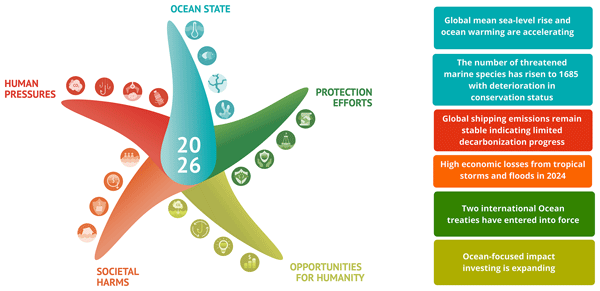
The 2026 Starfish Barometer
Marina Lévy

Karina von Schuckmann
Mahé Butel
William W. L. Cheung
Joachim Claudet
Thomas L. Frölicher
Patrice Guillotreau
Peter Haugan
Janine Adams
Diva Amon
Tamatoa Bambridge
Cynthia Barzuna
Bruno Blanke
Lijing Cheng
Sanae Chiba
Jorge Cortés
Pierre Friedlingstein
Jean-Pierre Gattuso
Stefan Gelcich
Jessica Gephart
Deborah Greaves
Audrey Hasson
Claire Jolly
Daoji Li
Yunne-Jai Shin
Aimée Slangen
Mere Takoko
Olivier Thébaud
Adrien Vincent
Patrick Vincent
The Ocean plays a central role in regulating climate, sustaining biodiversity, and supporting human societies, yet it is experiencing increasing environmental change driven by human activities. The Starfish Barometer provides an annual, science-based synthesis of global Ocean-related developments. It does not generate new data, but brings together already available siloed information. It is structured around five interconnected dimensions – the five arms of the Starfish: Ocean state, human pressures, societal harms, protection efforts, and opportunities for humanity. This article presents the second edition of the Barometer, released each year on World Ocean Day (8 June). In the 2026 Barometer, key highlights confirm the consequences and intensification of human pressures on the Ocean. Global sea-level rise and Ocean warming are accelerating; the number of identified threatened marine species continues to rise, and the level of threat they experience is intensifying. Over 84 % of global coral reefs are at risk, exposed to bleaching-level heat stress. Annual plastic waste generation reached 130 million t, with up to 10 % potentially reaching the Ocean. Global shipping emissions remain stable indicating limited decarbonization progress. Economic losses from tropical storms and floods were particularly high in 2024, illustrating how human pressures are translating into material costs for societies. Geopolitical instability has increased maritime insurance costs, and half of the social cost of climate change falls on the Ocean economy. Major in-situ ocean observing systems are shrinking reducing Ocean protection capacity. In parallel, protection efforts continue to expand. Stronger protection rules for rays and sharks have been adopted, reflecting gradual progress in conservation ambition. A treaty for the High Seas has been adopted, providing a legal framework to protect and govern the Ocean. More than 2000 Ocean startups worldwide are also contributing to innovation, with a growing will for sustainable Ocean development and Ocean-focused environmentally beneficial investments. Taken together, these signals show a growing gap between increasing human pressures on the Ocean and the efforts being made to protect it and drive change. While governance frameworks, financial commitments, and innovation ecosystems are advancing, current trajectories remain insufficient to meet global biodiversity, climate and Ocean sustainability objectives, as reflected for example in SDG 14, the link to other SDGs, and related international frameworks (von Schuckmann et al., 2020). By compiling robust, evidence-based information within a consistent annual framework guided by international and multidisciplinary expertise, the Starfish Barometer provides a transparent and evidence-based foundation to support accountability for a sustainable Ocean.
- Article
(1016 KB) - Full-text XML
- BibTeX
- EndNote


The Ocean is essential to life on Earth. It regulates the climate, sustains biodiversity, supports livelihoods, and shapes cultures worldwide. But it is undergoing rapid changes driven by human activities, with consequences for both marine ecosystems and human societies. Keeping track of these changes and their socioeconomic implications, and making them understandable beyond scientific and expert communities, are a growing need.
The Starfish Barometer was established to address this need by providing a yearly synthesis of the most recent, robust, and evidence-based scientific knowledge on the Ocean for a broad audience. This article presents the second edition of the Starfish Barometer, published on World Ocean Day (8 June), one year after its initial release (Lévy et al., 2025). While the first edition marked the creation of the Barometer, this new edition confirms its role as a recurring tool designed to update, year after year, information on the state of the Ocean and on its interactions with Humanity.
Indeed, the Starfish Barometer adopts a perspective centered on the interdependence between Humanity and the Ocean. Human activities generate pressures on the Ocean, but also drive protection efforts. In return, the Ocean provides essential benefits to societies while also posing risks and constraints. By presenting these interactions in a balanced and integrated manner, the Barometer aims to support informed public understanding and long-term engagement with Ocean issues.
An annual update is essential. The Ocean's state, the pressures it faces, and the efforts to protect it evolve continuously, as do scientific understanding and governance frameworks. Over the past year, new evidence, assessments, and policy developments have refined our knowledge of Ocean changes and their implications. The Starfish Barometer aims to capture these developments in a consistent way from one year to the next, contributing to a sustained narrative on the importance of the Ocean for society.
The Starfish Barometer does not generate new data. Instead, it brings together evidence-based information already published and validated in the peer-reviewed scientific literature as well as in institutional and international reports. Its added value lies in synthesizing this dispersed knowledge into an integrated overview, while keeping in sight the targets identified under the United Nations Sustainable Development Goal dedicated to the Ocean, SDG 14 (UN, 2015). The Barometer is designed for a non-specialist audience – including policy makers, educators, civil society actors, and the general public – while remaining grounded in established scientific evidence.
This second edition provides an overview of the information released in the year following the previous Starfish Barometer. It highlights key developments and new information, focusing on global rather than regional information, and on historical changes, current status, and ongoing trends, rather than future projections. The selection of Ocean-related developments – ranging from updated scientific findings to governance and policy milestones – is not exhaustive, but reflects globally relevant signals based on the best available updates or new knowledge at the time of publication. This article provides the peer-reviewed scientific foundation underpinning the release of the 2026 Starfish Barometer to the general public and all stakeholders, scheduled on 8 June 2026 (http://www.starfishbarometer.org, last access: 12 March 2026).
Each annual edition of the Starfish Barometer follows the same symbolic and structural framework, organised around five thematic arms (Fig. 1): Ocean state, human pressures, societal harms, protection efforts, and opportunities for Humanity. Key information is presented as concise, evidence-based summaries of key developments, highlighted through clear and accessible headlines. In the following, we refer to these as items. While this structure remains constant, items evolve from one edition to the next to reflect the most recent and relevant developments. Rather than systematically updating a fixed set of indicators, the Barometer offers a curated, narrative-based synthesis aimed at capturing a selection of policy-relevant Ocean signals of the year at the global scale, without seeking to provide an exhaustive account of Ocean-related developments. This curation relies on collective expert judgement within the scientific committee, guided by the availability of new evidence.
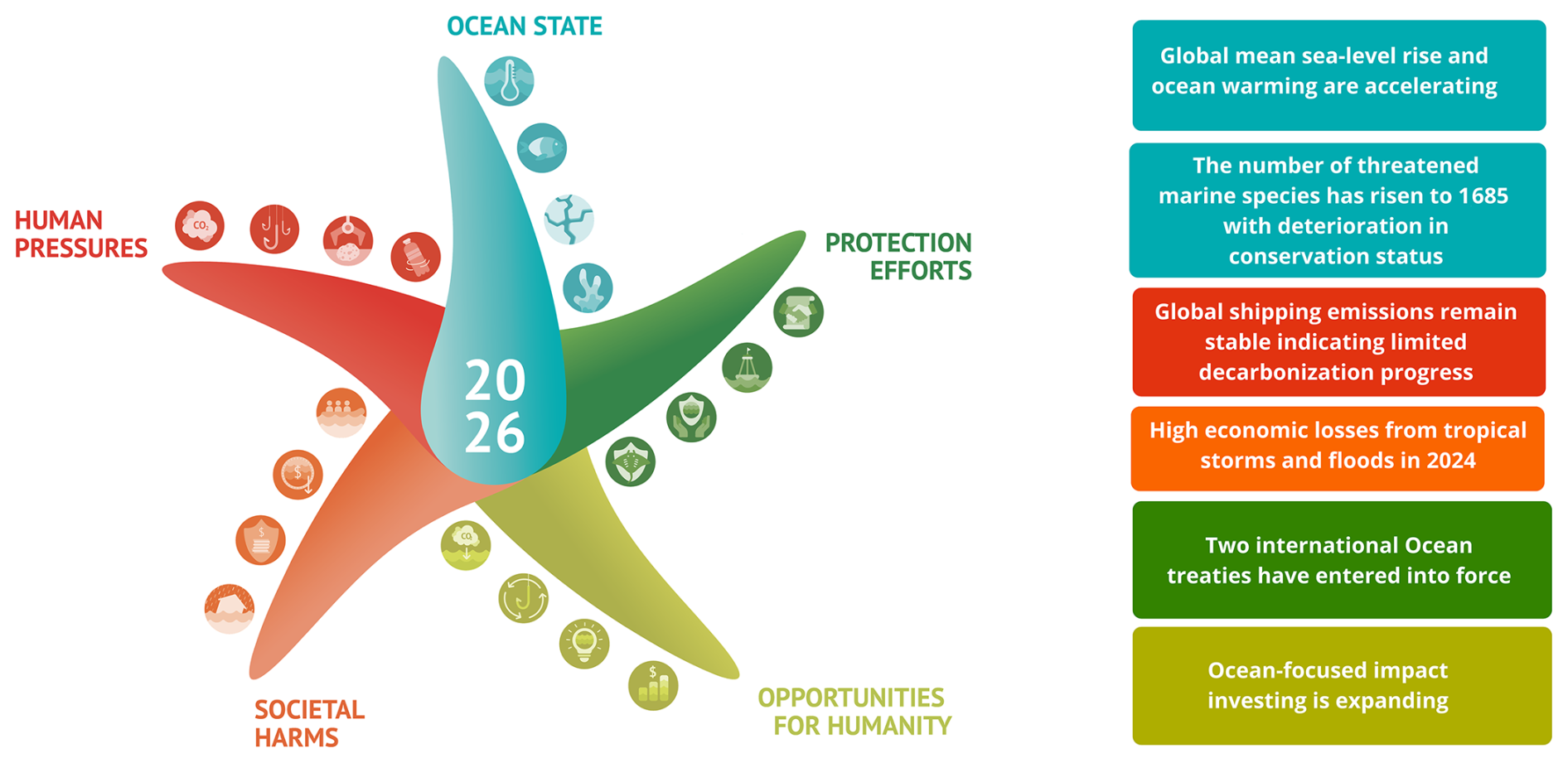
Figure 1Schematic representation of the five arms of the Starfish Barometer and six global key developments chosen for 2026. At the top, the blue arm represents the current state of the Ocean. The four other arms can be read horizontally, from red tones on the left to green tones on the right (negative to positive), or vertically, from darker tones at the top to lighter tones at the bottom (human actions to societal consequences).
2.1 Structural framework
The structure of the Starfish Barometer is represented by a five-armed Starfish. The upper arm provides a global view of the Ocean's state. The two left arms represent negative dynamics, from human-induced pressures to societal harms, while the two right arms reflect positive dynamics, from protection efforts to opportunities the Ocean offers to Humanity. The Starfish can be read horizontally, from negative to positive, or vertically, from human actions to societal consequences. Four items are attached to each arm.
2.2 Expert group
The content of the Starfish Barometer was curated by a multidisciplinary and international group of experts, substantially expanded compared to the first edition. This enlarged group brings together a wide range of scientific expertise covering most Ocean-related themes, as well as diverse geographic backgrounds, ensuring global coverage of Ocean issues. This writing committee was also designed to increase gender and geographical diversity, including experts from both the Global North and the Global South. Bringing diverse perspectives is a key aspiration of the Barometer's methodology, supporting a comprehensive and integrated view of the Ocean-human relationship.
The overall coordination of the article was ensured by two chairs assisted by a project manager. The five thematic arms of the Starfish Barometer were each coordinated by an arm leader. All other members of the expert group contributed to at least two arms, a structure deliberately chosen to foster cross-fertilisation across themes and to avoid siloed analyses.
2.3 Context of the second edition
This second edition of the Starfish Barometer was developed during the year that followed the United Nations Ocean Conference (UNOC-3) and its associated One Ocean Science Congress. This period was marked by particularly intense multilateral activity related to Ocean governance and protection, alongside the continued degradation of Ocean systems. The Barometer was therefore developed in a context of both heightened political momentum and persistent environmental pressures, reinforcing the importance of a yearly, structured assessment of Ocean-related developments. In practice, the analysis draws on the information and knowledge available at the time of writing.
2.4 Selection of items
For this second edition, the selection of items builds explicitly on last year's edition whenever possible. When updated information was available, these updates were prioritised and incorporated into the 2026 edition. As a result, a substantial share of the items presented this year, approximately between one half and three quarters, correspond to follow-ups of themes highlighted last year, reflecting the Barometer's objective of tracking Ocean-related signals over time.
Importantly, an item often encompasses several pieces of information related to a common topic. In such cases, continuity was ensured at the thematic level rather than through the systematic update of all associated figures or indicators. An item was retained from one year to the next when at least one relevant and meaningful element had evolved or been updated, even if other aspects of the topic remained unchanged. This approach allows the Barometer to follow key issues over time without implying that all quantitative elements are monitored or updated annually.
When no significant updated information was available for previously featured topics, new items were identified to reflect developments that became particularly relevant that year, even if they had not been highlighted in the previous edition. The Barometer should therefore be considered across successive editions, as developments highlighted in earlier years remain relevant and may not be repeated unless new information or updates become available.
This balance between continuity and renewal is a deliberate methodological choice. The Starfish Barometer acknowledges that Ocean-related data, assessments, and policy developments evolve at different paces across domains. Its non-exhaustive and adaptive framework allows certain key themes to be followed across successive editions when meaningful updates exist, while leaving room to introduce new information when warranted by the most recent scientific or governance context.
Candidate items – both follow-ups and new developments – were proposed by experts within each arm based on shared criteria, including global-scale relevance, robustness of the underlying data, significance of the development, and relevance to the Ocean-human relationship. Proposed items were first discussed within arm-specific subgroups and subsequently reviewed during plenary meetings involving the full expert group. These collective discussions ensured consistency across arms, facilitated cross-arm comparisons, and supported the final selection of items that best capture the most meaningful Ocean-related signals of the year. Together, these principles define how continuity and renewal are balanced across editions.
2.5 Arm allocation of items
The allocation of items to specific arms is guided by thematic relevance but is not exclusive, as many Ocean-related developments span multiple dimensions. For example, some services offered by the Ocean, presented as opportunities for Humanity, can simultaneously represent human pressures on the Ocean and drivers of societal harm. In such cases, items were assigned to the arm most closely aligned with their primary emphasis, following a consistent editorial framework rather than rigid topical boundaries.
This reflects the inherently interconnected nature of the Ocean–human system, in which processes and impacts often span multiple dimensions of the Barometer. While these interconnections are acknowledged, they are not systematically developed within the Barometer, as its objective is to present a set of robust, evidence-based signals rather than to establish explicit causal relationships between dimensions, which should also strictly be based on scientific evidence (von Schuckmann et al., 2026).
To maintain concision and balance across arms, each arm of the Starfish Barometer is limited in length and presents four key messages, one per item, anchored in recent developments and supported, in most cases, by figures and trend analyses. No explicit logical or causal links are imposed between individual items within or across arms. Instead, each item stands as an independent, robust signal from the year.
2.6 Data sources
All figures presented in the Starfish Barometer are drawn directly from authoritative sources and are reported as published, ensuring transparency and traceability. Readers seeking further methodological detail or information on associated uncertainties are referred to the original sources provided in the reference list.
3.1 Ocean state
Global mean sea-level rise and Ocean warming are accelerating. Global mean sea-level rise is a consequence of Ocean warming and land ice melt (Wang et al., 2024; Dangendorf et al., 2024; Mu et al., 2025). While global mean sea level rise was estimated at 2.6 ± 0.3 mm yr−1 over the period 1993 to 2011 (WMO, 2026), this rate has increased to 4.2 ± 0.3 mm yr−1 over the period 2012–2025 (Leclercq et al., 2026), consistent with an acceleration in sea-level rise over the last 30 years. Global mean Ocean warming is also since 1960 (Minière et al., 2023; Storto and Yang, 2024), and reached record values in 2025 (Pan et al., 2026; WMO, 2026). In addition to these long-term trends, recent years have been consecutively marked by particularly high values. In 2025, global mean temperatures at the sea surface reached their third highest levels on record, at 0.49 °C above the 1981–2010 baseline slightly below the peaks observed in 2023 and 2024 (Pan et al., 2026), with 20 % of the Global Ocean experiencing strong marine heatwave conditions in June 2025 (Mercator Ocean International, 2025a, b). Warming is a climate change stressor to marine ecosystems that adds to other climate change stressors such as changes in salinity, deoxygenation and acidification. About 25 % of the top 1000 m of the Ocean is now affected by more than two climate change stressors simultaneously (Tan et al., 2025).
Global sea ice extent reached its second lowest annual maximum at 32.1 million km2 since 1982. Sea ice is frozen seawater that forms in autumn and winter in both polar Ocean basins and progressively melts in spring and summer. It is important because it helps regulate Earth's climate and supports polar ecosystems. With climate change, the maximum extent reached by sea ice in winter continues to rapidly shrink in the Arctic (Meier et al., 2025; Roach and Meier, 2024; von Schuckmann et al., 2024; Walsh et al., 2022), and since 2015 also in the Antarctic (IPCC, 2019; Hobbs et al., 2024). Annual maximum sea ice extent reached 14.3 million km2 in March 2025 in the Arctic (Howell et al., 2025; Meier et al., 2025) and 17.8 million km2 in September 2025 in the Antarctic (Bliss et al., 2025), adding up (asynchronous sum) to 32.1 million km2 taken together. The Annual minimum was 4.6 million km2 in September 2025 in the Arctic and 2.0 million km2 in March 2025 in the Antarctic. This is the fourth consecutive year that Antarctic sea ice has reached a minimum below 2.0 million km2 (Bliss et al., 2025). Declining sea ice is increasing the accessibility of trans-arctic shipping routes (PAME, 2026).
The number of threatened marine species has risen to 1685 with deterioration in conservation status. As of the most recent update (April 2026), 1685 (8.6 %) of the 19 508 marine species assessed by the International Union for Conservation of Nature worldwide are classified as threatened with extinction on their Red List (IUCN, 2026). This indicator provides a broad signal of the status of assessed marine biodiversity, although it also reflects the evolving coverage and completeness of species assessments over time. Compared with the value reported in the previous edition of the Barometer, the current assessment includes eight additional threatened marine species (Starfish, 2025: Lévy et al., 2025). Of the threatened species, 293 are classified as Critically Endangered, 660 as Endangered, and 732 as Vulnerable. This corresponds to a deterioration in conservation status for 30 species since last year. Population trends reinforce this assessment: 1224 threatened species are experiencing population declines, 13 more than last year, while only 28 species show increasing populations (one fewer than in 2024). Beyond extinction risk, the IUCN Red List also reports 1631 threats to ecosystems such as invasive and other problematic species, genes and diseases affecting marine ecosystems, further undermining ecosystem stability and resilience.
84.4 % of coral reefs experience heat stress severe enough to cause bleaching. Warm-water coral reefs are among the most diverse and valuable ecosystems on Earth. They occupy nearly 0.2 % of the global seafloor, support at least 25 % of all marine species, and underpin coastal protection, food security, livelihoods, cultural values and human wellbeing for hundreds of millions of people worldwide (Souter et al., 2020). Climate change now represents an existential threat to coral reefs (Pearce-Kelly et al., 2025), and repeated thermal stress drives widespread bleaching, mortality and long-term loss of ecosystem function (IPCC, 2019). Between January 2023 and September 2025, 84.4 % of the world's coral reefs have experienced bleaching-level heat stress, exceeding the previous global record of 68.2 % during 2014–2017 and far surpassing the 1998 and 2010 mass bleaching episodes (Coral Reef Watch, 2026). Coral reef degradation is also influenced by additional stressors such as eutrophication, acidification and overfishing, which can act in synergy with climate change (Bhuyan et al., 2026). All wetland ecosystems are losing surface area since 1970, coral reefs (−26.4 %) but also mangroves (−11.8 %), salt marshes (−14 %), kelp forests (−48.1 %), and seagrass (−16.3 %) (Ramsar, 2025).
3.2 Human pressures
Global shipping emissions remain stable indicating limited decarbonisation progress. Fossil fuel CO2 emissions are the main contributor to recent climate change (IPCC, 2021). Global fossil carbon dioxide (CO2) emissions have increased by 1.1 % between 2024 and 2025, and reached a record high of 38.1 billion t CO2 in 2025, with 2025 emissions from international shipping at 0.6 billion t CO2 similar to their 2024 value (Andrew and Peters, 2025; Friedlingstein et al., 2025). A Net-Zero framework, proposing a USD 100 t−1 CO2 fee on vessels exceeding emission thresholds, was developed by the International Maritime Organization but stalled in 2025 and is rescheduled for 2026.
67 % of industrial fishing vessels in large coastal marine protected areas are untracked. Between 2022 and 2024, an estimated 67 % of industrial fishing vessels operating in coastal Marine Protected Areas (MPAs) larger than 1 km2 were not publicly tracked, highlighting widespread unsustainable fishing practices and major shortcomings in transparency and governance (Paolo et al., 2024; Basurto et al., 2025; Seguin et al., 2025). These MPAs represent 17.4 % of global marine protection, yet industrial fishing pressure remains largely untracked. In contrast, industrial fishing activity is close to zero in fully and highly protected MPAs, which currently cover only about 2.2 % of the global Ocean (Raynor et al., 2025), underscoring the effectiveness of strong protection measures when properly implemented and enforced. Climate change further exacerbates these governance challenges by shifting fish distributions and fishing effort (Pinsky et al., 2020; Dahms and Killen, 2023). Expanding marine protection under the Kunming-Montreal Global Biodiversity Framework target to conserve 30 % of marine and coastal areas by 2030, coupled with effective monitoring, enforcement, and climate-adapted governance, is critical to reducing unsustainable fishing as a direct human pressure on Ocean ecosystems. The proportion of overfished stocks has been increasing at a rate of approximately 1 % yr−1 over the past two decades (Sharma et al., 2025).
31 exploration contracts for deep-sea mineral resources are currently active. The deep sea is the largest and least understood biome on Earth, it holds a remarkable diversity of life forms adapted to extreme conditions, it is important for global biodiversity and function, including fisheries support and climate regulation (Sánchez et al., 2024). A total of thirty-one contracts lasting 15 years each are currently ongoing in areas beyond national jurisdictions, issued by the International Seabed Authority, including 19 contracts for polymetallic nodules, 7 for polymetallic sulphides and 5 for cobalt-rich ferromanganese crusts (International Seabed Authority, 2026). Exploration activities consist of geological studies, mineral resource assessments, bathymetric measurements and environmental surveys and sampling. They can also include the development and testing of mining technology and mineral processing techniques (Hilmi et al., 2026). If scaled up to industrial levels without effective environmental safeguards, deep-sea mining could have severe long-term impacts on deep-Ocean ecosystems due to their slow recovery rates (Amon et al., 2022). In 2026, eight new countries opposed deep-seabed mining, bringing the global total to 40 countries (Deep Sea Conservation Coalition, 2026).
A record 130 Mt of plastic waste was produced, with up to 10 % potentially reaching the Ocean. Global plastic production continues to rise, and annual plastic waste polluting the environment reached 130 Mt yr−1 in 2025 (The Pew Charitable Trusts, 2025). Due to the lack of global monitoring, the proportion of total waste that reaches the Ocean remains highly uncertain, likely between 1 and 14 Mt yr−1 (Lebreton et al., 2017; The Pew Charitable Trusts, 2025; UNEP, 2021). The main sources of marine litter are land-based and plastics constitute 85 % of total marine litter (UNEP, 2021). The seafloor is the primary sink for large plastic debris, with approximately 11 million Mt accumulated globally (Zhu et al., 2024), where recovery is neither technically nor financially feasible. More than 2800 marine species are impacted by plastic pollution through entanglement, ingestion, chemical contamination and other processes (Tekman et al., 2022). While an agreement for an International Plastics Treaty failed in 2025, a Global Plastic Action Partnership is advancing systemic and circular-economy solutions to reduce plastic pollution (Global Plastic Action Partnership, 2026).
3.3 Societal harms
High economic losses from tropical storms and floods in 2024. Economic losses from tropical storms and floods can vary greatly from one year to another. Tropical storms draw their energy from warm Ocean waters making the Ocean a key driver of storm intensity and frequency (Guan et al., 2026). Over the long term, related economic losses have increased decade by decade since the early 1980s, with an acceleration during the past two decades (WMO, 2021). In 2024, damage costs due to tropical storms and flood surges were nearly twice as high as in 2023, reaching USD 212 billion (inflation-adjusted, Munich RE, 2026), of which only 34 % were insured. This high level is largely explained by two strong hurricanes. Other long-term consequences add to the direct economic damage of tropical cyclones, such as 79 000 children prevented from accessing education between 2000 and 2020 (Jing et al., 2025). Monetary valuation of losses from tropical storms and floods can shape decisions and actions to reduce exposure to risk, but these effects occur within broader socio-economic systems where underinvestment persists and losses from extreme events can reinforce vulnerability, inequality, and instability (Hallegatte et al., 2020; Weerasinghe et al., 2025; Fischer and Patterson, 2026).
Geopolitical instability has increased maritime insurance costs to USD 39.9 billion. The global marine insurance premium base reached USD 39.9 billion in 2024, representing a 1.5 % increase from 2023, and a 21 % increase since 2021 (IUMI, 2025). The largest share of risk is held by cargo (57 %), followed by hull (24 %), offshore energy (12 %) and marine liability (7 %). While expanding trade has contributed to insurance premium growth, geopolitical instability and international conflicts have emerged as major additional drivers, creating uncertainty across global trade and becoming critical factors of risk (Chi et al., 2025; Cong et al., 2024; Kotenko et al., 2022).
Half of the social cost of climate change falls on the Ocean economy. The social cost of carbon estimates the economic damages caused by emitting one additional tonne of CO2 into the atmosphere. For the Ocean, climate damages to fisheries and mariculture, coral reefs, mangroves, and ports were estimated at USD 48 t−1 of CO2 in 2020, equalling all other carbon social costs including those on health, agriculture and infrastructure and highlighting the importance of including Ocean impacts in carbon pricing and climate policy to fully capture societal harms (Bastien-Olvera et al., 2026). Much of this increase comes from declining fisheries and the degradation of coastal protection and biodiversity. Despite its importance for guiding policy, only 28 % of global emissions are currently covered by a carbon price (World Bank, 2025).
8260 migrants lost their lives at sea. In 2025, the number of dead or missing migrants at sea stands at high levels (8260 fatalities, IOM, 2026), highlighting that the Ocean remains an important and unsafe route for human mobility. This reflects the Ocean as a space of transit, risk, and human activity, where significant humanitarian challenges persist. The drivers of migration are complex and multifaceted. Economic and political insecurity due to resource grabbing and severe climatic conditions, including extreme weather events, sea-level rise, desertification, and water scarcity, are among the factors that push people to leave their countries (Maatouk et al., 2025; Yang et al., 2025).
3.4 Protection efforts
Marine protected areas cover 10.01 % of the global Ocean, with 3.2 % fully or highly protected. Global Ocean protection has reached the 10 % milestone but remains far from the Kunming-Montreal Global Biodiversity Framework target to conserve 30 % of marine and coastal areas by 2030. Marine Protected Area (MPA) coverage has increased from 8.34 % in 2024 to 10.01 % of the global Ocean in mid-2026 (Lévy et al., 2025; ProtectedPlanet, 2026). The global Ocean can be divided into areas within national jurisdiction, and international waters beyond national jurisdiction. A total of 22.54 % of national waters and 1.45 % of international waters are designated as MPAs. Actively managed MPAs, with evidence of monitoring and enforcement, have more positive ecological outcomes than those that are only designated (Horta e Costa et al., 2025). Despite this recent progress, the extent of effectively protected areas remains limited at the global scale, and their outcomes depend on implementation, monitoring, and broader enabling conditions, such as governance arrangements and incentive structures (Barzuna et al., 2025): 3.2 % of the Ocean is fully or highly protected (Marine Protection Atlas, 2026).
Major in-situ Ocean observing systems are shrinking reducing Ocean protection capacity. Effective protection requires sustained measurement to anticipate risks and respond effectively. The number of in-situ Ocean observations on the physical and chemical state of the Ocean is estimated at 120 000 d−1 in 2025 (GOOS, 2025). This number is primarily driven by autonomous networks such as drifting buoys with high-frequency observations. The number of Argo profiling floats reached 4166 in December 2025 (Argo, 2026). Some major networks such as moored buoys and ship-based observations are shrinking since the pandemic (Boyer et al., 2023). Part of the observation decline is due to global budget constraints, reduced ship-time and reduced number of experienced personnel, reflecting broader constraints on ocean science capacity (Tanhua et al., 2024; von Jackowski, 2025; GOOS, 2025). Taken together this threatens international Ocean science and diplomacy (Gattuso et al., 2025). Ocean observing is a critical infrastructure for climate resilience, disaster risk reduction, Ocean health, sustainable development, and economic stability. They are the feeding ground for operational systems to monitor and forecast changing Ocean conditions.
Two international Ocean treaties have entered into force. Global governance of the High Seas has gained momentum with the Agreement on the Conservation and Sustainable Use of Marine Biological Diversity Beyond National Jurisdiction (BBNJ) entering into force on 17 January 2026. This treaty provides a shared legal framework to protect and govern the 61 % of the Ocean beyond national jurisdiction. It sets the foundation for establishing marine protected areas in international waters, for environmental impact assessments, for fairer rules for sharing benefits from marine genetic resources, and for giving a voice to indigenous and local communities and ensuring equity through capacity building and technology transfer. A treaty to ban harmful fisheries subsidies came into force in September 2025 (WTO, 2026). This treaty prohibits government support to illegal fishing activities, a key factor in the widespread depletion of the world's fish stocks and human trafficking (Selig et al., 2022). It commits members of the World Trade Organization to curbing billions of dollars in annual spending on the most harmful subsidies. Subsidies that lower the cost of fishing can fuel overfishing and illegal fishing where management is weak. An estimated 65 % of government fisheries support carries this risk (OECD, 2025a).
Stronger international protections for sharks and rays adopted. A decision regarding international trade protections for several marine species was adopted by parties of the Convention on International Trade in Endangered Species of Wild Fauna and Flora (CITES) in December 2025 (IISD, 2025). Oceanic whitetip sharks, whale sharks, and manta and devil rays were upgraded to the highest levels of protection, taking a significant step toward curbing the over-exploitation of these vulnerable marine species. Wedgefishes and giant guitarfish were assigned zero export quotas, effectively halting all legal international trade in these wild-caught species (CITES, 2026a). Gulper, tope, and smooth-hound sharks were listed for the first time under CITES trade controls. Trade bans do not stop overexploitation and illegal trade, but contribute to closing major loopholes in the global fin, meat, and cartilage trades that drive population collapses. To date, international commercial trade is highly restricted or prohibited for more than 1500 marine species under CITES (e.g. corals, giant clams, seahorses) (CITES, 2026b).
3.5 Opportunities for Humanity
Global nutrition from fisheries increasingly relies on circular economy practices. In 2023, global marine animal production, including both fisheries and aquaculture, stalled at 115 million t (FAO FishStatJ, 2026), a number comparable to last year (Lévy et al., 2025). In addition, the global production of marine aquatic plants was 39 million t (FAO FishStatJ, 2026). Thus global marine production, including animals and plants, reached a total of 154 million t. Aquaculture production represented 48 % of this global marine production (FAO FishStatJ, 2026). Marine animal production is an important source of nutrition for people around the world, with around 89 % of all aquatic animal production destined for direct human consumption in 2022 (FAO SOFIA, 2024). Beyond direct consumption, a significant share of marine animal production is used to produce fishmeal and fish oil, which are primarily used in animal feed, largely driven by growing demand for aquaculture (FAO SOFIA, 2024). By-products of marine fisheries have supplied an increasing share of fishmeal and fish oil production, with 34 % of fishmeal and 53 % of fish oil sourced from by-products in 2022. This increasing use of fisheries by-products represents an opportunity for advancing circular economy practices (FAO SOFIA, 2024).
Over 2000 startups drive Ocean innovations. The Ocean is increasingly recognised as a driver of innovation, particularly in food and energy systems, climate change mitigation and adaptation, human health, and coastal resilience. Over the past decade, more than 2000 startups have emerged worldwide across the Ocean economy (Katapult Ocean, 2024) and more are coming (Chang et al., 2026). Their role in driving digital transformation and cleaner energy adoption can help Ocean industries shift away from harmful business-as-usual practices and ease current Ocean economy productivity stagnation and decline (Jolliffe and Jolly, 2025). However, the external conditions under which businesses operate remain insufficiently aligned with sustainability goals and continue to perpetuate systemic risks. Addressing these challenges requires collaboration and coordinated collective and individual action to create an enabling environment in which businesses can contribute to a just and sustainable future (Jones et al., 2025), alongside the establishment of rigorous standards and science-based regulatory pathways (Doney et al., 2025).
Ocean-focused impact investing is expanding. In 2018, four environmentally beneficial investment funds were dedicated to Ocean health and sustainability worldwide (WEF, 2025). By 2025, more than 40 venture and impact funds were active or in fundraising across the Ocean economy (WEF, 2025). These investments cover a range of sectors, including sustainable seafood, seaweed production, Ocean pollution mitigation, coastal resilience, and Ocean data. Financial commitments to Ocean-related activities have increased accordingly. Official development assistance for the Ocean economy reached USD 3.5 billion in 2022, a 45 % increase from 2021 (OECD, 2024). Of this, USD 2.4 billion (69 %) supported initiatives that promote sustainable Ocean activities and protect marine ecosystems. Stakeholders announced EUR 8.7 billion in firm financial commitments for Ocean-related projects by 2030, comprising EUR 4.7 billion from philanthropies and private investors and EUR 4 billion from public financial institutions (BEFF, 2025). These amounts remain below estimates of the annual investment required to achieve SDG 14, which are approximately USD 175 billion yr−1 by 2030, indicating a gap between current financial commitments and the scale of transformation required (Johansen and Vestvik, 2020; OECD, 2025b).
The Ocean buffers climate change. The Ocean has a natural capacity to remove and store heat and carbon away from the atmosphere and, as such, is crucial in mitigating climate change. It has absorbed about 12 billion t CO2 yr−1 on average over the last decade, roughly 29 % of human-caused CO2 emissions (Friedlingstein et al., 2025), resulting in Ocean acidification. This Ocean sink has been stagnant since 2016, largely in response to climate variability modulating the expected sink growth due to the atmospheric CO2 increase. The 2023/2024 sink strength was further affected by the El Niño conditions and the near-global marine heatwave (Li et al., 2024; Müller et al., 2025). Greenhouse gas emissions have caused an Earth energy imbalance, leading to heat accumulation in the climate system that has reached its highest levels in modern records over the past two decades (Forster et al., 2025; WMO, 2026). The Ocean absorbs roughly 90 % of this excess heat (von Schuckmann et al., 2023), resulting in Ocean warming, while the remaining 10 % warms the continents and atmosphere and melts ice on the planet.
Building on the first edition released in 2025, the 2026 Barometer introduces several new thematic areas, including deep-sea mining exploration contracts, the social costs of Ocean-related climate change, the capacity of Ocean observing systems, strengthened protection for sharks and rays, circular economy practices in fisheries, and the Ocean's role as a carbon and heat sink. It also brings new perspectives on issues already tracked in the previous edition, including global sea-ice extent, industrial fishing activities within marine protected areas, and key dimensions of the blue economy.
Most of all, the 2026 Starfish Barometer confirms an Ocean system under intensifying stress. Intensification is the dominant signal, with indication of acceleration in some cases: global mean sea-level rise and Ocean warming are accelerating; sea-ice extent is reaching historically low levels at both poles; the number of identified threatened marine species continues to climb; an unprecedented share of coral reefs are under severe heat stress. In parallel, human pressures remain high: shipping emissions show limited signs of decarbonisation, industrial fishing is still insufficiently transparent, deep-sea mining exploration contracts are being granted, and plastic waste has reached record levels while the fraction reaching the Ocean remains poorly evaluated due to the absence of global monitoring. These pressures translate into rising societal harms, highlighting that the Ocean-human relationship is not only ecological, but profoundly social, economic, and geopolitical: the sharp long-term increase in economic losses from storms and floods, the growing costs of maritime insurance, the high toll of migration fatalities at sea, and new estimates showing that Ocean-related damages represent a major share of the total socioeconomic cost of climate change, overexploitation, biodiversity loss and pollution.
At the same time, 2026 also reflects tangible momentum for protection and transformation. Marine protected areas have expanded, and evidence continues to show that strong, fully or highly protected areas deliver the most effective outcomes – yet still cover only a small fraction of the Ocean. In-situ observations are critical infrastuctures, but show signs of decline due to budget constraints even as societal demand for Ocean information rises. Critically, the entry into force of major international agreements – including the High Seas treaty and the ban on harmful fisheries subsidies – marks a step change in the legal and institutional conditions for action, alongside strengthened trade protections for threatened sharks and rays. On the opportunity side, circular economy gains in fisheries and aquaculture, a rapidly growing innovation ecosystem, and expanding Ocean-focused investing illustrate the potential for solutions, while also underscoring that current financial commitments remain far below estimated needs.
The Starfish Barometer highlights the importance of bringing together robust evidence from across the vast, often siloed network of Ocean science, policy, and practice. By integrating evidence-based knowledge into a coherent global picture across Ocean state, human pressures, societal harms, protection efforts, and opportunities for Humanity – and updating it annually – it provides a clear view of trends, emerging risks and multilateral advances. This global perspective makes it evident that Ocean change is inherently transboundary and requires coordinated international action.
No data sets were used in this article.
ML co-developed the concept of the starfish barometer, provided overall leadership and led the writing of the manuscript. KvS served as co-lead on scientific directions and played a central role in shaping the manuscript's final writing. MB coordinated the project, facilitated collaboration across all contributors, and organized the meetings and workflow that enabled the integration of the Barometer. The Barometer arms were led by TF (Ocean State), WC (Human Pressures), PG (Societal Harms), JC (Protection Efforts), and PH (Opportunities for Humanity). All coauthors contributed to content curation and manuscript preparation.
At least one of the (co-)authors serves as topic editor for the report to which this paper belongs. The peer-review process was guided by an independent editor, and the authors also have no other competing interests to declare.
Publisher's note: Copernicus Publications remains neutral with regard to jurisdictional claims made in the text, published maps, institutional affiliations, or any other geographical representation in this paper. The authors bear the ultimate responsibility for providing appropriate place names. Views expressed in the text are those of the authors and do not necessarily reflect the views of the publisher.
We wish to honor the memory of Kristina Gjerde, who warmly supported the first edition of the Starfish Barometer. The Starfish barometer is an outcome of the 3rd United Nations Ocean Conference. This Starfish edition was greatly facilitated by Laurence Collet (communication), Xi Ruan (production support) and Pierre Bahurel (operational leadership). We thank François Houllier and Olivier Poivre d'Arvor for their support. This article has been reviewed by Corinne Le Quéré and Elva Escobar-Briones, whose thoughtful and constructive comments have substantially supported the improvement of this edition of the Starfish Barometer.
This paper was edited by Marilaure Grégoire and reviewed by Elva Escobar-Briones and Corinne Le Quéré.
Amon, D. J., Levin, L. A., Metaxas, A., Mudd, G. M., and Smith, C. R.: Heading to the deep end without knowing how to swim: Do we need deep-seabed mining?, One Earth, 5, 220–223, https://doi.org/10.1016/j.oneear.2022.02.013, 2022. a
Andrew, R. M. and Peters, G. P.: The Global Carbon Project's fossil CO2 emissions dataset (2025v15), Zenodo [data set], https://doi.org/10.5281/zenodo.17417124, 2015. a
Argo: https://argo.ucsd.edu, last access: 2 April 2026. a
Barzuna, C., Haugan, P., Barbière, J., Swift, A., Khan, M., Ansong, J. O., James, P. A. S., Scherer, M., Thiele, T., von Schuckmann, K., Abramic, A., Barrowclough, D., Cisneros-Montemayor, A., Girón, A., Heaps, L., Koirala, S., Lyons, M., Paul, K., Priyanto, A. T., Randone, M., Rosado, S., Santos, C. F., Savoldelli, C., Spalding, A. K., Strand, M., Sumaila, U. R., Swaddling, A., Turner, J., Vestergaard, O., and Yulianto, I.: Handbook on Sustainable Ocean Plans: A practitioners' guide, World Resources Institute, Washington, DC, https://oceanpanel.org/publication/sop-handbook/ (last access: 12 March 2026), 2025. a
Bastien-Olvera, B. A., Aburto-Oropeza, O., Brander, L. M., Cheung, W. W., Emmerling, J., Free, C. M., Granella, F., Tavoni, M., Verschuur, J., and Ricke, K.: Accounting for ocean impacts nearly doubles the social cost of carbon, Nat. Clim. Chang., https://doi.org/10.1038/s41558-025-02533-5, 2026. a
Basurto, X., Gutierrez, N. L., Franz, N., Mancha-Cisneros, M. D. M., Gorelli, G., Aguión, A., Funge-Smith, S., Harper, S., Mills, D. J., Nico, G., and Tilley, A.: Illuminating the multidimensional contributions of small-scale fisheries, Nature, 637, 875–884, https://doi.org/10.1038/s41586-024-08448-z, 2025. a
BEFF: Blue Economy and Finance Forum, https://beff2025monaco.org/images/BilanBlue%20Economy%20and%20Finance%20ForumVDEF_11.06.pdf (last access: 12 March 2026), 2025. a
Bhuyan, M. S., Jenzri, M., Islam, M. T., Adikari, D., and Hoque, M. M.: Climate change impacts on coral reefs and emerging resilience pathways: A systematic review, Ocean Coast. Manag., 276, 108134, https://doi.org/10.1016/j.ocecoaman.2026.108134, 2026. a
Bliss, A. C., Comiso, J. C., Parkinson, C. L., Gersten, R., and Markus, T.: Current State of Sea Ice Cover, https://earth.gsfc.nasa.gov/cryo/data/current-state-sea-ice-cover (last access: 2 April 2026), 2025 a, b
Boyer, T., Zhang, H., O'Brien, K., Reagan, J., Diggs, S., Freeman, E., Garcia, H., Heslop, E., Hogan, P., Huang, B., Jiang, L., Kozyr, A., Liu, C., Locarnini, R., Mishonov, A., Paver, C., Wang, Z., Zweng, M., Alin, S., Barbero, L., Barth, J., Belbeoch, M., Cebrian, J., Connell, K., Cowley, R., Dukhovskoy, D., Galbraith, N., Goni, G., Katz, F., Kramp, M., Kumar, A., Legler, D., Lumpkin, R., McMahon, C., Pierrot, D., Plueddemann, A., Smith, E., Sutton, A., Turpin, V., Jiang, L., Suneel, V., Wanninkhof, R., Weller, R., and Wong, A.: Effects of the Pandemic on Observing the Global Ocean, B. Am. Meteorol. Soc., 104, E389–E410, https://doi.org/10.1175/BAMS-D-21-0210.1, 2023. a
Chang, L., Giron, C., and Tardiff, R.: The Ocean Economy Imperative: Defining Value, Managing Risk and Mobilizing Investment, World Economic Forum, https://reports.weforum.org/docs/WEF_Ocean_Economy_Imperative_2026.pdf (last access: 12 March 2026), 2026. a
Chi, X., Zheng, R., Chen, Y., and Xiao, G.: Research on the volatility spillover effects of geopolitical conflict risks on international shipping and crude oil markets, Front. Mar. Sci., 12, 1647599, https://doi.org/10.3389/fmars.2025.1647599, 2025. a
CITES: Amendments to Appendices I and II of the Convention adopted by the Conference of the Parties at its 20th meeting, Samarkand, 24 November–5 December 2025, Notification To The Parties, No. 2026/005, Geneva, https://cites.org/sites/default/files/notifications/E-Notif-2026-005_0.pdf (last access: 12 March 2026), 2026a. a
CITES: Convention on International Trade in Endangered Species of Wild Fauna and Flora, https://cites.org/eng, last access: 2 April 2026b. a
Cong, L., Zhang, H., Wang, P., Chu, C., and Wang, J.: Impact of the Russia-Ukraine Conflict on Global Marine Network Based on Massive Vessel Trajectories, Remote Sens., 16, 1329, https://doi.org/10.3390/rs16081329, 2024. a
Coral reef Watch: https://coralreefwatch.noaa.gov/satellite/research/coral_bleaching_report.php, last access: 2 April 2026. a
Dahms, C. and Killen, S. S.: Temperature change effects on marine fish range shifts: A meta-analysis of ecological and methodological predictors, Glob. Change Biol., 29, 4459–4479, https://doi.org/10.1111/gcb.16770, 2023. a
Dangendorf, S., Sun, Q., Wahl, T., Thompson, P., Mitrovica, J. X., and Hamlington, B.: Probabilistic reconstruction of sea-level changes and their causes since 1900, Earth Syst. Sci. Data, 16, 3471–3494, https://doi.org/10.5194/essd-16-3471-2024, 2024. a
Deep Sea Conservation Coalition: https://deep-sea-conservation.org/solutions/no-deep-sea-mining/momentum-for-a-moratorium/, last access: 2 April 2026. a
Doney, S., Lebling, K., Ashford, O. S., Pearce, C. R., Burns, W., Nawaz, S., Satterfield, T., Findlay, H. S., Gallo, N. D., Gattuso, J. P., and Halloran, P.: Principles for responsible and effective marine carbon dioxide removal development and governance, World Resources Institute, hal-05121256, https://doi.org/10.69902/84b3a9a8, 2025. a
FAO FishStatJ: Software for Fishery and Aquaculture Statistical Time Series, Food and Agriculture Organization of the United Nations, https://www.fao.org/fishery/en/topic/166235/en, last access: 2 April 2026. a, b, c
FAO SOFIA: Blue Transformation in action, The State of World Fisheries and Aquaculture (SOFIA) 2024, Rome, https://doi.org/10.4060/cd0683en, 2024. a, b, c
Fischer, S. and Patterson, L.: Natural disasters, environmental values, and the importance of politics: Empirical evidence from worldwide survey data, J. Econ. Psychol., 114, 102890, https://doi.org/10.1016/j.joep.2026.102890, 2026. a
Forster, P. M., Smith, C., Walsh, T., Lamb, W. F., Lamboll, R., Cassou, C., Hauser, M., Hausfather, Z., Lee, J.-Y., Palmer, M. D., von Schuckmann, K., Slangen, A. B. A., Szopa, S., Trewin, B., Yun, J., Gillett, N. P., Jenkins, S., Matthews, H. D., Raghavan, K., Ribes, A., Rogelj, J., Rosen, D., Zhang, X., Allen, M., Aleluia Reis, L., Andrew, R. M., Betts, R. A., Borger, A., Broersma, J. A., Burgess, S. N., Cheng, L., Friedlingstein, P., Domingues, C. M., Gambarini, M., Gasser, T., Gütschow, J., Ishii, M., Kadow, C., Kennedy, J., Killick, R. E., Krummel, P. B., Liné, A., Monselesan, D. P., Morice, C., Mühle, J., Naik, V., Peters, G. P., Pirani, A., Pongratz, J., Minx, J. C., Rigby, M., Rohde, R., Savita, A., Seneviratne, S. I., Thorne, P., Wells, C., Western, L. M., van der Werf, G. R., Wijffels, S. E., Masson-Delmotte, V., and Zhai, P.: Indicators of Global Climate Change 2024: annual update of key indicators of the state of the climate system and human influence, Earth Syst. Sci. Data, 17, 2641–2680, https://doi.org/10.5194/essd-17-2641-2025, 2025. a
Friedlingstein, P., O'Sullivan, M., Jones, M. W., Andrew, R. M., Bakker, D. C. E., Hauck, J., Landschützer, P., Le Quéré, C., Li, H., Luijkx, I. T., Peters, G. P., Peters, W., Pongratz, J., Schwingshackl, C., Sitch, S., Canadell, J. G., Ciais, P., Aas, K., Alin, S. R., Anthoni, P., Barbero, L., Bates, N. R., Bellouin, N., Benoit-Cattin, A., Berghoff, C. F., Bernardello, R., Bopp, L., Brasika, I. B. M., Chamberlain, M. A., Chandra, N., Chevallier, F., Chini, L. P., Collier, N. O., Colligan, T. H., Cronin, M., Djeutchouang, L., Dou, X., Enright, M. P., Enyo, K., Erb, M., Evans, W., Feely, R. A., Feng, L., Ford, D. J., Foster, A., Fransner, F., Gasser, T., Gehlen, M., Gkritzalis, T., Goncalves De Souza, J., Grassi, G., Gregor, L., Gruber, N., Guenet, B., Gürses, Ö., Harrington, K., Harris, I., Heinke, J., Hurtt, G. C., Iida, Y., Ilyina, T., Ito, A., Jacobson, A. R., Jain, A. K., Jarníková, T., Jersild, A., Jiang, F., Jones, S. D., Kato, E., Keeling, R. F., Klein Goldewijk, K., Knauer, J., Kong, Y., Korsbakken, J. I., Koven, C., Kunimitsu, T., Lan, X., Liu, J., Liu, Z., Liu, Z., Lo Monaco, C., Ma, L., Marland, G., McGuire, P. C., McKinley, G. A., Melton, J., Monacci, N., Monier, E., Morgan, E. J., Munro, D. R., Müller, J. D., Nakaoka, S.-I., Nayagam, L. R., Niwa, Y., Nutzel, T., Olsen, A., Omar, A. M., Pan, N., Pandey, S., Pierrot, D., Qin, Z., Regnier, P. A. G., Rehder, G., Resplandy, L., Roobaert, A., Rosan, T. M., Rödenbeck, C., Schwinger, J., Skjelvan, I., Smallman, T. L., Spada, V., Sreeush, M. G., Sun, Q., Sutton, A. J., Sweeney, C., Swingedouw, D., Séférian, R., Takao, S., Tatebe, H., Tian, H., Tian, X., Tilbrook, B., Tsujino, H., Tubiello, F., van Ooijen, E., van der Werf, G., van de Velde, S. J., Walker, A., Wanninkhof, R., Yang, X., Yuan, W., Yue, X., and Zeng, J.: Global Carbon Budget 2025, Earth Syst. Sci. Data Discuss. [preprint], https://doi.org/10.5194/essd-2025-659, in review, 2025. a, b
Gattuso, J.-P., Houllier, F., Adams, J., Amon, D., Bambridge, T., Cheung, W., Chiba, S., Cortés, J., Duarte, C. M., Frölicher, T., Gelcich, S., Gjerde, K., Greaves, D., Haugan, P. M., Li, D., and Tuda, A.: US federal cuts threaten international ocean science and diplomacy, Nature Ecology and Evolution, 9, 1079–1080, https://doi.org/10.1038/s41559-025-02750-3, 2025. a
Global Plastic Action Partnership: https://www.globalplasticaction.org/home, last access: 2 April 2026. a
GOOS: Global Ocean Observing System Status Report 2025, No. GOOS-310, https://www.ocean-ops.org/goosreport/#home, 2025. a, b
Guan, S., Huang, M., Cai, W., Zhang, Z., Lin, I. I., Kim, H. S., Zhou, L., Lin, X., Xu, Z., Jin, F. F., and Mei, W.: Weak self-induced cooling of tropical cyclones amid fast sea surface warming, Nat. Geosci., 19, 153–158, https://doi.org/10.1038/s41561-025-01879-x, 2026. a
Hallegatte, S., Vogt-Schilb, A., Rozenberg, J., Bangalore, M., and Beaudet, C.: From Poverty to Disaster and Back: a Review of the Literature, Econ. Disasters Clim. Chang., 4, 223–247, https://doi.org/10.1007/s41885-020-00060-5, 2020. a
Horta e Costa, B., de Benito-Abelló, C., Pike, E., Turnbull, J., MacCarthy, J., Harasta, N., Fragkopoulou, E., Roessger, J., Sullivan-Stack, J., Grorud-Colvert, K., and Gill, D.: Marine protected areas stage of establishment and level of protection are good predictors of their conservation outcomes, Cell Rep. Sustain., 2, https://doi.org/10.1016/j.crsus.2025.100345, 2025. a
Hilmi, N., Dbouk, W., Crisóstomo, M., Couvreur, C., Arruda, G., Aziza, A., and Bax, N.: Governing the deep: Economic, ecological, and legal perspectives on deep-sea mining in areas beyond national jurisdiction, Mar. Policy, 183, 106887, https://doi.org/10.1016/j.marpol.2025.106887, 2026. a
Hobbs, W., Spence, P., Meyer, A., Schroeter, S., Fraser, A. D., Reid, P., Tian, T. R., Wang, Z., Liniger, G., Doddridge, E. W., and Boyd, P. W.: Observational evidence for a regime shift in summer Antarctic sea ice, J. Climate, 37, 2263–2275, https://doi.org/10.1175/JCLI-D-23-0479.1, 2024. a
Howell, S. E. L., Cabaj, A., Babb, D. G., Landy, J. C., Dawson, J., Mahmud, M., and Brady, M.: Near sea ice-free conditions in the northern route of the Northwest Passage at the end of the 2024 melt season, The Cryosphere, 19, 6711–6725, https://doi.org/10.5194/tc-19-6711-2025, 2025. a
IISD: Summary of the 20th Meeting of the CITES Conference of the Parties, 24 November–5 December 2025, Earth Negotiations Bulletin, https://enb.iisd.org/sites/default/files/2025-12/enb21124e.pdf (last access: 12 March 2026), 2025. a
International Seabed Authority: https://isa.org.jm/exploration-contracts/, last access: 2 April 2026. a
IOM: Missing Migrants Project by International Organization for Migration, https://missingmigrants.iom.int/data, last access: 25 February 2026. a
IPCC: IPCC Special Report on the Ocean and Cryosphere in a Changing Climate, Cambridge University Press, https://doi.org/10.1017/9781009157964, 2019. a, b
IPCC: Climate Change 2021: The Physical Science Basis, Contribution of Working Group I to the Sixth Assessment Report of the Intergovernmental Panel on Climate Change, Cambridge University Press, https://doi.org/10.1017/9781009157896, 2021. a
IUCN: The IUCN Red List of Threatened Species: https://www.iucnredlist.org/en, last access: 2 April 2026. a
IUMI: IUMI STATS Report 2025, International Union of Marine Insurance, Germany, https://iumi.com/wp-content/uploads/2026/02/IUMI-Stats-Report-2025-2.pdf (last access: 12 March 2026), 2025. a
Jing, R., Heft-Neal, S., Wang, Z., Chen, J., Qiu, M., Opper, I. M., Wagner, Z., and Bendavid, E.: Decreased likelihood of schooling as a consequence of tropical cyclones: Evidence from 13 low- and middle-income countries, P. Natl. Acad. Sci. USA, 122, e2413962122, https://doi.org/10.1073/pnas.2413962122, 2025. a
Johansen, D. F. and Vestvik, R. A.: The cost of saving our ocean-estimating the funding gap of sustainable development goal 14, Mar. Policy, 112, 103783, https://doi.org/10.1016/j.marpol.2019.103783, 2020. a
Jolliffe J. and Jolly C.: Why ocean economy productivity is declining and what policymakers can do about it, OECD Blog, https://www.oecd.org/en/blogs/2025/09/why-ocean-economy-productivity-is-declining-and-what-policymakers-can-do-about-it.html (last access: 12 March 2026), 2025. a
Jones, M., Polasky, S., Rueda, X., Brooks, S., Ingram, J. C., von Hase, A., Egoh, B., Kohsaka, R., Kulak, M., Leach, K., Loyola, R., Mandle, L., Rodriguez Osuna, V., Schaafsma, M., and Sonter, L.: IPBES Business and Biodiversity Assessment: Summary for Policymakers, Zenodo, https://doi.org/10.5281/zenodo.19705111, 2025. a
Katapult Ocean: BlueInvest Investor Report 2024 Unlocking the potential of the Blue Economy, https://blueinvest-community.converve.io/upload/fck/file/Report_Blue_Invest_FINAL_7march-compressed.pdf (last access: 12 March 2026), 2024. a
Kotenko, S., Ilchenko, S., Kasianova, V., Diakov, V., Mashkantseva, S., and Nitsenko, V.: Determination of the Expected Value of Losses Caused by the Cargo Transportation Insurance Risks by Water Transport, Inventions, 7, 81, https://doi.org/10.3390/inventions7030081, 2022. a
Lebreton, L. C., van der Zwet, J., Damsteeg, J. W., Slat, B., Andrady, A., and Reisser, J.: River plastic emissions to the world's ocean, Nat. Commun., 8, 15611, https://doi.org/10.1038/ncomms15611, 2017. a
Leclercq, L., Oelsmann, J., Cazenave, A., Passaro, M., Jevrejeva, S., Connors, S., Legeais, J.-F., Birol, F., and Abarca-del-Rio, R.: Abrupt trend change in global mean sea level and its components in the early 2010s, Commun. Earth Environ., 7, 130, https://doi.org/10.1038/s43247-025-03149-5, 2026. a
Lévy, M., von Schuckmann, K., Vincent, P., Blanke, B., Claudet, J., Guillotreau, P., Hasson, A., Jolly, C., Shin, Y., Thébaud, O., Vincent, A., and Bahurel, P.: The 2025 Starfish Barometer, in: 9th edition of the Copernicus Ocean State Report (OSR9), edited by: von Schuckmann, K., Moreira, L., de Pascual Collar, Á., Grégoire, M., Brasseur, P., Garric, G., Karstensen, J., Lionello, P., Marcos, M., Poulain, P.-M., and Staneva, J., Copernicus Publications, State Planet, 6-osr9, 1, https://doi.org/10.5194/sp-6-osr9-1-2025, 2025. a, b, c, d
Li, C., Burger, F. A., Raible, C. C., and Frölicher, T. L.: Observed regional impacts of marine heatwaves on sea‐air CO2 exchange, Geophys. Res. Lett., 51, e2024GL110379, https://doi.org/10.1029/2024GL110379, 2024. a
Maatouk, C., Germanos, O., Khattab, Y., Aad, A. M., Aboelhassan, Y. M. E. I., Gandour, G., Hafeez, H. S., Vicerra, P. M. M., Budhathoki, S. S., Lucas, D., and Canals, M. L.: Migration and health policy: Applying the nexus to safety issues of migrants crossing the Mediterranean Sea, Public Health Chall., 4, e70023, https://doi.org/10.1002/puh2.70023, 2025. a
Marine Protection Atlas: https://mpatlas.org, last access: 25 February 2026. a
Meier, W. N., Petty, A., Hendricks, S., Bliss, A., Kaleschke, L., Divine, D., Farrell, S., Gerland, S., Perovich, D., Ricker, R., Tian-Kunze, X., and Webster, M.: NOAA Arctic Report Card 2025: Sea Ice, NOAA technical report OAR ARC 25-06 (Arctic Report Card), https://doi.org/10.25923/mmxf-0r86, 2025. a, b
Mercator Ocean International: Marine Heatwave Forecasts – 28 June 2025: https://www.mercator-ocean.eu/bulletin/marine-heatwave-forecasts-28-june-2025/ (last access: 2 March 2026), 2025a. a
Mercator Ocean International: June 2025 is the 3rd warmest June for the global Ocean following 2023 and 2024, https://www.mercator-ocean.eu/june-2025-marks-third-warmest-june-on-record-globally-following-2023-and-2024-record-high-intensity-marine-heatwaves-impact-62-of-the-mediterranean-sea/ (last access: 2 March 2026), 2025b. a
Minière, A., von Schuckmann, K., Sallée, J. B., and Vogt, L.: Robust acceleration of Earth system heating observed over the past six decades, Sci. Rep., 13, 22975, https://doi.org/10.1038/s41598-023-49353-1, 2023. a
Mu, D., Huang, R., Yin, P., Yan, H., and Xu, T.: Reconstructing sea level rise from global 945 tide gauges since 1900, Earth Syst. Sci. Data, 17, 5507–5528, https://doi.org/10.5194/essd-17-5507-2025, 2025. a
Müller, J. D., Gruber, N., Schneuwly, A., Bakker, D. C., Gehlen, M., Gregor, L., Hauck, J., Landschützer, P., and McKinley, G. A.: Unexpected decline in the ocean carbon sink under record-high sea surface temperatures in 2023, Nat. Clim. Chang., 15, 978–985, https://doi.org/10.1038/s41558-025-02380-4, 2025. a
Munich RE: https://www.munichre.com/en/risks/natural-disasters/hurricanes.html, last access: 25 February 2026. a
OECD: Development co-operation for a sustainable ocean economy in 2022: A snapshot, https://one.oecd.org/document/DCD%282024%2921/en/pdf (last access: 12 March 2026), 2024. a
OECD: Review of Fisheries 2025, OECD Publishing, Paris, https://doi.org/10.1787/560cd8fc-en, 2025a. a
OECD: Promoting Sustainable Ocean Economies, OECD Publishing, Paris, https://www.oecd.org/content/dam/oecd/en/ publications/reports/2025/06/promoting-sustainable-ocean-economies_07f85c4d/72055d7f-en.pdf (last access: 12 March 2026), 2025b. a
PAME: The Increase In Arctic Shipping 2013–2025, Arctic Shipping Status Report #1 (updated February 2026), https://oaarchive.arctic-council.org/bitstreams/61870641-ba6a-4e1d-8e71-be201713a27f/download, last access: 12 March 2026. a
Pan, Y., Cheng, L., Abraham, J., Trenberth, K. E., Reagan, J., Du, J., Wang, Z., Storto, A., Von Schuckmann, K., Zhu, Y., and Mann, M. E.: Ocean Heat Content Sets Another Record in 2025, Adv. Atmos. Sci., https://doi.org/10.1007/s00376-026-5876-0, 2026. a, b
Paolo, F. S., Kroodsma, D., Raynor, J., Hochberg, T., Davis, P., Cleary, J., Marsaglia, L., Orofino, S., Thomas, C., and Halpin, P.: Satellite mapping reveals extensive industrial activity at sea, Nature, 625, 85–91, https://doi.org/10.1038/s41586-023-06825-8, 2024. a
Pearce-Kelly, P., Altieri, A. H., Bruno, J. F., Cornwall, C. E., McField, M., Muñiz-Castillo, A. I., Rocha, J., Setter, R. O., Sheppard, C., Roman-Cuesta, R. M., and Yesson, C.: Considerations for determining warm-water coral reef tipping points, Earth Syst. Dynam., 16, 275–292, https://doi.org/10.5194/esd-16-275-2025, 2025. a
Pinsky, M. L., Selden, R. L., and Kitchel, Z. J.: Climate-driven shifts in marine species ranges: scaling from organisms to communities, Annu. Rev. Mar. Sci., 12, 153–179, https://doi.org/10.1146/annurev-marine-010419-010916, 2020. a
Protected Planet: Marine Protected Areas, Protected Planet, https://www.protectedplanet.net/en/thematic-areas/marine-protected-areas, last access: 25 February 2026. a
Ramsar: Global Wetland Outlook 2025: Valuing, conserving, restoring and financing wetlands, Secretariat of the Convention on Wetlands, Gland, Switzerland, https://doi.org/10.69556/GWO-2025-eng, 2005. a
Raynor, J., Orofino, S., Costello, C., McDonald, G., Mayorga, J., and Sala, E.: Little-to-no industrial fishing occurs in fully and highly protected marine areas, Science, 389, 392–395, https://doi.org/10.1126/science.adt9009, 2025. a
Roach, L. A. and Meier, W. N.: Sea ice in 2023, Nat. Rev. Earth Environ., 5, 235–237, https://doi.org/10.1038/s43017-024-00542-0, 2024. a
Sánchez, O., Stefanni, S., and Bhadury, P: The deep sea biodiversity and conservation collection, Sci. Rep., 14, 27559, https://doi.org/10.1038/s41598-024-77742-7, 2024. a
Seguin, R., Le Manach, F., Devillers, R., Velez, L., and Mouillot, D.: Global patterns and drivers of untracked industrial fishing in coastal marine protected areas, Science, 389, 396–401, https://doi.org/10.1126/science.ado9468, 2025. a
Selig, E. R., Nakayama, S., Wabnitz, C. C. C., Österblom, H., Spijkers, J., Miller, N. A., Bebbington, J., and Decker Sparks, J. L.: Revealing global risks of labor abuse and illegal, unreported, and unregulated fishing, Nat. Commun., 13, 1612, https://doi.org/10.1038/s41467-022-28916-2, 2022. a
Sharma, R., Barange, M., Agostini, V., Barros, P., Gutierrez, N. L., Vasconcellos, M., Fernandez Reguera, D., Tiffay, C., and Levontin, P. (Eds.): Review of the state of world marine fishery resources – 2025, FAO Fisheries and Aquaculture Technical Papers, No. 721, Rome, https://doi.org/10.4060/cd5538en, 2025. a
Souter, D., Planes, S., Wicquart, J., Logan, M., Obura, D., and Staub, F. (Eds.): Status of Coral Reefs of the World: 2020, Global Coral Reef Monitoring Network (GCRMN), Australian Institute of Marine Science, https://gcrmn.net/2020-report/ (last access: 12 March 2026), 2020. a
Storto, A. and Yang, C.: Acceleration of the ocean warming from 1961 to 2022 unveiled by large-ensemble reanalyses, Nat. Commun., 15, 545, https://doi.org/10.1038/s41467-024-44749-7, 2024. a
Tan, Z., Von Schuckmann, K., Speich, S., Bopp, L., Zhu, J., and Cheng, L.: Observed large-scale and deep-reaching compound ocean state changes over the past 60 years, Nat. Clim. Chang, 16, 58–68, https://doi.org/10.1038/s41558-025-02484-x, 2025. a
Tanhua, T., Traon, P.-Y. L., Köstner, N., Eparkhina, D., Navarro, G., Dunbar, M. B., Speich, S., Pascual, A., von Schuckmann, K., Liguori, G., Karstensen, J., Hassoun, A. E. R., Doorn, E. van, Barceló-Llull, B., Gómez, B. P., Cusack, C., Heslop, E., Lara-Lopez, A., Petihakis, G., Telszewski, M., Palacz, A. P., Wilmer-Becker, K., Pearlman, J., Piniella, Á. M., Heymans, J. J., and Lips, I.: Towards a sustained and fit-for-purpose European ocean observing and forecasting system, Front. Mar. Sci., 11, 1394549, https://doi.org/10.3389/fmars.2024.1394549, 2024. a
Tekman, M. B., Walther, B. A., Peter, C., Gutow, L., and Bergmann, M.: Impacts of plastic pollution in the oceans on marine species, biodiversity and ecosystems, WWF Germany, Berlin, https://doi.org/10.5281/zenodo.5898684, 2022. a
The Pew Charitable Trusts: Breaking the Plastic Wave 2025, https://www.pew.org/en/research-and-analysis/reports/2025/12/breaking-the-plastic-wave-2025 (last access: 2 April 2026), 2025. a, b
UN: 2030 Agenda for Sustainable Development, https://sdgs.un.org/2030agenda (last access: 2 April 2026), 2015. a
UNEP: From Pollution to Solution: A global assessment of marine litter and plastic pollution, Nairobi, United Nations Environment Programme, https://wedocs.unep.org/handle/20.500.11822/36963 (last access: 12 March 2026), 2021. a, b
von Jackowski, A.: Navigating the current landscape of ocean observations: an overview from platform infrastructures to networks related to ocean time series, Front. Mar. Sci., 11, 1363863, https://doi.org/10.3389/fmars.2024.1363863, 2025. a
von Schuckmann, K., Holland, E., Haugan, P., and Thomson, P.: Ocean science, data, and services for the UN 2030 Sustainable Development Goals, Mar. Polic., 121, 104154, https://doi.org/10.1016/j.marpol.2020.104154, 2020. a
von Schuckmann, K., Minière, A., Gues, F., Cuesta-Valero, F. J., Kirchengast, G., Adusumilli, S., Straneo, F., Ablain, M., Allan, R. P., Barker, P. M., Beltrami, H., Blazquez, A., Boyer, T., Cheng, L., Church, J., Desbruyeres, D., Dolman, H., Domingues, C. M., García-García, A., Giglio, D., Gilson, J. E., Gorfer, M., Haimberger, L., Hakuba, M. Z., Hendricks, S., Hosoda, S., Johnson, G. C., Killick, R., King, B., Kolodziejczyk, N., Korosov, A., Krinner, G., Kuusela, M., Landerer, F. W., Langer, M., Lavergne, T., Lawrence, I., Li, Y., Lyman, J., Marti, F., Marzeion, B., Mayer, M., MacDougall, A. H., McDougall, T., Monselesan, D. P., Nitzbon, J., Otosaka, I., Peng, J., Purkey, S., Roemmich, D., Sato, K., Sato, K., Savita, A., Schweiger, A., Shepherd, A., Seneviratne, S. I., Simons, L., Slater, D. A., Slater, T., Steiner, A. K., Suga, T., Szekely, T., Thiery, W., Timmermans, M.-L., Vanderkelen, I., Wjiffels, S. E., Wu, T., and Zemp, M.: Heat stored in the Earth system 1960–2020: where does the energy go?, Earth Syst. Sci. Data, 15, 1675–1709, https://doi.org/10.5194/essd-15-1675-2023, 2023. a
von Schuckmann, K., Moreira, L., Grégoire, M., Marcos, M., Staneva, J., Brasseur, P., Garric, G., Lionello, P., Karstensen, J., and Neukermans, G. (Eds.): 8th edition of the Copernicus Ocean State Report (OSR8), Copernicus Publications, State Planet, 4-osr8, 10.5194/sp-4-osr8, 2024. a
von Schuckmann, K., Godoy-Faundez, A., Garçon, V., Muller-Karger, F. E., Evans, K., Appeltans, W., Bax, N., Cecchi, L. B., Bernard, A., Bernard, K., Byrnes, J., Canonico, G., Chapuis, L., Clark, M. R., Darnaude, A. M., Davies, C., Englyst, P., Fransson, A., Hallam, S., Heslop, E., Holland, E., Hood, M., Kern, S., Liné, A., Lara-Lopez, A., Loose, N., Míguez, B. M., McMahon, C. R., Nordlund, L. M., Post, J., Speich, S., Sutton, A., Tanhua, T., Telszewski, M., Poursanidis, D., and Yu, W.: Global ocean indicators: Marking pathways at the science-policy nexus, Mar. Polic., 184, 106922, https://doi.org/10.1016/j.marpol.2025.106922, 2026. a
Walsh, J. E., Eicken, H., Redilla, K., and Johnson, M.: Sea ice breakup and freeze-up indicators for users of the Arctic coastal environment, The Cryosphere, 16, 4617–4635, https://doi.org/10.5194/tc-16-4617-2022, 2022. a
Wang, J., Church, J. A., Zhang, X. and Chen, X.: Improved Sea Level Reconstruction from 1900 to 2019, J. Clim., 37, 6453–6474, https://doi.org/10.1175/JCLI-D-23-0410.1, 2024. a
Weerasinghe, T., Amaratunga, D., and Haigh, R.: Appraising investments in Disaster Risk Reduction (DRR): A systematic literature review, Prog. Disaster Sci., 26, 100438, https://doi.org/10.1016/j.pdisas.2025.100438, 2025. a
WEF: Making Waves in the Regenerative & Sustainable Ocean Economy: Transformative Ocean Investment Opportunities, https://reports.weforum.org/docs/WEF_Transformative_Ocean_Investment_Opportunities_2025.pdf (last access: 12 March 2026), 2025. a, b
WMO: State of the Global Climate 2021, WMO-No. 1290, ISBN 978-92-63-11290-3, https://library.wmo.int/idurl/4/56300 (last access: 12 March 2026), 2021. a
World Meteorological Organization (WMO): State of the Global Climate 2025 (WMO-No. 1342), Geneva, ISBN 978-92-63-11299-7, https://doi.org/10.59327/WMO/S/CRI/SOC/1, 2026. a, b, c
World Bank: State and Trends of Carbon Pricing 2025, World Bank, Washington, DC, https://hdl.handle.net/10986/43277 (last access: 19 May 2026), 2025. a
WTO (World Trade Organization): https://www.wto.org/english/news_e/news25_e/fish_15sep25_e.htm, last access: 2 April 2026. a
Yang, X., Chen, D., Wahab, I., and Burman, A.: Evidence of climate and economic drivers affecting migration in an unequal and warming world, Commun. Earth Environ., 6, 782, https://doi.org/10.1038/s43247-025-02811-2, 2025. a
Zhu, X., Rochman, C. M., Hardesty, B. D., and Wilcox, C.: Plastics in the deep sea – A global estimate of the ocean floor reservoir, Deep-Sea Res.-Pt. I, 206, 104266, https://doi.org/10.1016/j.dsr.2024.104266, 2024. a