Articles | Volume 7-osr10
https://doi.org/10.5194/sp-7-osr10-1-2026
© Author(s) 2026. This work is distributed under
the Creative Commons Attribution 4.0 License.
the Creative Commons Attribution 4.0 License.
https://doi.org/10.5194/sp-7-osr10-1-2026
© Author(s) 2026. This work is distributed under
the Creative Commons Attribution 4.0 License.
the Creative Commons Attribution 4.0 License.

08 Jun 2026
| OSR10 | Chapter 1.3
| 08 Jun 2026 | OSR10 | Chapter 1.3
The 2026 Starfish Barometer
Marina Lévy
CORRESPONDING AUTHOR

Sorbonne Université, LOCEAN-IPSL, CNRS, IRD, MNHN, Paris, France
Karina von Schuckmann
Mercator Ocean International, Toulouse, France
Mahé Butel
Mercator Ocean International, Toulouse, France
William W. L. Cheung
Institute for the Oceans and Fisheries, The University of British Columbia, Vancouver, Canada
Joachim Claudet
CNRS, PSL-EPHE-UPVD, CRIOBE, Paris, France
Thomas L. Frölicher
Climate and Environmental Physics, Physics Institute, University of Bern, Bern, Switzerland
Oeschger Centre for Climate Change Research, University of Bern, Bern, Switzerland
Patrice Guillotreau
MARBEC, Université de Montpellier, CNRS, Ifremer, IRD, Sète, France
Peter Haugan
Institute of Marine Research, Bergen, Norway
Janine Adams
Department of Botany, Institute for Coastal and Marine Research, Nelson Mandela University, Gqeberha, South Africa
Diva Amon
Marine Science Institute, University of California, Santa Barbara, Santa Barbara, CA, USA
Tamatoa Bambridge
Centre de Recherches Insulaires et Observatoire de l'Environnement, Moorea, Polynésie Française
Cynthia Barzuna
World Resources Institute, Washington, DC, United States
Bruno Blanke
Laboratoire d'Océanographie Physique et Spatiale (LOPS), Université de Brest, CNRS, Ifremer, IRD, IUEM, Plouzané, France
Lijing Cheng
State Key Laboratory of Earth System Numerical Modeling and Application, Institute of Atmospheric Physics, Chinese Academy of Sciences, Beijing, China
Sanae Chiba
North Pacific Marine Science Organization, Sidney, British Columbia, Canada
Jorge Cortés
Department of Mechanical and Aerospace Engineering, University of California San Diego, San Diego, USA
Pierre Friedlingstein
Faculty of Environment, Science and Economy, University of Exeter, Exeter, UK
Laboratoire de Météorologie Dynamique, Institut Pierre-Simon Laplace, CNRS, ENS, Université PSL, Sorbonne Université, Ecole Polytechnique, Paris, France
Jean-Pierre Gattuso
Laboratoire d'Océanographie de Villefranche, CNRS, Sorbonne Université, Villefranche-sur-Mer, France
Institute for Sustainable Development and International Relations, Sciences Po, Paris, France
Stefan Gelcich
Instituto Milenio en Socio-Ecología Costera (SECOS), Santiago, Chile
Jessica Gephart
School of Aquatic and Fishery Sciences, University of Washington, Seattle, WA, USA
Deborah Greaves
University of Oxford, Oxford, UK
Audrey Hasson
Mercator Ocean International, Toulouse, France
Claire Jolly
OECD, Directorate on Science, Technology and Innovation, Paris, France
Daoji Li
State Key Laboratory of Estuarine and Coastal Research, East China Normal University, Shanghai, China
Yunne-Jai Shin
MARBEC, IRD, Université de Montpellier, IFREMER, CNRS, Montpellier, France
Aimée Slangen
Department of Estuarine and Delta Systems, NIOZ Royal Netherlands Institute for Sea Research, Yerseke, the Netherlands
Department of Physical Geography, Faculty of Geosciences, Utrecht University, Utrecht, the Netherlands
Mere Takoko
Pacific Whale Fund, Gisborne, New Zealand
Olivier Thébaud
Ifremer, Université de Brest, CNRS, IRD, UMR 6308, AMURE, Unité d'Économie Maritime, IUEM, Plouzané, France
Adrien Vincent
Albatros Advisory, Bordeaux, France
Patrick Vincent
Mercator Ocean International, Toulouse, France
Related authors
No articles found.
Jens Terhaar, Laurent Bopp, Pierre Friedlingstein, Thomas Frölicher, Helene Hollitzer, Tatiana Ilyina, Lester Kwiatkowski, Paul Lerner, Hongmei Li, Anastasia Romanou, Jörg Schwinger, Roland Séférian, and Aaron Wienkers
EGUsphere, https://doi.org/10.5194/egusphere-2026-5757, https://doi.org/10.5194/egusphere-2026-5757, 2026
This preprint is open for discussion and under review for Biogeosciences (BG).
Short summary
Short summary
The ocean absorbs about 30% of CO2 emissions, but how much it will keep absorbing as CO2 levels rise and the climate warms is highly uncertain. Combining climate models with observations, we show models underestimate both the ocean CO2 uptake with increasing atmospheric CO2 and how strongly this uptake weakens with warming, and that the two are linked. Our tighter estimate reduces uncertainty in how much emitted CO2 stays in the atmosphere, and in the warming caused by future emissions.
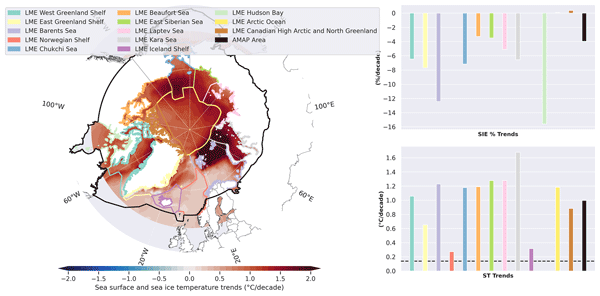
Karina von Schuckmann, Flora Gues, Mahé Butel, Gilles Garric, Alvaro de Pascual, Axel Alonso Valle, Aurélien Liné, and Lorena Moreira Mendez
State Planet, 7-osr10, 2, https://doi.org/10.5194/sp-7-osr10-2-2026, https://doi.org/10.5194/sp-7-osr10-2-2026, 2026
Short summary
Short summary
The polar ocean narrative integrates physical, ecological, and societal indicators and shows amplified warming, sea ice loss, and compound change for coastal erosion in the Arctic. Indicators in the Antarctic illustrate an international governance challenge, where biodiversity protection requires both conservation and global mitigation. Together, these examples show that polar ocean change is not a collection of isolated environmental trends, but undergoes an interconnected transformation.
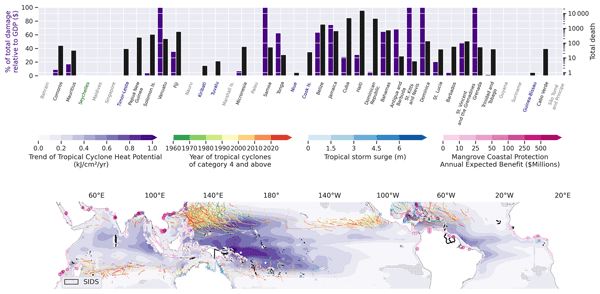
Flora Gues, Karina von Schuckmann, Mahé Butel, Samantha Hallam, Alvaro de Pascual, Axel Alonso Valle, Aurélien Liné, and Lorena Moreira Mendez
State Planet, 7-osr10, 3, https://doi.org/10.5194/sp-7-osr10-3-2026, https://doi.org/10.5194/sp-7-osr10-3-2026, 2026
Short summary
Short summary
Small Island Developing States (SIDS) depend on the ocean for their societies, economies and livelihoods, addressed here with an ocean narrative using a suite of integrated ocean indicators. Their Exclusive Economic Zones govern 8 % of the global ocean and hold global biodiversity hotspots. SIDS are also among the regions most exposed to ocean and climate change, facing sea-level rise, ocean warming, tropical cyclone risks, and growing impacts on marine ecosystems and SIDS communities.
Andreas Karpasitis, Manabu Abe, Isaline Bossert, Friederike Fröb, Thomas Frölicher, Panos Hadjinicolaou, Colin Jones, Roland Séférian, Tomas Torsvik, Jeremy Walton, Klaus Wyser, Tokuta Yokohata, and George Zittis
EGUsphere, https://doi.org/10.5194/egusphere-2026-5285, https://doi.org/10.5194/egusphere-2026-5285, 2026
This preprint is open for discussion and under review for Weather and Climate Dynamics (WCD).
Short summary
Short summary
The tropical atmosphere plays a key role in driving rainfall and influencing weather around the world. In this study, we used idealized simulations to examine how tropical rainfall and atmospheric circulation change as the planet warms. We found that the main tropical rain belt shifts closer to the Equator. Although vertical air motion becomes weaker, rainfall becomes more intense. These changes could affect regional rainfall patterns and climate regimes in other parts of the world.
Gaël Many, Julien Jouanno, Marc Lucas, Audrey Hasson, Jean-Michel Lellouche, and Yann Drillet
State Planet Discuss., https://doi.org/10.5194/sp-2026-30, https://doi.org/10.5194/sp-2026-30, 2026
Preprint under review for SP
Short summary
Short summary
Large Sargassum blooms have become a recurring feature of the Tropical Atlantic, affecting coastal areas and ecosystems. We studied satellite observations from 2002 to 2025 to understand how bloom size and severity vary through time and across regions. We developed two simple indicators to compare years and areas. The results reveal strong regional differences and show that 2025 was an exceptional basin-wide bloom, highlighting the value of consistent monitoring for tracking future events.
Alexander Nauels, Tessa Möller, Victor Couplet, Robert E. Kopp, Praveen Kumar, Matthias Mengel, Gregory Munday, Zebedee R. J. Nicholls, Lennart Ramme, Aimée B. A. Slangen, Chris Smith, Jennifer H. Weeks, and Tony E. Wong
EGUsphere, https://doi.org/10.5194/egusphere-2026-3874, https://doi.org/10.5194/egusphere-2026-3874, 2026
This preprint is open for discussion and under review for Geoscientific Model Development (GMD).
Short summary
Short summary
Sea levels will keep rising for centuries, so coastal planning needs long-term outlooks. For the first time, we brought together seven simplified models, called emulators, and combined their estimates of future sea level rise to year 2300, including a scenario with strong temperature overshoot before returning to 1.5 °C of warming. The emulators differ most over how much ice Antarctica will lose. Even if global temperatures fall again, extra sea level rise stays locked in for centuries.
Li-Qing Jiang and Jean-Pierre Gattuso
Earth Syst. Sci. Data Discuss., https://doi.org/10.5194/essd-2026-650, https://doi.org/10.5194/essd-2026-650, 2026
Preprint under review for ESSD
Short summary
Short summary
The ocean is changing rapidly, yet the data needed to understand and respond to these changes remains scattered across institutions and countries. We examine the barriers in ocean data management and propose a new framework built on: a research-driven data model, policy-driven integration, and long-term preservation. This framework would enable seamless global data integration, open new horizons in ocean science, and strengthen economic resilience for present and future generations.
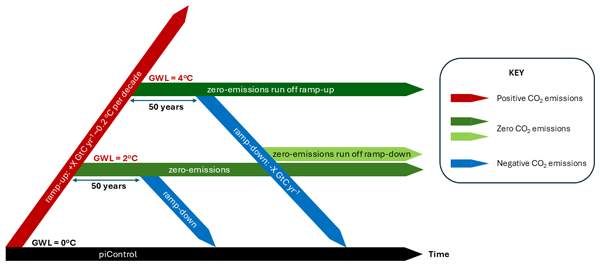
Colin Jones, Isaline Bossert, Donovan P. Dennis, Hazel A. Jeffery, Chris D. Jones, Torben Koenigk, Sina Loriani, Benjamin Sanderson, Roland Séférian, Klaus Wyser, Shuting Yang, Manabu Abe, Sebastian Bathiany, Pascale Braconnot, Victor Brovkin, Friedrich A. Burger, Patrica Cadule, Frederic S. Castruccio, Gokhan Danabasoglu, Andrea Dittus, Jonathan F. Donges, Friederike Fröb, Thomas L. Frölicher, Goran Georgievski, Chuncheng Guo, Aixue Hu, Peter Lawrence, Paul Lerner, José Licón-Saláiz, Bette Otto-Bliesner, Anastasia Romanou, Elena Shevliakova, Yona Silvy, Didier Swingedouw, Jerry Tjiputra, Jeremy Walton, Andy Wiltshire, Ricarda Winkelmann, Richard Wood, Tokuta Yokohata, and Tilo Ziehn
Geosci. Model Dev., 19, 6941–6966, https://doi.org/10.5194/gmd-19-6941-2026, https://doi.org/10.5194/gmd-19-6941-2026, 2026
Short summary
Short summary
We introduce a new Earth system model experiment protocol to help researchers understand how Earth might respond to positive, zero, and negative carbon emissions. This protocol enables different models to be compared following similar warming and cooling rates. Researchers use the models to explore how the Earth reacts to different climate futures, including the risk of tipping points being exceeded and whether changes can be reversed. The results will support improved long-term climate policy.
Ida Bagus Mandhara Brasika, Pierre Friedlingstein, Stephen Sitch, Michael O'Sullivan, Maria Carolina Duran-Rojas, Emma W. Littleton, Toby R. Marthews, Timothy Hill, Wei Li, Yidi Xu, Jiaxin Zhou, Xiangzhong Luo, Ruiying Zhao, Yuanchao Fan, Dedy Sukmara, Timer Manurung, Masayuki Kondo, Alexander Knohl, Tejaswini Jaajpera, and Lisma Safitri
EGUsphere, https://doi.org/10.5194/egusphere-2026-3689, https://doi.org/10.5194/egusphere-2026-3689, 2026
This preprint is open for discussion and under review for Geoscientific Model Development (GMD).
Short summary
Short summary
Oil palm is a major crop in Indonesia, but climate models often treat it as generic cropland. We developed a new way to represent oil palm in the Joint UK Land Environment Simulator. This improved how the model captures carbon stored and released by oil-palm plantations. The work helps estimate emissions from land-use change more realistically, supporting better understanding of tropical agriculture, deforestation and climate impacts.

Zhaokun Wang, Bin Lu, Yi Xin, Takamitsu Ito, Lei Zhou, Lijing Cheng, Yuanlong Li, Xinbing Wang, and Meng Jin
Earth Syst. Sci. Data, 18, 5069–5092, https://doi.org/10.5194/essd-18-5069-2026, https://doi.org/10.5194/essd-18-5069-2026, 2026
Short summary
Short summary
We present Jingwei-Nutrients, a global monthly data product of ocean nitrate, phosphate, and silicate from 1965 to 2023 down to 2000 meters. Built using a multi-task deep learning framework, it combines sparse historical observations with hydrographic information. This continuous record helps scientists understand marine ecosystems and climate change responses. We also provide the Jingwei web platform (https://jingwei.acemap.info) for dynamic data exploration and visualization without coding.
Tim Stripp, Zhixuan Guo, Pierre Friedlingstein, Michael O’Sullivan, Stephen Sitch, Ana Bastos, Philippe Ciais, Jefferson Goncalves de Souza, Akihiko Ito, Wei Li, and Lei Ma
EGUsphere, https://doi.org/10.5194/egusphere-2026-3584, https://doi.org/10.5194/egusphere-2026-3584, 2026
Short summary
Short summary
Fire is a key process within the Earth system, yet it is often poorly represented in land carbon cycle models used to estimate how much carbon land ecosystems absorb from the atmosphere. We improved these models by applying long-term burned area data reconstructed from satellite observations. This reduced biases and uncertainty in fire carbon emission estimates and improved estimates of land carbon uptake, implying this method could enhance global and regional carbon budget estimates.
Thomas L. Frölicher, Patrick Maier, Friedrich A. Burger, Yona Silvy, Didier Swingedouw, Urs Hofmann Elizondo, and Manon Berger
EGUsphere, https://doi.org/10.5194/egusphere-2026-3065, https://doi.org/10.5194/egusphere-2026-3065, 2026
Short summary
Short summary
We simulate climate and carbon-cycle responses to a strong AMOC weakening under a 2 °C stabilization pathway. A collapse to 20 % of preindustrial strength cools global climate by 0.8 °C and winter climate in Northern Europe by up to 5 °C, enhances ocean heat uptake and sea-level rise, and alters land and ocean carbon storage. The cooling temporarily increases the remaining carbon budget for limiting warming to 2 °C.
Viktor Gouretski, Lijing Cheng, and Juan Du
Earth Syst. Sci. Data Discuss., https://doi.org/10.5194/essd-2026-416, https://doi.org/10.5194/essd-2026-416, 2026
Revised manuscript under review for ESSD
Short summary
Short summary
This study depicts a three-step quality control procedure applied to the Nansen cast temperature profiles (1873–2025, especially before 1970), including automatic/manual quality control and temperature anomaly quality control. Corrections for depth bias are also suggested with improved vertical interpolation procedure. Based on this dataset we access for the first time the change of the ocean heat content of the upper 2000 m layer over a 100 year time period between 1870s and 2020s.
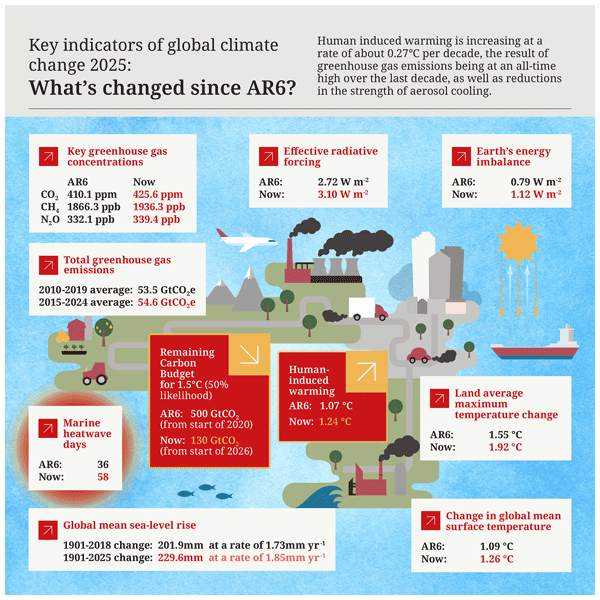
Piers M. Forster, Tristram Walsh, Chris Smith, William F. Lamb, Robin Lamboll, Christophe Cassou, Mathias Hauser, Zeke Hausfather, June-Yi Lee, Matthew D. Palmer, Karina von Schuckmann, Aimée B. A. Slangen, Sophie Szopa, Blair Trewin, Jeongeun Yun, Nathan P. Gillett, Stuart Jenkins, H. Damon Matthews, Krishnan Raghavan, Aurélien Ribes, Joeri Rogelj, Debbie Rosen, Xuebin Zhang, Myles Allen, Robbie M. Andrew, Chris Atkinson, Richard A. Betts, Antonio Bombelli, Samantha N. Burgess, Lijing Cheng, Helen E. Claxton, Pierre Friedlingstein, Thomas L. Frölicher, Catia M. Domingues, Thomas Gasser, Catherine H. Gregory, Rachel M. Hoesly, Daniel Huppmann, Masayoshi Ishii, Christopher Kadow, Alexia Karwat, John Kennedy, Rachel E. Killick, Mahesh V. M. Kovilakam, Paul B. Krummel, Xin Lan, Jean-François Lamarque, Aurélien Liné, Belén Martín-Míguez, Didier P. Monselesan, Colin Morice, Jens Mühle, Pino Mussak, Glen P. Peters, Anna Pirani, Julia Pongratz, Matthew Rigby, Robert Rohde, Abhishek Savita, Sonia I. Seneviratne, Steven J. Smith, Ghassan Taha, Caterina Tassone, Peter Thorne, Christopher Wells, Luke M. Western, Guido R. van der Werf, Susan E. Wijffels, Marco Zecchetto, Junting Zhong, Xiao-Ye Zhang, Valérie Masson-Delmotte, and Panmao Zhai
Earth Syst. Sci. Data, 18, 3889–3933, https://doi.org/10.5194/essd-18-3889-2026, https://doi.org/10.5194/essd-18-3889-2026, 2026
Short summary
Short summary
We give our annual update of key climate indicators. Our work quantifies the human contribution to global warming and the pace of climate change. This represents a large effort by the international community akin to an Intergovernmental Panel on Climate Change (IPCC) report.
Hendrik Grosselindemann, Friedrich A. Burger, and Thomas L. Frölicher
Biogeosciences, 23, 3299–3321, https://doi.org/10.5194/bg-23-3299-2026, https://doi.org/10.5194/bg-23-3299-2026, 2026
Short summary
Short summary
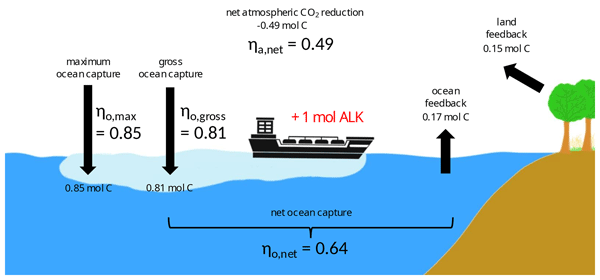
We assess the long-term carbon cycle, climate and ocean acidification response of ocean alkalinity enhancement (OAE) using an emission-driven Earth system model across warming stabilization scenarios. OAE lowers atmospheric CO2 and produces a scenario-independent linear cooling. Gross carbon capture efficiency remains high, while net efficiencies decline over time due to carbon-cycle feedbacks. Ocean acidification mitigation by OAE is dominated by CO2 drawdown on long timescales.
Pierre Friedlingstein, Michael O'Sullivan, Matthew W. Jones, Robbie M. Andrew, Dorothee C. E. Bakker, Judith Hauck, Peter Landschützer, Corinne Le Quéré, Hongmei Li, Ingrid T. Luijkx, Glen P. Peters, Wouter Peters, Julia Pongratz, Clemens Schwingshackl, Stephen Sitch, Josep G. Canadell, Philippe Ciais, Kjetil Aas, Simone R. Alin, Peter Anthoni, Leticia Barbero, Nicholas R. Bates, Nicolas Bellouin, Alice Benoit-Cattin, Carla F. Berghoff, Raffaele Bernardello, Laurent Bopp, Ida Bagus Mandhara Brasika, Matthew A. Chamberlain, Naveen Chandra, Frédéric Chevallier, Louise P. Chini, Nathan O. Collier, Thomas H. Colligan, Margot Cronin, Laique M. Djeutchouang, Xinyu Dou, Matt P. Enright, Kazutaka Enyo, Michael Erb, Wiley Evans, Richard A. Feely, Liang Feng, Daniel J. Ford, Adrianna Foster, Filippa Fransner, Thomas Gasser, Marion Gehlen, Thanos Gkritzalis, Jefferson Goncalves De Souza, Giacomo Grassi, Luke Gregor, Nicolas Gruber, Bertrand Guenet, Özgür Gürses, Kirsty Harrington, Ian Harris, Jens Heinke, George C. Hurtt, Yosuke Iida, Tatiana Ilyina, Akihiko Ito, Andrew R. Jacobson, Atul K. Jain, Tereza Jarníková, Annika Jersild, Fei Jiang, Steve D. Jones, Etsushi Kato, Ralph F. Keeling, Kees Klein Goldewijk, Jürgen Knauer, Yawen Kong, Jan Ivar Korsbakken, Charles Koven, Taro Kunimitsu, Xin Lan, Junjie Liu, Zhiqiang Liu, Zhu Liu, Claire Lo Monaco, Lei Ma, Gregg Marland, Patrick C. McGuire, Galen A. McKinley, Joe R. Melton, Natalie Monacci, Erwan Monier, Eric J. Morgan, David R. Munro, Jens D. Müller, Shin-Ichiro Nakaoka, Lorna R. Nayagam, Yosuke Niwa, Tobias Nutzel, Are Olsen, Abdirahman M. Omar, Naiqing Pan, Sudhanshu Pandey, Denis Pierrot, Zhangcai Qin, Pierre Regnier, Gregor Rehder, Laure Resplandy, Alizée Roobaert, Thais M. Rosan, Christian Rödenbeck, Jörg Schwinger, Ingunn Skjelvan, T. Luke Smallman, Victoria Spada, Mohanan G. Sreeush, Qing Sun, Adrienne J. Sutton, Colm Sweeney, Didier Swingedouw, Roland Séférian, Shintaro Takao, Hiroaki Tatebe, Hanqin Tian, Xiangjun Tian, Bronte Tilbrook, Hiroyuki Tsujino, Francesco Tubiello, Erik van Ooijen, Guido R. van der Werf, Sebastiaan J. van de Velde, Anthony P. Walker, Rik Wanninkhof, Xiaojuan Yang, Wenping Yuan, Xu Yue, and Jiye Zeng
Earth Syst. Sci. Data, 18, 3211–3288, https://doi.org/10.5194/essd-18-3211-2026, https://doi.org/10.5194/essd-18-3211-2026, 2026
Short summary
Short summary
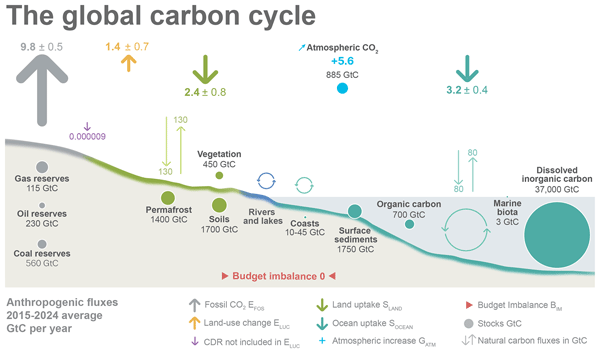
The Global Carbon Budget 2025 describes the methodology, main results, and datasets used to quantify the anthropogenic emissions of carbon dioxide (CO2) and their partitioning among the atmosphere, land ecosystems, and the ocean over the historical period (1750–2025). These living datasets are updated every year to provide the highest transparency and traceability in the reporting of CO2, the key driver of climate change.
Friedrich A. Burger, Urs Hofmann Elizondo, Hendrik Grosselindemann, and Thomas L. Frölicher
Biogeosciences, 23, 3279–3298, https://doi.org/10.5194/bg-23-3279-2026, https://doi.org/10.5194/bg-23-3279-2026, 2026
Short summary
Short summary
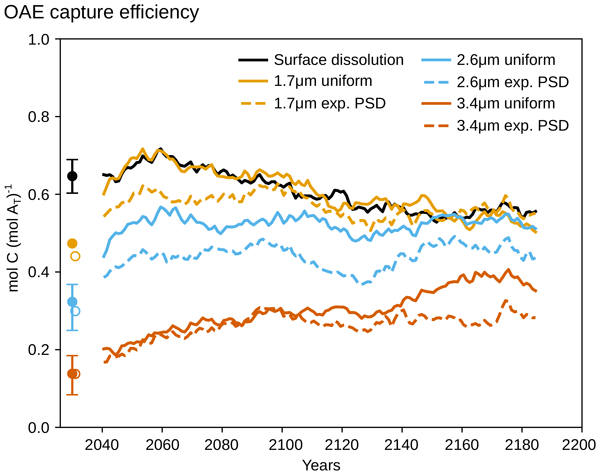
Ocean alkalinity enhancement is viewed as a promising option for carbon dioxide removal. When alkalinity is added in the open ocean through mineral powders, carbon uptake from the atmosphere is decreased when mineral particles sink before fully dissolving. Here we prescribe vertical alkalinity release profiles to an Earth system model. We show that carbon uptake may initially decrease by more than 75% when grain size doubles and that full uptake is delayed by centuries and spatially dispersed.
Juan Du, Lijing Cheng, Takamitsu Ito, Hernan E. Garcia, Zhankun Wang, Jonathan D. Sharp, Christopher J. Roach, Shoshiro Minobe, Yuntao Zhou, Bin Lu, Gian Giacomo Navarra, and Seth M. Bushinsky
Ocean Sci., 22, 1483–1499, https://doi.org/10.5194/os-22-1483-2026, https://doi.org/10.5194/os-22-1483-2026, 2026
Short summary
Short summary
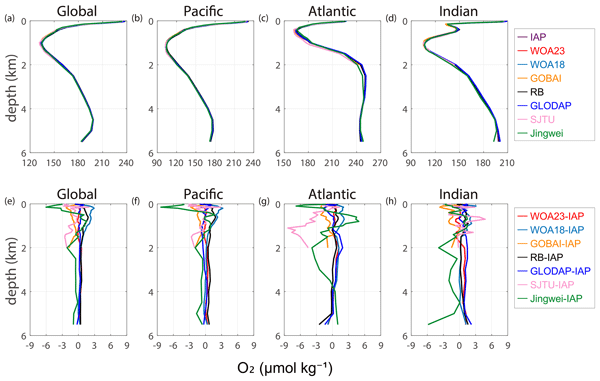
This study assesses the spread of mean state and annual cycle of ocean dissolved oxygen by multiple observational gridded data products. A good consistency is validated globally, although substantial local differences exist in areas of strong spatial gradient. Quantifying the discrepancies could give an insight into regions relatively more sensitive to data reconstruction processes and further advance the improvement of oxygen data products.
Marilaure Grégoire, Gianpiero Cossarini, Corinne Derval, Elodie Gutknecht, Susan Kay, Julien Lamouroux, Helen Morrison, Coralie Perruche, Annette Samuelsen, Lena Spruch, Anna Teruzzi, Luc Vandenbulcke, Karina Von Schuckmann, and Tsuyoshi Wakamatsu
EGUsphere, https://doi.org/10.5194/egusphere-2026-813, https://doi.org/10.5194/egusphere-2026-813, 2026
Short summary
Short summary
We review the advancements in our capabilities to predict the green ocean in the frame of the European Copernicus Marine Service since its start in 2015 and for the five European seas, the Arctic and Global oceans. The evolutions of the prediction systems, delivered products and computing resources requirements are reviewed. Recommendations for future developments are proposed based on a SWOT analysis of current CMEMS green ocean prediction systems and products.
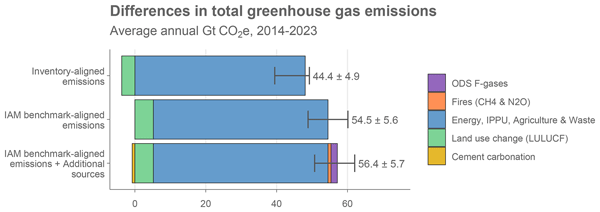
William F. Lamb, Robbie M. Andrew, Matthew Jones, Zebedee Nicholls, Glen P. Peters, Chris Smith, Marielle Saunois, Giacomo Grassi, Julia Pongratz, Steven J. Smith, Francesco N. Tubiello, Monica Crippa, Matthew Gidden, Pierre Friedlingstein, Jan Minx, and Piers M. Forster
Earth Syst. Sci. Data, 18, 2549–2572, https://doi.org/10.5194/essd-18-2549-2026, https://doi.org/10.5194/essd-18-2549-2026, 2026
Short summary
Short summary
This study explores why global greenhouse gas (GHG) emissions estimates vary. Key reasons include different coverage of gases and sectors, varying definitions of anthropogenic land use change emissions, and the Paris Agreement not covering all emission sources. The study highlights three main ways emissions data is reported, each with different objectives and resulting in varying global emission totals. It emphasizes the need for transparency in choosing datasets and setting assessment scopes.
Didier Swingedouw, Laura Jackson, Aixue Hu, Anastasia Romanou, Nicole C. Laureanti, Wilbert Weijer, Sina Loriani, Bette Otto-Bliesner, Ayako Abe-Ouchi, Lucas Almeida, Alessio Bellucci, Reyk Börner, Gokhan Danabasoglu, Donovan P. Dennis, Marion Devilliers, Sybren Drijfhout, Jonathan Donges, Friederike Fröb, Thomas L. Frölicher, Guillaume Gastineau, Heiko Goelzer, Chuncheng Guo, Urs Hofmann, Anna Höse, Colin Jones, Torben Koenigk, Ann Kristin Klose, Valerio Lembo, Jose Licon-Salaiz, Ken Mankoff, Virna Meccia, Irina Melnikova, Oliver Mehling, Laurie Menviel, Juliette Mignot, Jon I. Robson, Gavin A. Schmidt, Robin Smith, Yuchen Sun, Irene Trombini, Matteo Willeit, Richard Wood, Fanghua Wu, Lin Zhaohui, and Ricarda Winkelmann
EGUsphere, https://doi.org/10.5194/egusphere-2026-1698, https://doi.org/10.5194/egusphere-2026-1698, 2026
Short summary
Short summary
This study presents a plan for climate model experiments to better understand how changes in freshwater in the North Atlantic affect major ocean currents. We designed coordinated simulations to test their response to warming, added freshwater, and possible recovery after weakening. Comparing results across models and past climate evidence helps improve confidence in projections and assess risks of large ocean circulation changes.
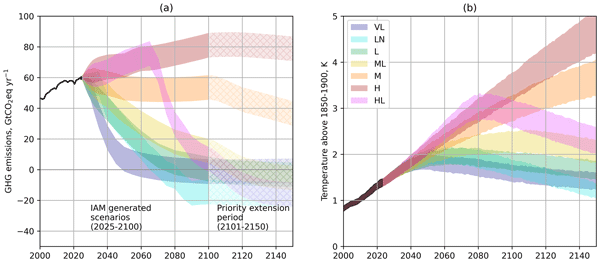
Detlef P. Van Vuuren, Brian C. O'Neill, Claudia Tebaldi, Benjamin M. Sanderson, Louise P. Chini, Pierre Friedlingstein, Tomoko Hasegawa, Keywan Riahi, Bala Govindasamy, Nico Bauer, Veronika Eyring, Cheikh M. N. Fall, Katja Frieler, Matthew J. Gidden, Laila K. Gohar, Annika Högner, Andrew D. Jones, Jarmo Kikstra, Andrew King, Reto Knutti, Elmar Kriegler, Peter Lawrence, Chris Lennard, Jason Lowe, Camilla Mathison, Shahbaz Mehmood, Zebedee Nicholls, Luciana F. Prado, Qiang Zhang, Steven K. Rose, Alex C. Ruane, Marit Sandstad, Carl-Friedrich Schleussner, Roland Seferian, Jana Sillmann, Chris Smith, Anna A. Sörensson, Swapna Panickal, Kaoru Tachiiri, Naomi Vaughan, Saritha S. Vishwanathan, Tokuta Yokohata, Marco Zecchetto, and Tilo Ziehn
Geosci. Model Dev., 19, 2627–2656, https://doi.org/10.5194/gmd-19-2627-2026, https://doi.org/10.5194/gmd-19-2627-2026, 2026
Short summary
Short summary
We propose a set of seven plausible 21st century emission scenarios, and their multi-century extensions, that will be used by the international community of climate modeling centers to produce the next generation of climate projections. These projections will support climate, impact and mitigation researchers, provide information to practitioners to address future risks from climate change, and contribute to policymakers’ considerations of the trade-offs among various levels of mitigation.
Audrey Minière, Karina von Schuckmann, and Sabrina Speich
Earth Syst. Sci. Data Discuss., https://doi.org/10.5194/essd-2026-106, https://doi.org/10.5194/essd-2026-106, 2026
Preprint under review for ESSD
Short summary
Short summary
This study assesses the sensitivity of global ocean heat content estimates to key methodological choices. Global trends are robust across methodological configurations. Most of the spread comes from the choice of temperature dataset, while other methodological impacts remain small. Our results show that both research and operational indicators consistently track global ocean warming, supporting their reliability and traceability for climate monitoring and Earth energy budget assessments.
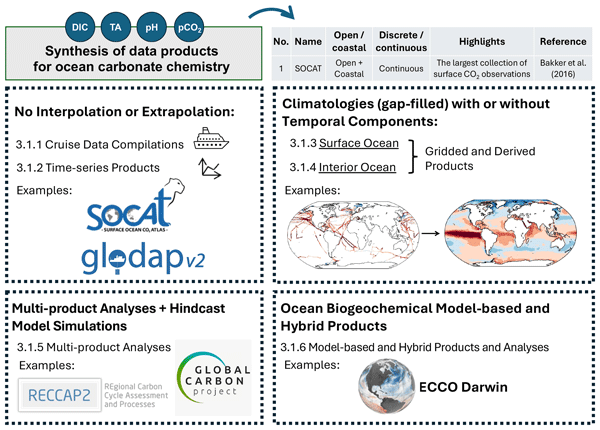
Li-Qing Jiang, Amanda Fay, Jens Daniel Müller, Luke Gregor, Alizée Roobaert, Lydia Keppler, Dustin Carroll, Siv K. Lauvset, Tim DeVries, Judith Hauck, Christian Rödenbeck, Nicolas Metzl, Andrea J. Fassbender, Jean-Pierre Gattuso, Peter Landschützer, Rik Wanninkhof, Christopher Sabine, Simone R. Alin, Mario Hoppema, Are Olsen, Matthew P. Humphreys, Kunal Chakraborty, Ana C. Franco, Kumiko Azetsu-Scott, Dorothee C. E. Bakker, Leticia Barbero, Nicholas R. Bates, Nicole Besemer, Henry C. Bittig, Albert E. Boyd, Daniel Broullón, Wei-Jun Cai, Brendan R. Carter, Thi-Tuyet-Trang Chau, Chen-Tung Arthur Chen, Frédéric Cyr, John E. Dore, Ian Enochs, Richard A. Feely, Hernan E. Garcia, Marion Gehlen, Prasanna Kanti Ghoshal, Lucas Gloege, Melchor González-Dávila, Nicolas Gruber, Debby Ianson, Yosuke Iida, Masao Ishii, Apurva Padamnabh Joshi, Esther Kennedy, Alex Kozyr, Nico Lange, Claire Lo Monaco, Derek P. Manzello, Galen A. McKinley, Natalie M. Monacci, Xose A. Padin, Ana M. Palacio-Castro, Fiz F. Pérez, J. Magdalena Santana-Casiano, Jonathan Sharp, Adrienne Sutton, Jim Swift, Toste Tanhua, Maciej Telszewski, Jens Terhaar, Ruben van Hooidonk, Anton Velo, Andrew J. Watson, Angelicque E. White, Zelun Wu, Liang Xue, Hyelim Yoo, Jiye Zeng, and Guorong Zhong
Earth Syst. Sci. Data, 18, 1405–1462, https://doi.org/10.5194/essd-18-1405-2026, https://doi.org/10.5194/essd-18-1405-2026, 2026
Short summary
Short summary
This review article provides an overview of 68 existing ocean carbonate chemistry data products and data product sets, encompassing a broad range of types, including compilations of cruise datasets, gap-filled observational products, model simulations, and more. It is designed to help researchers identify and access the data products that best support their scientific objectives, thereby facilitating progress in understanding the ocean's changing carbonate chemistry.
Joana Melo, Simone Rossi, Frédéric Achard, Ramdane Alkama, Josep G. Canadell, Sandro Federici, Pierre Friedlingstein, David Gibbs, Nancy Harris, Viola Heinrich, Michael O’Sullivan, Glen P. Peters, Julia Pongratz, Melissa Rose, Rosa Roman-Cuesta, María J. Sanz, Clemens Schwingshackl, Stephen Sitch, and Giacomo Grassi
Earth Syst. Sci. Data Discuss., https://doi.org/10.5194/essd-2025-631, https://doi.org/10.5194/essd-2025-631, 2026
Preprint under review for ESSD
Short summary
Short summary
We created the LULUCF Data Hub to make information on how land use affects carbon dioxide emissions and removals more transparent and comparable among datasets. We show country-level data from national reports and global sources, allowing users to explore differences and similarities in land-based carbon fluxes. It helps identify where data agree, where they differ, and where more research is needed.
Peter W. Thorne, John M. Nicklas, John J. Kennedy, Bruce Calvert, Baylor Fox-Kemper, Mark T. Richardson, Adrian Simmons, Ed Hawkins, Robert Rhode, Kathryn Cowtan, Nerilie J. Abram, Axel Andersson, Simon Noone, Phillipe Marbaix, Nathan Lenssen, Dirk Olonscheck, Tristram Walsh, Stephen Outten, Ingo Bethke, Bjorn H. Samset, Chris Smith, Anna Pirani, Jan Fuglestvedt, Lavanya Rajamani, Richard A. Betts, Elizabeth C. Kent, Blair Trewin, Colin Morice, Tim Osborn, Samantha N. Burgess, Oliver Geden, Andrew Parnell, Piers M. Forster, Chris Hewitt, Zeke Hausfather, Valerie Masson-Delmotte, Jochem Marotzke, Nathan Gillett, Sonia I. Seneviratne, Gavin A. Schmidt, Duo Chan, Stefan Brönnimann, Andy Reisinger, Matthew Menne, Maisa Rojas Corradi, Christopher Kadow, Peter Huybers, David B. Stephenson, Emily Wallis, Joeri Rogelj, Andrew Schurer, Karen McKinnon, Panmao Zhai, Fatima Driouech, Wilfran Moufouma Okia, Saeed Vazifehkhah, Sophie Szopa, Christopher J. Merchant, Shoji Hirahara, Masayoshi Ishii, Francois A. Engelbrecht, Qingxiang Li, June-Yi Lee, Alex J. Cannon, Christophe Cassou, Karina von Schuckmann, Amir H. Delju, and Ellie Murtagh
Earth Syst. Sci. Data Discuss., https://doi.org/10.5194/essd-2025-825, https://doi.org/10.5194/essd-2025-825, 2026
Preprint under review for ESSD
Short summary
Short summary
We reassess the basis for determining the present level of long-term global warming. Unbiased estimates of both realised warming and anthropogenic warming are possible that approximate a 20-year retrospective mean. Our resulting estimates of 1.40 [1.23–1.58] °C (realised) and 1.34 [1.18–1.50] °C (anthropogenic) as at end of 2024 highlight the urgency of immediate, far-reaching and sustained climate mitigation actions if we are to meet the long term temperature goal of the Paris Agreement.
Jean-Francois Lamarque, Pierre Friedlingstein, Brian Osias, Steve Strongin, Venkatramani Balaji, Kevin W. Bowman, Josep G. Canadell, Philippe Ciais, Heidi Cullen, Kenneth J. Davis, Scott C. Doney, Kevin R. Gurney, Alicia R. Karspeck, Charles D. Koven, Galen McKinley, Glen P. Peters, Julia Pongratz, Britt Stephens, and Colm Sweeney
EGUsphere, https://doi.org/10.5194/egusphere-2025-6457, https://doi.org/10.5194/egusphere-2025-6457, 2026
Short summary
Short summary
This Perspective highlights requirements to scale the carbon credit market and enable the growth in climate solutions funded through such market. The requirements are on the understanding of the value of the proposed carbon credit projects, and on the availability of a verification system. This verification becomes particularly relevant as the carbon credit market scales to significant impacts on CO2 (or other greenhouse gases), such that attribution to collective actions can be identified.
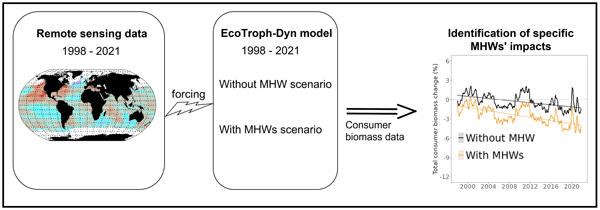
Vianney Guibourd de Luzinais, William W. L. Cheung, and Didier Gascuel
Biogeosciences, 22, 6583–6606, https://doi.org/10.5194/bg-22-6583-2025, https://doi.org/10.5194/bg-22-6583-2025, 2025
Short summary
Short summary
Marine heatwaves (MHWs) have become more frequent and intense, yet their impacts on marine ecosystems globally remain unclear. Using a novel ecological model, we show that MHWs significantly reduced marine ecosystem biomass between 1998 and 2021, especially in the North Pacific Ocean. Marine predators are more impacted than organisms lower in the food chain. This study underscores the urgent need to integrate MHWs into developing climate-resilient marine ecosystem management and conservation plans.
Timothée Bourgeois, Giang T. Tran, Aurich Jeltsch-Thömmes, Jörg Schwinger, Friederike Fröb, Thomas L. Frölicher, Thorsten Blenckner, Olivier Torres, Jean Negrel, David P. Keller, Andreas Oschlies, Laurent Bopp, and Fortunat Joos
Biogeosciences, 22, 5435–5462, https://doi.org/10.5194/bg-22-5435-2025, https://doi.org/10.5194/bg-22-5435-2025, 2025
Short summary
Short summary
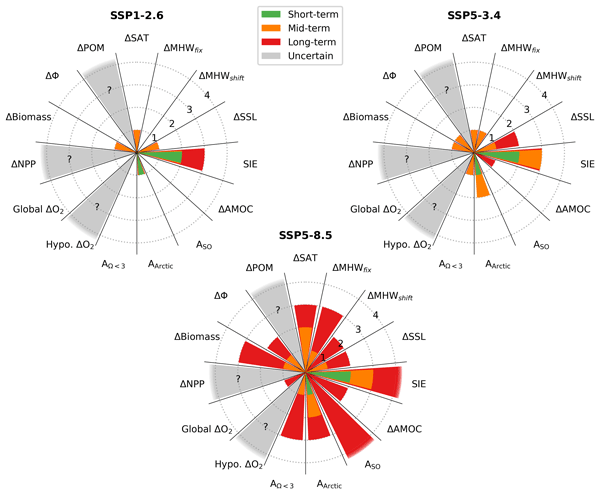
Anthropogenic greenhouse gas emissions significantly impact ocean ecosystems through climate change and acidification, leading to either progressive or abrupt changes. This study maps the crossing of physical and ecological limits for various ocean impact metrics under three emission scenarios. Using Earth system models, we identify when these limits are exceeded, highlighting the urgent need for ambitious climate action to safeguard the world's oceans and ecosystems.
Leigh-Ann Smit, Janine Adams, and Gavin Rishworth
EGUsphere, https://doi.org/10.5194/egusphere-2025-4749, https://doi.org/10.5194/egusphere-2025-4749, 2025
Preprint archived
Short summary
Short summary
Sediment-organism interactions are often context specific and complex, which makes the role of bioturbators in sediment processes and carbon cycling poorly understood. This review synthesizes current knowledge of these processes and interactions, while identifying important knowledge gaps for future research. A key finding is that bioturbation impacts cannot be generalized and efforts need to be focused on understanding species and family specific impacts on sediment properties.
Linus Vogt, Casimir de Lavergne, Jean-Baptiste Sallée, Lester Kwiatkowski, Thomas L. Frölicher, and Jens Terhaar
Earth Syst. Dynam., 16, 1453–1482, https://doi.org/10.5194/esd-16-1453-2025, https://doi.org/10.5194/esd-16-1453-2025, 2025
Short summary
Short summary
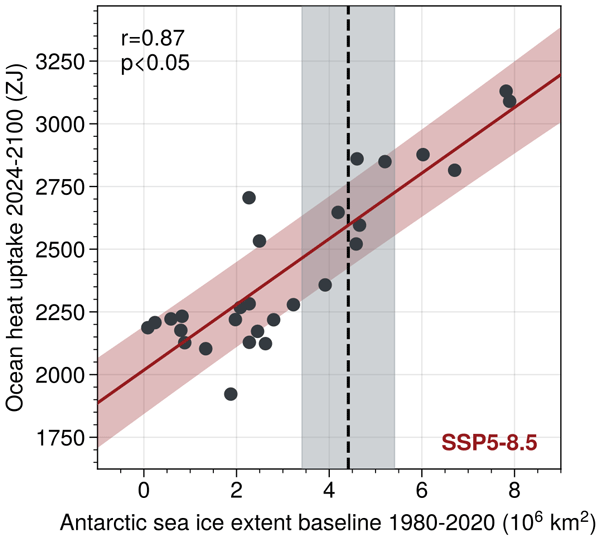
Future projections of global ocean heat uptake (OHU) strongly differ between climate models. Here, we reveal an observational constraint on future OHU based on historical Antarctic sea ice extent observations. This emergent constraint is based on a coupling between sea ice, deep- and surface ocean temperatures, and cloud feedback. It implies an upward correction of 2024–2100 global OHU projections by up to 14 % and suggests that previous constraints have underestimated future warming.
Ida Bagus Mandhara Brasika, Pierre Friedlingstein, Stephen Sitch, Michael O'Sullivan, Maria Carolina Duran-Rojas, Thais Michele Rosan, Kees Klein Goldewijk, Julia Pongratz, Clemens Schwingshackl, Louise P. Chini, and George C. Hurtt
Biogeosciences, 22, 3547–3561, https://doi.org/10.5194/bg-22-3547-2025, https://doi.org/10.5194/bg-22-3547-2025, 2025
Short summary
Short summary
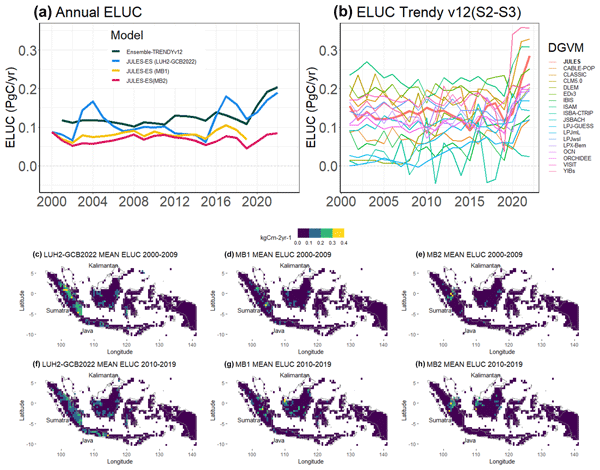
Indonesia is the world's third-highest carbon emitter from land use change. However, there are uncertainties in the carbon emissions of Indonesia. Our best estimate of carbon emissions from land use change in Indonesia is 0.12 ± 0.02 PgC/yr with a steady trend. Despite many uncertainties created by drivers, models, and products, we also found robust agreements between these models and products. All agree that Indonesian carbon emissions from LULCC (land use and land cover change) have had no decreasing trend for the last 2 decades.
Piers M. Forster, Chris Smith, Tristram Walsh, William F. Lamb, Robin Lamboll, Christophe Cassou, Mathias Hauser, Zeke Hausfather, June-Yi Lee, Matthew D. Palmer, Karina von Schuckmann, Aimée B. A. Slangen, Sophie Szopa, Blair Trewin, Jeongeun Yun, Nathan P. Gillett, Stuart Jenkins, H. Damon Matthews, Krishnan Raghavan, Aurélien Ribes, Joeri Rogelj, Debbie Rosen, Xuebin Zhang, Myles Allen, Lara Aleluia Reis, Robbie M. Andrew, Richard A. Betts, Alex Borger, Jiddu A. Broersma, Samantha N. Burgess, Lijing Cheng, Pierre Friedlingstein, Catia M. Domingues, Marco Gambarini, Thomas Gasser, Johannes Gütschow, Masayoshi Ishii, Christopher Kadow, John Kennedy, Rachel E. Killick, Paul B. Krummel, Aurélien Liné, Didier P. Monselesan, Colin Morice, Jens Mühle, Vaishali Naik, Glen P. Peters, Anna Pirani, Julia Pongratz, Jan C. Minx, Matthew Rigby, Robert Rohde, Abhishek Savita, Sonia I. Seneviratne, Peter Thorne, Christopher Wells, Luke M. Western, Guido R. van der Werf, Susan E. Wijffels, Valérie Masson-Delmotte, and Panmao Zhai
Earth Syst. Sci. Data, 17, 2641–2680, https://doi.org/10.5194/essd-17-2641-2025, https://doi.org/10.5194/essd-17-2641-2025, 2025
Short summary
Short summary
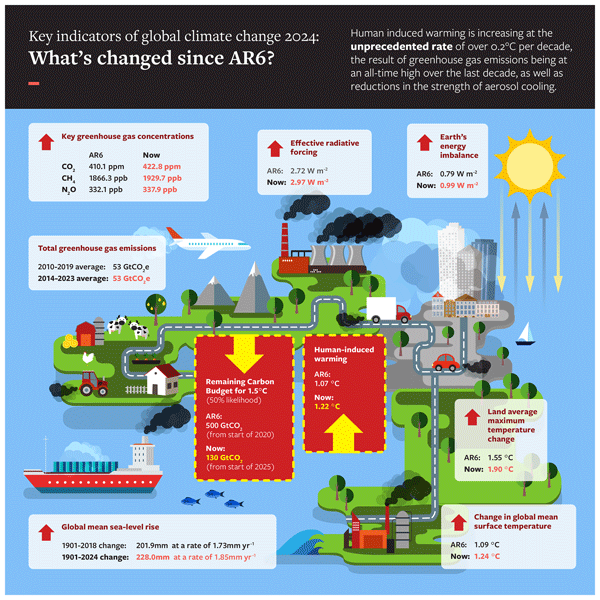
In a rapidly changing climate, evidence-based decision-making benefits from up-to-date and timely information. Here we compile monitoring datasets to track real-world changes over time. To make our work relevant to policymakers, we follow methods from the Intergovernmental Panel on Climate Change (IPCC). Human activities are increasing the Earth's energy imbalance and driving faster sea-level rise compared to the IPCC assessment.
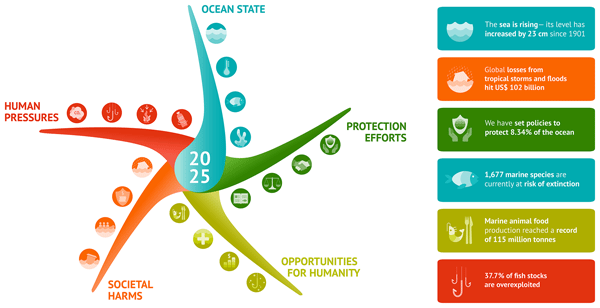
Marina Lévy, Karina von Schuckmann, Patrick Vincent, Bruno Blanke, Joachim Claudet, Patrice Guillotreau, Audrey Hasson, Claire Jolly, Yunne Shin, Olivier Thébaud, Adrien Vincent, and Pierre Bahurel
State Planet, 6-osr9, 1, https://doi.org/10.5194/sp-6-osr9-1-2025, https://doi.org/10.5194/sp-6-osr9-1-2025, 2025
Short summary
Short summary
The Ocean is vital to humanity, but humans are putting it at risk. The Starfish Barometer is a new yearly civic rendezvous that shows how people and the Ocean affect each other. Using science-based facts, it highlights major trends in ocean health, the pressures it faces, the harm to people, and current protection efforts and opportunities. The goal is to raise awareness to secure a better future for the Ocean and humanity.
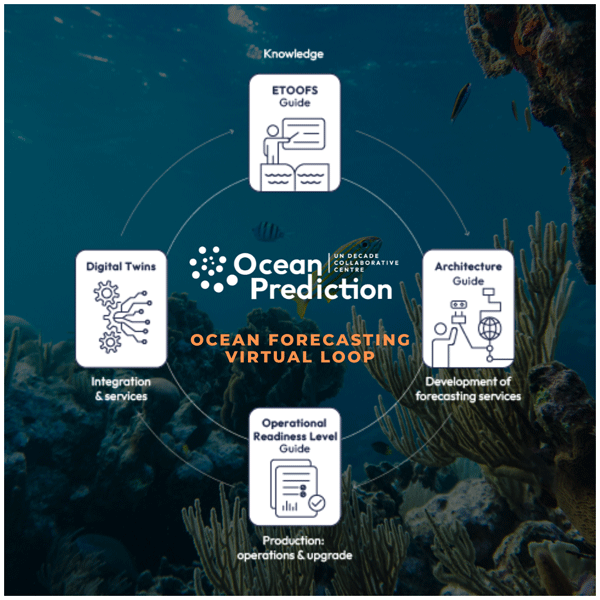
Lillian Diarra, Romane Zufic, Audrey Hasson, Cécile Thomas-Courcoux, and Enrique Alvarez Fanjul
State Planet, 5-opsr, 26, https://doi.org/10.5194/sp-5-opsr-26-2025, https://doi.org/10.5194/sp-5-opsr-26-2025, 2025
Short summary
Short summary
This paper explores capacity development in ocean science – strengthening the skills, resources, and systems needed to generate and use ocean data effectively. It reviews global efforts, current gaps, and recommendations for long-term impact. The paper also presents the work of the OceanPrediction Decade Collaborative Centre, showcasing a project aiming to enhance ocean prediction in Africa, illustrating good practices while offering insights for future improvement.
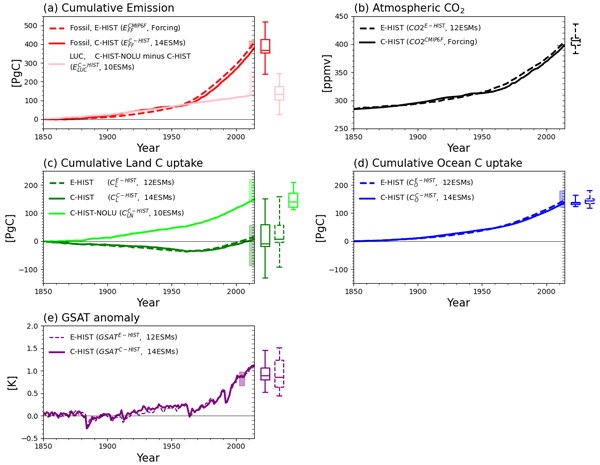
Tomohiro Hajima, Michio Kawamiya, Akihiko Ito, Kaoru Tachiiri, Chris D. Jones, Vivek Arora, Victor Brovkin, Roland Séférian, Spencer Liddicoat, Pierre Friedlingstein, and Elena Shevliakova
Biogeosciences, 22, 1447–1473, https://doi.org/10.5194/bg-22-1447-2025, https://doi.org/10.5194/bg-22-1447-2025, 2025
Short summary
Short summary
This study analyzes atmospheric CO2 concentrations and global carbon budgets simulated by multiple Earth system models, using several types of simulations (CO2 concentration- and emission-driven experiments). We successfully identified problems with regard to the global carbon budget in each model. We also found urgent issues with regard to land use change CO2 emissions that should be solved in the latest generation of models.
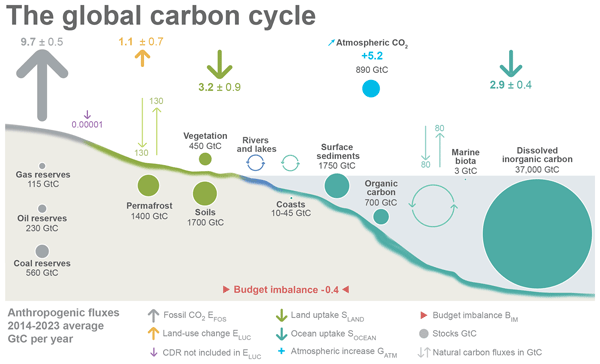
Pierre Friedlingstein, Michael O'Sullivan, Matthew W. Jones, Robbie M. Andrew, Judith Hauck, Peter Landschützer, Corinne Le Quéré, Hongmei Li, Ingrid T. Luijkx, Are Olsen, Glen P. Peters, Wouter Peters, Julia Pongratz, Clemens Schwingshackl, Stephen Sitch, Josep G. Canadell, Philippe Ciais, Robert B. Jackson, Simone R. Alin, Almut Arneth, Vivek Arora, Nicholas R. Bates, Meike Becker, Nicolas Bellouin, Carla F. Berghoff, Henry C. Bittig, Laurent Bopp, Patricia Cadule, Katie Campbell, Matthew A. Chamberlain, Naveen Chandra, Frédéric Chevallier, Louise P. Chini, Thomas Colligan, Jeanne Decayeux, Laique M. Djeutchouang, Xinyu Dou, Carolina Duran Rojas, Kazutaka Enyo, Wiley Evans, Amanda R. Fay, Richard A. Feely, Daniel J. Ford, Adrianna Foster, Thomas Gasser, Marion Gehlen, Thanos Gkritzalis, Giacomo Grassi, Luke Gregor, Nicolas Gruber, Özgür Gürses, Ian Harris, Matthew Hefner, Jens Heinke, George C. Hurtt, Yosuke Iida, Tatiana Ilyina, Andrew R. Jacobson, Atul K. Jain, Tereza Jarníková, Annika Jersild, Fei Jiang, Zhe Jin, Etsushi Kato, Ralph F. Keeling, Kees Klein Goldewijk, Jürgen Knauer, Jan Ivar Korsbakken, Xin Lan, Siv K. Lauvset, Nathalie Lefèvre, Zhu Liu, Junjie Liu, Lei Ma, Shamil Maksyutov, Gregg Marland, Nicolas Mayot, Patrick C. McGuire, Nicolas Metzl, Natalie M. Monacci, Eric J. Morgan, Shin-Ichiro Nakaoka, Craig Neill, Yosuke Niwa, Tobias Nützel, Lea Olivier, Tsuneo Ono, Paul I. Palmer, Denis Pierrot, Zhangcai Qin, Laure Resplandy, Alizée Roobaert, Thais M. Rosan, Christian Rödenbeck, Jörg Schwinger, T. Luke Smallman, Stephen M. Smith, Reinel Sospedra-Alfonso, Tobias Steinhoff, Qing Sun, Adrienne J. Sutton, Roland Séférian, Shintaro Takao, Hiroaki Tatebe, Hanqin Tian, Bronte Tilbrook, Olivier Torres, Etienne Tourigny, Hiroyuki Tsujino, Francesco Tubiello, Guido van der Werf, Rik Wanninkhof, Xuhui Wang, Dongxu Yang, Xiaojuan Yang, Zhen Yu, Wenping Yuan, Xu Yue, Sönke Zaehle, Ning Zeng, and Jiye Zeng
Earth Syst. Sci. Data, 17, 965–1039, https://doi.org/10.5194/essd-17-965-2025, https://doi.org/10.5194/essd-17-965-2025, 2025
Short summary
Short summary
The Global Carbon Budget 2024 describes the methodology, main results, and datasets used to quantify the anthropogenic emissions of carbon dioxide (CO2) and their partitioning among the atmosphere, land ecosystems, and the ocean over the historical period (1750–2024). These living datasets are updated every year to provide the highest transparency and traceability in the reporting of CO2, the key driver of climate change.
Nicolas Metzl, Jonathan Fin, Claire Lo Monaco, Claude Mignon, Samir Alliouane, Bruno Bombled, Jacqueline Boutin, Yann Bozec, Steeve Comeau, Pascal Conan, Laurent Coppola, Pascale Cuet, Eva Ferreira, Jean-Pierre Gattuso, Frédéric Gazeau, Catherine Goyet, Emilie Grossteffan, Bruno Lansard, Dominique Lefèvre, Nathalie Lefèvre, Coraline Leseurre, Sébastien Petton, Mireille Pujo-Pay, Christophe Rabouille, Gilles Reverdin, Céline Ridame, Peggy Rimmelin-Maury, Jean-François Ternon, Franck Touratier, Aline Tribollet, Thibaut Wagener, and Cathy Wimart-Rousseau
Earth Syst. Sci. Data, 17, 1075–1100, https://doi.org/10.5194/essd-17-1075-2025, https://doi.org/10.5194/essd-17-1075-2025, 2025
Short summary
Short summary
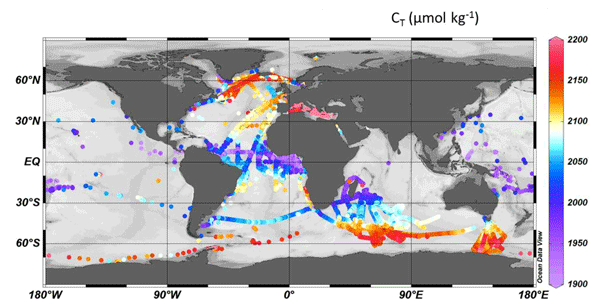
This work presents a new synthesis of 67 000 total alkalinity and total dissolved inorganic carbon observations obtained between 1993 and 2023 in the global ocean, coastal zones, and the Mediterranean Sea. We describe the data assemblage and associated quality control and discuss some potential uses of this dataset. The dataset is provided in a single format and includes the quality flag for each sample.
Anne L. Morée, Fabrice Lacroix, William W. L. Cheung, and Thomas L. Frölicher
Biogeosciences, 22, 1115–1133, https://doi.org/10.5194/bg-22-1115-2025, https://doi.org/10.5194/bg-22-1115-2025, 2025
Short summary
Short summary
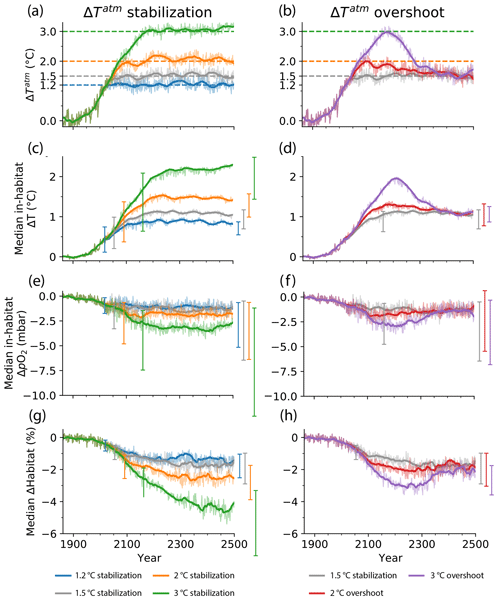
Using novel Earth system model simulations and applying the Aerobic Growth Index, we show that only about half of the habitat loss for marine species is realized when temperature stabilization is initially reached. The maximum habitat loss happens over a century after peak warming in a temperature overshoot scenario peaking at 2 °C before stabilizing at 1.5 °C. We also emphasize that species adaptation may be key in mitigating the long-term impacts of temperature stabilization and overshoot.
Guorong Zhong, Xuegang Li, Jinming Song, Baoxiao Qu, Fan Wang, Yanjun Wang, Bin Zhang, Lijing Cheng, Jun Ma, Huamao Yuan, Liqin Duan, Ning Li, Qidong Wang, Jianwei Xing, and Jiajia Dai
Earth Syst. Sci. Data, 17, 719–740, https://doi.org/10.5194/essd-17-719-2025, https://doi.org/10.5194/essd-17-719-2025, 2025
Short summary
Short summary
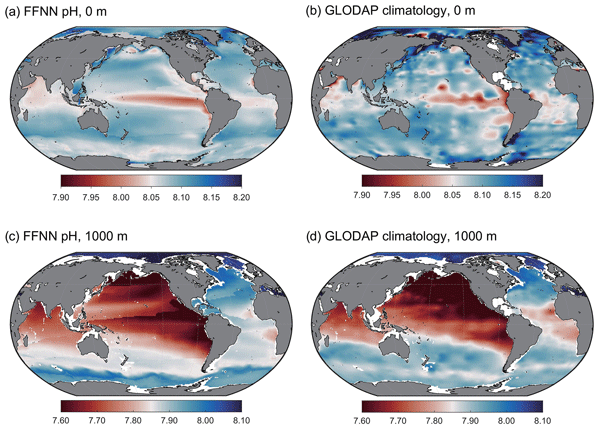
The continuous uptake of atmospheric CO2 by the ocean leads to decreasing seawater pH, which is an ongoing threat to the marine ecosystem. This pH change has been globally documented in the surface ocean, but information is limited below the surface. Here, we present a monthly 1° gridded product of global seawater pH based on a machine learning method and real pH observations. The pH product covers the years from 1992 to 2020 and depths from 0 to 2000 m.
Yona Silvy, Thomas L. Frölicher, Jens Terhaar, Fortunat Joos, Friedrich A. Burger, Fabrice Lacroix, Myles Allen, Raffaele Bernardello, Laurent Bopp, Victor Brovkin, Jonathan R. Buzan, Patricia Cadule, Martin Dix, John Dunne, Pierre Friedlingstein, Goran Georgievski, Tomohiro Hajima, Stuart Jenkins, Michio Kawamiya, Nancy Y. Kiang, Vladimir Lapin, Donghyun Lee, Paul Lerner, Nadine Mengis, Estela A. Monteiro, David Paynter, Glen P. Peters, Anastasia Romanou, Jörg Schwinger, Sarah Sparrow, Eric Stofferahn, Jerry Tjiputra, Etienne Tourigny, and Tilo Ziehn
Earth Syst. Dynam., 15, 1591–1628, https://doi.org/10.5194/esd-15-1591-2024, https://doi.org/10.5194/esd-15-1591-2024, 2024
Short summary
Short summary
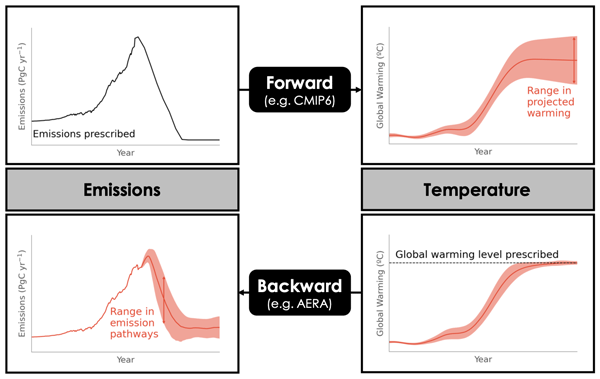
The adaptive emission reduction approach is applied with Earth system models to generate temperature stabilization simulations. These simulations provide compatible emission pathways and budgets for a given warming level, uncovering uncertainty ranges previously missing in the Coupled Model Intercomparison Project scenarios. These target-based emission-driven simulations offer a more coherent assessment across models for studying both the carbon cycle and its impacts under climate stabilization.
Simona Simoncelli, Franco Reseghetti, Claudia Fratianni, Lijing Cheng, and Giancarlo Raiteri
Earth Syst. Sci. Data, 16, 5531–5561, https://doi.org/10.5194/essd-16-5531-2024, https://doi.org/10.5194/essd-16-5531-2024, 2024
Short summary
Short summary
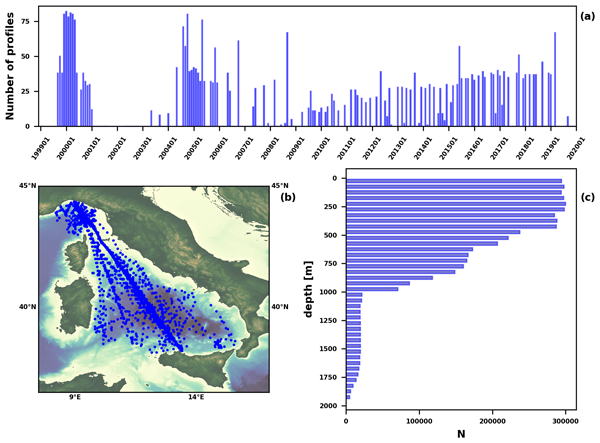
This data review is about the reprocessing of historical eXpendable BathyThermograp (XBT) profiles from the Ligurian and Tyrrhenian seas over the time period 1999–2019. A new automated quality control analysis has been performed starting from the original raw data and operational log sheets. The data have been formatted and standardized according to the latest community best practices, and all available metadata have been inserted, including calibration information and uncertainty specification.
Viktor Gouretski, Lijing Cheng, Juan Du, Xiaogang Xing, Fei Chai, and Zhetao Tan
Earth Syst. Sci. Data, 16, 5503–5530, https://doi.org/10.5194/essd-16-5503-2024, https://doi.org/10.5194/essd-16-5503-2024, 2024
Short summary
Short summary
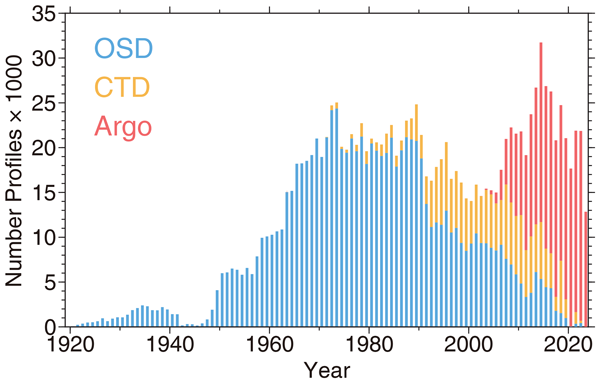
High-quality observations are crucial to understanding ocean oxygen changes and their impact on marine biota. We developed a quality control procedure to ensure the high quality of the heterogeneous ocean oxygen data archive and to prove data consistency. Oxygen data obtained by means of oxygen sensors on autonomous Argo floats were compared with reference data based on the chemical analysis, and estimates of the residual offsets were obtained.
Bettina K. Gier, Manuel Schlund, Pierre Friedlingstein, Chris D. Jones, Colin Jones, Sönke Zaehle, and Veronika Eyring
Biogeosciences, 21, 5321–5360, https://doi.org/10.5194/bg-21-5321-2024, https://doi.org/10.5194/bg-21-5321-2024, 2024
Short summary
Short summary
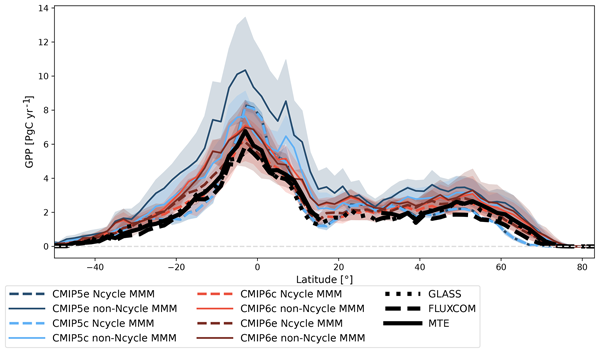
This study investigates present-day carbon cycle variables in CMIP5 and CMIP6 simulations. Overall, CMIP6 models perform better but also show many remaining biases. A significant improvement in the simulation of photosynthesis in models with a nitrogen cycle is found, with only small differences between emission- and concentration-based simulations. Thus, we recommend using emission-driven simulations in CMIP7 by default and including the nitrogen cycle in all future carbon cycle models.
Benjamin M. Sanderson, Ben B. B. Booth, John Dunne, Veronika Eyring, Rosie A. Fisher, Pierre Friedlingstein, Matthew J. Gidden, Tomohiro Hajima, Chris D. Jones, Colin G. Jones, Andrew King, Charles D. Koven, David M. Lawrence, Jason Lowe, Nadine Mengis, Glen P. Peters, Joeri Rogelj, Chris Smith, Abigail C. Snyder, Isla R. Simpson, Abigail L. S. Swann, Claudia Tebaldi, Tatiana Ilyina, Carl-Friedrich Schleussner, Roland Séférian, Bjørn H. Samset, Detlef van Vuuren, and Sönke Zaehle
Geosci. Model Dev., 17, 8141–8172, https://doi.org/10.5194/gmd-17-8141-2024, https://doi.org/10.5194/gmd-17-8141-2024, 2024
Short summary
Short summary
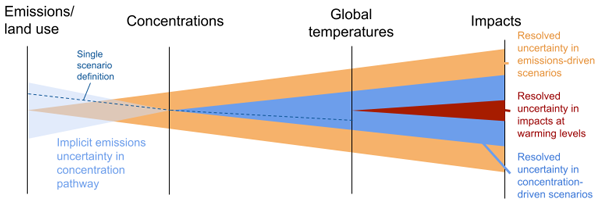
We discuss how, in order to provide more relevant guidance for climate policy, coordinated climate experiments should adopt a greater focus on simulations where Earth system models are provided with carbon emissions from fossil fuels together with land use change instructions, rather than past approaches that have largely focused on experiments with prescribed atmospheric carbon dioxide concentrations. We discuss how these goals might be achieved in coordinated climate modeling experiments.
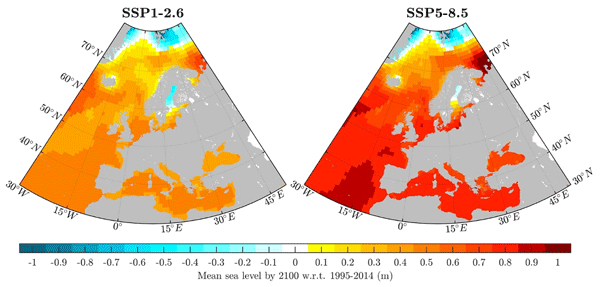
Angélique Melet, Roderik van de Wal, Angel Amores, Arne Arns, Alisée A. Chaigneau, Irina Dinu, Ivan D. Haigh, Tim H. J. Hermans, Piero Lionello, Marta Marcos, H. E. Markus Meier, Benoit Meyssignac, Matthew D. Palmer, Ronja Reese, Matthew J. R. Simpson, and Aimée B. A. Slangen
State Planet, 3-slre1, 4, https://doi.org/10.5194/sp-3-slre1-4-2024, https://doi.org/10.5194/sp-3-slre1-4-2024, 2024
Short summary
Short summary
The EU Knowledge Hub on Sea Level Rise’s Assessment Report strives to synthesize the current scientific knowledge on sea level rise and its impacts across local, national, and EU scales to support evidence-based policy and decision-making, primarily targeting coastal areas. This paper complements IPCC reports by documenting the state of knowledge of observed and 21st century projected changes in mean and extreme sea levels with more regional information for EU seas as scoped with stakeholders.
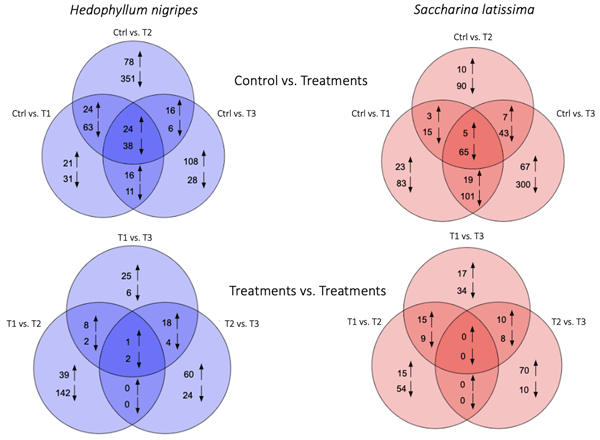
Anaïs Lebrun, Cale A. Miller, Marc Meynadier, Steeve Comeau, Pierre Urrutti, Samir Alliouane, Robert Schlegel, Jean-Pierre Gattuso, and Frédéric Gazeau
Biogeosciences, 21, 4605–4620, https://doi.org/10.5194/bg-21-4605-2024, https://doi.org/10.5194/bg-21-4605-2024, 2024
Short summary
Short summary
We tested the effects of warming, low salinity, and low irradiance on Arctic kelps. We show that growth rates were similar across species and treatments. Alaria esculenta is adapted to low-light conditions. Saccharina latissima exhibited nitrogen limitation, suggesting coastal erosion and permafrost thawing could be beneficial. Laminaria digitata did not respond to the treatments. Gene expression of Hedophyllum nigripes and S. latissima indicated acclimation to the experimental treatments.

Colin G. Jones, Fanny Adloff, Ben B. B. Booth, Peter M. Cox, Veronika Eyring, Pierre Friedlingstein, Katja Frieler, Helene T. Hewitt, Hazel A. Jeffery, Sylvie Joussaume, Torben Koenigk, Bryan N. Lawrence, Eleanor O'Rourke, Malcolm J. Roberts, Benjamin M. Sanderson, Roland Séférian, Samuel Somot, Pier Luigi Vidale, Detlef van Vuuren, Mario Acosta, Mats Bentsen, Raffaele Bernardello, Richard Betts, Ed Blockley, Julien Boé, Tom Bracegirdle, Pascale Braconnot, Victor Brovkin, Carlo Buontempo, Francisco Doblas-Reyes, Markus Donat, Italo Epicoco, Pete Falloon, Sandro Fiore, Thomas Frölicher, Neven S. Fučkar, Matthew J. Gidden, Helge F. Goessling, Rune Grand Graversen, Silvio Gualdi, José M. Gutiérrez, Tatiana Ilyina, Daniela Jacob, Chris D. Jones, Martin Juckes, Elizabeth Kendon, Erik Kjellström, Reto Knutti, Jason Lowe, Matthew Mizielinski, Paola Nassisi, Michael Obersteiner, Pierre Regnier, Romain Roehrig, David Salas y Mélia, Carl-Friedrich Schleussner, Michael Schulz, Enrico Scoccimarro, Laurent Terray, Hannes Thiemann, Richard A. Wood, Shuting Yang, and Sönke Zaehle
Earth Syst. Dynam., 15, 1319–1351, https://doi.org/10.5194/esd-15-1319-2024, https://doi.org/10.5194/esd-15-1319-2024, 2024
Short summary
Short summary
We propose a number of priority areas for the international climate research community to address over the coming decade. Advances in these areas will both increase our understanding of past and future Earth system change, including the societal and environmental impacts of this change, and deliver significantly improved scientific support to international climate policy, such as future IPCC assessments and the UNFCCC Global Stocktake.
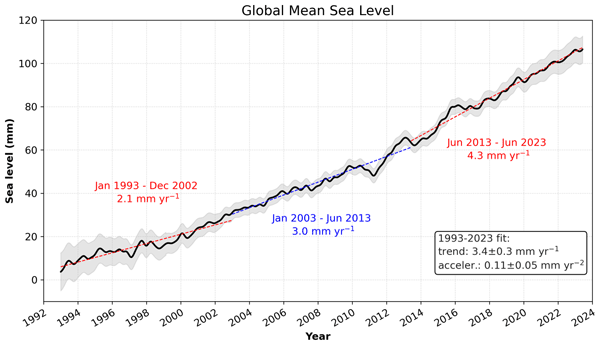
Karina von Schuckmann, Lorena Moreira, Mathilde Cancet, Flora Gues, Emmanuelle Autret, Jonathan Baker, Clément Bricaud, Romain Bourdalle-Badie, Lluis Castrillo, Lijing Cheng, Frederic Chevallier, Daniele Ciani, Alvaro de Pascual-Collar, Vincenzo De Toma, Marie Drevillon, Claudia Fanelli, Gilles Garric, Marion Gehlen, Rianne Giesen, Kevin Hodges, Doroteaciro Iovino, Simon Jandt-Scheelke, Eric Jansen, Melanie Juza, Ioanna Karagali, Thomas Lavergne, Simona Masina, Ronan McAdam, Audrey Minière, Helen Morrison, Tabea Rebekka Panteleit, Andrea Pisano, Marie-Isabelle Pujol, Ad Stoffelen, Sulian Thual, Simon Van Gennip, Pierre Veillard, Chunxue Yang, and Hao Zuo
State Planet, 4-osr8, 1, https://doi.org/10.5194/sp-4-osr8-1-2024, https://doi.org/10.5194/sp-4-osr8-1-2024, 2024
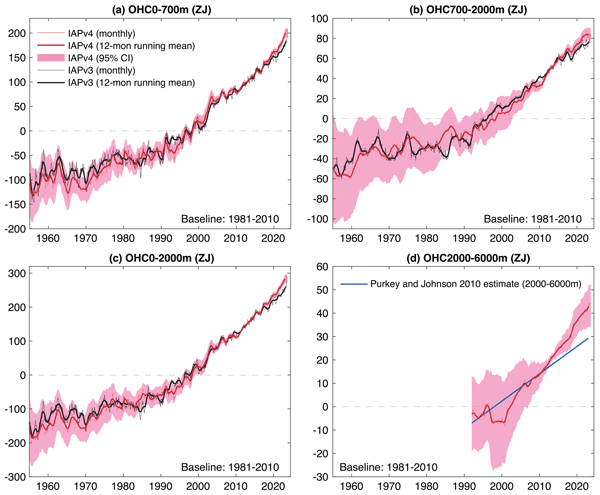
Lijing Cheng, Yuying Pan, Zhetao Tan, Huayi Zheng, Yujing Zhu, Wangxu Wei, Juan Du, Huifeng Yuan, Guancheng Li, Hanlin Ye, Viktor Gouretski, Yuanlong Li, Kevin E. Trenberth, John Abraham, Yuchun Jin, Franco Reseghetti, Xiaopei Lin, Bin Zhang, Gengxin Chen, Michael E. Mann, and Jiang Zhu
Earth Syst. Sci. Data, 16, 3517–3546, https://doi.org/10.5194/essd-16-3517-2024, https://doi.org/10.5194/essd-16-3517-2024, 2024
Short summary
Short summary
Observational gridded products are essential for understanding the ocean, the atmosphere, and climate change; they support policy decisions and socioeconomic developments. This study provides an update of an ocean subsurface temperature and ocean heat content gridded product, named the IAPv4 data product, which is available for the upper 6000 m (119 levels) since 1940 (more reliable after ~1955) for monthly and 1° × 1° temporal and spatial resolutions.
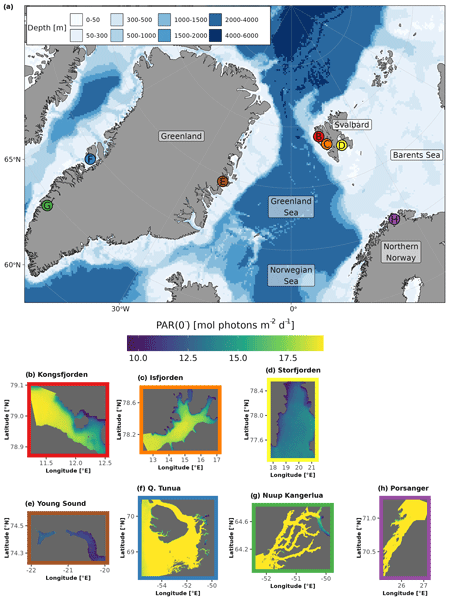
Robert W. Schlegel, Rakesh Kumar Singh, Bernard Gentili, Simon Bélanger, Laura Castro de la Guardia, Dorte Krause-Jensen, Cale A. Miller, Mikael Sejr, and Jean-Pierre Gattuso
Earth Syst. Sci. Data, 16, 2773–2788, https://doi.org/10.5194/essd-16-2773-2024, https://doi.org/10.5194/essd-16-2773-2024, 2024
Short summary
Short summary
Fjords play a vital role in the Arctic ecosystems and human communities. It is therefore important to have as clear of an understanding of the processes within these systems as possible. While temperature and salinity tend to be well measured, light is usually not. The dataset described in this paper uses remotely sensed data from 2003 to 2022 to address this problem by providing high-spatial-resolution surface, water column, and seafloor light data for several well-studied Arctic fjords.
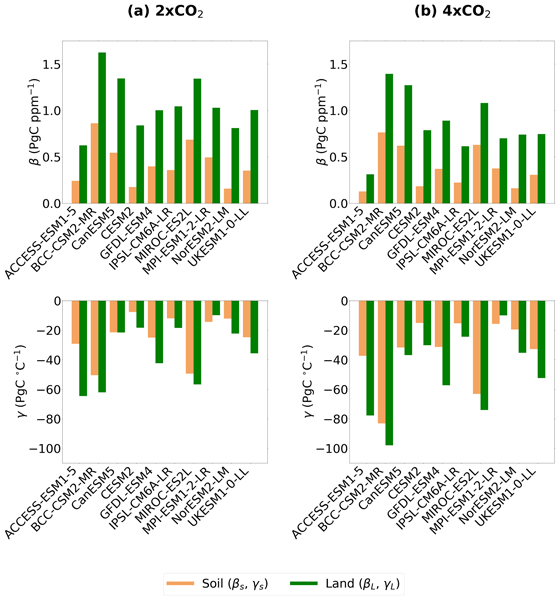
Rebecca M. Varney, Pierre Friedlingstein, Sarah E. Chadburn, Eleanor J. Burke, and Peter M. Cox
Biogeosciences, 21, 2759–2776, https://doi.org/10.5194/bg-21-2759-2024, https://doi.org/10.5194/bg-21-2759-2024, 2024
Short summary
Short summary
Soil carbon is the largest store of carbon on the land surface of Earth and is known to be particularly sensitive to climate change. Understanding this future response is vital to successfully meeting Paris Agreement targets, which rely heavily on carbon uptake by the land surface. In this study, the individual responses of soil carbon are quantified and compared amongst CMIP6 Earth system models used within the most recent IPCC report, and the role of soils in the land response is highlighted.
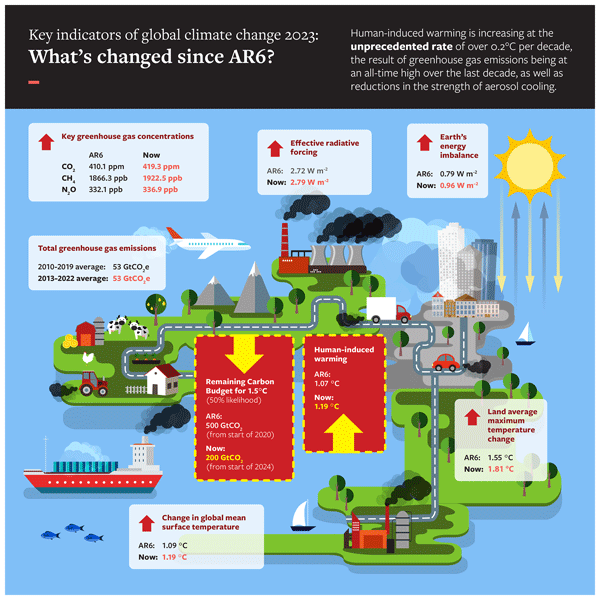
Piers M. Forster, Chris Smith, Tristram Walsh, William F. Lamb, Robin Lamboll, Bradley Hall, Mathias Hauser, Aurélien Ribes, Debbie Rosen, Nathan P. Gillett, Matthew D. Palmer, Joeri Rogelj, Karina von Schuckmann, Blair Trewin, Myles Allen, Robbie Andrew, Richard A. Betts, Alex Borger, Tim Boyer, Jiddu A. Broersma, Carlo Buontempo, Samantha Burgess, Chiara Cagnazzo, Lijing Cheng, Pierre Friedlingstein, Andrew Gettelman, Johannes Gütschow, Masayoshi Ishii, Stuart Jenkins, Xin Lan, Colin Morice, Jens Mühle, Christopher Kadow, John Kennedy, Rachel E. Killick, Paul B. Krummel, Jan C. Minx, Gunnar Myhre, Vaishali Naik, Glen P. Peters, Anna Pirani, Julia Pongratz, Carl-Friedrich Schleussner, Sonia I. Seneviratne, Sophie Szopa, Peter Thorne, Mahesh V. M. Kovilakam, Elisa Majamäki, Jukka-Pekka Jalkanen, Margreet van Marle, Rachel M. Hoesly, Robert Rohde, Dominik Schumacher, Guido van der Werf, Russell Vose, Kirsten Zickfeld, Xuebin Zhang, Valérie Masson-Delmotte, and Panmao Zhai
Earth Syst. Sci. Data, 16, 2625–2658, https://doi.org/10.5194/essd-16-2625-2024, https://doi.org/10.5194/essd-16-2625-2024, 2024
Short summary
Short summary
This paper tracks some key indicators of global warming through time, from 1850 through to the end of 2023. It is designed to give an authoritative estimate of global warming to date and its causes. We find that in 2023, global warming reached 1.3 °C and is increasing at over 0.2 °C per decade. This is caused by all-time-high greenhouse gas emissions.
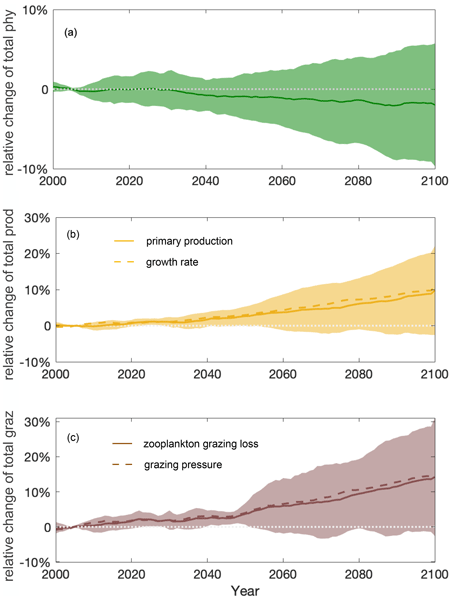
Tianfei Xue, Jens Terhaar, A. E. Friederike Prowe, Thomas L. Frölicher, Andreas Oschlies, and Ivy Frenger
Biogeosciences, 21, 2473–2491, https://doi.org/10.5194/bg-21-2473-2024, https://doi.org/10.5194/bg-21-2473-2024, 2024
Short summary
Short summary
Phytoplankton play a crucial role in marine ecosystems. However, climate change's impact on phytoplankton biomass remains uncertain, particularly in the Southern Ocean. In this region, phytoplankton biomass within the water column is likely to remain stable in response to climate change, as supported by models. This stability arises from a shallower mixed layer, favoring phytoplankton growth but also increasing zooplankton grazing due to phytoplankton concentration near the surface.
Laura M. Pereira, Ignacio Gianelli, Therezah Achieng, Diva Amon, Sally Archibald, Suchinta Arif, Azucena Castro, Tapiwa Prosper Chimbadzwa, Kaera Coetzer, Tracy-Lynn Field, Odirilwe Selomane, Nadia Sitas, Nicola Stevens, Sebastian Villasante, Mohammed Armani, Duncan M. Kimuyu, Ibukun J. Adewumi, David M. Lapola, David Obura, Patricia Pinho, Felipe Roa-Clavijo, Juan Rocha, and U. Rashid Sumaila
Earth Syst. Dynam., 15, 341–366, https://doi.org/10.5194/esd-15-341-2024, https://doi.org/10.5194/esd-15-341-2024, 2024
Short summary
Short summary
Narratives around tipping points, such as the need for
positivetipping points in energy transitions to avoid
negativeEarth system tipping points, do not take into account the entire spectrum of impacts the proposed interventions could have or still rely on narratives that maintain current unsustainable behaviours and marginalize many people. We unpack these ideas in the context of what they mean for the concept of tipping points, using a critical decolonial view from the Global South.
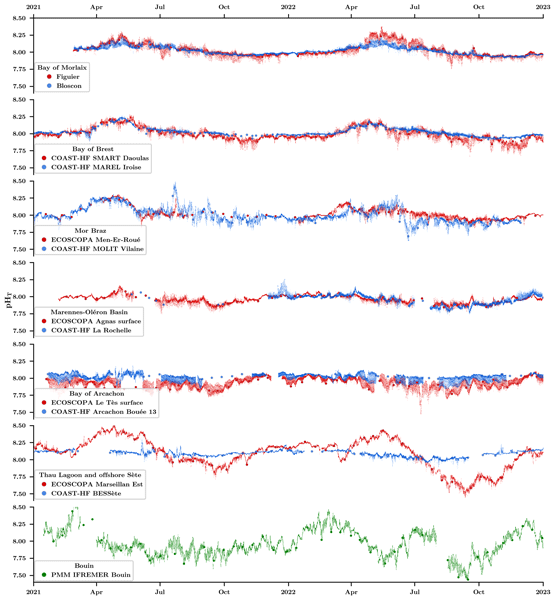
Sébastien Petton, Fabrice Pernet, Valérian Le Roy, Matthias Huber, Sophie Martin, Éric Macé, Yann Bozec, Stéphane Loisel, Peggy Rimmelin-Maury, Émilie Grossteffan, Michel Repecaud, Loïc Quemener, Michael Retho, Soazig Manac'h, Mathias Papin, Philippe Pineau, Thomas Lacoue-Labarthe, Jonathan Deborde, Louis Costes, Pierre Polsenaere, Loïc Rigouin, Jérémy Benhamou, Laure Gouriou, Joséphine Lequeux, Nathalie Labourdette, Nicolas Savoye, Grégory Messiaen, Elodie Foucault, Vincent Ouisse, Marion Richard, Franck Lagarde, Florian Voron, Valentin Kempf, Sébastien Mas, Léa Giannecchini, Francesca Vidussi, Behzad Mostajir, Yann Leredde, Samir Alliouane, Jean-Pierre Gattuso, and Frédéric Gazeau
Earth Syst. Sci. Data, 16, 1667–1688, https://doi.org/10.5194/essd-16-1667-2024, https://doi.org/10.5194/essd-16-1667-2024, 2024
Short summary
Short summary
Our research highlights the concerning impact of rising carbon dioxide levels on coastal areas. To better understand these changes, we've established an observation network in France. By deploying pH sensors and other monitoring equipment at key coastal sites, we're gaining valuable insights into how various factors, such as freshwater inputs, tides, temperature, and biological processes, influence ocean pH.
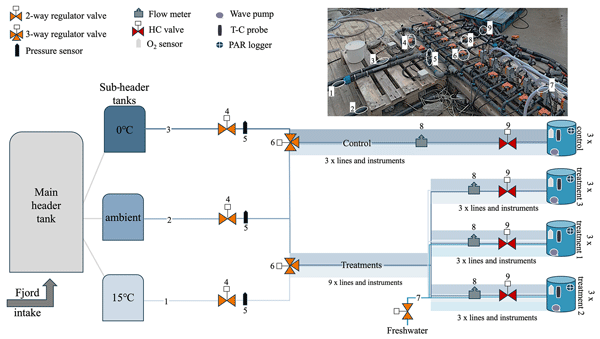
Cale A. Miller, Pierre Urrutti, Jean-Pierre Gattuso, Steeve Comeau, Anaïs Lebrun, Samir Alliouane, Robert W. Schlegel, and Frédéric Gazeau
Biogeosciences, 21, 315–333, https://doi.org/10.5194/bg-21-315-2024, https://doi.org/10.5194/bg-21-315-2024, 2024
Short summary
Short summary
This work describes an experimental system that can replicate and manipulate environmental conditions in marine or aquatic systems. Here, we show how the temperature and salinity of seawater delivered from a fjord is manipulated to experimental tanks on land. By constantly monitoring temperature and salinity in each tank via a computer program, the system continuously adjusts automated flow valves to ensure the seawater in each tank matches the targeted experimental conditions.
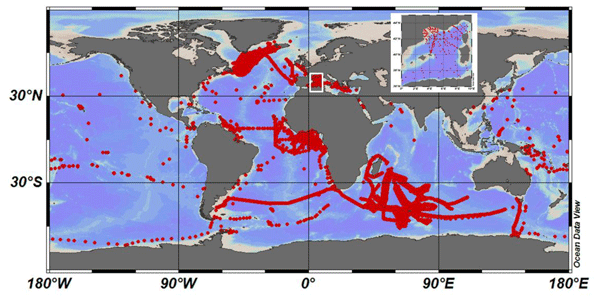
Nicolas Metzl, Jonathan Fin, Claire Lo Monaco, Claude Mignon, Samir Alliouane, David Antoine, Guillaume Bourdin, Jacqueline Boutin, Yann Bozec, Pascal Conan, Laurent Coppola, Frédéric Diaz, Eric Douville, Xavier Durrieu de Madron, Jean-Pierre Gattuso, Frédéric Gazeau, Melek Golbol, Bruno Lansard, Dominique Lefèvre, Nathalie Lefèvre, Fabien Lombard, Férial Louanchi, Liliane Merlivat, Léa Olivier, Anne Petrenko, Sébastien Petton, Mireille Pujo-Pay, Christophe Rabouille, Gilles Reverdin, Céline Ridame, Aline Tribollet, Vincenzo Vellucci, Thibaut Wagener, and Cathy Wimart-Rousseau
Earth Syst. Sci. Data, 16, 89–120, https://doi.org/10.5194/essd-16-89-2024, https://doi.org/10.5194/essd-16-89-2024, 2024
Short summary
Short summary
This work presents a synthesis of 44 000 total alkalinity and dissolved inorganic carbon observations obtained between 1993 and 2022 in the Global Ocean and the Mediterranean Sea at the surface and in the water column. Seawater samples were measured using the same method and calibrated with international Certified Reference Material. We describe the data assemblage, quality control and some potential uses of this dataset.
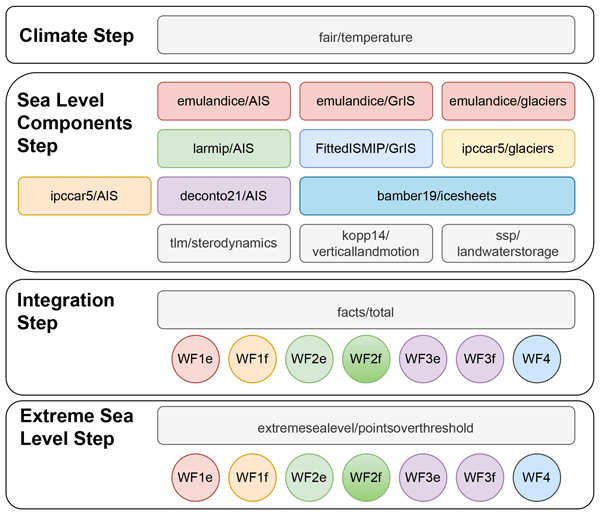
Robert E. Kopp, Gregory G. Garner, Tim H. J. Hermans, Shantenu Jha, Praveen Kumar, Alexander Reedy, Aimée B. A. Slangen, Matteo Turilli, Tamsin L. Edwards, Jonathan M. Gregory, George Koubbe, Anders Levermann, Andre Merzky, Sophie Nowicki, Matthew D. Palmer, and Chris Smith
Geosci. Model Dev., 16, 7461–7489, https://doi.org/10.5194/gmd-16-7461-2023, https://doi.org/10.5194/gmd-16-7461-2023, 2023
Short summary
Short summary
Future sea-level rise projections exhibit multiple forms of uncertainty, all of which must be considered by scientific assessments intended to inform decision-making. The Framework for Assessing Changes To Sea-level (FACTS) is a new software package intended to support assessments of global mean, regional, and extreme sea-level rise. An early version of FACTS supported the development of the IPCC Sixth Assessment Report sea-level projections.
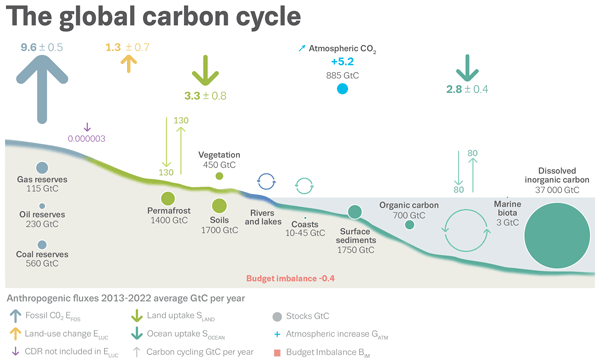
Pierre Friedlingstein, Michael O'Sullivan, Matthew W. Jones, Robbie M. Andrew, Dorothee C. E. Bakker, Judith Hauck, Peter Landschützer, Corinne Le Quéré, Ingrid T. Luijkx, Glen P. Peters, Wouter Peters, Julia Pongratz, Clemens Schwingshackl, Stephen Sitch, Josep G. Canadell, Philippe Ciais, Robert B. Jackson, Simone R. Alin, Peter Anthoni, Leticia Barbero, Nicholas R. Bates, Meike Becker, Nicolas Bellouin, Bertrand Decharme, Laurent Bopp, Ida Bagus Mandhara Brasika, Patricia Cadule, Matthew A. Chamberlain, Naveen Chandra, Thi-Tuyet-Trang Chau, Frédéric Chevallier, Louise P. Chini, Margot Cronin, Xinyu Dou, Kazutaka Enyo, Wiley Evans, Stefanie Falk, Richard A. Feely, Liang Feng, Daniel J. Ford, Thomas Gasser, Josefine Ghattas, Thanos Gkritzalis, Giacomo Grassi, Luke Gregor, Nicolas Gruber, Özgür Gürses, Ian Harris, Matthew Hefner, Jens Heinke, Richard A. Houghton, George C. Hurtt, Yosuke Iida, Tatiana Ilyina, Andrew R. Jacobson, Atul Jain, Tereza Jarníková, Annika Jersild, Fei Jiang, Zhe Jin, Fortunat Joos, Etsushi Kato, Ralph F. Keeling, Daniel Kennedy, Kees Klein Goldewijk, Jürgen Knauer, Jan Ivar Korsbakken, Arne Körtzinger, Xin Lan, Nathalie Lefèvre, Hongmei Li, Junjie Liu, Zhiqiang Liu, Lei Ma, Greg Marland, Nicolas Mayot, Patrick C. McGuire, Galen A. McKinley, Gesa Meyer, Eric J. Morgan, David R. Munro, Shin-Ichiro Nakaoka, Yosuke Niwa, Kevin M. O'Brien, Are Olsen, Abdirahman M. Omar, Tsuneo Ono, Melf Paulsen, Denis Pierrot, Katie Pocock, Benjamin Poulter, Carter M. Powis, Gregor Rehder, Laure Resplandy, Eddy Robertson, Christian Rödenbeck, Thais M. Rosan, Jörg Schwinger, Roland Séférian, T. Luke Smallman, Stephen M. Smith, Reinel Sospedra-Alfonso, Qing Sun, Adrienne J. Sutton, Colm Sweeney, Shintaro Takao, Pieter P. Tans, Hanqin Tian, Bronte Tilbrook, Hiroyuki Tsujino, Francesco Tubiello, Guido R. van der Werf, Erik van Ooijen, Rik Wanninkhof, Michio Watanabe, Cathy Wimart-Rousseau, Dongxu Yang, Xiaojuan Yang, Wenping Yuan, Xu Yue, Sönke Zaehle, Jiye Zeng, and Bo Zheng
Earth Syst. Sci. Data, 15, 5301–5369, https://doi.org/10.5194/essd-15-5301-2023, https://doi.org/10.5194/essd-15-5301-2023, 2023
Short summary
Short summary
The Global Carbon Budget 2023 describes the methodology, main results, and data sets used to quantify the anthropogenic emissions of carbon dioxide (CO2) and their partitioning among the atmosphere, land ecosystems, and the ocean over the historical period (1750–2023). These living datasets are updated every year to provide the highest transparency and traceability in the reporting of CO2, the key driver of climate change.
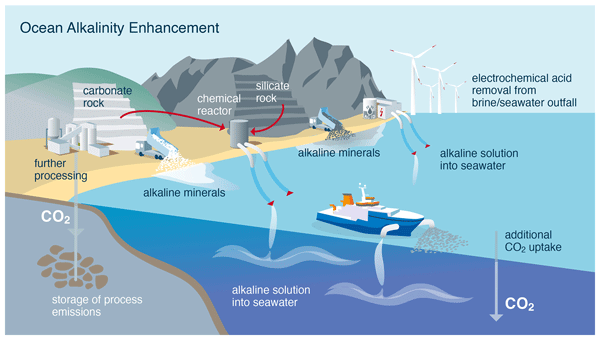
Andreas Oschlies, Lennart T. Bach, Rosalind E. M. Rickaby, Terre Satterfield, Romany Webb, and Jean-Pierre Gattuso
State Planet, 2-oae2023, 1, https://doi.org/10.5194/sp-2-oae2023-1-2023, https://doi.org/10.5194/sp-2-oae2023-1-2023, 2023
Short summary
Short summary
Reaching promised climate targets will require the deployment of carbon dioxide removal (CDR). Marine CDR options receive more and more interest. Based on idealized theoretical studies, ocean alkalinity enhancement (OAE) appears as a promising marine CDR method. We provide an overview on the current situation of developing OAE as a marine CDR method and describe the history that has led to the creation of the OAE research best practice guide.
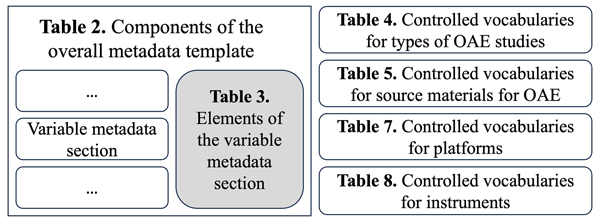
Li-Qing Jiang, Adam V. Subhas, Daniela Basso, Katja Fennel, and Jean-Pierre Gattuso
State Planet, 2-oae2023, 13, https://doi.org/10.5194/sp-2-oae2023-13-2023, https://doi.org/10.5194/sp-2-oae2023-13-2023, 2023
Short summary
Short summary
This paper provides comprehensive guidelines for ocean alkalinity enhancement (OAE) researchers on archiving their metadata and data. It includes data standards for various OAE studies and a universal metadata template. Controlled vocabularies for terms like alkalinization methods are included. These guidelines also apply to ocean acidification data.
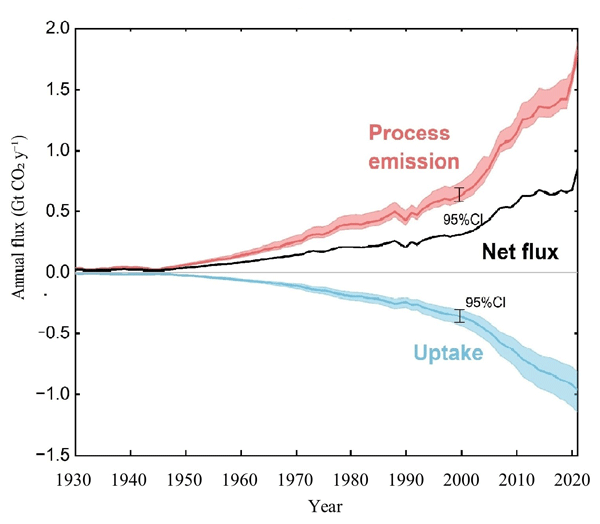
Zi Huang, Jiaoyue Wang, Longfei Bing, Yijiao Qiu, Rui Guo, Ying Yu, Mingjing Ma, Le Niu, Dan Tong, Robbie M. Andrew, Pierre Friedlingstein, Josep G. Canadell, Fengming Xi, and Zhu Liu
Earth Syst. Sci. Data, 15, 4947–4958, https://doi.org/10.5194/essd-15-4947-2023, https://doi.org/10.5194/essd-15-4947-2023, 2023
Short summary
Short summary
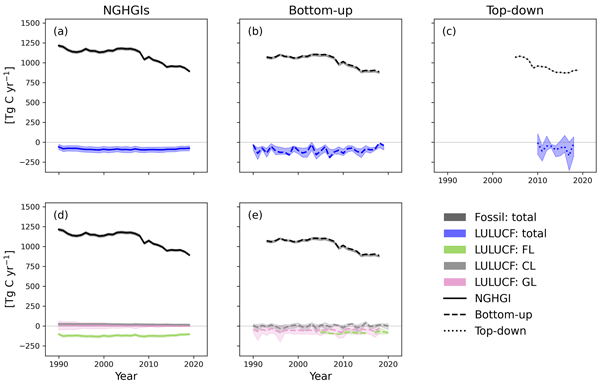
This is about global and regional cement process carbon emissions and CO2 uptake calculations from 1930 to 2019. The global cement production is rising to 4.4 Gt, causing processing carbon emission of 1.81 Gt (95% CI: 1.75–1.88 Gt CO2) in 2021. Plus, in 2021, cement’s carbon accumulated uptake (22.9 Gt, 95% CI: 19.6–22.6 Gt CO2) has offset 55.2% of cement process CO2 emissions (41.5 Gt, 95% CI: 38.7–47.1 Gt CO2) since 1930.
Matthew J. McGrath, Ana Maria Roxana Petrescu, Philippe Peylin, Robbie M. Andrew, Bradley Matthews, Frank Dentener, Juraj Balkovič, Vladislav Bastrikov, Meike Becker, Gregoire Broquet, Philippe Ciais, Audrey Fortems-Cheiney, Raphael Ganzenmüller, Giacomo Grassi, Ian Harris, Matthew Jones, Jürgen Knauer, Matthias Kuhnert, Guillaume Monteil, Saqr Munassar, Paul I. Palmer, Glen P. Peters, Chunjing Qiu, Mart-Jan Schelhaas, Oksana Tarasova, Matteo Vizzarri, Karina Winkler, Gianpaolo Balsamo, Antoine Berchet, Peter Briggs, Patrick Brockmann, Frédéric Chevallier, Giulia Conchedda, Monica Crippa, Stijn N. C. Dellaert, Hugo A. C. Denier van der Gon, Sara Filipek, Pierre Friedlingstein, Richard Fuchs, Michael Gauss, Christoph Gerbig, Diego Guizzardi, Dirk Günther, Richard A. Houghton, Greet Janssens-Maenhout, Ronny Lauerwald, Bas Lerink, Ingrid T. Luijkx, Géraud Moulas, Marilena Muntean, Gert-Jan Nabuurs, Aurélie Paquirissamy, Lucia Perugini, Wouter Peters, Roberto Pilli, Julia Pongratz, Pierre Regnier, Marko Scholze, Yusuf Serengil, Pete Smith, Efisio Solazzo, Rona L. Thompson, Francesco N. Tubiello, Timo Vesala, and Sophia Walther
Earth Syst. Sci. Data, 15, 4295–4370, https://doi.org/10.5194/essd-15-4295-2023, https://doi.org/10.5194/essd-15-4295-2023, 2023
Short summary
Short summary
Accurate estimation of fluxes of carbon dioxide from the land surface is essential for understanding future impacts of greenhouse gas emissions on the climate system. A wide variety of methods currently exist to estimate these sources and sinks. We are continuing work to develop annual comparisons of these diverse methods in order to clarify what they all actually calculate and to resolve apparent disagreement, in addition to highlighting opportunities for increased understanding.
Robert W. Schlegel and Jean-Pierre Gattuso
Earth Syst. Sci. Data, 15, 3733–3746, https://doi.org/10.5194/essd-15-3733-2023, https://doi.org/10.5194/essd-15-3733-2023, 2023
Short summary
Short summary
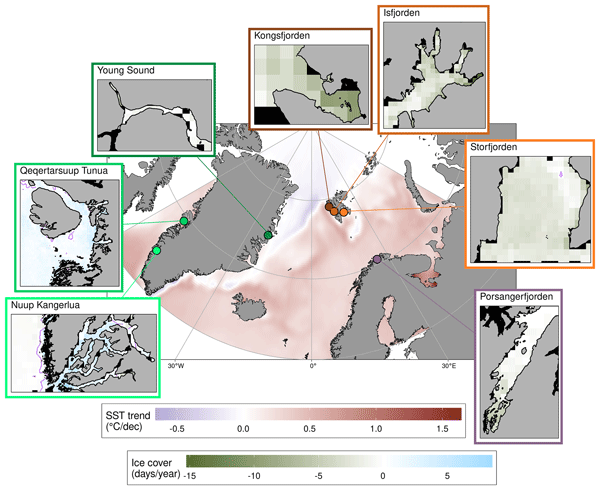
A single dataset was created for investigations of changes in the socio-ecological systems within seven Arctic fjords by amalgamating roughly 1400 datasets from a number of sources. The many variables in these data were organised into five distinct categories and classified into 14 key drivers. Data for seawater temperature and salinity are available from the late 19th century, with some other drivers having data available from the 1950s and 1960s and the others starting from the 1990s onward.
Saeed Hariri, Sabrina Speich, Bruno Blanke, and Marina Lévy
Ocean Sci., 19, 1183–1201, https://doi.org/10.5194/os-19-1183-2023, https://doi.org/10.5194/os-19-1183-2023, 2023
Short summary
Short summary
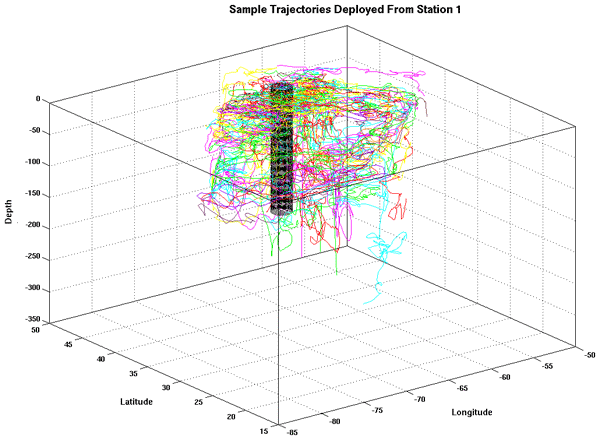
This work presents a series of studies conducted by the authors on the application of the Lagrangian approach for the connectivity analysis between different ocean locations in an idealized open-ocean model. We assess how the connectivity properties of typical oceanic flows are affected by the fine-scale circulation and discuss the challenges facing ocean connectivity estimates related to the spatial resolution. Our results are important to improve the understanding of marine ecosystems.
Jean-Pierre Gattuso, Samir Alliouane, and Philipp Fischer
Earth Syst. Sci. Data, 15, 2809–2825, https://doi.org/10.5194/essd-15-2809-2023, https://doi.org/10.5194/essd-15-2809-2023, 2023
Short summary
Short summary
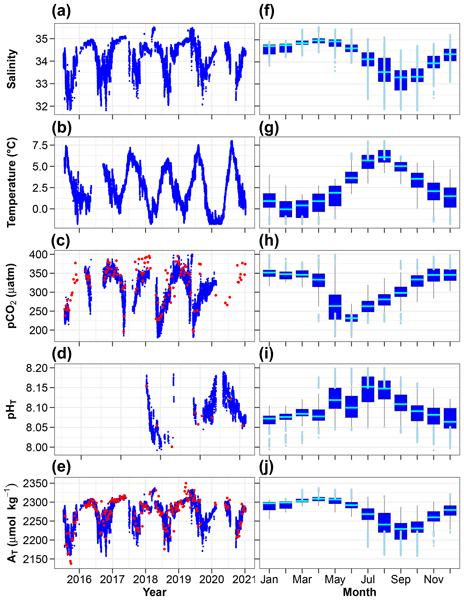
The Arctic Ocean is subject to high rates of ocean warming and acidification, with critical implications for marine organisms, ecosystems and the services they provide. We report here on the first high-frequency (1 h), multi-year (5 years) dataset of the carbonate system at a coastal site in a high-Arctic fjord (Kongsfjorden, Svalbard). This site is a significant sink for CO2 every month of the year (9 to 17 mol m-2 yr-1). The saturation state of aragonite can be as low as 1.3.
Anne L. Morée, Tayler M. Clarke, William W. L. Cheung, and Thomas L. Frölicher
Biogeosciences, 20, 2425–2454, https://doi.org/10.5194/bg-20-2425-2023, https://doi.org/10.5194/bg-20-2425-2023, 2023
Short summary
Short summary
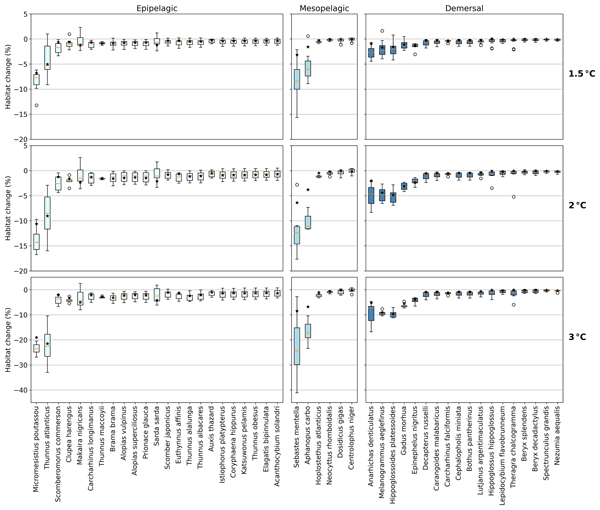
Ocean temperature and oxygen shape marine habitats together with species’ characteristics. We calculated the impacts of projected 21st-century warming and oxygen loss on the contemporary habitat volume of 47 marine species and described the drivers of these impacts. Most species lose less than 5 % of their habitat at 2 °C of global warming, but some species incur losses 2–3 times greater than that. We also calculate which species may be most vulnerable to climate change and why this is the case.
Piers M. Forster, Christopher J. Smith, Tristram Walsh, William F. Lamb, Robin Lamboll, Mathias Hauser, Aurélien Ribes, Debbie Rosen, Nathan Gillett, Matthew D. Palmer, Joeri Rogelj, Karina von Schuckmann, Sonia I. Seneviratne, Blair Trewin, Xuebin Zhang, Myles Allen, Robbie Andrew, Arlene Birt, Alex Borger, Tim Boyer, Jiddu A. Broersma, Lijing Cheng, Frank Dentener, Pierre Friedlingstein, José M. Gutiérrez, Johannes Gütschow, Bradley Hall, Masayoshi Ishii, Stuart Jenkins, Xin Lan, June-Yi Lee, Colin Morice, Christopher Kadow, John Kennedy, Rachel Killick, Jan C. Minx, Vaishali Naik, Glen P. Peters, Anna Pirani, Julia Pongratz, Carl-Friedrich Schleussner, Sophie Szopa, Peter Thorne, Robert Rohde, Maisa Rojas Corradi, Dominik Schumacher, Russell Vose, Kirsten Zickfeld, Valérie Masson-Delmotte, and Panmao Zhai
Earth Syst. Sci. Data, 15, 2295–2327, https://doi.org/10.5194/essd-15-2295-2023, https://doi.org/10.5194/essd-15-2295-2023, 2023
Short summary
Short summary
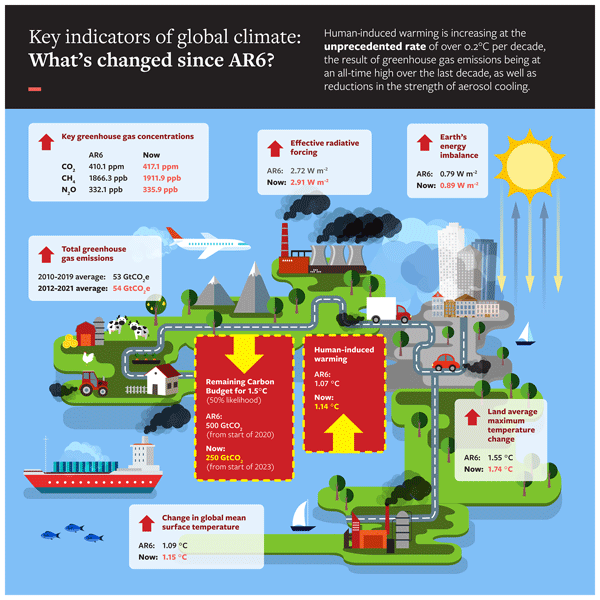
This is a critical decade for climate action, but there is no annual tracking of the level of human-induced warming. We build on the Intergovernmental Panel on Climate Change assessment reports that are authoritative but published infrequently to create a set of key global climate indicators that can be tracked through time. Our hope is that this becomes an important annual publication that policymakers, media, scientists and the public can refer to.
Víctor Malagón-Santos, Aimée B. A. Slangen, Tim H. J. Hermans, Sönke Dangendorf, Marta Marcos, and Nicola Maher
Ocean Sci., 19, 499–515, https://doi.org/10.5194/os-19-499-2023, https://doi.org/10.5194/os-19-499-2023, 2023
Short summary
Short summary
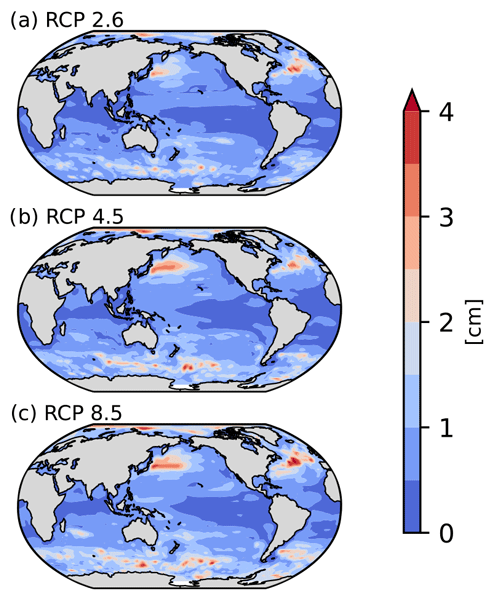
Climate change will alter heat and freshwater fluxes as well as ocean circulation, driving local changes in sea level. This sea-level change component is known as ocean dynamic sea level (DSL), and it is usually projected using computationally expensive global climate models. Statistical models are a cheaper alternative for projecting DSL but may contain significant errors. Here, we partly remove those errors (driven by internal climate variability) by using pattern recognition techniques.
Karina von Schuckmann, Audrey Minière, Flora Gues, Francisco José Cuesta-Valero, Gottfried Kirchengast, Susheel Adusumilli, Fiammetta Straneo, Michaël Ablain, Richard P. Allan, Paul M. Barker, Hugo Beltrami, Alejandro Blazquez, Tim Boyer, Lijing Cheng, John Church, Damien Desbruyeres, Han Dolman, Catia M. Domingues, Almudena García-García, Donata Giglio, John E. Gilson, Maximilian Gorfer, Leopold Haimberger, Maria Z. Hakuba, Stefan Hendricks, Shigeki Hosoda, Gregory C. Johnson, Rachel Killick, Brian King, Nicolas Kolodziejczyk, Anton Korosov, Gerhard Krinner, Mikael Kuusela, Felix W. Landerer, Moritz Langer, Thomas Lavergne, Isobel Lawrence, Yuehua Li, John Lyman, Florence Marti, Ben Marzeion, Michael Mayer, Andrew H. MacDougall, Trevor McDougall, Didier Paolo Monselesan, Jan Nitzbon, Inès Otosaka, Jian Peng, Sarah Purkey, Dean Roemmich, Kanako Sato, Katsunari Sato, Abhishek Savita, Axel Schweiger, Andrew Shepherd, Sonia I. Seneviratne, Leon Simons, Donald A. Slater, Thomas Slater, Andrea K. Steiner, Toshio Suga, Tanguy Szekely, Wim Thiery, Mary-Louise Timmermans, Inne Vanderkelen, Susan E. Wjiffels, Tonghua Wu, and Michael Zemp
Earth Syst. Sci. Data, 15, 1675–1709, https://doi.org/10.5194/essd-15-1675-2023, https://doi.org/10.5194/essd-15-1675-2023, 2023
Short summary
Short summary
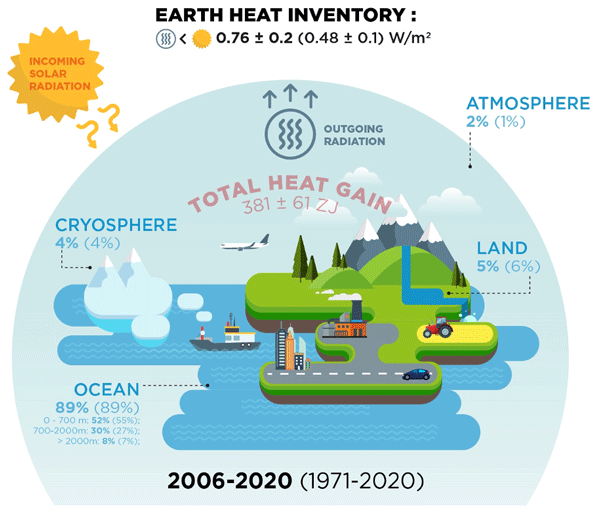
Earth's climate is out of energy balance, and this study quantifies how much heat has consequently accumulated over the past decades (ocean: 89 %, land: 6 %, cryosphere: 4 %, atmosphere: 1 %). Since 1971, this accumulated heat reached record values at an increasing pace. The Earth heat inventory provides a comprehensive view on the status and expectation of global warming, and we call for an implementation of this global climate indicator into the Paris Agreement’s Global Stocktake.
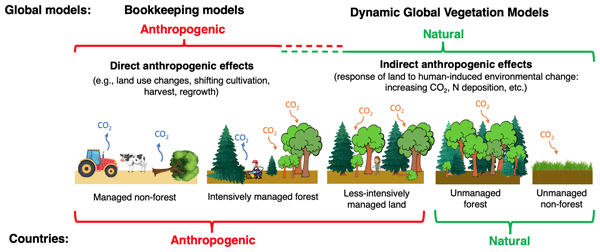
Giacomo Grassi, Clemens Schwingshackl, Thomas Gasser, Richard A. Houghton, Stephen Sitch, Josep G. Canadell, Alessandro Cescatti, Philippe Ciais, Sandro Federici, Pierre Friedlingstein, Werner A. Kurz, Maria J. Sanz Sanchez, Raúl Abad Viñas, Ramdane Alkama, Selma Bultan, Guido Ceccherini, Stefanie Falk, Etsushi Kato, Daniel Kennedy, Jürgen Knauer, Anu Korosuo, Joana Melo, Matthew J. McGrath, Julia E. M. S. Nabel, Benjamin Poulter, Anna A. Romanovskaya, Simone Rossi, Hanqin Tian, Anthony P. Walker, Wenping Yuan, Xu Yue, and Julia Pongratz
Earth Syst. Sci. Data, 15, 1093–1114, https://doi.org/10.5194/essd-15-1093-2023, https://doi.org/10.5194/essd-15-1093-2023, 2023
Short summary
Short summary
Striking differences exist in estimates of land-use CO2 fluxes between the national greenhouse gas inventories and the IPCC assessment reports. These differences hamper an accurate assessment of the collective progress under the Paris Agreement. By implementing an approach that conceptually reconciles land-use CO2 flux from national inventories and the global models used by the IPCC, our study is an important step forward for increasing confidence in land-use CO2 flux estimates.
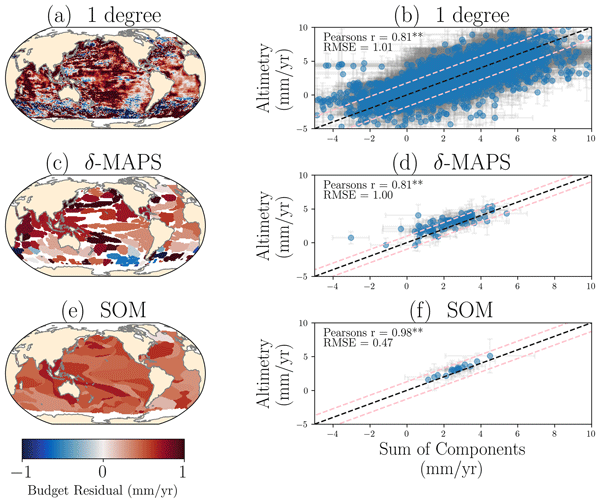
Carolina M. L. Camargo, Riccardo E. M. Riva, Tim H. J. Hermans, Eike M. Schütt, Marta Marcos, Ismael Hernandez-Carrasco, and Aimée B. A. Slangen
Ocean Sci., 19, 17–41, https://doi.org/10.5194/os-19-17-2023, https://doi.org/10.5194/os-19-17-2023, 2023
Short summary
Short summary
Sea-level change is mainly caused by variations in the ocean’s temperature and salinity and land ice melting. Here, we quantify the contribution of the different drivers to the regional sea-level change. We apply machine learning techniques to identify regions that have similar sea-level variability. These regions reduce the observational uncertainty that has limited the regional sea-level budget so far and highlight how large-scale ocean circulation controls regional sea-level change.
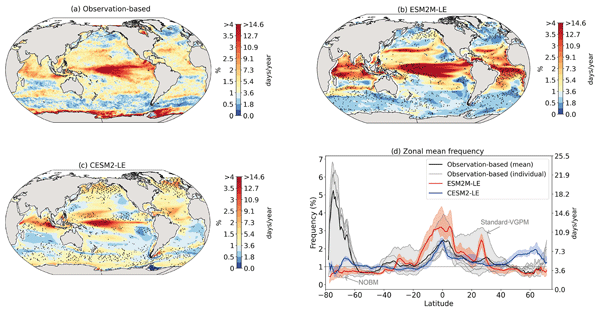
Natacha Le Grix, Jakob Zscheischler, Keith B. Rodgers, Ryohei Yamaguchi, and Thomas L. Frölicher
Biogeosciences, 19, 5807–5835, https://doi.org/10.5194/bg-19-5807-2022, https://doi.org/10.5194/bg-19-5807-2022, 2022
Short summary
Short summary
Compound events threaten marine ecosystems. Here, we investigate the potentially harmful combination of marine heatwaves with low phytoplankton productivity. Using satellite-based observations, we show that these compound events are frequent in the low latitudes. We then investigate the drivers of these compound events using Earth system models. The models share similar drivers in the low latitudes but disagree in the high latitudes due to divergent factors limiting phytoplankton production.
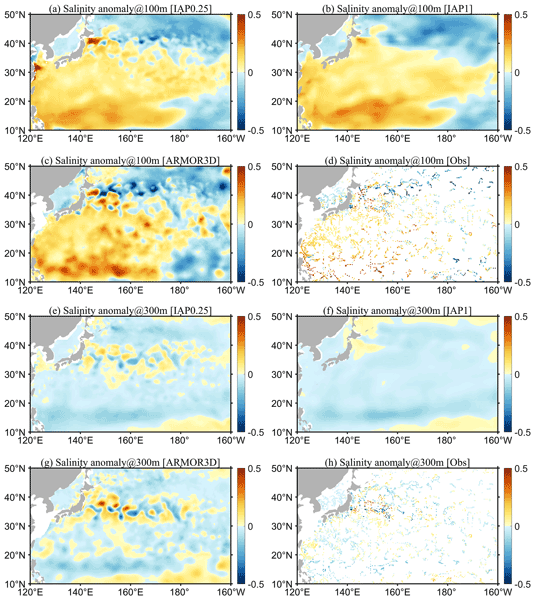
Tian Tian, Lijing Cheng, Gongjie Wang, John Abraham, Wangxu Wei, Shihe Ren, Jiang Zhu, Junqiang Song, and Hongze Leng
Earth Syst. Sci. Data, 14, 5037–5060, https://doi.org/10.5194/essd-14-5037-2022, https://doi.org/10.5194/essd-14-5037-2022, 2022
Short summary
Short summary
A high-resolution gridded dataset is crucial for understanding ocean processes at various spatiotemporal scales. Here we used a machine learning approach and successfully reconstructed a high-resolution (0.25° × 0.25°) ocean subsurface (1–2000 m) salinity dataset for the period 1993–2018 (monthly) by merging in situ salinity profile observations with high-resolution satellite remote-sensing data. This new product could be useful in various applications in ocean and climate fields.
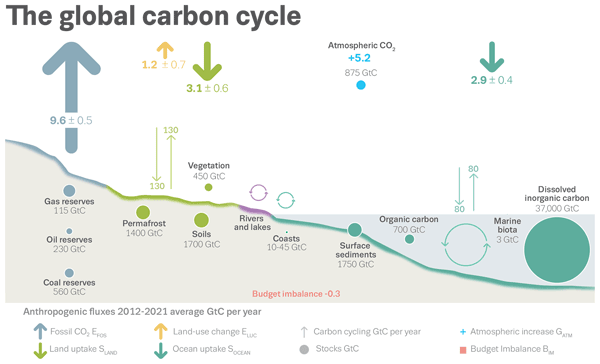
Pierre Friedlingstein, Michael O'Sullivan, Matthew W. Jones, Robbie M. Andrew, Luke Gregor, Judith Hauck, Corinne Le Quéré, Ingrid T. Luijkx, Are Olsen, Glen P. Peters, Wouter Peters, Julia Pongratz, Clemens Schwingshackl, Stephen Sitch, Josep G. Canadell, Philippe Ciais, Robert B. Jackson, Simone R. Alin, Ramdane Alkama, Almut Arneth, Vivek K. Arora, Nicholas R. Bates, Meike Becker, Nicolas Bellouin, Henry C. Bittig, Laurent Bopp, Frédéric Chevallier, Louise P. Chini, Margot Cronin, Wiley Evans, Stefanie Falk, Richard A. Feely, Thomas Gasser, Marion Gehlen, Thanos Gkritzalis, Lucas Gloege, Giacomo Grassi, Nicolas Gruber, Özgür Gürses, Ian Harris, Matthew Hefner, Richard A. Houghton, George C. Hurtt, Yosuke Iida, Tatiana Ilyina, Atul K. Jain, Annika Jersild, Koji Kadono, Etsushi Kato, Daniel Kennedy, Kees Klein Goldewijk, Jürgen Knauer, Jan Ivar Korsbakken, Peter Landschützer, Nathalie Lefèvre, Keith Lindsay, Junjie Liu, Zhu Liu, Gregg Marland, Nicolas Mayot, Matthew J. McGrath, Nicolas Metzl, Natalie M. Monacci, David R. Munro, Shin-Ichiro Nakaoka, Yosuke Niwa, Kevin O'Brien, Tsuneo Ono, Paul I. Palmer, Naiqing Pan, Denis Pierrot, Katie Pocock, Benjamin Poulter, Laure Resplandy, Eddy Robertson, Christian Rödenbeck, Carmen Rodriguez, Thais M. Rosan, Jörg Schwinger, Roland Séférian, Jamie D. Shutler, Ingunn Skjelvan, Tobias Steinhoff, Qing Sun, Adrienne J. Sutton, Colm Sweeney, Shintaro Takao, Toste Tanhua, Pieter P. Tans, Xiangjun Tian, Hanqin Tian, Bronte Tilbrook, Hiroyuki Tsujino, Francesco Tubiello, Guido R. van der Werf, Anthony P. Walker, Rik Wanninkhof, Chris Whitehead, Anna Willstrand Wranne, Rebecca Wright, Wenping Yuan, Chao Yue, Xu Yue, Sönke Zaehle, Jiye Zeng, and Bo Zheng
Earth Syst. Sci. Data, 14, 4811–4900, https://doi.org/10.5194/essd-14-4811-2022, https://doi.org/10.5194/essd-14-4811-2022, 2022
Short summary
Short summary
The Global Carbon Budget 2022 describes the datasets and methodology used to quantify the anthropogenic emissions of carbon dioxide (CO2) and their partitioning among the atmosphere, the land ecosystems, and the ocean. These living datasets are updated every year to provide the highest transparency and traceability in the reporting of CO2, the key driver of climate change.
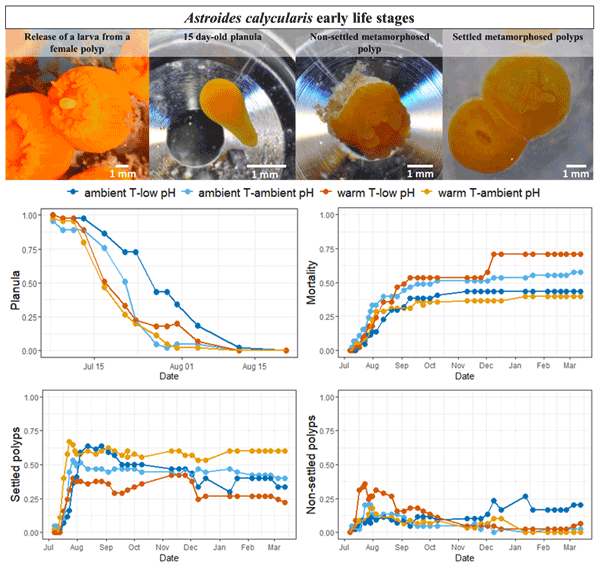
Chloe Carbonne, Steeve Comeau, Phoebe T. W. Chan, Keyla Plichon, Jean-Pierre Gattuso, and Núria Teixidó
Biogeosciences, 19, 4767–4777, https://doi.org/10.5194/bg-19-4767-2022, https://doi.org/10.5194/bg-19-4767-2022, 2022
Short summary
Short summary
For the first time, our study highlights the synergistic effects of a 9-month warming and acidification combined stress on the early life stages of a Mediterranean azooxanthellate coral, Astroides calycularis. Our results predict a decrease in dispersion, settlement, post-settlement linear extention, budding and survival under future global change and that larvae and recruits of A. calycularis are stages of interest for this Mediterranean coral resistance, resilience and conservation.
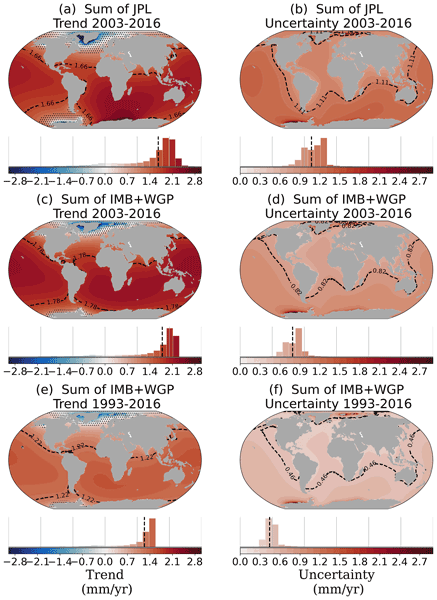
Carolina M. L. Camargo, Riccardo E. M. Riva, Tim H. J. Hermans, and Aimée B. A. Slangen
Earth Syst. Dynam., 13, 1351–1375, https://doi.org/10.5194/esd-13-1351-2022, https://doi.org/10.5194/esd-13-1351-2022, 2022
Short summary
Short summary
The mass loss from Antarctica, Greenland and glaciers and variations in land water storage cause sea-level changes. Here, we characterize the regional trends within these sea-level contributions, taking into account mass variations since 1993. We take a comprehensive approach to determining the uncertainties of these sea-level changes, considering different types of errors. Our study reveals the importance of clearly quantifying the uncertainties of sea-level change trends.

Jens Terhaar, Thomas L. Frölicher, and Fortunat Joos
Biogeosciences, 19, 4431–4457, https://doi.org/10.5194/bg-19-4431-2022, https://doi.org/10.5194/bg-19-4431-2022, 2022
Short summary
Short summary
Estimates of the ocean sink of anthropogenic carbon vary across various approaches. We show that the global ocean carbon sink can be estimated by three parameters, two of which approximate the ocean ventilation in the Southern Ocean and the North Atlantic, and one of which approximates the chemical capacity of the ocean to take up carbon. With observations of these parameters, we estimate that the global ocean carbon sink is 10 % larger than previously assumed, and we cut uncertainties in half.
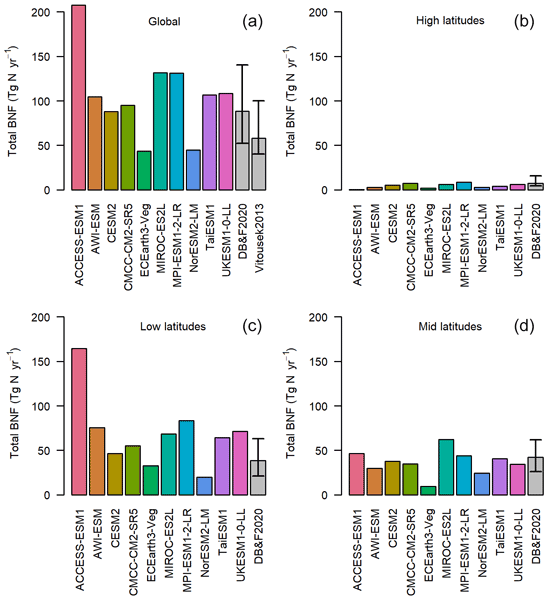
Taraka Davies-Barnard, Sönke Zaehle, and Pierre Friedlingstein
Biogeosciences, 19, 3491–3503, https://doi.org/10.5194/bg-19-3491-2022, https://doi.org/10.5194/bg-19-3491-2022, 2022
Short summary
Short summary
Biological nitrogen fixation is the largest natural input of new nitrogen onto land. Earth system models mainly represent global total terrestrial biological nitrogen fixation within observational uncertainties but overestimate tropical fixation. The model range of increase in biological nitrogen fixation in the SSP3-7.0 scenario is 3 % to 87 %. While biological nitrogen fixation is a key source of new nitrogen, its predictive power for net primary productivity in models is limited.
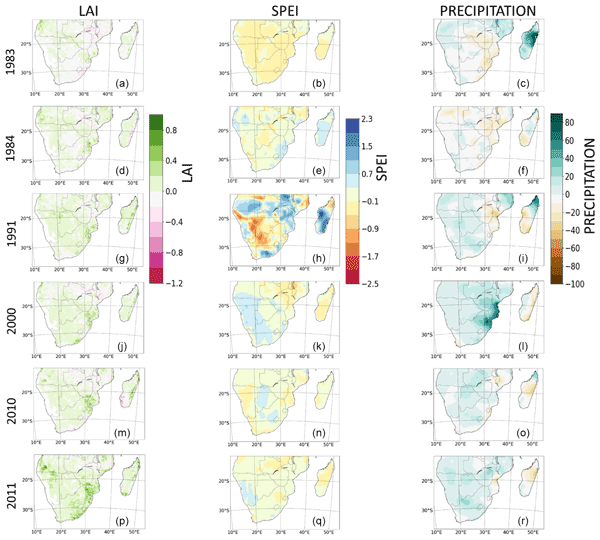
Shakirudeen Lawal, Stephen Sitch, Danica Lombardozzi, Julia E. M. S. Nabel, Hao-Wei Wey, Pierre Friedlingstein, Hanqin Tian, and Bruce Hewitson
Hydrol. Earth Syst. Sci., 26, 2045–2071, https://doi.org/10.5194/hess-26-2045-2022, https://doi.org/10.5194/hess-26-2045-2022, 2022
Short summary
Short summary
To investigate the impacts of drought on vegetation, which few studies have done due to various limitations, we used the leaf area index as proxy and dynamic global vegetation models (DGVMs) to simulate drought impacts because the models use observationally derived climate. We found that the semi-desert biome responds strongly to drought in the summer season, while the tropical forest biome shows a weak response. This study could help target areas to improve drought monitoring and simulation.
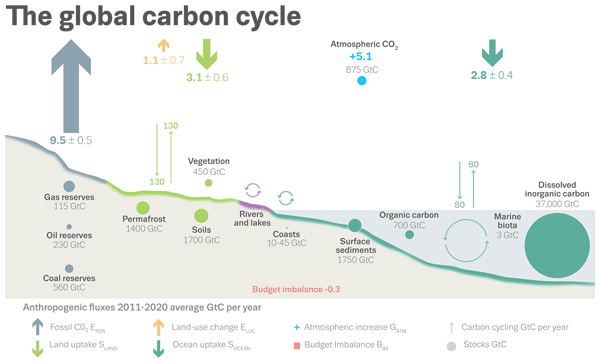
Pierre Friedlingstein, Matthew W. Jones, Michael O'Sullivan, Robbie M. Andrew, Dorothee C. E. Bakker, Judith Hauck, Corinne Le Quéré, Glen P. Peters, Wouter Peters, Julia Pongratz, Stephen Sitch, Josep G. Canadell, Philippe Ciais, Rob B. Jackson, Simone R. Alin, Peter Anthoni, Nicholas R. Bates, Meike Becker, Nicolas Bellouin, Laurent Bopp, Thi Tuyet Trang Chau, Frédéric Chevallier, Louise P. Chini, Margot Cronin, Kim I. Currie, Bertrand Decharme, Laique M. Djeutchouang, Xinyu Dou, Wiley Evans, Richard A. Feely, Liang Feng, Thomas Gasser, Dennis Gilfillan, Thanos Gkritzalis, Giacomo Grassi, Luke Gregor, Nicolas Gruber, Özgür Gürses, Ian Harris, Richard A. Houghton, George C. Hurtt, Yosuke Iida, Tatiana Ilyina, Ingrid T. Luijkx, Atul Jain, Steve D. Jones, Etsushi Kato, Daniel Kennedy, Kees Klein Goldewijk, Jürgen Knauer, Jan Ivar Korsbakken, Arne Körtzinger, Peter Landschützer, Siv K. Lauvset, Nathalie Lefèvre, Sebastian Lienert, Junjie Liu, Gregg Marland, Patrick C. McGuire, Joe R. Melton, David R. Munro, Julia E. M. S. Nabel, Shin-Ichiro Nakaoka, Yosuke Niwa, Tsuneo Ono, Denis Pierrot, Benjamin Poulter, Gregor Rehder, Laure Resplandy, Eddy Robertson, Christian Rödenbeck, Thais M. Rosan, Jörg Schwinger, Clemens Schwingshackl, Roland Séférian, Adrienne J. Sutton, Colm Sweeney, Toste Tanhua, Pieter P. Tans, Hanqin Tian, Bronte Tilbrook, Francesco Tubiello, Guido R. van der Werf, Nicolas Vuichard, Chisato Wada, Rik Wanninkhof, Andrew J. Watson, David Willis, Andrew J. Wiltshire, Wenping Yuan, Chao Yue, Xu Yue, Sönke Zaehle, and Jiye Zeng
Earth Syst. Sci. Data, 14, 1917–2005, https://doi.org/10.5194/essd-14-1917-2022, https://doi.org/10.5194/essd-14-1917-2022, 2022
Short summary
Short summary
The Global Carbon Budget 2021 describes the data sets and methodology used to quantify the emissions of carbon dioxide and their partitioning among the atmosphere, land, and ocean. These living data are updated every year to provide the highest transparency and traceability in the reporting of CO2, the key driver of climate change.

István Dunkl, Aaron Spring, Pierre Friedlingstein, and Victor Brovkin
Earth Syst. Dynam., 12, 1413–1426, https://doi.org/10.5194/esd-12-1413-2021, https://doi.org/10.5194/esd-12-1413-2021, 2021
Short summary
Short summary
The variability in atmospheric CO2 is largely controlled by terrestrial carbon fluxes. These land–atmosphere fluxes are predictable for around 2 years, but the mechanisms providing the predictability are not well understood. By decomposing the predictability of carbon fluxes into individual contributors we were able to explain the spatial and seasonal patterns and the interannual variability of CO2 flux predictability.
Cited articles
Amon, D. J., Levin, L. A., Metaxas, A., Mudd, G. M., and Smith, C. R.: Heading to the deep end without knowing how to swim: Do we need deep-seabed mining?, One Earth, 5, 220–223, https://doi.org/10.1016/j.oneear.2022.02.013, 2022. a
Andrew, R. M. and Peters, G. P.: The Global Carbon Project's fossil CO2 emissions dataset (2025v15), Zenodo [data set], https://doi.org/10.5281/zenodo.17417124, 2015. a
Argo: https://argo.ucsd.edu, last access: 2 April 2026. a
Barzuna, C., Haugan, P., Barbière, J., Swift, A., Khan, M., Ansong, J. O., James, P. A. S., Scherer, M., Thiele, T., von Schuckmann, K., Abramic, A., Barrowclough, D., Cisneros-Montemayor, A., Girón, A., Heaps, L., Koirala, S., Lyons, M., Paul, K., Priyanto, A. T., Randone, M., Rosado, S., Santos, C. F., Savoldelli, C., Spalding, A. K., Strand, M., Sumaila, U. R., Swaddling, A., Turner, J., Vestergaard, O., and Yulianto, I.: Handbook on Sustainable Ocean Plans: A practitioners' guide, World Resources Institute, Washington, DC, https://oceanpanel.org/publication/sop-handbook/ (last access: 12 March 2026), 2025. a
Bastien-Olvera, B. A., Aburto-Oropeza, O., Brander, L. M., Cheung, W. W., Emmerling, J., Free, C. M., Granella, F., Tavoni, M., Verschuur, J., and Ricke, K.: Accounting for ocean impacts nearly doubles the social cost of carbon, Nat. Clim. Chang., https://doi.org/10.1038/s41558-025-02533-5, 2026. a
Basurto, X., Gutierrez, N. L., Franz, N., Mancha-Cisneros, M. D. M., Gorelli, G., Aguión, A., Funge-Smith, S., Harper, S., Mills, D. J., Nico, G., and Tilley, A.: Illuminating the multidimensional contributions of small-scale fisheries, Nature, 637, 875–884, https://doi.org/10.1038/s41586-024-08448-z, 2025. a
BEFF: Blue Economy and Finance Forum, https://beff2025monaco.org/images/BilanBlue%20Economy%20and%20Finance%20ForumVDEF_11.06.pdf (last access: 12 March 2026), 2025. a
Bhuyan, M. S., Jenzri, M., Islam, M. T., Adikari, D., and Hoque, M. M.: Climate change impacts on coral reefs and emerging resilience pathways: A systematic review, Ocean Coast. Manag., 276, 108134, https://doi.org/10.1016/j.ocecoaman.2026.108134, 2026. a
Boyer, T., Zhang, H., O'Brien, K., Reagan, J., Diggs, S., Freeman, E., Garcia, H., Heslop, E., Hogan, P., Huang, B., Jiang, L., Kozyr, A., Liu, C., Locarnini, R., Mishonov, A., Paver, C., Wang, Z., Zweng, M., Alin, S., Barbero, L., Barth, J., Belbeoch, M., Cebrian, J., Connell, K., Cowley, R., Dukhovskoy, D., Galbraith, N., Goni, G., Katz, F., Kramp, M., Kumar, A., Legler, D., Lumpkin, R., McMahon, C., Pierrot, D., Plueddemann, A., Smith, E., Sutton, A., Turpin, V., Jiang, L., Suneel, V., Wanninkhof, R., Weller, R., and Wong, A.: Effects of the Pandemic on Observing the Global Ocean, B. Am. Meteorol. Soc., 104, E389–E410, https://doi.org/10.1175/BAMS-D-21-0210.1, 2023. a
Chang, L., Giron, C., and Tardiff, R.: The Ocean Economy Imperative: Defining Value, Managing Risk and Mobilizing Investment, World Economic Forum, https://reports.weforum.org/docs/WEF_Ocean_Economy_Imperative_2026.pdf (last access: 12 March 2026), 2026. a
Chi, X., Zheng, R., Chen, Y., and Xiao, G.: Research on the volatility spillover effects of geopolitical conflict risks on international shipping and crude oil markets, Front. Mar. Sci., 12, 1647599, https://doi.org/10.3389/fmars.2025.1647599, 2025. a
CITES: Amendments to Appendices I and II of the Convention adopted by the Conference of the Parties at its 20th meeting, Samarkand, 24 November–5 December 2025, Notification To The Parties, No. 2026/005, Geneva, https://cites.org/sites/default/files/notifications/E-Notif-2026-005_0.pdf (last access: 12 March 2026), 2026a. a
CITES: Convention on International Trade in Endangered Species of Wild Fauna and Flora, https://cites.org/eng, last access: 2 April 2026b. a
Cong, L., Zhang, H., Wang, P., Chu, C., and Wang, J.: Impact of the Russia-Ukraine Conflict on Global Marine Network Based on Massive Vessel Trajectories, Remote Sens., 16, 1329, https://doi.org/10.3390/rs16081329, 2024. a
Coral reef Watch: https://coralreefwatch.noaa.gov/satellite/research/coral_bleaching_report.php, last access: 2 April 2026. a
Dahms, C. and Killen, S. S.: Temperature change effects on marine fish range shifts: A meta-analysis of ecological and methodological predictors, Glob. Change Biol., 29, 4459–4479, https://doi.org/10.1111/gcb.16770, 2023. a
Dangendorf, S., Sun, Q., Wahl, T., Thompson, P., Mitrovica, J. X., and Hamlington, B.: Probabilistic reconstruction of sea-level changes and their causes since 1900, Earth Syst. Sci. Data, 16, 3471–3494, https://doi.org/10.5194/essd-16-3471-2024, 2024. a
Deep Sea Conservation Coalition: https://deep-sea-conservation.org/solutions/no-deep-sea-mining/momentum-for-a-moratorium/, last access: 2 April 2026. a
Doney, S., Lebling, K., Ashford, O. S., Pearce, C. R., Burns, W., Nawaz, S., Satterfield, T., Findlay, H. S., Gallo, N. D., Gattuso, J. P., and Halloran, P.: Principles for responsible and effective marine carbon dioxide removal development and governance, World Resources Institute, hal-05121256, https://doi.org/10.69902/84b3a9a8, 2025. a
FAO SOFIA: Blue Transformation in action, The State of World Fisheries and Aquaculture (SOFIA) 2024, Rome, https://doi.org/10.4060/cd0683en, 2024. a, b, c
Fischer, S. and Patterson, L.: Natural disasters, environmental values, and the importance of politics: Empirical evidence from worldwide survey data, J. Econ. Psychol., 114, 102890, https://doi.org/10.1016/j.joep.2026.102890, 2026. a
Forster, P. M., Smith, C., Walsh, T., Lamb, W. F., Lamboll, R., Cassou, C., Hauser, M., Hausfather, Z., Lee, J.-Y., Palmer, M. D., von Schuckmann, K., Slangen, A. B. A., Szopa, S., Trewin, B., Yun, J., Gillett, N. P., Jenkins, S., Matthews, H. D., Raghavan, K., Ribes, A., Rogelj, J., Rosen, D., Zhang, X., Allen, M., Aleluia Reis, L., Andrew, R. M., Betts, R. A., Borger, A., Broersma, J. A., Burgess, S. N., Cheng, L., Friedlingstein, P., Domingues, C. M., Gambarini, M., Gasser, T., Gütschow, J., Ishii, M., Kadow, C., Kennedy, J., Killick, R. E., Krummel, P. B., Liné, A., Monselesan, D. P., Morice, C., Mühle, J., Naik, V., Peters, G. P., Pirani, A., Pongratz, J., Minx, J. C., Rigby, M., Rohde, R., Savita, A., Seneviratne, S. I., Thorne, P., Wells, C., Western, L. M., van der Werf, G. R., Wijffels, S. E., Masson-Delmotte, V., and Zhai, P.: Indicators of Global Climate Change 2024: annual update of key indicators of the state of the climate system and human influence, Earth Syst. Sci. Data, 17, 2641–2680, https://doi.org/10.5194/essd-17-2641-2025, 2025. a
Friedlingstein, P., O'Sullivan, M., Jones, M. W., Andrew, R. M., Bakker, D. C. E., Hauck, J., Landschützer, P., Le Quéré, C., Li, H., Luijkx, I. T., Peters, G. P., Peters, W., Pongratz, J., Schwingshackl, C., Sitch, S., Canadell, J. G., Ciais, P., Aas, K., Alin, S. R., Anthoni, P., Barbero, L., Bates, N. R., Bellouin, N., Benoit-Cattin, A., Berghoff, C. F., Bernardello, R., Bopp, L., Brasika, I. B. M., Chamberlain, M. A., Chandra, N., Chevallier, F., Chini, L. P., Collier, N. O., Colligan, T. H., Cronin, M., Djeutchouang, L., Dou, X., Enright, M. P., Enyo, K., Erb, M., Evans, W., Feely, R. A., Feng, L., Ford, D. J., Foster, A., Fransner, F., Gasser, T., Gehlen, M., Gkritzalis, T., Goncalves De Souza, J., Grassi, G., Gregor, L., Gruber, N., Guenet, B., Gürses, Ö., Harrington, K., Harris, I., Heinke, J., Hurtt, G. C., Iida, Y., Ilyina, T., Ito, A., Jacobson, A. R., Jain, A. K., Jarníková, T., Jersild, A., Jiang, F., Jones, S. D., Kato, E., Keeling, R. F., Klein Goldewijk, K., Knauer, J., Kong, Y., Korsbakken, J. I., Koven, C., Kunimitsu, T., Lan, X., Liu, J., Liu, Z., Liu, Z., Lo Monaco, C., Ma, L., Marland, G., McGuire, P. C., McKinley, G. A., Melton, J., Monacci, N., Monier, E., Morgan, E. J., Munro, D. R., Müller, J. D., Nakaoka, S.-I., Nayagam, L. R., Niwa, Y., Nutzel, T., Olsen, A., Omar, A. M., Pan, N., Pandey, S., Pierrot, D., Qin, Z., Regnier, P. A. G., Rehder, G., Resplandy, L., Roobaert, A., Rosan, T. M., Rödenbeck, C., Schwinger, J., Skjelvan, I., Smallman, T. L., Spada, V., Sreeush, M. G., Sun, Q., Sutton, A. J., Sweeney, C., Swingedouw, D., Séférian, R., Takao, S., Tatebe, H., Tian, H., Tian, X., Tilbrook, B., Tsujino, H., Tubiello, F., van Ooijen, E., van der Werf, G., van de Velde, S. J., Walker, A., Wanninkhof, R., Yang, X., Yuan, W., Yue, X., and Zeng, J.: Global Carbon Budget 2025, Earth Syst. Sci. Data Discuss. [preprint], https://doi.org/10.5194/essd-2025-659, in review, 2025. a, b
Gattuso, J.-P., Houllier, F., Adams, J., Amon, D., Bambridge, T., Cheung, W., Chiba, S., Cortés, J., Duarte, C. M., Frölicher, T., Gelcich, S., Gjerde, K., Greaves, D., Haugan, P. M., Li, D., and Tuda, A.: US federal cuts threaten international ocean science and diplomacy, Nature Ecology and Evolution, 9, 1079–1080, https://doi.org/10.1038/s41559-025-02750-3, 2025. a
Global Plastic Action Partnership: https://www.globalplasticaction.org/home, last access: 2 April 2026. a
Guan, S., Huang, M., Cai, W., Zhang, Z., Lin, I. I., Kim, H. S., Zhou, L., Lin, X., Xu, Z., Jin, F. F., and Mei, W.: Weak self-induced cooling of tropical cyclones amid fast sea surface warming, Nat. Geosci., 19, 153–158, https://doi.org/10.1038/s41561-025-01879-x, 2026. a
Hallegatte, S., Vogt-Schilb, A., Rozenberg, J., Bangalore, M., and Beaudet, C.: From Poverty to Disaster and Back: a Review of the Literature, Econ. Disasters Clim. Chang., 4, 223–247, https://doi.org/10.1007/s41885-020-00060-5, 2020. a
Horta e Costa, B., de Benito-Abelló, C., Pike, E., Turnbull, J., MacCarthy, J., Harasta, N., Fragkopoulou, E., Roessger, J., Sullivan-Stack, J., Grorud-Colvert, K., and Gill, D.: Marine protected areas stage of establishment and level of protection are good predictors of their conservation outcomes, Cell Rep. Sustain., 2, https://doi.org/10.1016/j.crsus.2025.100345, 2025. a
Hilmi, N., Dbouk, W., Crisóstomo, M., Couvreur, C., Arruda, G., Aziza, A., and Bax, N.: Governing the deep: Economic, ecological, and legal perspectives on deep-sea mining in areas beyond national jurisdiction, Mar. Policy, 183, 106887, https://doi.org/10.1016/j.marpol.2025.106887, 2026. a
Hobbs, W., Spence, P., Meyer, A., Schroeter, S., Fraser, A. D., Reid, P., Tian, T. R., Wang, Z., Liniger, G., Doddridge, E. W., and Boyd, P. W.: Observational evidence for a regime shift in summer Antarctic sea ice, J. Climate, 37, 2263–2275, https://doi.org/10.1175/JCLI-D-23-0479.1, 2024. a
Howell, S. E. L., Cabaj, A., Babb, D. G., Landy, J. C., Dawson, J., Mahmud, M., and Brady, M.: Near sea ice-free conditions in the northern route of the Northwest Passage at the end of the 2024 melt season, The Cryosphere, 19, 6711–6725, https://doi.org/10.5194/tc-19-6711-2025, 2025. a
IISD: Summary of the 20th Meeting of the CITES Conference of the Parties, 24 November–5 December 2025, Earth Negotiations Bulletin, https://enb.iisd.org/sites/default/files/2025-12/enb21124e.pdf (last access: 12 March 2026), 2025. a
International Seabed Authority: https://isa.org.jm/exploration-contracts/, last access: 2 April 2026. a
IOM: Missing Migrants Project by International Organization for Migration, https://missingmigrants.iom.int/data, last access: 25 February 2026. a
IPCC: IPCC Special Report on the Ocean and Cryosphere in a Changing Climate, Cambridge University Press, https://doi.org/10.1017/9781009157964, 2019. a, b
IPCC: Climate Change 2021: The Physical Science Basis, Contribution of Working Group I to the Sixth Assessment Report of the Intergovernmental Panel on Climate Change, Cambridge University Press, https://doi.org/10.1017/9781009157896, 2021. a
IUCN: The IUCN Red List of Threatened Species: https://www.iucnredlist.org/en, last access: 2 April 2026. a
IUMI: IUMI STATS Report 2025, International Union of Marine Insurance, Germany, https://iumi.com/wp-content/uploads/2026/02/IUMI-Stats-Report-2025-2.pdf (last access: 12 March 2026), 2025. a
Jing, R., Heft-Neal, S., Wang, Z., Chen, J., Qiu, M., Opper, I. M., Wagner, Z., and Bendavid, E.: Decreased likelihood of schooling as a consequence of tropical cyclones: Evidence from 13 low- and middle-income countries, P. Natl. Acad. Sci. USA, 122, e2413962122, https://doi.org/10.1073/pnas.2413962122, 2025. a
Johansen, D. F. and Vestvik, R. A.: The cost of saving our ocean-estimating the funding gap of sustainable development goal 14, Mar. Policy, 112, 103783, https://doi.org/10.1016/j.marpol.2019.103783, 2020. a
Jolliffe J. and Jolly C.: Why ocean economy productivity is declining and what policymakers can do about it, OECD Blog, https://www.oecd.org/en/blogs/2025/09/why-ocean-economy-productivity-is-declining-and-what-policymakers-can-do-about-it.html (last access: 12 March 2026), 2025. a
Jones, M., Polasky, S., Rueda, X., Brooks, S., Ingram, J. C., von Hase, A., Egoh, B., Kohsaka, R., Kulak, M., Leach, K., Loyola, R., Mandle, L., Rodriguez Osuna, V., Schaafsma, M., and Sonter, L.: IPBES Business and Biodiversity Assessment: Summary for Policymakers, Zenodo, https://doi.org/10.5281/zenodo.19705111, 2025. a
Katapult Ocean: BlueInvest Investor Report 2024 Unlocking the potential of the Blue Economy, https://blueinvest-community.converve.io/upload/fck/file/Report_Blue_Invest_FINAL_7march-compressed.pdf (last access: 12 March 2026), 2024. a
Kotenko, S., Ilchenko, S., Kasianova, V., Diakov, V., Mashkantseva, S., and Nitsenko, V.: Determination of the Expected Value of Losses Caused by the Cargo Transportation Insurance Risks by Water Transport, Inventions, 7, 81, https://doi.org/10.3390/inventions7030081, 2022. a
Lebreton, L. C., van der Zwet, J., Damsteeg, J. W., Slat, B., Andrady, A., and Reisser, J.: River plastic emissions to the world's ocean, Nat. Commun., 8, 15611, https://doi.org/10.1038/ncomms15611, 2017. a
Leclercq, L., Oelsmann, J., Cazenave, A., Passaro, M., Jevrejeva, S., Connors, S., Legeais, J.-F., Birol, F., and Abarca-del-Rio, R.: Abrupt trend change in global mean sea level and its components in the early 2010s, Commun. Earth Environ., 7, 130, https://doi.org/10.1038/s43247-025-03149-5, 2026. a
Lévy, M., von Schuckmann, K., Vincent, P., Blanke, B., Claudet, J., Guillotreau, P., Hasson, A., Jolly, C., Shin, Y., Thébaud, O., Vincent, A., and Bahurel, P.: The 2025 Starfish Barometer, in: 9th edition of the Copernicus Ocean State Report (OSR9), edited by: von Schuckmann, K., Moreira, L., de Pascual Collar, Á., Grégoire, M., Brasseur, P., Garric, G., Karstensen, J., Lionello, P., Marcos, M., Poulain, P.-M., and Staneva, J., Copernicus Publications, State Planet, 6-osr9, 1, https://doi.org/10.5194/sp-6-osr9-1-2025, 2025. a, b, c, d
Li, C., Burger, F. A., Raible, C. C., and Frölicher, T. L.: Observed regional impacts of marine heatwaves on sea‐air CO2 exchange, Geophys. Res. Lett., 51, e2024GL110379, https://doi.org/10.1029/2024GL110379, 2024. a
Maatouk, C., Germanos, O., Khattab, Y., Aad, A. M., Aboelhassan, Y. M. E. I., Gandour, G., Hafeez, H. S., Vicerra, P. M. M., Budhathoki, S. S., Lucas, D., and Canals, M. L.: Migration and health policy: Applying the nexus to safety issues of migrants crossing the Mediterranean Sea, Public Health Chall., 4, e70023, https://doi.org/10.1002/puh2.70023, 2025. a
Marine Protection Atlas: https://mpatlas.org, last access: 25 February 2026. a
Meier, W. N., Petty, A., Hendricks, S., Bliss, A., Kaleschke, L., Divine, D., Farrell, S., Gerland, S., Perovich, D., Ricker, R., Tian-Kunze, X., and Webster, M.: NOAA Arctic Report Card 2025: Sea Ice, NOAA technical report OAR ARC 25-06 (Arctic Report Card), https://doi.org/10.25923/mmxf-0r86, 2025. a, b
Mercator Ocean International: Marine Heatwave Forecasts – 28 June 2025: https://www.mercator-ocean.eu/bulletin/marine-heatwave-forecasts-28-june-2025/ (last access: 2 March 2026), 2025a. a
Mercator Ocean International: June 2025 is the 3rd warmest June for the global Ocean following 2023 and 2024, https://www.mercator-ocean.eu/june-2025-marks-third-warmest-june-on-record-globally-following-2023-and-2024-record-high-intensity-marine-heatwaves-impact-62-of-the-mediterranean-sea/ (last access: 2 March 2026), 2025b. a
Minière, A., von Schuckmann, K., Sallée, J. B., and Vogt, L.: Robust acceleration of Earth system heating observed over the past six decades, Sci. Rep., 13, 22975, https://doi.org/10.1038/s41598-023-49353-1, 2023. a
Mu, D., Huang, R., Yin, P., Yan, H., and Xu, T.: Reconstructing sea level rise from global 945 tide gauges since 1900, Earth Syst. Sci. Data, 17, 5507–5528, https://doi.org/10.5194/essd-17-5507-2025, 2025. a
Müller, J. D., Gruber, N., Schneuwly, A., Bakker, D. C., Gehlen, M., Gregor, L., Hauck, J., Landschützer, P., and McKinley, G. A.: Unexpected decline in the ocean carbon sink under record-high sea surface temperatures in 2023, Nat. Clim. Chang., 15, 978–985, https://doi.org/10.1038/s41558-025-02380-4, 2025. a
Munich RE: https://www.munichre.com/en/risks/natural-disasters/hurricanes.html, last access: 25 February 2026. a
OECD: Development co-operation for a sustainable ocean economy in 2022: A snapshot, https://one.oecd.org/document/DCD%282024%2921/en/pdf (last access: 12 March 2026), 2024. a
OECD: Review of Fisheries 2025, OECD Publishing, Paris, https://doi.org/10.1787/560cd8fc-en, 2025a. a
OECD: Promoting Sustainable Ocean Economies, OECD Publishing, Paris, https://www.oecd.org/content/dam/oecd/en/ publications/reports/2025/06/promoting-sustainable-ocean-economies_07f85c4d/72055d7f-en.pdf (last access: 12 March 2026), 2025b. a
PAME: The Increase In Arctic Shipping 2013–2025, Arctic Shipping Status Report #1 (updated February 2026), https://oaarchive.arctic-council.org/bitstreams/61870641-ba6a-4e1d-8e71-be201713a27f/download, last access: 12 March 2026. a
Pan, Y., Cheng, L., Abraham, J., Trenberth, K. E., Reagan, J., Du, J., Wang, Z., Storto, A., Von Schuckmann, K., Zhu, Y., and Mann, M. E.: Ocean Heat Content Sets Another Record in 2025, Adv. Atmos. Sci., https://doi.org/10.1007/s00376-026-5876-0, 2026. a, b
Paolo, F. S., Kroodsma, D., Raynor, J., Hochberg, T., Davis, P., Cleary, J., Marsaglia, L., Orofino, S., Thomas, C., and Halpin, P.: Satellite mapping reveals extensive industrial activity at sea, Nature, 625, 85–91, https://doi.org/10.1038/s41586-023-06825-8, 2024. a
Pearce-Kelly, P., Altieri, A. H., Bruno, J. F., Cornwall, C. E., McField, M., Muñiz-Castillo, A. I., Rocha, J., Setter, R. O., Sheppard, C., Roman-Cuesta, R. M., and Yesson, C.: Considerations for determining warm-water coral reef tipping points, Earth Syst. Dynam., 16, 275–292, https://doi.org/10.5194/esd-16-275-2025, 2025. a
Pinsky, M. L., Selden, R. L., and Kitchel, Z. J.: Climate-driven shifts in marine species ranges: scaling from organisms to communities, Annu. Rev. Mar. Sci., 12, 153–179, https://doi.org/10.1146/annurev-marine-010419-010916, 2020. a
Protected Planet: Marine Protected Areas, Protected Planet, https://www.protectedplanet.net/en/thematic-areas/marine-protected-areas, last access: 25 February 2026. a
Ramsar: Global Wetland Outlook 2025: Valuing, conserving, restoring and financing wetlands, Secretariat of the Convention on Wetlands, Gland, Switzerland, https://doi.org/10.69556/GWO-2025-eng, 2005. a
Raynor, J., Orofino, S., Costello, C., McDonald, G., Mayorga, J., and Sala, E.: Little-to-no industrial fishing occurs in fully and highly protected marine areas, Science, 389, 392–395, https://doi.org/10.1126/science.adt9009, 2025. a
Roach, L. A. and Meier, W. N.: Sea ice in 2023, Nat. Rev. Earth Environ., 5, 235–237, https://doi.org/10.1038/s43017-024-00542-0, 2024. a
Sánchez, O., Stefanni, S., and Bhadury, P: The deep sea biodiversity and conservation collection, Sci. Rep., 14, 27559, https://doi.org/10.1038/s41598-024-77742-7, 2024. a
Seguin, R., Le Manach, F., Devillers, R., Velez, L., and Mouillot, D.: Global patterns and drivers of untracked industrial fishing in coastal marine protected areas, Science, 389, 396–401, https://doi.org/10.1126/science.ado9468, 2025. a
Selig, E. R., Nakayama, S., Wabnitz, C. C. C., Österblom, H., Spijkers, J., Miller, N. A., Bebbington, J., and Decker Sparks, J. L.: Revealing global risks of labor abuse and illegal, unreported, and unregulated fishing, Nat. Commun., 13, 1612, https://doi.org/10.1038/s41467-022-28916-2, 2022. a
Sharma, R., Barange, M., Agostini, V., Barros, P., Gutierrez, N. L., Vasconcellos, M., Fernandez Reguera, D., Tiffay, C., and Levontin, P. (Eds.): Review of the state of world marine fishery resources – 2025, FAO Fisheries and Aquaculture Technical Papers, No. 721, Rome, https://doi.org/10.4060/cd5538en, 2025. a
Souter, D., Planes, S., Wicquart, J., Logan, M., Obura, D., and Staub, F. (Eds.): Status of Coral Reefs of the World: 2020, Global Coral Reef Monitoring Network (GCRMN), Australian Institute of Marine Science, https://gcrmn.net/2020-report/ (last access: 12 March 2026), 2020. a
Storto, A. and Yang, C.: Acceleration of the ocean warming from 1961 to 2022 unveiled by large-ensemble reanalyses, Nat. Commun., 15, 545, https://doi.org/10.1038/s41467-024-44749-7, 2024. a
Tan, Z., Von Schuckmann, K., Speich, S., Bopp, L., Zhu, J., and Cheng, L.: Observed large-scale and deep-reaching compound ocean state changes over the past 60 years, Nat. Clim. Chang, 16, 58–68, https://doi.org/10.1038/s41558-025-02484-x, 2025. a
Tanhua, T., Traon, P.-Y. L., Köstner, N., Eparkhina, D., Navarro, G., Dunbar, M. B., Speich, S., Pascual, A., von Schuckmann, K., Liguori, G., Karstensen, J., Hassoun, A. E. R., Doorn, E. van, Barceló-Llull, B., Gómez, B. P., Cusack, C., Heslop, E., Lara-Lopez, A., Petihakis, G., Telszewski, M., Palacz, A. P., Wilmer-Becker, K., Pearlman, J., Piniella, Á. M., Heymans, J. J., and Lips, I.: Towards a sustained and fit-for-purpose European ocean observing and forecasting system, Front. Mar. Sci., 11, 1394549, https://doi.org/10.3389/fmars.2024.1394549, 2024. a
Tekman, M. B., Walther, B. A., Peter, C., Gutow, L., and Bergmann, M.: Impacts of plastic pollution in the oceans on marine species, biodiversity and ecosystems, WWF Germany, Berlin, https://doi.org/10.5281/zenodo.5898684, 2022. a
UN: 2030 Agenda for Sustainable Development, https://sdgs.un.org/2030agenda (last access: 2 April 2026), 2015. a
von Jackowski, A.: Navigating the current landscape of ocean observations: an overview from platform infrastructures to networks related to ocean time series, Front. Mar. Sci., 11, 1363863, https://doi.org/10.3389/fmars.2024.1363863, 2025. a
von Schuckmann, K., Holland, E., Haugan, P., and Thomson, P.: Ocean science, data, and services for the UN 2030 Sustainable Development Goals, Mar. Polic., 121, 104154, https://doi.org/10.1016/j.marpol.2020.104154, 2020. a
von Schuckmann, K., Minière, A., Gues, F., Cuesta-Valero, F. J., Kirchengast, G., Adusumilli, S., Straneo, F., Ablain, M., Allan, R. P., Barker, P. M., Beltrami, H., Blazquez, A., Boyer, T., Cheng, L., Church, J., Desbruyeres, D., Dolman, H., Domingues, C. M., García-García, A., Giglio, D., Gilson, J. E., Gorfer, M., Haimberger, L., Hakuba, M. Z., Hendricks, S., Hosoda, S., Johnson, G. C., Killick, R., King, B., Kolodziejczyk, N., Korosov, A., Krinner, G., Kuusela, M., Landerer, F. W., Langer, M., Lavergne, T., Lawrence, I., Li, Y., Lyman, J., Marti, F., Marzeion, B., Mayer, M., MacDougall, A. H., McDougall, T., Monselesan, D. P., Nitzbon, J., Otosaka, I., Peng, J., Purkey, S., Roemmich, D., Sato, K., Sato, K., Savita, A., Schweiger, A., Shepherd, A., Seneviratne, S. I., Simons, L., Slater, D. A., Slater, T., Steiner, A. K., Suga, T., Szekely, T., Thiery, W., Timmermans, M.-L., Vanderkelen, I., Wjiffels, S. E., Wu, T., and Zemp, M.: Heat stored in the Earth system 1960–2020: where does the energy go?, Earth Syst. Sci. Data, 15, 1675–1709, https://doi.org/10.5194/essd-15-1675-2023, 2023. a
von Schuckmann, K., Moreira, L., Grégoire, M., Marcos, M., Staneva, J., Brasseur, P., Garric, G., Lionello, P., Karstensen, J., and Neukermans, G. (Eds.): 8th edition of the Copernicus Ocean State Report (OSR8), Copernicus Publications, State Planet, 4-osr8, 10.5194/sp-4-osr8, 2024. a
von Schuckmann, K., Godoy-Faundez, A., Garçon, V., Muller-Karger, F. E., Evans, K., Appeltans, W., Bax, N., Cecchi, L. B., Bernard, A., Bernard, K., Byrnes, J., Canonico, G., Chapuis, L., Clark, M. R., Darnaude, A. M., Davies, C., Englyst, P., Fransson, A., Hallam, S., Heslop, E., Holland, E., Hood, M., Kern, S., Liné, A., Lara-Lopez, A., Loose, N., Míguez, B. M., McMahon, C. R., Nordlund, L. M., Post, J., Speich, S., Sutton, A., Tanhua, T., Telszewski, M., Poursanidis, D., and Yu, W.: Global ocean indicators: Marking pathways at the science-policy nexus, Mar. Polic., 184, 106922, https://doi.org/10.1016/j.marpol.2025.106922, 2026. a
Walsh, J. E., Eicken, H., Redilla, K., and Johnson, M.: Sea ice breakup and freeze-up indicators for users of the Arctic coastal environment, The Cryosphere, 16, 4617–4635, https://doi.org/10.5194/tc-16-4617-2022, 2022. a
Wang, J., Church, J. A., Zhang, X. and Chen, X.: Improved Sea Level Reconstruction from 1900 to 2019, J. Clim., 37, 6453–6474, https://doi.org/10.1175/JCLI-D-23-0410.1, 2024. a
Weerasinghe, T., Amaratunga, D., and Haigh, R.: Appraising investments in Disaster Risk Reduction (DRR): A systematic literature review, Prog. Disaster Sci., 26, 100438, https://doi.org/10.1016/j.pdisas.2025.100438, 2025. a
WMO: State of the Global Climate 2021, WMO-No. 1290, ISBN 978-92-63-11290-3, https://library.wmo.int/idurl/4/56300 (last access: 12 March 2026), 2021. a
World Meteorological Organization (WMO): State of the Global Climate 2025 (WMO-No. 1342), Geneva, ISBN 978-92-63-11299-7, https://doi.org/10.59327/WMO/S/CRI/SOC/1, 2026. a, b, c
World Bank: State and Trends of Carbon Pricing 2025, World Bank, Washington, DC, https://hdl.handle.net/10986/43277 (last access: 19 May 2026), 2025. a
WTO (World Trade Organization): https://www.wto.org/english/news_e/news25_e/fish_15sep25_e.htm, last access: 2 April 2026. a
Yang, X., Chen, D., Wahab, I., and Burman, A.: Evidence of climate and economic drivers affecting migration in an unequal and warming world, Commun. Earth Environ., 6, 782, https://doi.org/10.1038/s43247-025-02811-2, 2025. a
Zhu, X., Rochman, C. M., Hardesty, B. D., and Wilcox, C.: Plastics in the deep sea – A global estimate of the ocean floor reservoir, Deep-Sea Res.-Pt. I, 206, 104266, https://doi.org/10.1016/j.dsr.2024.104266, 2024. a
Short summary
The Starfish Barometer provides an annual, science-based synthesis of global Ocean-related developments, structured around five interconnected dimensions: the Ocean state, human pressures, societal harms, protection efforts, and opportunities for humanity. It is released each year on World Ocean Day. This article presents the second edition of the Barometer, which shows a growing gap between increasing human pressures on the Ocean and the efforts being made to protect it and drive change.
The Starfish Barometer provides an annual, science-based synthesis of global Ocean-related...


Altmetrics
Final-revised paper
Preprint