Articles | Volume 7-osr10
https://doi.org/10.5194/sp-7-osr10-13-2026
© Author(s) 2026. This work is distributed under
the Creative Commons Attribution 4.0 License.
the Creative Commons Attribution 4.0 License.
https://doi.org/10.5194/sp-7-osr10-13-2026
© Author(s) 2026. This work is distributed under
the Creative Commons Attribution 4.0 License.
the Creative Commons Attribution 4.0 License.

30 Sep 2026
| OSR10 | Chapter 3.1
| 30 Sep 2026 | OSR10 | Chapter 3.1
Decadal variability in the Eastern and Western Mediterranean sea level trends
Federica Borile
Department of Physics and Astronomy, University of Bologna, Bologna, 40127, Italy
CMCC Foundation – Euro-Mediterranean Center on Climate Change, Bologna, 40127, Italy
Vladyslav Lyubartsev
CMCC Foundation – Euro-Mediterranean Center on Climate Change, Bologna, 40127, Italy
Begoña Pérez Gómez
Climate Change and Prediction Department – Puertos del Estado, Madrid, 28042, Spain
Jue Lin-Ye
Department of In Situ, Nologin Oceanic Weather Systems, Madrid, 28045, Spain
Anna Mangilli
Collecte Localisation Satellites group, Tolouse, France
Emanuela Clementi
CORRESPONDING AUTHOR

CMCC Foundation – Euro-Mediterranean Center on Climate Change, Bologna, 40127, Italy
Paolo Oddo
Department of Physics and Astronomy, University of Bologna, Bologna, 40127, Italy
Related authors
Lucia Gualtieri, Hans Burchard, Federica Borile, Aimie Moulin, Pietro Miraglio, Francesco Maicu, Emanuela Clementi, and Paolo Oddo
Geosci. Model Dev., 19, 7041–7068, https://doi.org/10.5194/gmd-19-7041-2026, https://doi.org/10.5194/gmd-19-7041-2026, 2026
Short summary
Short summary
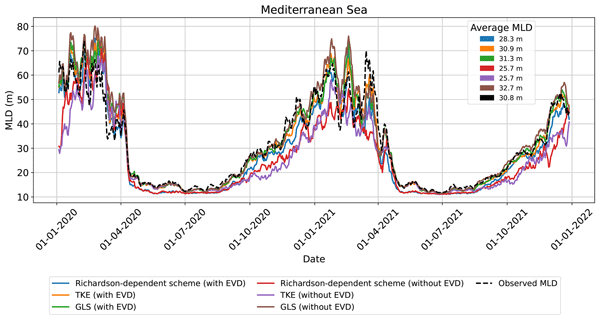
This study addresses a gap in understanding how turbulent mixing closure schemes and convective adjustments interplay in the Mediterranean Sea. Coupled ocean-wave simulations were performed with different mixing parameterizations and model results were compared against Argo float observations across different space and time scales. Results show that the Generalised Length Scale closure scheme best reproduces observed mixed layer properties and variability, without needing convective adjustment.
Álvaro de Pascual Collar, Axel Alonso Valle, Alex Gallardo, Marta de Alfonso Alonso-Muñoyerro, Begoña Pérez Gómez, Stefania Ciliberti, and Marcos G. Sotillo
State Planet, 7-osr10, 7, https://doi.org/10.5194/sp-7-osr10-7-2026, https://doi.org/10.5194/sp-7-osr10-7-2026, 2026
Short summary
Short summary
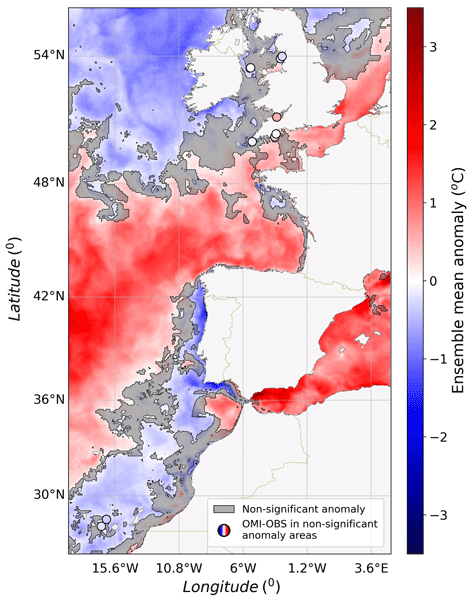
This study improves the monitoring of extreme sea surface temperature events in the Iberia–Biscay–Ireland region. We tested new data sources and combined information from different models and satellites to provide more consistent results and characterize inter-product spread. The findings show that these methods make the indicator more reliable and useful for supporting climate and ocean management decisions.
Leonardo Lima, Rafael Gomes de Menezes, Ehsan Sadighrad, Ronan McAdam, Filipe Costa, Pietro Miraglio, Mehmet Ilicak, Eric Jansen, Ali Aydogdu, Francesco Maicu, and Emanuela Clementi
State Planet, 7-osr10, 5, https://doi.org/10.5194/sp-7-osr10-5-2026, https://doi.org/10.5194/sp-7-osr10-5-2026, 2026
Short summary
Short summary
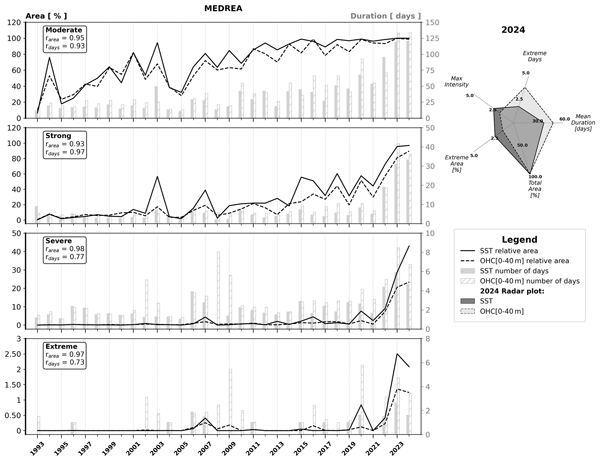
As climate change intensifies, marine heatwaves (MHWs), periods of unusually high ocean temperatures, threaten ecosystems and communities. This study analyzes MHWs in the Mediterranean and Black Seas, examining surface temperatures and ocean heat content in the upper 0–40 m to capture subsurface warming. Findings highlight the need to monitor both surface and subsurface conditions for a comprehensive understanding and better management considering ongoing warming trends in both seas.
Pablo Lorente, Garbiñe Ayensa, Marta De Alfonso, Samuel Galán, Pilar Gil, Fernando Manzano, Anna Magdalena Matulka, Pedro Montero, Verónica Morales-Márquez, Begoña Pérez-Gómez, Cristina Pérez-Íñigo, Susana Pérez-Rubio, and M. Isabel Ruiz
State Planet, 7-osr10, 15, https://doi.org/10.5194/sp-7-osr10-15-2026, https://doi.org/10.5194/sp-7-osr10-15-2026, 2026
Short summary
Short summary
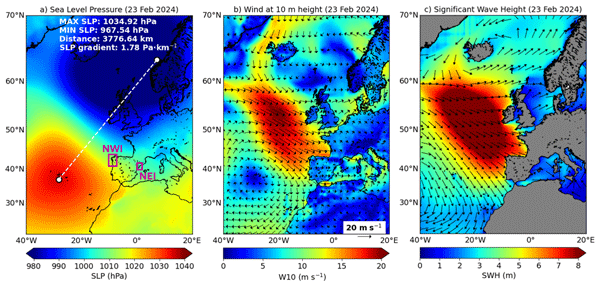
Storm Louis hit southwestern Europe in February 2024, causing major transport disruptions, power outages, and one death. Powerful winds and high waves struck two Spanish ports, with wave heights over 8 m. Despite similar conditions offshore, the ports reacted differently due to their layouts. One saw long-lasting, moderate impacts, while the other faced a shorter, more intense event. The study highlights the need for better storm monitoring to protect coastal infrastructure.
Francesco Maicu, Seimur Shirinov, Charikleia L. G. Oikonomou, Vitalii Sharmar, Lucia Gualtieri, Anna Chiara Goglio, Ehsan Sadighrad, Dimitra Denaxa, Aimie Moulin, Bethany McDonagh, Salvatore Causio, Emanuela Clementi, Gerasimos Korres, Ivan Federico, and Enrico Scoccimarro
State Planet Discuss., https://doi.org/10.5194/sp-2026-12, https://doi.org/10.5194/sp-2026-12, 2026
Preprint under review for SP
Short summary
Short summary
In January 2026, an exceptional storm brought record waves, flooding, and strong currents to the Mediterranean Sea. To understand its coastal impact, we combined data from Europe's ocean monitoring service with a detailed coastal computer model, tracking the storm from open sea to shore. We found unusually high waves, raised sea levels, and strong changes in currents and saltiness. Combining wide-area forecasts with local models improves flood prediction, supporting earlier coastal warning.
Anna Chiara Goglio, Emanuela Clementi, Nadia Pinardi, Giulio Boccaletti, Paolo Oddo, and Lorenzo Mentaschi
EGUsphere, https://doi.org/10.5194/egusphere-2026-4734, https://doi.org/10.5194/egusphere-2026-4734, 2026
Short summary
Short summary
Venice, one of the world's most famous cities, is threatened by flooding, locally known as Acqua Alta. Based on numerical results from the Copernicus Marine Mediterranean Analysis and Forecasting System, we investigate each process involved in the dynamics of these events to improve their predictability. For the first time, we identify processes occurring within the water column that contribute to the sea level peak, providing new insight into the understanding and modeling of Acqua Alta events.
Lucia Gualtieri, Hans Burchard, Federica Borile, Aimie Moulin, Pietro Miraglio, Francesco Maicu, Emanuela Clementi, and Paolo Oddo
Geosci. Model Dev., 19, 7041–7068, https://doi.org/10.5194/gmd-19-7041-2026, https://doi.org/10.5194/gmd-19-7041-2026, 2026
Short summary
Short summary
This study addresses a gap in understanding how turbulent mixing closure schemes and convective adjustments interplay in the Mediterranean Sea. Coupled ocean-wave simulations were performed with different mixing parameterizations and model results were compared against Argo float observations across different space and time scales. Results show that the Generalised Length Scale closure scheme best reproduces observed mixed layer properties and variability, without needing convective adjustment.
Filipe Costa, Ehsan Sadighrad, Leonardo Lima, Ali Aydoğdu, Mehmet Ilicak, Diana Azevedo, and Emanuela Clementi
State Planet Discuss., https://doi.org/10.5194/sp-2026-17, https://doi.org/10.5194/sp-2026-17, 2026
Preprint under review for SP
Short summary
Short summary
Freshwater is essential to the Black Sea, supporting marine ecosystems, coastal management, and climate services. This study presents the first long-term assessment of freshwater storage changes using a high-resolution regional dataset. We show that freshwater has declined mainly because of increasing evaporation and decreasing river discharge. This new indicator supports long-term monitoring of environmental change in the Black Sea.
Anna Chiara Goglio, Lorenzo Mentaschi, Begoña Pérez Gómez, Paolo Oddo, Emanuela Clementi, and Federica Borile
State Planet Discuss., https://doi.org/10.5194/sp-2026-7, https://doi.org/10.5194/sp-2026-7, 2026
Preprint under review for SP
Short summary
Short summary
Mediterranean coastal communities are increasingly threatened by extreme sea level events. We built an indicator combining model and observed data to summarize their changes. The analysis of their evolution revealed that the associated hazard is rising along the entire coastline, especially in the northern Adriatic, the Aegean Sea, and along Turkish and Cypriot coasts. This trend is mostly driven by sea level rise, except for the Adriatic Sea, where strong storm effects play a bigger role.
Laura Feudale, Giorgio Bolzon, Gianpiero Cossarini, Anna Teruzzi, Emanuela Clementi, and Stefano Salon
EGUsphere, https://doi.org/10.5194/egusphere-2026-3413, https://doi.org/10.5194/egusphere-2026-3413, 2026
This preprint is open for discussion and under review for Ocean Science (OS).
Short summary
Short summary
We investigate the impact of physical forcing frequency on Mediterranean biogeochemical simulations. Using 6-hourly instead of daily ocean fields improves phytoplankton bloom and nutrient patterns through a better representation of vertical transport processes, highlighting the importance of high-frequency variability for ecosystem forecasting.
Martina Auditore, Baptiste Mourre, and Paolo Oddo
EGUsphere, https://doi.org/10.5194/egusphere-2026-3276, https://doi.org/10.5194/egusphere-2026-3276, 2026
This preprint is open for discussion and under review for Ocean Science (OS).
Short summary
Short summary
Coastal eddies are rotating water masses that transport heat, nutrients, and other materials, shaping ecosystems and circulation. This study evaluates the new SWOT (Surface Water and Ocean Topography) satellite’s ability to track the alongshore propagation of a coastal eddy in the Algerian Basin (Western Mediterranean). SWOT’s high-resolution daily observations capture eddy evolution in unprecedented detail, revealing interactions with the coast and topography beyond conventional altimetry.
Manuel Vargas-Yáñez, Orens Pasqueron de Fommervault, Emanuela Clementi, Christian Ferrarin, Svitlana Liubertseva, Diego Álvarez-Berastegui, Baptiste Mourre, Salvatore Aronica, Rosa Balbin, Joaquín Ballabrera-Poy, Sana Ben Ismail, Nathaniel Benssousan, Ismail Bessa, Alicia Blanco, Anthony Bosse, Evi Bourma, François Bourrin, Carlo Brandini, Fulvio Capodici, Clara Casals-Baixas, Branko Cermelj, Giuseppe Ciraolo, Pascal Conan, Laurent Coppola, Lorenzo Corgnati, Joaquín del Río, Emilie Diamond Riquier, Lara Diaz-Barroso, Bartolomeo Doronzo, Xavier Durrieu de Madron, Milad Fakhri, Costantine Frangoulis, Claudia Fratianni, Emilio García-Ladona, Jesus García-Lafuente, M. Carmen García-Martínez, Joaquín Garrabou, Josep Gasol, Adam Gauci, Frédéric Gazeau, Gerard Gregory, Abed El Raman Hassoun, Jordi Isern-Fontanet, Dominique Lefevre, Nadia Lo Bue, Guiomar López, Pablo Lorente, Deny Malengros, Ramon Massana, Sinan Mavruk, Stefano Miserocchi, Behzad Mostajir, Laure Mousseau, Francina Moya, Antonio Novellino, Arianna Orasi, Emanuele Organelli, Vicent Ouisse, Tal Ozer, Begoña Pérez-Gómez, Susana Pérez-Rubio, Leonidas Perivoliotis, Georges Petihakis, Anne Petrenko, Sebastien Pinel, Xavier Pitarch, Angela Pomaro, Lucía Quirós-Collazos, Emma Reyes, Simone Sammartino, Anna Sánchez-Vidal, Katrin Schroeder, Stefano Taddei, Elena Tel, Pierre Testor, Marco Torri, Daniela Turk, Laura Ursella, Dimitris Velaoras, Francesca Vidussi, Ivica Vilivić, Enrico Zambiachi, D. Nikolaos Zarokanellos, George Zodiatis, and Vanessa Cardin
EGUsphere, https://doi.org/10.5194/egusphere-2026-2632, https://doi.org/10.5194/egusphere-2026-2632, 2026
Short summary
Short summary
This work compiles current marine observation capabilities in the Mediterranean Sea, making this information accessible to scientists, organizations, stakeholders, and environmental policymakers. It supports initiatives such as Copernicus Marine Service, EMODNet, the European Ocean Pact, and EU directives. It is intended as a living resource to be updated, identifying strengths and gaps in Mediterranean observation systems.
Simona Masina, Andrea Cipollone, Doroteaciro Iovino, Stefania Ciliberti, Rita Lecci, Sergio Cretí, Vladyslav Lyubartsev, Giovanni Coppini, and Emanuela Clementi
EGUsphere, https://doi.org/10.5194/egusphere-2026-887, https://doi.org/10.5194/egusphere-2026-887, 2026
Short summary
Short summary
The paper presents GOFS16, an eddy-resolving global operational ocean and sea ice forecasting system which provides 6-day forecasts of three-dimensional temperature, salinity, currents, sea level, and sea ice properties. The system assimilates satellite and in situ observations using a 3D variational data assimilation scheme. Validation is conducted routinely using global and regional metrics. Results indicate that GOFS16 performs within the expected range of skill for current global systems.
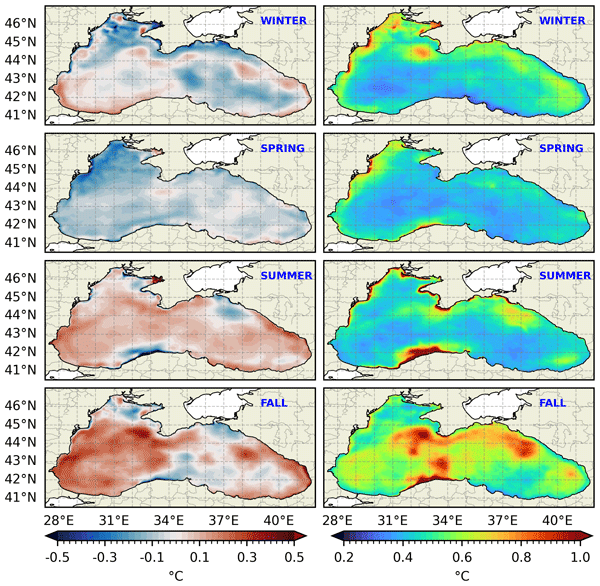
Leonardo Lima, Diana Azevedo, Mehmet Ilicak, Eric Jansen, Filipe Costa, Adil Sozer, Pietro Miraglio, and Emanuela Clementi
Ocean Sci., 22, 1051–1072, https://doi.org/10.5194/os-22-1051-2026, https://doi.org/10.5194/os-22-1051-2026, 2026
Short summary
Short summary
We used a high-resolution ocean model to investigate how the Black Sea is responding to external drivers, including climate change. Our results show clear warming, particularly in the upper 150 m, and reveal significant changes in ocean circulation and water masses. The model also supports the development of ocean monitoring indicators that help track the sea’s response to climate-related trends and improve our understanding of how ocean conditions in the Black Sea evolve.

Paolo Oddo, Mario Adani, Francesco Carere, Andrea Cipollone, Anna Chiara Goglio, Eric Jansen, Ali Aydogdu, Francesca Mele, Italo Epicoco, Jenny Pistoia, Emanuela Clementi, Nadia Pinardi, and Simona Masina
Geosci. Model Dev., 19, 423–445, https://doi.org/10.5194/gmd-19-423-2026, https://doi.org/10.5194/gmd-19-423-2026, 2026
Short summary
Short summary
This study present a data assimilation system that combines ocean observational data with ocean model results to better understand the ocean and predict its future state. The method uses a three dimensional incremental variational approach focusing on the physical relationships between all the state vector variables errors. Testing in the Mediterranean Sea showed that a complex sea level operator based on a barotropic model works best.
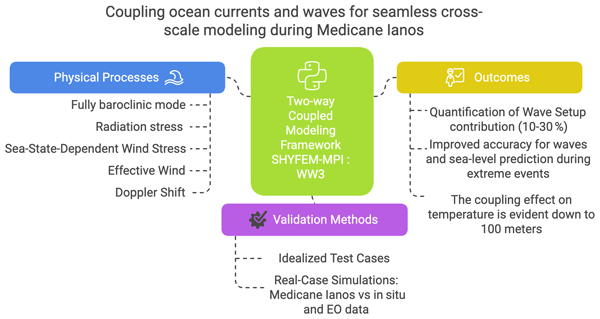
Salvatore Causio, Seimur Shirinov, Ivan Federico, Giovanni De Cillis, Emanuela Clementi, Lorenzo Mentaschi, and Giovanni Coppini
Ocean Sci., 21, 1105–1123, https://doi.org/10.5194/os-21-1105-2025, https://doi.org/10.5194/os-21-1105-2025, 2025
Short summary
Short summary
This study examines how waves and ocean currents interact during severe weather, focusing on Medicane Ianos, one of the strongest storms in the Mediterranean. Using advanced modeling, we created a unique system to simulate these interactions, capturing effects like wave-induced water levels and wave-induced effects on the vertical structure of the ocean. We validated our approach with ideal tests and real data from the storm.
Marina Tonani, Eric Chassignet, Mauro Cirano, Yasumasa Miyazawa, and Begoña Pérez Gómez
State Planet, 5-opsr, 3, https://doi.org/10.5194/sp-5-opsr-3-2025, https://doi.org/10.5194/sp-5-opsr-3-2025, 2025
Short summary
Short summary
This article provides an overview of the main characteristics of ocean forecast systems covering a limited region of the ocean. Their main components are described, as well as the spatial and temporal scales they resolve. The oceanic variables that these systems are able to predict are also explained. An overview of the main forecasting systems currently in operation is also provided.
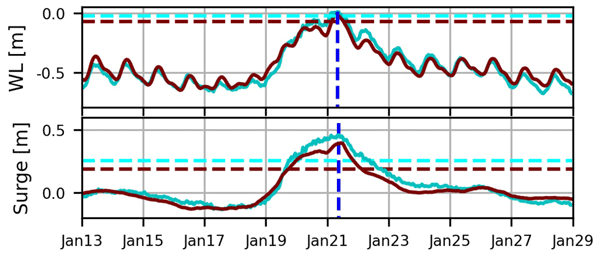
Angelique Melet, Begoña Pérez Gómez, and Pascal Matte
State Planet, 5-opsr, 11, https://doi.org/10.5194/sp-5-opsr-11-2025, https://doi.org/10.5194/sp-5-opsr-11-2025, 2025
Short summary
Short summary
Forecasting the sea level is crucial for supporting coastal management through early warning systems and for adopting adaptation strategies to mitigate climate change impacts. We provide here an overview on models commonly used for sea level forecasting, which can be based on storm surge models or ocean circulation ones, integrated on structured or unstructured grids, including an outlook on new approaches based on ensemble methods.
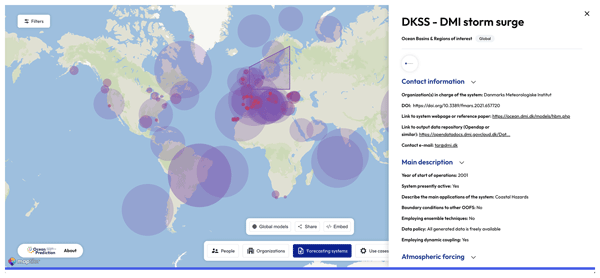
Mauro Cirano, Enrique Alvarez-Fanjul, Arthur Capet, Stefania Ciliberti, Emanuela Clementi, Boris Dewitte, Matias Dinápoli, Ghada El Serafy, Patrick Hogan, Sudheer Joseph, Yasumasa Miyazawa, Ivonne Montes, Diego A. Narvaez, Heather Regan, Claudia G. Simionato, Gregory C. Smith, Joanna Staneva, Clemente A. S. Tanajura, Pramod Thupaki, Claudia Urbano-Latorre, Jennifer Veitch, and Jorge Zavala Hidalgo
State Planet, 5-opsr, 5, https://doi.org/10.5194/sp-5-opsr-5-2025, https://doi.org/10.5194/sp-5-opsr-5-2025, 2025
Short summary
Short summary
Operational ocean forecasting systems (OOFSs) are crucial for human activities, environmental monitoring, and policymaking. An assessment across eight key regions highlights strengths and gaps, particularly in coastal and biogeochemical forecasting. AI offers improvements, but collaboration, knowledge sharing, and initiatives like the OceanPrediction Decade Collaborative Centre (DCC) are key to enhancing accuracy, accessibility, and global forecasting capabilities.

Jennifer Veitch, Enrique Alvarez-Fanjul, Arthur Capet, Stefania Ciliberti, Mauro Cirano, Emanuela Clementi, Fraser Davidson, Ghada el Serafy, Guilherme Franz, Patrick Hogan, Sudheer Joseph, Svitlana Liubartseva, Yasumasa Miyazawa, Heather Regan, and Katerina Spanoudaki
State Planet, 5-opsr, 6, https://doi.org/10.5194/sp-5-opsr-6-2025, https://doi.org/10.5194/sp-5-opsr-6-2025, 2025
Short summary
Short summary
Ocean forecast systems provide information about a future state of the ocean. This information is provided in the form of decision support tools, or downstream applications, that can be accessed by various stakeholders to support livelihoods, coastal resilience and the good governance of the marine environment. This paper provides an overview of the various downstream applications of ocean forecast systems that are utilized around the world.
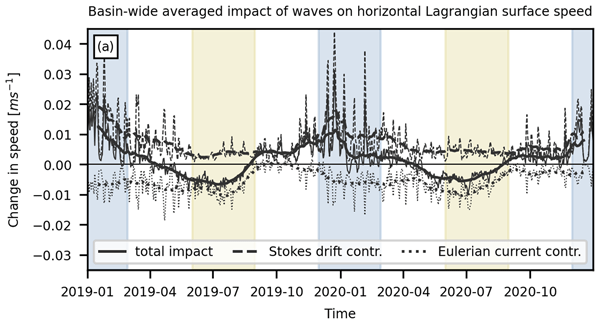
Siren Rühs, Ton van den Bremer, Emanuela Clementi, Michael C. Denes, Aimie Moulin, and Erik van Sebille
Ocean Sci., 21, 217–240, https://doi.org/10.5194/os-21-217-2025, https://doi.org/10.5194/os-21-217-2025, 2025
Short summary
Short summary
Simulating the transport of floating particles on the ocean surface is crucial for solving many societal issues. Here, we investigate how the representation of wind-generated surface waves impacts particle transport simulations. We find that different wave-driven processes can alter transport patterns and that commonly adopted approximations are not always adequate. This suggests that ideally coupled ocean–wave models should be used for surface particle transport simulations.
Alexander Bisaro, Giulia Galluccio, Elisa Fiorini Beckhauser, Fulvio Biddau, Ruben David, Floortje d'Hont, Antonio Góngora Zurro, Gonéri Le Cozannet, Sadie McEvoy, Begoña Pérez Gómez, Claudia Romagnoli, Eugenio Sini, and Jill Slinger
State Planet, 3-slre1, 7, https://doi.org/10.5194/sp-3-slre1-7-2024, https://doi.org/10.5194/sp-3-slre1-7-2024, 2024
Short summary
Short summary
This paper assesses coastal adaptation governance by examining socio-economic and political contexts, reviewing policy frameworks, and identifying challenges. Results show that regional and basin-scale frameworks lack sea level rise provisions, but significant national progress is observed. The main governance challenges are time horizons and uncertainty, coordination, and social vulnerability. These, however, can be addressed if flexible planning and nature-based solutions are implemented.
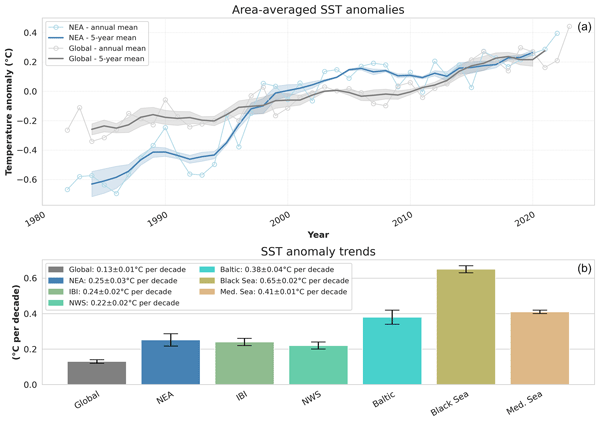
Karina von Schuckmann, Lorena Moreira, Mathilde Cancet, Flora Gues, Emmanuelle Autret, Ali Aydogdu, Lluis Castrillo, Daniele Ciani, Andrea Cipollone, Emanuela Clementi, Gianpiero Cossarini, Alvaro de Pascual-Collar, Vincenzo De Toma, Marion Gehlen, Rianne Giesen, Marie Drevillon, Claudia Fanelli, Kevin Hodges, Simon Jandt-Scheelke, Eric Jansen, Melanie Juza, Ioanna Karagali, Priidik Lagemaa, Vidar Lien, Leonardo Lima, Vladyslav Lyubartsev, Ilja Maljutenko, Simona Masina, Ronan McAdam, Pietro Miraglio, Helen Morrison, Tabea Rebekka Panteleit, Andrea Pisano, Marie-Isabelle Pujol, Urmas Raudsepp, Roshin Raj, Ad Stoffelen, Simon Van Gennip, Pierre Veillard, and Chunxue Yang
State Planet, 4-osr8, 2, https://doi.org/10.5194/sp-4-osr8-2-2024, https://doi.org/10.5194/sp-4-osr8-2-2024, 2024
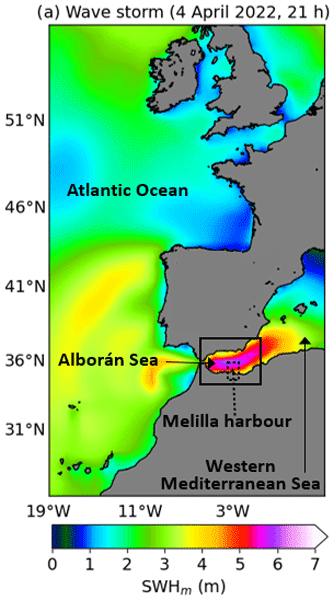
Pablo Lorente, Marta de Alfonso, Pilar Gil, Fernando Manzano, Anna Magdalena Matulka, Begoña Pérez-Gómez, Susana Pérez-Rubio, and M. Isabel Ruiz
State Planet, 4-osr8, 19, https://doi.org/10.5194/sp-4-osr8-19-2024, https://doi.org/10.5194/sp-4-osr8-19-2024, 2024
Short summary
Short summary
Over recent decades, extreme weather events have attracted growing public concern due to their widespread impact on the environment and human well-being. Their comprehensive monitoring is crucial to adopt prevention strategies and reduce coastal vulnerability. In this work, the record-breaking wave event that hit Melilla harbour (SW Mediterranean Sea) during early April 2022 was investigated to elucidate the meteorological drivers and evaluate the energetic response of Melilla harbour basins.
Anna Teruzzi, Ali Aydogdu, Carolina Amadio, Emanuela Clementi, Simone Colella, Valeria Di Biagio, Massimiliano Drudi, Claudia Fanelli, Laura Feudale, Alessandro Grandi, Pietro Miraglio, Andrea Pisano, Jenny Pistoia, Marco Reale, Stefano Salon, Gianluca Volpe, and Gianpiero Cossarini
State Planet, 4-osr8, 15, https://doi.org/10.5194/sp-4-osr8-15-2024, https://doi.org/10.5194/sp-4-osr8-15-2024, 2024
Short summary
Short summary
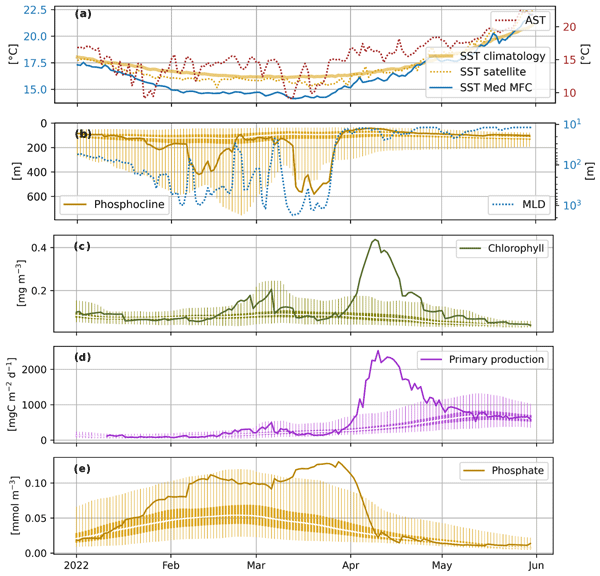
A noticeable cold spell occurred in Eastern Europe at the beginning of 2022 and was the main driver of intense deep-water formation and the associated transport of nutrients to the surface. Southeast of Crete, the availability of both light and nutrients in the surface layer stimulated an anomalous phytoplankton bloom. In the area, chlorophyll concentration (a proxy for bloom intensity) and primary production were considerably higher than usual, suggesting possible impacts on fishery catches.
Ronan McAdam, Giulia Bonino, Emanuela Clementi, and Simona Masina
State Planet, 4-osr8, 13, https://doi.org/10.5194/sp-4-osr8-13-2024, https://doi.org/10.5194/sp-4-osr8-13-2024, 2024
Short summary
Short summary
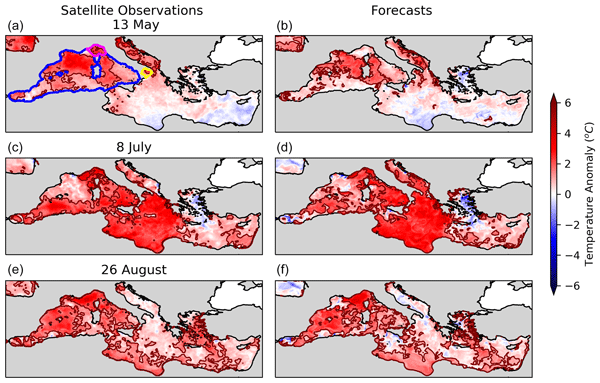
In the summer of 2022, a regional short-term forecasting system was able to predict the onset, spread, peaks, and decay of a record-breaking marine heatwave in the Mediterranean Sea up to 10 d in advance. Satellite data show that the event was record-breaking in terms of basin-wide intensity and duration. This study demonstrates the potential of state-of-the-art forecasting systems to provide early warning of marine heatwaves for marine activities (e.g. conservation and aquaculture).
Bethany McDonagh, Emanuela Clementi, Anna Chiara Goglio, and Nadia Pinardi
Ocean Sci., 20, 1051–1066, https://doi.org/10.5194/os-20-1051-2024, https://doi.org/10.5194/os-20-1051-2024, 2024
Short summary
Short summary
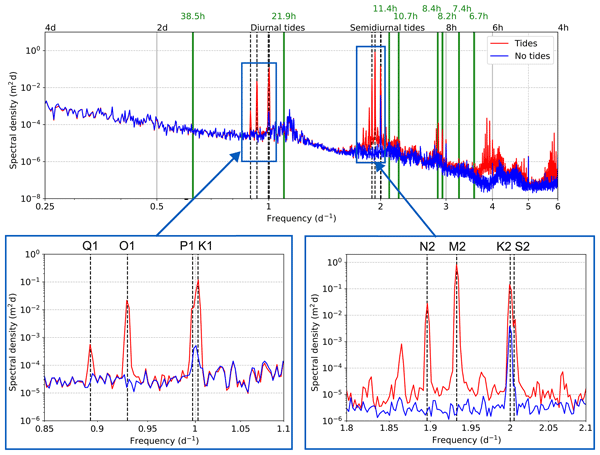
Tides in the Mediterranean Sea are typically of low amplitude, but twin experiments with and without tides demonstrate that tides affect the circulation directly at scales away from those of the tides. Analysis of the energy changes due to tides shows that they enhance existing oscillations, and internal tides interact with other internal waves. Tides also increase the mixed layer depth and enhance deep water formation in key regions. Internal tides are widespread in the Mediterranean Sea.
Giulia Bonino, Giuliano Galimberti, Simona Masina, Ronan McAdam, and Emanuela Clementi
Ocean Sci., 20, 417–432, https://doi.org/10.5194/os-20-417-2024, https://doi.org/10.5194/os-20-417-2024, 2024
Short summary
Short summary
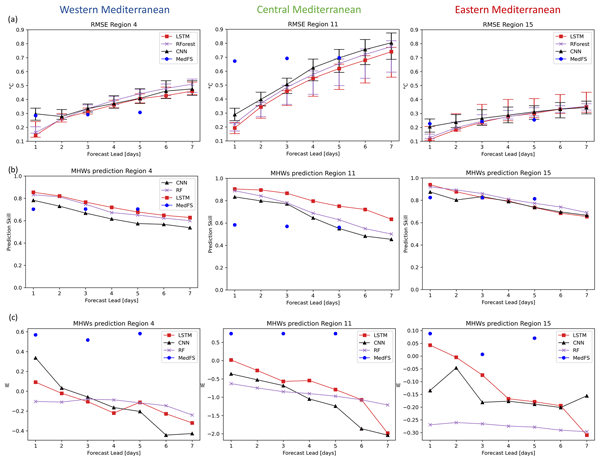
This study employs machine learning to predict marine heatwaves (MHWs) in the Mediterranean Sea. MHWs have far-reaching impacts on society and ecosystems. Using data from ESA and ECMWF, the research develops accurate prediction models for sea surface temperature (SST) and MHWs across the region. Notably, machine learning methods outperform existing forecasting systems, showing promise in early MHW predictions. The study also highlights the importance of solar radiation as a predictor of SST.
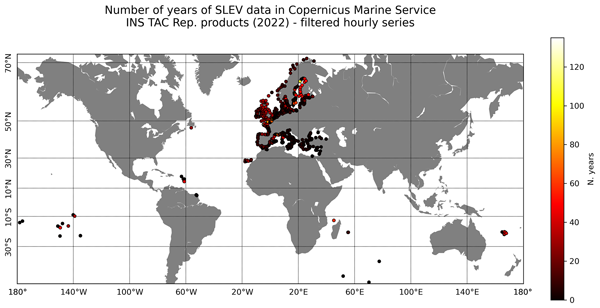
Jue Lin-Ye, Begoña Pérez Gómez, Alejandro Gallardo, Fernando Manzano, Marta de Alfonso, Elizabeth Bradshaw, and Angela Hibbert
Ocean Sci., 19, 1743–1751, https://doi.org/10.5194/os-19-1743-2023, https://doi.org/10.5194/os-19-1743-2023, 2023
Short summary
Short summary
The historical sea level measurements in the Copernicus Marine Service have been machine flagged and visually inspected. The existing software for the near-real-time product has been adapted. The new product was launched in November of 2022 and is readily available to the general public.
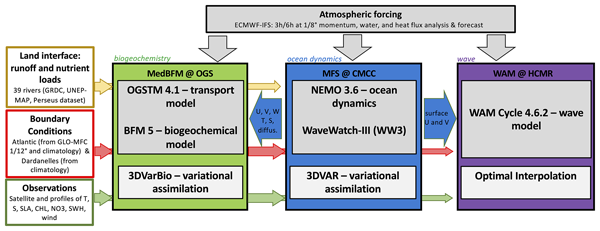
Giovanni Coppini, Emanuela Clementi, Gianpiero Cossarini, Stefano Salon, Gerasimos Korres, Michalis Ravdas, Rita Lecci, Jenny Pistoia, Anna Chiara Goglio, Massimiliano Drudi, Alessandro Grandi, Ali Aydogdu, Romain Escudier, Andrea Cipollone, Vladyslav Lyubartsev, Antonio Mariani, Sergio Cretì, Francesco Palermo, Matteo Scuro, Simona Masina, Nadia Pinardi, Antonio Navarra, Damiano Delrosso, Anna Teruzzi, Valeria Di Biagio, Giorgio Bolzon, Laura Feudale, Gianluca Coidessa, Carolina Amadio, Alberto Brosich, Arnau Miró, Eva Alvarez, Paolo Lazzari, Cosimo Solidoro, Charikleia Oikonomou, and Anna Zacharioudaki
Ocean Sci., 19, 1483–1516, https://doi.org/10.5194/os-19-1483-2023, https://doi.org/10.5194/os-19-1483-2023, 2023
Short summary
Short summary
The paper presents the Mediterranean Forecasting System evolution and performance developed in the framework of the Copernicus Marine Service.
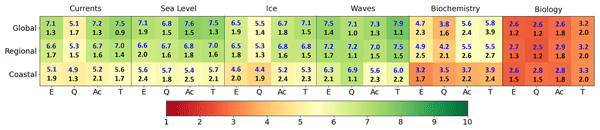
Stefania A. Ciliberti, Enrique Alvarez Fanjul, Jay Pearlman, Kirsten Wilmer-Becker, Pierre Bahurel, Fabrice Ardhuin, Alain Arnaud, Mike Bell, Segolene Berthou, Laurent Bertino, Arthur Capet, Eric Chassignet, Stefano Ciavatta, Mauro Cirano, Emanuela Clementi, Gianpiero Cossarini, Gianpaolo Coro, Stuart Corney, Fraser Davidson, Marie Drevillon, Yann Drillet, Renaud Dussurget, Ghada El Serafy, Katja Fennel, Marcos Garcia Sotillo, Patrick Heimbach, Fabrice Hernandez, Patrick Hogan, Ibrahim Hoteit, Sudheer Joseph, Simon Josey, Pierre-Yves Le Traon, Simone Libralato, Marco Mancini, Pascal Matte, Angelique Melet, Yasumasa Miyazawa, Andrew M. Moore, Antonio Novellino, Andrew Porter, Heather Regan, Laia Romero, Andreas Schiller, John Siddorn, Joanna Staneva, Cecile Thomas-Courcoux, Marina Tonani, Jose Maria Garcia-Valdecasas, Jennifer Veitch, Karina von Schuckmann, Liying Wan, John Wilkin, and Romane Zufic
State Planet, 1-osr7, 2, https://doi.org/10.5194/sp-1-osr7-2-2023, https://doi.org/10.5194/sp-1-osr7-2-2023, 2023
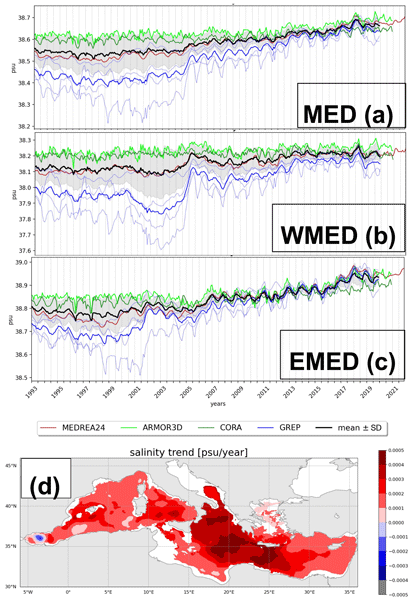
Ali Aydogdu, Pietro Miraglio, Romain Escudier, Emanuela Clementi, and Simona Masina
State Planet, 1-osr7, 6, https://doi.org/10.5194/sp-1-osr7-6-2023, https://doi.org/10.5194/sp-1-osr7-6-2023, 2023
Short summary
Short summary
This paper investigates the salt content, salinity anomaly and trend in the Mediterranean Sea using observational and reanalysis products. The salt content increases overall, while negative salinity anomalies appear in the western basin, especially around the upwelling regions. There is a large spread in the salinity estimates that is reduced with the emergence of the Argo profilers.
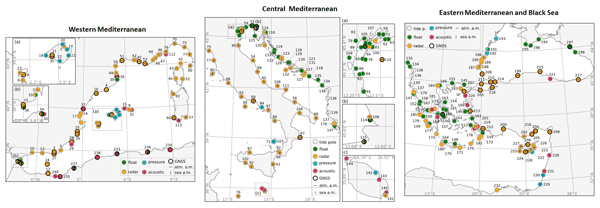
Begoña Pérez Gómez, Ivica Vilibić, Jadranka Šepić, Iva Međugorac, Matjaž Ličer, Laurent Testut, Claire Fraboul, Marta Marcos, Hassen Abdellaoui, Enrique Álvarez Fanjul, Darko Barbalić, Benjamín Casas, Antonio Castaño-Tierno, Srđan Čupić, Aldo Drago, María Angeles Fraile, Daniele A. Galliano, Adam Gauci, Branislav Gloginja, Víctor Martín Guijarro, Maja Jeromel, Marcos Larrad Revuelto, Ayah Lazar, Ibrahim Haktan Keskin, Igor Medvedev, Abdelkader Menassri, Mohamed Aïssa Meslem, Hrvoje Mihanović, Sara Morucci, Dragos Niculescu, José Manuel Quijano de Benito, Josep Pascual, Atanas Palazov, Marco Picone, Fabio Raicich, Mohamed Said, Jordi Salat, Erdinc Sezen, Mehmet Simav, Georgios Sylaios, Elena Tel, Joaquín Tintoré, Klodian Zaimi, and George Zodiatis
Ocean Sci., 18, 997–1053, https://doi.org/10.5194/os-18-997-2022, https://doi.org/10.5194/os-18-997-2022, 2022
Short summary
Short summary
This description and mapping of coastal sea level monitoring networks in the Mediterranean and Black seas reveals the existence of 240 presently operational tide gauges. Information is provided about the type of sensor, time sampling, data availability, and ancillary measurements. An assessment of the fit-for-purpose status of the network is also included, along with recommendations to mitigate existing bottlenecks and improve the network, in a context of sea level rise and increasing extremes.
Cited articles
Adloff, F., Somot, S., Sevault, F., Jordà, G., Aznar, R., Déqué, M., Herrmann, M., Marcos, M., Dubois, C., Padorno, E., Alvarez-Fanjul, E., and Gomis, D.: Mediterranean Sea response to climate change in an ensemble of twenty first century scenarios, Clim. Dyn., 45, 2775–2802, https://doi.org/10.1007/s00382-015-2507-3, 2015.
Alothman, A. O., Bos, M. S., Fernandes, R. M. S., and Ayhan, M. E.: Sea level rise in the north-western part of the Arabian Gulf, J. Geodyn., 81, 105–110, https://doi.org/10.1016/j.jog.2014.09.002, 2014.
Aydogdu, A., Miraglio, P., Escudier, R., Clementi, E., and Masina, S.: The dynamical role of upper layer salinity in the Mediterranean Sea, in: 7th edition of the Copernicus Ocean State Report (OSR7), edited by: von Schuckmann, K., Moreira, L., Le Traon, P.-Y., Grégoire, M., Marcos, M., Staneva, J., Brasseur, P., Garric, G., Lionello, P., Karstensen, J., and Neukermans, G., Copernicus Publications, State Planet, 1-osr7, 6, https://doi.org/10.5194/sp-1-osr7-6-2023, 2023.
Ballarotta, M., Pujol, M. I., and SL-TAC team: EU Copernicus Marine Service Quality Information Document for the Global Ocean Gridded L 4 Sea Surface Heights And Derived Variables Reprocessed Copernicus Climate Service, SEALEVEL_GLO_PHY_CLIMATE_L4_MY_008_057, issue 3.0, Mercator Ocean International, https://documentation.marine.copernicus.eu/QUID/CMEMS-SL-QUID-008-057.pdf (last access: 30 October 2025), 2024.
Ballarotta, M., Pujol, M. I., and SL-TAC team: EU Copernicus Marine Service Quality Information Document for the European Seas Gridded L 4 Sea Surface Heights And Derived Variables Reprocessed 1993 Ongoing, SEALEVEL_EUR_PHY_L4_MY_008_068, issue 13.0, Mercator Ocean International, https://documentation.marine.copernicus.eu/QUID/CMEMS-SL-QUID-008-032-068.pdf (last access: 30 October 2025), 2025.
Borghini, M., Bryden, H., Schroeder, K., Sparnocchia, S., and Vetrano, A.: The Mediterranean is becoming saltier, Ocean Sci., 10, 693–700, https://doi.org/10.5194/os-10-693-2014, 2014.
Borile, F.: Codes used in the Ocean State Report #10 contribution titled “Decadal variability in the Eastern and Western Mediterranean sea level trends”, in: State of the Planet (v0.0), Zenodo [code], https://doi.org/10.5281/zenodo.20284500, 2026.
Borile, F., Pinardi, N., Lyubartsev, V., Ghani, M. H., Navarra, A., Alessandri, J., Clementi, E., Coppini, G., Mentaschi, L., Verri, G., da Costa, V. S., Scoccimarro, E., Misurale, F., Novellino, A., and Oddo, P.: The Eastern Mediterranean Sea mean sea level decadal slowdown: the effects of the water budget, Front. Clim., 7, https://doi.org/10.3389/fclim.2025.1472731, 2025.
Buzzanga, B., Bekaert, D. P. S., Hamlington, B. D., Kopp, R. E., Govorcin, M., and Miller, K. G.: Localized uplift, widespread subsidence, and implications for sea level rise in the New York City metropolitan area, Sci. Adv., 9, eadi8259, https://doi.org/10.1126/sciadv.adi8259, 2023.
Calafat, F. M., Chambers, D. P., and Tsimplis, M. N.: Mechanisms of decadal sea level variability in the eastern North Atlantic and the Mediterranean Sea, J. Geophys. Res.-Oceans, 117, https://doi.org/10.1029/2012JC008285, 2012.
Calafat, F. M., Frederikse, T., and Horsburgh, K.: The Sources of Sea-Level Changes in the Mediterranean Sea Since 1960, J. Geophys. Res.-Oceans, 127, e2022JC019061, https://doi.org/10.1029/2022JC019061, 2022.
Cazenave, A., Henry, O., Munier, S., Delcroix, T., Gordon, A. L., Meyssignac, B., Llovel, H., Palanisamy, H., and Becker, M.: Estimating ENSO Influence on the Global Mean Sea Level, 1993–2010, Mar. Geod., 35, 82–97 https://doi.org/10.1080/01490419.2012.718209, 2012.
Cazenave, A., Dieng, H.-B., Meyssignac, B., von Schuckmann, K., Decharme, B., and Berthier, E.: The rate of sea-level rise, Nat. Clim. Change, 4, 358–361, https://doi.org/10.1038/nclimate2159, 2014.
Cipollini, P., Calafat, F. M., Jevrejeva, S., Melet, A., and Prandi, P.: Monitoring Sea Level in the Coastal Zone with Satellite Altimetry and Tide Gauges, in: Integrative Study of the Mean Sea Level and Its Components, edited by: Cazenave, A., Champollion, N., Paul, F., and Benveniste, J., Springer International Publishing, Cham, 35–59, https://doi.org/10.1007/978-3-319-56490-6_3, 2017.
Civitarese, G., Gačić, M., Batistić, M., Bensi, M., Cardin, V., Dulčić, J., Garić, R., and Menna, M.: The BiOS mechanism: History, theory, implications, Prog. Oceanogr., 216, 103056, https://doi.org/10.1016/j.pocean.2023.103056, 2023.
Cramer, W., Guiot, J., Fader, M., Garrabou, J., Gattuso, J.-P., Iglesias, A., Lange, M. A., Lionello, P., Llasat, M. C., Paz, S., Peñuelas, J., Snoussi, M., Toreti, A., Tsimplis, M. N., and Xoplaki, E.: Climate change and interconnected risks to sustainable development in the Mediterranean, Nat. Clim. Change, 8, 972–980, https://doi.org/10.1038/s41558-018-0299-2, 2018.
Dibarboure, G., Pujol, M.-I., Briol, F., Traon, P. Y. L., Larnicol, G., Picot, N., Mertz, F., and Ablain, M.: Jason-2 in DUACS: Updated System Description, First Tandem Results and Impact on Processing and Products, Mar. Geod., 34, 214–241, https://doi.org/10.1080/01490419.2011.584826, 2011.
Drévillon, M., Lellouche, J. M., Régnier, C., Garric, G., Bricaud, C., Hernandez, O., and Bourdallé-Badie, R.: EU Copernicus Marine Service Quality Information Document for the Global Ocean Physics Reanalysis, GLOBAL_MULTIYEAR_PHY_001_030, issue 1.6, Mercator Ocean International, https://documentation.marine.copernicus.eu/QUID/CMEMS-GLO-QUID-001-030.pdf (last access: 5 July 2025), 2023.
Drévillon, M., Fernandez, E., and Lellouche, J. M.: EU Copernicus Marine Service Product User Manual for the Global Ocean Physics Reanalysis, GLOBAL_MULTIYEAR_PHY_001_030, issue 1.6, Mercator Ocean International, https://documentation.marine.copernicus.eu/PUM/CMEMS-GLO-PUM-001-030.pdf (last access: 5 July 2025), 2024.
Escudier, R., Clementi, E., Cipollone, A., Pistoia, J., Drudi, M., Grandi, A., Lyubartsev, V., Lecci, R., Aydogdu, A., Delrosso, D., Omar, M., Masina, S., Coppini, G., and Pinardi, N.: A High Resolution Reanalysis for the Mediterranean Sea, Front. Earth Sci., 9, https://doi.org/10.3389/feart.2021.702285, 2021.
Escudier, R., Clementi, E., Nigam, T., Aydogdu, A., Fini, E., Pistoia, J., Grandi, A., and Miraglio, P.: EU Copernicus Marine Service Quality Information Document for the Mediterranean Sea Physics Reanalysis, MEDSEA_MULTIYEAR_PHY_006_004, issue 2.4, Mercator Ocean International, https://documentation.marine.copernicus.eu/QUID/CMEMS-MED-QUID-006-004.pdf (last access: 5 July 2025), 2024.
EU Copernicus Marine Service Product: Global Ocean Physics Reanalysis, Mercator Ocean International [data set], https://doi.org/10.48670/moi-00021, 2023.
EU Copernicus Marine Service Product: Global Ocean Gridded L 4 Sea Surface Heights And Derived Variables Reprocessed Copernicus Climate Service, Mercator Ocean International [data set], https://doi.org/10.48670/moi-00145, 2024a.
EU Copernicus Marine Service Product: European Seas Gridded L 4 Sea Surface Heights And Derived Variables Reprocessed 1993 Ongoing, Mercator Ocean International [data set], https://doi.org/10.48670/moi-00141, 2024b.
EU Copernicus Marine Service Product: Mediterranean Sea Physics Reanalysis, Mercator Ocean International [data set], https://doi.org/10.25423/CMCC/MEDSEA_MULTIYEAR_PHY_006_004_E3R1, 2024c.
EU Copernicus Marine Service Product: Global Ocean - Delayed Mode Sea level product, Mercator Ocean International [data set], https://doi.org/10.17882/93670, 2024d.
Gačić, M., Borzelli, G. L. E., Civitarese, G., Cardin, V., and Yari, S.: Can internal processes sustain reversals of the ocean upper circulation? The Ionian Sea example, Geophys. Res. Lett., 37, https://doi.org/10.1029/2010GL043216, 2010.
García-García, D., Vigo, M. I., Trottini, M., Vargas-Alemañy, J. A., and Sayol, J.-M.: Hydrological cycle of the Mediterranean-Black Sea system, Clim. Dyn., 59, 1919–1938, https://doi.org/10.1007/s00382-022-06188-2, 2022.
Giorgi, F.: Climate change hot-spots, Geophys. Res. Lett., 33, https://doi.org/10.1029/2006GL025734, 2006.
Gomis, D., Ruiz, S., Sotillo, M. G., Álvarez-Fanjul, E., and Terradas, J.: Low frequency Mediterranean sea level variability: The contribution of atmospheric pressure and wind, Glob. Planet. Change, 63, 215–229, https://doi.org/10.1016/j.gloplacha.2008.06.005, 2008.
Gravelle, M., Wöppelmann, G., Gobron, K., Altamimi, Z., Guichard, M., Herring, T., and Rebischung, P.: The ULR-repro3 GPS data reanalysis and its estimates of vertical land motion at tide gauges for sea level science, Earth Syst. Sci. Data, 15, 497–509, https://doi.org/10.5194/essd-15-497-2023, 2023.
Gräwe, U., Klingbeil, K., Kelln, J., and Dangendorf, S.: Decomposing Mean Sea Level Rise in a Semi-Enclosed Basin, the Baltic Sea, J. Climate, 32, 3089–3108, https://doi.org/10.1175/JCLI-D-18-0174.1, 2019.
Grodsky, S. A., Reul, N., Bentamy, A., Vandemark, D., and Guimbard, S.: Eastern Mediterranean salinification observed in satellite salinity from SMAP mission, J. Mar. Sys., 198, 103190, https://doi.org/10.1016/j.jmarsys.2019.103190, 2019.
Holgate, S. J., Matthews, A., Woodworth, P. L., Rickards, L. J., Tamisiea, M. E., Bradshaw, E., Foden, P. R., Gordon, K. M., Jevrejeva, S., and Pugh, J.: New Data Systems and Products at the Permanent Service for Mean Sea Level, J. Coast. Res., 29, 493–504, https://doi.org/10.2112/JCOASTRES-D-12-00175.1, 2013.
Intergovernmental Panel on Climate Change (IPCC): Ocean, Cryosphere and Sea Level Change, in: Climate Change 2021 – The Physical Science Basis: Working Group I Contribution to the Sixth Assessment Report of the Intergovernmental Panel on Climate Change, Cambridge University Press, Cambridge, 1211–1362, https://doi.org/10.1017/9781009157896.011, 2023.
Kubin, E., Menna, M., Mauri, E., Notarstefano, G., Mieruch, S., and Poulain, P. M.: Heat content and temperature trends in the Mediterranean Sea as derived from Argo float data, Front. Mar. Sci., 10, 1271638, https://doi.org/10.3389/fmars.2023.1271638, 2023.
Lecci, R., Drudi, M., Grandi, A., and Clementi, E.: EU Copernicus Marine Service Product User Manual for the Mediterranean Sea Physics Reanalysis, MEDSEA_MULTIYEAR_PHY_006_004, issue 2.4, Mercator Ocean International, https://documentation.marine.copernicus.eu/PUM/CMEMS-MED-PUM-006-004.pdf (last access: 5 July 2025), 2024.
Lellouche, J.-M., Greiner, E., Bourdallé-Badie, R., Gilles, G., Melet, A., Drévillon, M., Bricaud, C., Hamon, M., Le Galloudec, O., Regnier, C., Candela, T., Testut, C.-E., Gasparin, F., Ruggiero, G., Mounir, B., Yann, D., and Pierre-Yves, L. T.: The Copernicus Global
Lin-Ye, J., Pérez Gómez, B., Gallardo, A., Manzano, F., de Alfonso, M., Bradshaw, E., and Hibbert, A.: Delayed-mode reprocessing of in situ sea level data for the Copernicus Marine Service, Ocean Sci., 19, 1743–1751, https://doi.org/10.5194/os-19-1743-2023, 2023.
Marcos, M. and Tsimplis, M. N.: Coastal sea level trends in Southern Europe, Geophys. J. Int., 175, 70–82, https://doi.org/10.1111/j.1365-246X.2008.03892.x, 2008.
MedECC: Summary for Policymakers, in: Climate and Environmental Coastal Risks in the Mediterranean, edited by: Djoundourian, S., Lionello, P., Llasat, M. C., Guiot, J., Cramer, W., Driouech, F., Gattacceca, J. C., and Marini, K., MedECC Reports, MedECC Secretariat, Marseille, France, p. 28, ISBN 978-2-493662-03-3, 2024.
Meli, M.: The potential recording of North Ionian Gyre's reversals as a decadal signal in sea level during the instrumental period, Sci. Rep., 14, 4907, https://doi.org/10.1038/s41598-024-55579-4, 2024.
Meli, M., Camargo, C. M. L., Olivieri, M., Slangen, A. B. A., and Romagnoli, C.: Sea-level trend variability in the Mediterranean during the 1993–2019 period, Front. Mar. Sci., 10, https://doi.org/10.3389/fmars.2023.1150488, 2023.
Milne, G. A., Gehrels, W. R., Hughes, C. W., and Tamisiea, M. E.: Identifying the causes of sea-level change, Nat. Geosci., 2, 471–478, https://doi.org/10.1038/ngeo544, 2009.
Mohamed, B. and Skliris, N.: Steric and atmospheric contributions to interannual sea level variability in the eastern mediterranean sea over 1993–2019, Oceanologia, 64, 50–62, https://doi.org/10.1016/j.oceano.2021.09.001, 2022.
Nerem, R. S., Chambers, D. P., Choe, C., and Mitchum, G. T.: Estimating Mean Sea Level Change from the TOPEX and Jason Altimeter Missions, Mar. Geod., 33, 435–446, https://doi.org/10.1080/01490419.2010.491031, 2010.
Oppenheimer, M., Glavovic, B., Hinkel, J., van deWal, R., Magnan, A. K., Abd-Elgawad, A., Cai, R., Cifuentes-Jara, M., Deconto, R. M., Ghosh, T., Hay, J., Isla, F., Marzeion, B., Meyssignac, B., and Sebesvari, Z.: Sea Level Rise and Implications for Low Lying Islands, Coasts and Communities, in: IPCC Special Report on the Ocean and Cryosphere in a Changing Climate (SROCC), Cambridge University Press, Cambridge, UK and New York, NY, USA, 321–445, https://doi.org/10.1017/9781009157964.006, 2019.
Parmesan, C., Morecroft, M. D., Trisurat, Y., and Mezzi, D.: Climate Change 2022: Impacts, Adaptation and Vulnerability, GIEC, IPCC, hal-03774939, https://hal.science/hal-03774939v1 (last access: 23 April 2026), 2022.
Pascual, A., Faugère, Y., Larnicol, G., and Le Traon, P.-Y.: Improved description of the ocean mesoscale variability by combining four satellite altimeters, Geophys. Res. Lett., 33, https://doi.org/10.1029/2005GL024633, 2006.
Pascual, A., Marcos, M., and Gomis, D.: Comparing the sea level response to pressure and wind forcing of two barotropic models: Validation with tide gauge and altimetry data, J. Geophys. Res.-Oceans, 113, https://doi.org/10.1029/2007JC004459, 2008.
Pastor, F., Valiente, J. A., and Palau, J. L: Sea Surface Temperature in the Mediterranean: Trends and Spatial Patterns (1982–2016), Pure Appl. Geophys., 175, 4017–4029, https://doi.org/10.1007/s00024-017-1739-z, 2018.
Patton, A., Politis, D. N., and White, H.: Correction to “Automatic Block-Length Selection for the Dependent Bootstrap” by D. Politis and H. White, Econom. Rev., https://doi.org/10.1080/07474930802459016, 2009.
Pérez Gómez, B., Vilibić, I., Šepić, J., Međugorac, I., Ličer, M., Testut, L., Fraboul, C., Marcos, M., Abdellaoui, H., Álvarez Fanjul, E., Barbalić, D., Casas, B., Castaño-Tierno, A., Čupić, S., Drago, A., Fraile, M. A., Galliano, D. A., Gauci, A., Gloginja, B., Martín Guijarro, V., Jeromel, M., Larrad Revuelto, M., Lazar, A., Keskin, I. H., Medvedev, I., Menassri, A., Meslem, M. A., Mihanović, H., Morucci, S., Niculescu, D., Quijano de Benito, J. M., Pascual, J., Palazov, A., Picone, M., Raicich, F., Said, M., Salat, J., Sezen, E., Simav, M., Sylaios, G., Tel, E., Tintoré, J., Zaimi, K., and Zodiatis, G.: Coastal sea level monitoring in the Mediterranean and Black seas, Ocean Sci., 18, 997–1053, https://doi.org/10.5194/os-18-997-2022, 2022.
Pérez Gómez, B., Lin-Ye, J., Hibbert, A., and Bradshaw, E.: EU Copernicus Marine Service Quality Information Document for the Global Ocean – Delayed Mode Sea level product, INSITU_GLO_PHY_SSH_DISCRETE_MY_013_053, issue 1.6, Mercator Ocean International, https://documentation.marine.copernicus.eu/QUID/CMEMS-INS-QUID-013-053.pdf (last access: 30 October 2025), 2024a.
Pérez Gómez, B., Lin-Ye, J., Gallardo, A., Bradshaw, E., Hibbert, A., Manzano F., and In Situ TAC partners: EU Copernicus Marine Service Product User Manual for the Global Ocean – Delayed Mode Sea level product, INSITU_GLO_PHY_SSH_DISCRETE_MY_013_053, issue 1.6, Mercator Ocean International, https://documentation.marine.copernicus.eu/PUM/CMEMS-INS-PUM-013-053.pdf (last access: 30 October 2025), 2024b.
Pinardi, N. and Masetti, E.: Variability of the large scale general circulation of the Mediterranean Sea from observations and modelling: a review, Palaeogeogr. Palaeoclimatol. Palaeoecol., 158, 153–173, https://doi.org/10.1016/S0031-0182(00)00048-1, 2000.
Pinardi, N., Bonaduce, A., Navarra, A., Dobricic, S., and Oddo, P.: The Mean Sea Level Equation and Its Application to the Mediterranean Sea, J. Climate, 27, 442–447, https://doi.org/10.1175/JCLI-D-13-00139.1, 2014.
Pinardi, N., Zavatarelli, M., Adani, M., Coppini, G., Fratianni, C., Oddo, P., Simoncelli, S., Tonani, M., Lyubartsev, V., Dobricic, S., and Bonaduce, A.: Mediterranean Sea large-scale low-frequency ocean variability and water mass formation rates from 1987 to 2007: A retrospective analysis, Prog. Oceanogr., 132, 318–332, https://doi.org/10.1016/j.pocean.2013.11.003, 2015.
Pisano, A., Marullo, S., Artale, V., Falcini, F., Yang, C., Leonelli, F. E., Santoleri, R., and Buongiorno Nardelli, B.: New Evidence of Mediterranean Climate Change and Variability from Sea Surface Temperature Observations, Remote Sens., 12, 132, https://doi.org/10.3390/rs12010132, 2020.
Politis, D. N. and Romano, J. P.: The Stationary Bootstrap, J. Am. Stat. Assoc., 89, 1303–1313, https://doi.org/10.1080/01621459.1994.10476870, 1994.
Pujol, M. I.: EU Copernicus Marine Service Product User Manual for the Global Ocean Gridded L 4 Sea Surface Heights And Derived Variables Reprocessed Copernicus Climate Service, SEALEVEL_GLO_PHY_CLIMATE_L4_MY_008_057, issue 4.0, Mercator Ocean International, https://documentation.marine.copernicus.eu/PUM/CMEMS-SL-PUM-008-057.pdf (last access: 30 October 2025), 2024.
Pujol, M. I.: EU Copernicus Marine Service Product User Manual for the European Seas Gridded L 4 Sea Surface Heights And Derived Variables Reprocessed 1993 Ongoing, SEALEVEL_EUR_PHY_L4_MY_008_068, issue 10.0, Mercator Ocean International, https://documentation.marine.copernicus.eu/PUM/CMEMS-SL-PUM-008-032-068.pdf (last access: 30 October 2025), 2025.
Sannino, G., Carillo, A., Iacono, R., Napolitano, E., Palma, M., Pisacane, G., and Struglia, M.: Modelling present and future climate in the Mediterranean Sea: a focus on sea-level change, Clim. Dyn., 59, 357–391, https://doi.org/10.1007/s00382-021-06132-w, 2022.
Santamaría-Gómez, A., Gravelle, M., Collilieux, X., Guichard, M., Míguez, B. M., Tiphaneau, P., and Wöppelmann, G.: Mitigating the effects of vertical land motion in tide gauge records using a state-of-the-art GPS velocity field, Glob. Planet. Change, 98–99, 6–17, https://doi.org/10.1016/j.gloplacha.2012.07.007, 2012.
Sen, P. K.: Estimates of the Regression Coefficient Based on Kendall's Tau, J. Am. Stat. Assoc., 63, 1379–1389, https://doi.org/10.1080/01621459.1968.10480934, 1968.
Spada, G. and Melini, D.: New estimates of ongoing sea level change and land movements caused by Glacial Isostatic Adjustment in the Mediterranean region, Geophys. J. Int., 229, 984–998, https://doi.org/10.1093/gji/ggab508, 2022.
Terzić, E., Cardin, V., Le Meur, J., Dunić, N., Vodopivec, M., and Vilibić, I.: Unprecedented warming and salinization observed in the deep Adriatic, Limnol. Oceanogr. Lett., 10, 888–898, https://doi.org/10.1002/lol2.70051, 2025.
Theil, H.: A Rank-Invariant Method of Linear and Polynomial Regression Analysis, in: Henri Theil's Contributions to Economics and Econometrics: Econometric Theory and Methodology, edited by: Raj, B. and Koerts, J., Springer Netherlands, Dordrecht, 345–381, https://doi.org/10.1007/978-94-011-2546-8_20, 1992.
Tsimplis, M. N. and Rixen, M.: Sea level in the Mediterranean Sea: The contribution of temperature and salinity changes, Geophys. Res. Lett., 29, 51-1–51-4, https://doi.org/10.1029/2002GL015870, 2002.
Tuel, A. and Eltahir, E. A. B.: Why Is the Mediterranean a Climate Change Hot Spot?, J. Climate, 33, 5829–5843, https://doi.org/10.1175/JCLI-D-19-0910.1, 2020.
Vignudelli, S., Birol, F., Benveniste, J., Fu, L.-L., Picot, N., Raynal, M., and Roinard, H.: Satellite Altimetry Measurements of Sea Level in the Coastal Zone, Surv. Geophys., 40, 1319–1349, https://doi.org/10.1007/s10712-019-09569-1, 2019.
Zanchettin, D., Bruni, S., Raicich, F., Lionello, P., Adloff, F., Androsov, A., Antonioli, F., Artale, V., Carminati, E., Ferrarin, C., Fofonova, V., Nicholls, R. J., Rubinetti, S., Rubino, A., Sannino, G., Spada, G., Thiéblemont, R., Tsimplis, M., Umgiesser, G., Vignudelli, S., Wöppelmann, G., and Zerbini, S.: Sea-level rise in Venice: historic and future trends (review article), Nat. Hazards Earth Syst. Sci., 21, 2643–2678, https://doi.org/10.5194/nhess-21-2643-2021, 2021.
Short summary
Sea level decadal trends are analysed in the Western and Eastern Mediterranean Sea using satellite and in-situ data. We found that sea level rise is not constant but varies over decades and differs between regions. These changes are influenced by temperature, salinity, and local land movements. Understanding this variability helps improve coastal planning and prepares communities for changing sea levels in the near future.
Sea level decadal trends are analysed in the Western and Eastern Mediterranean Sea using...


Altmetrics
Final-revised paper
Preprint