Articles | Volume 7-osr10
https://doi.org/10.5194/sp-7-osr10-12-2026
© Author(s) 2026. This work is distributed under
the Creative Commons Attribution 4.0 License.
the Creative Commons Attribution 4.0 License.
https://doi.org/10.5194/sp-7-osr10-12-2026
© Author(s) 2026. This work is distributed under
the Creative Commons Attribution 4.0 License.
the Creative Commons Attribution 4.0 License.

30 Sep 2026
| OSR10 | Chapter 2.9
| 30 Sep 2026 | OSR10 | Chapter 2.9
15 years of satellite, in-situ and reanalyzed salinity data: insights into sea surface salinity trends, variability, and water cycle links
Ana Claudia Parracho
CORRESPONDING AUTHOR

LOCEAN, Sorbonne Université, Paris, 75005, France
Patricia Zunino
Collecte Localisation Satellites (CLS), Ramonville-Saint-Agne, 31520, France
Michela Sammartino
National Research Council (CNR), Naples, 80133, Italy
Jacqueline Boutin
LOCEAN, Sorbonne Université, Paris, 75005, France
Eric Greiner
Collecte Localisation Satellites (CLS), Ramonville-Saint-Agne, 31520, France
Bruno Buongiorno Nardelli
National Research Council (CNR), Naples, 80133, Italy
Nicolas Kolodziejczyk
LOPS, Université de Bretagne Occidentale, Brest, 29280, France
Related authors
No articles found.
Alejandro Blazquez, Benoit Meyssignac, Robin Fraudeau, Michael Ablain, Jonathan Bamber, Antonio Bonaduce, Marie Bouih, Anny Cazenave, Thorben Döhne, Ines Dussaillant, Ramiro Ferrari, Martin Horwath, Nicolas Kolodziejczyk, Hugo Lecomte, Stephanie Leroux, William Llovel, Daniele Melini, Erwan Oulhen, Thierry Penduff, Roshin P. Raj, Giorgio Spada, Marius Schlaak, Papasarafianou Stamatia, Andrea Storto, Chunxue Yang, and Sarah Connors
Earth Syst. Sci. Data Discuss., https://doi.org/10.5194/essd-2026-627, https://doi.org/10.5194/essd-2026-627, 2026
Preprint under review for ESSD
Short summary
Short summary
Closing the sea‑level budget on annual and longer time scales is a cornerstone of physical oceanography because sea‑level rise is one of the best indicators of climate change, and a closed budget shows we have identified and quantified all major drivers. We examined it from 1993 to 2022, finding an accelerated rise that matched ice melt and warm water until 2015. Afterwards an unexplained gap appears. Better deep‑ocean observations and refined gravity processing are needed to close the budget.
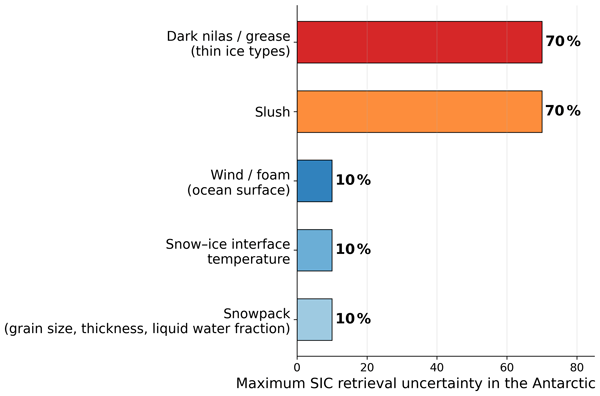
Marta Stentella, Ghislain Picard, Petra Heil, Jacqueline Boutin, Emmanuel Dinnat, and Stuart Corney
The Cryosphere, 20, 4465–4489, https://doi.org/10.5194/tc-20-4465-2026, https://doi.org/10.5194/tc-20-4465-2026, 2026
Short summary
Short summary
Passive microwave radiometers are the primary tool for monitoring Antarctic sea ice, but their reliability decreases in the marginal ice zone between the pack ice and the open ocean. We simulate satellite observations to assess the impact of varying physical parameters on sea ice concentration retrievals. The largest errors are due to flooded/wet snow, thin ice, and roughened ocean surfaces. These findings can improve our interpretation of satellite observations and forecast sea ice changes.
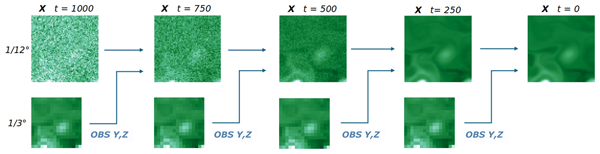
Enzo Forestier, Luther Ollier, Roy El Hourany, Jacqueline Boutin, Carlos Mejia, and Sylvie Thiria
Ocean Sci., 22, 2357–2373, https://doi.org/10.5194/os-22-2357-2026, https://doi.org/10.5194/os-22-2357-2026, 2026
Short summary
Short summary
This study evaluates deep generative diffusion models for downscaling sea surface salinity in the Gulf Stream. Using a reanalysis dataset as a controlled framework, it assesses the added value of high-resolution sea surface temperature and sea surface height as auxiliary constraints. The results show that diffusion-based reconstructions preserve plausible fine-scale variability, highlighting the method’s potential for future applications to satellite products.
Angelina Cassianides, Marina Levy, Clément Haëck, Ines Mangolte, Roy El Hourany, Michela Sammartino, and Bruno Buongiorno Nardelli
EGUsphere, https://doi.org/10.5194/egusphere-2026-3531, https://doi.org/10.5194/egusphere-2026-3531, 2026
Short summary
Short summary
Oceanic fronts are common features considered as biodiversity hotspots. Using satellite data, we quantified how fronts affect phytoplankton growth, the base of the marine food web, and its community in the Mediteranean Sea. We show that phytoplankton are systematically enhanced, especially in nutrient-poor area, while the community structure shifts to favor larger organisms like diatoms. However, these ecological impacts depend on both the method and the nature of the dataset used.
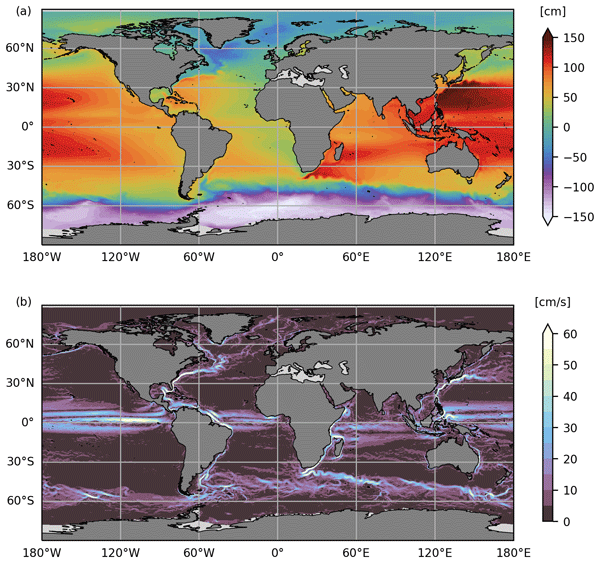
Solène Jousset, Sandrine Mulet, Eric Greiner, John Wilkin, Lien Vidar, Léon Chafik, Roshin Raj, Antonio Bonaduce, Nicolas Picot, and Gérald Dibarboure
Earth Syst. Sci. Data, 18, 2285–2303, https://doi.org/10.5194/essd-18-2285-2026, https://doi.org/10.5194/essd-18-2285-2026, 2026
Short summary
Short summary
Satellite altimetry has revolutionized ocean observation, making it possible to track sea level with very good spatio-temporal coverage. However, only sea level anomalies are retrieved; to monitor the entire ocean signal, mean dynamic topography (MDT) must be added to these anomalies. In this study, an evaluation of the CNES-CLS22 MDT shows significant improvements in the Arctic. Over the globe, this new solution represents an incremental update to previous CNES-CLS18 MDT.
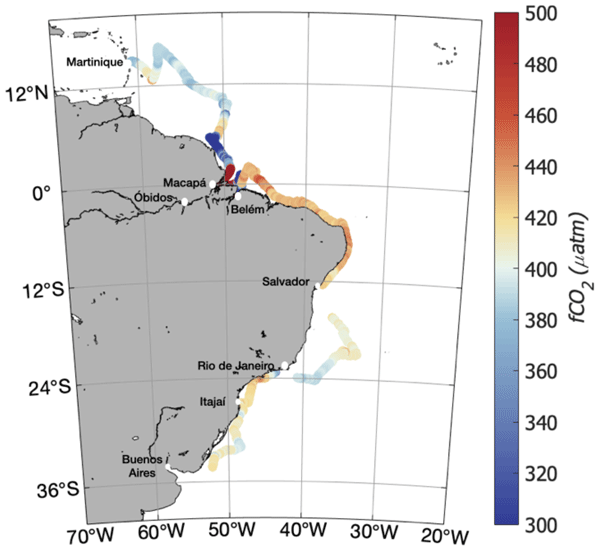
Léa Olivier, Jacqueline Boutin, Gilles Reverdin, Christopher Hunt, Thomas Linkowski, Alison Chase, Nils Haentjens, Pedro C. Junger, Stéphane Pesant, and Douglas Vandemark
Earth Syst. Sci. Data, 17, 3583–3598, https://doi.org/10.5194/essd-17-3583-2025, https://doi.org/10.5194/essd-17-3583-2025, 2025
Short summary
Short summary
The air–sea CO2 flux in coastal waters plays a key role in the global carbon budget but remains poorly understood. In 2021, the Tara schooner collected 14 000 km of CO2 fugacity (fCO2) data along the South American coast. This dataset improves our understanding of fCO2 in the under-sampled Brazilian coastal region and provides a unique insight into the complex biogeochemistry of the Amazon River–ocean continuum.
Lorenzo Della Cioppa and Bruno Buongiorno Nardelli
EGUsphere, https://doi.org/10.5194/egusphere-2025-1136, https://doi.org/10.5194/egusphere-2025-1136, 2025
Preprint archived
Short summary
Short summary
Forecasting of particles trajectories transported by ocean currents is of great importance for research and operational tasks. Even with satellite observations data or numerical simulations, the problem challenging. In this paper a neural network approach is proposed which is capable of learning from observed trajectories and corresponding data observed from satellites to generate predictions. The network is trained and validated on synthetic data, but it is easily applicable in the real-world.
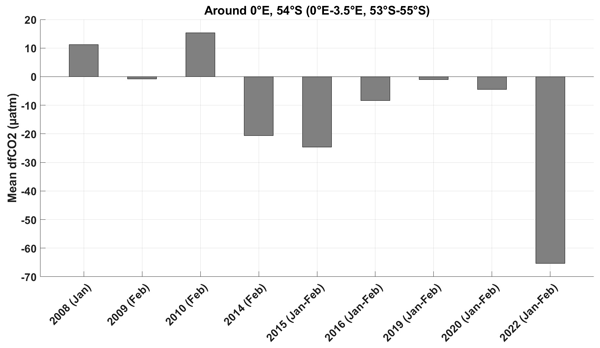
Kirtana Naëck, Jacqueline Boutin, Sebastiaan Swart, Marcel du Plessis, Liliane Merlivat, Laurence Beaumont, Antonio Lourenco, Francesco d'Ovidio, Louise Rousselet, Brian Ward, and Jean-Baptiste Sallée
Biogeosciences, 22, 1947–1968, https://doi.org/10.5194/bg-22-1947-2025, https://doi.org/10.5194/bg-22-1947-2025, 2025
Short summary
Short summary
In summer 2022, a CARbon Interface OCean Atmosphere (CARIOCA) drifting buoy observed an anomalously strong ocean carbon sink in the subpolar Southern Ocean associated with large plumes of chlorophyll a. Lagrangian backward trajectories indicate that these waters originated from the sea ice edge in spring 2021. Our study highlights the northward migration of the CO2 sink associated with early sea ice retreat.
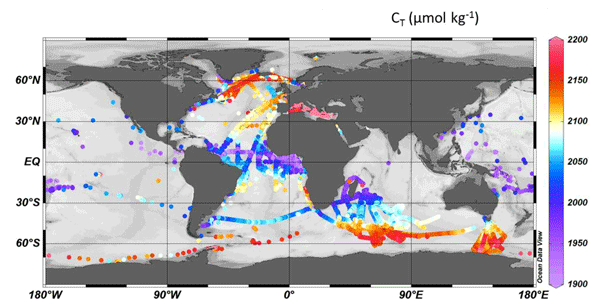
Nicolas Metzl, Jonathan Fin, Claire Lo Monaco, Claude Mignon, Samir Alliouane, Bruno Bombled, Jacqueline Boutin, Yann Bozec, Steeve Comeau, Pascal Conan, Laurent Coppola, Pascale Cuet, Eva Ferreira, Jean-Pierre Gattuso, Frédéric Gazeau, Catherine Goyet, Emilie Grossteffan, Bruno Lansard, Dominique Lefèvre, Nathalie Lefèvre, Coraline Leseurre, Sébastien Petton, Mireille Pujo-Pay, Christophe Rabouille, Gilles Reverdin, Céline Ridame, Peggy Rimmelin-Maury, Jean-François Ternon, Franck Touratier, Aline Tribollet, Thibaut Wagener, and Cathy Wimart-Rousseau
Earth Syst. Sci. Data, 17, 1075–1100, https://doi.org/10.5194/essd-17-1075-2025, https://doi.org/10.5194/essd-17-1075-2025, 2025
Short summary
Short summary
This work presents a new synthesis of 67 000 total alkalinity and total dissolved inorganic carbon observations obtained between 1993 and 2023 in the global ocean, coastal zones, and the Mediterranean Sea. We describe the data assemblage and associated quality control and discuss some potential uses of this dataset. The dataset is provided in a single format and includes the quality flag for each sample.
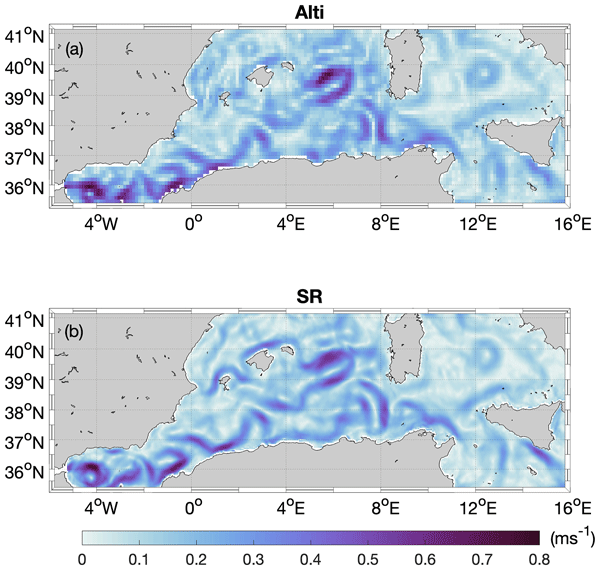
Daniele Ciani, Claudia Fanelli, and Bruno Buongiorno Nardelli
Ocean Sci., 21, 199–216, https://doi.org/10.5194/os-21-199-2025, https://doi.org/10.5194/os-21-199-2025, 2025
Short summary
Short summary
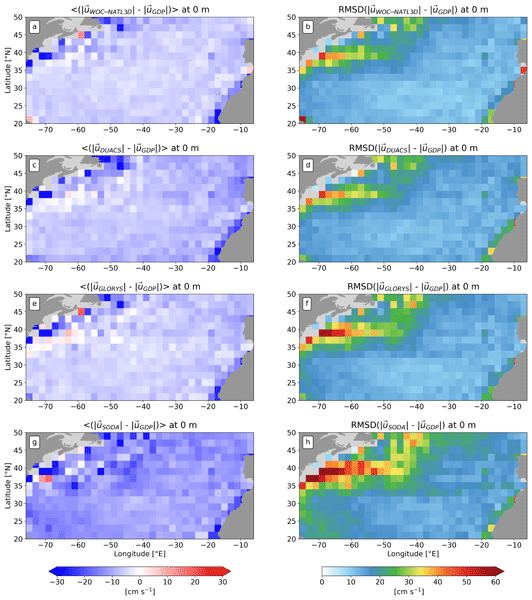
Ocean surface currents are routinely derived from satellite observations of the sea level, allowing regional- to global-scale synoptic monitoring. In order to overcome the theoretical and instrumental limits of this methodology, we exploit the synergy of multi-sensor satellite observations. We rely on deep learning, physics-informed algorithms to predict ocean currents from sea surface height and sea surface temperature observations. Results are validated by means of in situ measurements.
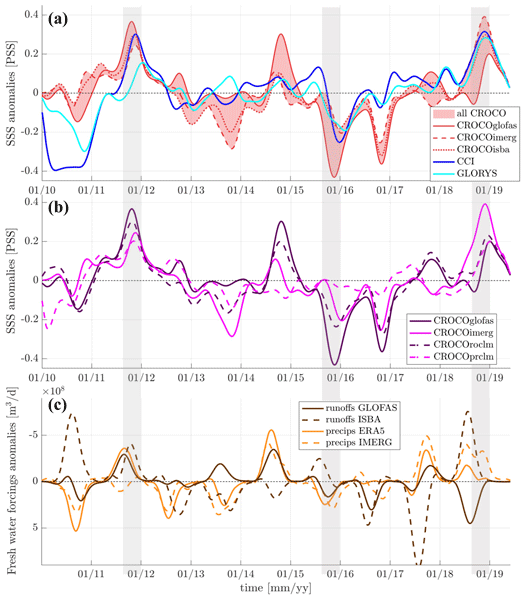
Clovis Thouvenin-Masson, Jacqueline Boutin, Vincent Échevin, Alban Lazar, and Jean-Luc Vergely
Ocean Sci., 20, 1547–1566, https://doi.org/10.5194/os-20-1547-2024, https://doi.org/10.5194/os-20-1547-2024, 2024
Short summary
Short summary
We focus on understanding the impact of river runoff and precipitation on sea surface salinity (SSS) in the eastern North Tropical Atlantic (e-NTA) region off northwestern Africa. By analyzing regional simulations and observational data, we find that river flows significantly influence SSS variability, particularly after the rainy season. Our findings underscore that a main source of uncertainty representing SSS variability in this region is from river runoff estimates.
Nicolas Kolodziejczyk, Esther Portela, Virginie Thierry, and Annaig Prigent
Earth Syst. Sci. Data, 16, 5191–5206, https://doi.org/10.5194/essd-16-5191-2024, https://doi.org/10.5194/essd-16-5191-2024, 2024
Short summary
Short summary
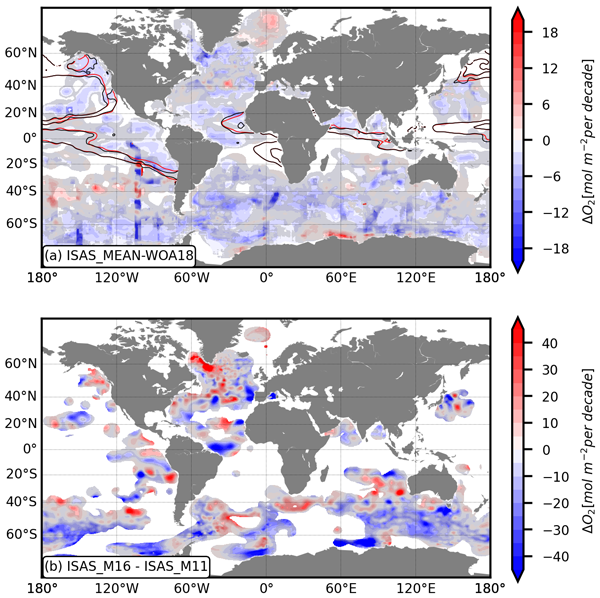
Oceanic dissolved oxygen (DO) is fundamental for ocean biogeochemical cycles and marine life. To ease the computation of the ocean oxygen budget from in situ DO data, mapping of data on a regular 3D grid is useful. Here, we present a new DO gridded product from the Argo database. We compare it with existing DO mapping from a historical dataset. We suggest that the ocean has generally been losing oxygen since the 1980s, but large interannual and regional variabilities should be considered.
Claudia Fanelli, Daniele Ciani, Andrea Pisano, and Bruno Buongiorno Nardelli
Ocean Sci., 20, 1035–1050, https://doi.org/10.5194/os-20-1035-2024, https://doi.org/10.5194/os-20-1035-2024, 2024
Short summary
Short summary
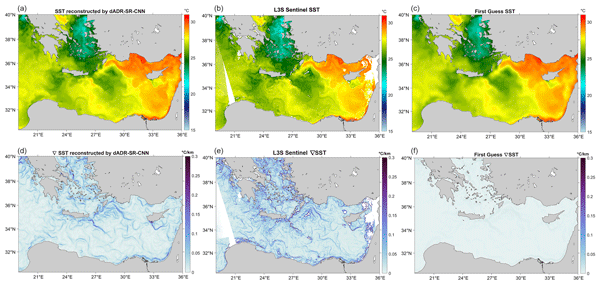
Sea surface temperature (SST) is an essential variable to understanding the Earth's climate system, and its accurate monitoring from space is essential. Since satellite measurements are hindered by cloudy/rainy conditions, data gaps are present even in merged multi-sensor products. Since optimal interpolation techniques tend to smooth out small-scale features, we developed a deep learning model to enhance the effective resolution of gap-free SST images over the Mediterranean Sea to address this.
Sarah Asdar, Daniele Ciani, and Bruno Buongiorno Nardelli
Earth Syst. Sci. Data, 16, 1029–1046, https://doi.org/10.5194/essd-16-1029-2024, https://doi.org/10.5194/essd-16-1029-2024, 2024
Short summary
Short summary
Estimating 3D currents is crucial for the understanding of ocean dynamics, and a precise knowledge of ocean circulation is essential to ensure a sustainable ocean. In this context, a new high-resolution (1 / 10°) data-driven dataset of 3D ocean currents has been developed within the European Space Agency World Ocean Circulation project, providing 10 years (2010–2019) of horizontal and vertical quasi-geostrophic currents at daily resolution over the North Atlantic Ocean, down to 1500 m depth.
Nicolas Metzl, Jonathan Fin, Claire Lo Monaco, Claude Mignon, Samir Alliouane, David Antoine, Guillaume Bourdin, Jacqueline Boutin, Yann Bozec, Pascal Conan, Laurent Coppola, Frédéric Diaz, Eric Douville, Xavier Durrieu de Madron, Jean-Pierre Gattuso, Frédéric Gazeau, Melek Golbol, Bruno Lansard, Dominique Lefèvre, Nathalie Lefèvre, Fabien Lombard, Férial Louanchi, Liliane Merlivat, Léa Olivier, Anne Petrenko, Sébastien Petton, Mireille Pujo-Pay, Christophe Rabouille, Gilles Reverdin, Céline Ridame, Aline Tribollet, Vincenzo Vellucci, Thibaut Wagener, and Cathy Wimart-Rousseau
Earth Syst. Sci. Data, 16, 89–120, https://doi.org/10.5194/essd-16-89-2024, https://doi.org/10.5194/essd-16-89-2024, 2024
Short summary
Short summary
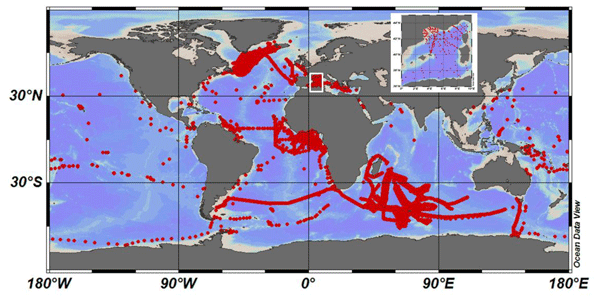
This work presents a synthesis of 44 000 total alkalinity and dissolved inorganic carbon observations obtained between 1993 and 2022 in the Global Ocean and the Mediterranean Sea at the surface and in the water column. Seawater samples were measured using the same method and calibrated with international Certified Reference Material. We describe the data assemblage, quality control and some potential uses of this dataset.
Andrea Pisano, Daniele Ciani, Salvatore Marullo, Rosalia Santoleri, and Bruno Buongiorno Nardelli
Earth Syst. Sci. Data, 14, 4111–4128, https://doi.org/10.5194/essd-14-4111-2022, https://doi.org/10.5194/essd-14-4111-2022, 2022
Short summary
Short summary
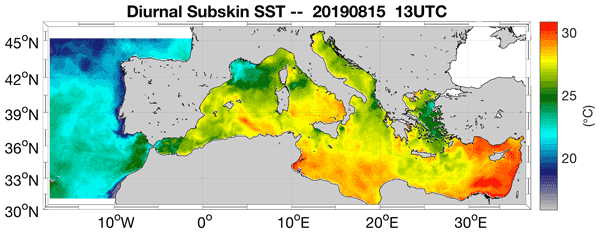
A new operational diurnal sea surface temperature (SST) product has been developed within the Copernicus Marine Service, providing gap-free hourly mean SST fields from January 2019 to the present. This product is able to accurately reproduce the diurnal cycle, the typical day–night SST oscillation mainly driven by solar heating, including extreme diurnal warming events. This product can thus represent a valuable dataset to improve the study of those processes that require a subdaily frequency.
Michael P. Hemming, Jan Kaiser, Jacqueline Boutin, Liliane Merlivat, Karen J. Heywood, Dorothee C. E. Bakker, Gareth A. Lee, Marcos Cobas García, David Antoine, and Kiminori Shitashima
Ocean Sci., 18, 1245–1262, https://doi.org/10.5194/os-18-1245-2022, https://doi.org/10.5194/os-18-1245-2022, 2022
Short summary
Short summary
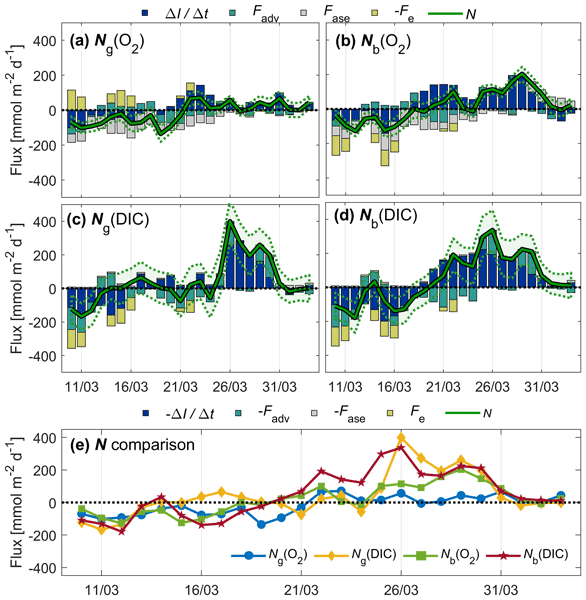
An underwater glider mission was carried out in spring 2016 near a mooring in the northwestern Mediterranean Sea. The glider deployment served as a test of a prototype ion-sensitive field-effect transistor pH sensor. Mean net community production rates were estimated from glider and buoy measurements of dissolved oxygen and inorganic carbon concentrations before and during the spring bloom. Incorporating advection is important for accurate mass budgets. Unexpected metabolic quotients were found.

Liliane Merlivat, Michael Hemming, Jacqueline Boutin, David Antoine, Vincenzo Vellucci, Melek Golbol, Gareth A. Lee, and Laurence Beaumont
Biogeosciences, 19, 3911–3920, https://doi.org/10.5194/bg-19-3911-2022, https://doi.org/10.5194/bg-19-3911-2022, 2022
Short summary
Short summary
We use in situ high-temporal-resolution measurements of dissolved inorganic carbon and atmospheric parameters at the air–sea interface to analyse phytoplankton bloom initiation identified as the net rate of biological carbon uptake in the Mediterranean Sea. The shift from wind-driven to buoyancy-driven mixing creates conditions for blooms to begin. Active mixing at the air–sea interface leads to the onset of the surface phytoplankton bloom due to the relaxation of wind speed following storms.
Léa Olivier, Jacqueline Boutin, Gilles Reverdin, Nathalie Lefèvre, Peter Landschützer, Sabrina Speich, Johannes Karstensen, Matthieu Labaste, Christophe Noisel, Markus Ritschel, Tobias Steinhoff, and Rik Wanninkhof
Biogeosciences, 19, 2969–2988, https://doi.org/10.5194/bg-19-2969-2022, https://doi.org/10.5194/bg-19-2969-2022, 2022
Short summary
Short summary
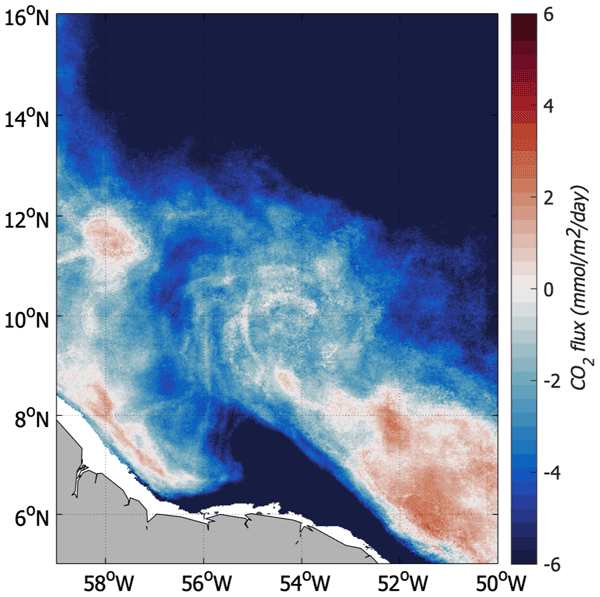
We investigate the impact of the interactions between eddies and the Amazon River plume on the CO2 air–sea fluxes to better characterize the ocean carbon sink in winter 2020. The region is a strong CO2 sink, previously underestimated by a factor of 10 due to a lack of data and understanding of the processes responsible for the variability in ocean carbon parameters. The CO2 absorption is mainly driven by freshwater from the Amazon entrained by eddies and by the winter seasonal cooling.
Cited articles
Akhil, V. P., Vialard, J., Lengaigne, M., Keerthi, M. G., Boutin, J., Vergely, J. L., and Papa, F.: Bay of Bengal sea surface salinity variability using a decade of improved SMOS re-processing, Remote Sens. Environ., 248, 111964, https://doi.org/10.1016/j.rse.2020.111964, 2020.
Bingham, F. M., Howden, S. D., and Koblinsky, C. J.: Sea surface salinity measurements in the historical database, J. Geophys. Res.-Oceans, 107, SRF-20, https://doi.org/10.1029/2000JC000767, 2002.
Blunden, J., Boyer, T., and Bartow-Gillies, E. (Eds.): State of the climate in 2022, Bull. Am. Meteorol. Soc., 104, S1–S501, 2023.
Bonjean, F., Boutin, J., Vergely, J. L., Richaume, P., and Sabia, R.: Recovery of SMOS salinity variability in RFI-contaminated regions, IEEE T. Geosci. Remote Sens., https://doi.org/10.1109/TGRS.2024.3408049, 2024.
Borger, C., Beirle, S., and Wagner, T.: Analysis of global trends of total column water vapour from multiple years of OMI observations, Atmos. Chem. Phys., 22, 10603–10621, https://doi.org/10.5194/acp-22-10603-2022, 2022.
Boutin, J., Vergely, J.-L., Marchand, S., D'Amico, F., Hasson, A., Kolodziejczyk, N., Reul, N., Reverdin, G., and Vialard, J.: New SMOS sea surface salinity with reduced systematic errors and improved variability, Remote Sens. Environ., 214, 115–134, https://doi.org/10.1016/j.rse.2018.05.022, 2018.
Buongiorno Nardelli, B. and Iudicone, D.: A dynamical geography of observed trends in the global ocean, Sci. Adv., 11, 3532, https://doi.org/10.1126/sciadv.adq3532, 2025.
Buongiorno Nardelli, B. and Sammartino, M.: EU Copernicus Marine Service Product User Manual for the Multi Observation Global Ocean Sea Surface Salinity and Sea Surface Density, MULTIOBS_GLO_PHY_S_SURFACE_MYNRT_015_013, issue 1.3, Mercator Ocean International, https://documentation.marine.copernicus.eu/PUM/CMEMS-MOB-PUM-015-013.pdf (last access: 16 July 2025), 2023.
Buongiorno Nardelli, B., Pisano, A., and Sammartino, M.: EU Copernicus Marine Service Quality Information Document for the Multi Observation Global Ocean Sea Surface Salinity and Sea Surface Density, MULTIOBS_GLO_PHY_S_SURFACE_MYNRT_015_013, issue 1.4, Mercator Ocean International, https://documentation.marine.copernicus.eu/QUID/CMEMS-MOB-QUID-015-013.pdf (last access: 16 July 2025), 2024.
CATDS: CATDS-PDC L3OS 3G – Debiased Gaussian average daily salinity field product from SMOS satellite, CATDS (CNES, IFREMER, LOCEAN, ACRI) [data set], https://doi.org/10.12770/9c97fb5c-d7d5-4bc2-a5c7-57944026cd60, 2022.
Cheng, L.: IAP observational salinity gridded dataset at 0.25 resolution, Inst. Atmos. Phys., Chin. Acad. Sci., https://doi.org/10.57760/sciencedb.o00122.00001, 2022.
Cheng, L. and Zhu, J.: Benefits of CMIP5 multimodel ensemble in reconstructing historical ocean subsurface temperature variations, J. Climate, 29, 5393–5416, 2016.
Cheng, L., Trenberth, K. E., Gruber, N., Abraham, J. P., Fasullo, J. T., Li, G., Mann, M. E., Zhao, X., and Zhu, J.: Improved estimates of changes in upper ocean salinity and the hydrological cycle, J. Climate, 33, https://doi.org/10.1175/JCLI-D-20-0366.1, 2020.
Douville, H., Raghavan, K., Renwick, J., Allan, R. P., Arias, P. A., Barlow, M., Cerezo-Mota, R., Cherchi, A., Gan, T. Y., Gergis, J., Jiang, D., Khan, A., Pokam Mba, W., Rosenfeld, D., Tierney, J., and Zolina, O.: Water Cycle Changes, in: Climate Change 2021: The Physical Science Basis, Cambridge Univ. Press, 1055–1210, https://doi.org/10.1017/9781009157896.010, 2021.
Drévillon, M., Lellouche, J.-M., Régnier, C., Garric, G., Bricaud, C., Hernandez, O., and Bourdallé-Badie, R.: EU Copernicus Marine Service Quality Information Document for the Global Ocean Physics Reanalysis, GLOBAL_REANALYSIS_PHY_001_030, issue 1.6, Mercator Ocean International, https://documentation.marine.copernicus.eu/QUID/CMEMS-GLO-QUID-001-030.pdf (last access: 16 July 2025), 2023.
Drévillon, M., Fernandez, E., and Lellouche, J.-M.: EU Copernicus Marine Service Product User Manual for the Global Ocean Physics Reanalysis, GLOBAL_REANALYSIS_PHY_001_030, issue 1.6, Mercator Ocean International, https://documentation.marine.copernicus.eu/PUM/CMEMS-GLO-PUM-001-030.pdf (last access: 16 July 2025), 2024.
Durack, P. J. and Wijffels, S. E.: Fifty-year trends in global ocean salinities and their relationship to broad-scale warming, J. Climate, 23, 4342–4362, https://doi.org/10.1175/2010JCLI3377.1, 2010.
Entekhabi, D., Njoku, E. G., O'Neill, P. E., Kellogg, K. H., Crow, W. T., Edelstein, W. N., Entin, J. K., and Yueh, S.: The soil moisture active passive (SMAP) mission, Proc. IEEE, 98, 704–716, https://doi.org/10.1109/JPROC.2010.2043918, 2010.
EU Copernicus Marine Service Product: Multi Observation Global Ocean 3D Temperature Salinity Height Geostrophic Current and MLD, Mercator Ocean International [data set], https://doi.org/10.48670/moi-00052, 2023a.
EU Copernicus Marine Service Product: Global Ocean Physics Reanalysis, Mercator Ocean International [data set], https://doi.org/10.48670/moi-00021, 2023b.
EU Copernicus Marine Service Product: SSS SMOS/SMAP L4 OI – LOPS-v2023, Mercator Ocean International [data set], https://doi.org/10.48670/mds-00369, 2024a.
EU Copernicus Marine Service Product: Multi Observation Global Ocean Sea Surface Salinity and Sea Surface Density, Mercator Ocean International [data set], https://doi.org/10.48670/moi-00051, 2024b.
Font, J., Camps, A., Borges, A., Martin-Neira, M., Boutin, J., Reul, N., Kerr, Y. H., Hahne, A., and Mecklenburg, S.: SMOS: The challenging sea surface salinity measurement from space, Proc. IEEE, 98, 649–665, https://doi.org/10.1109/JPROC.2009.2033096, 2010.
Frankignoul, C., Gastineau, G., and Kwon, Y.-O.: Estimation of the SST response to anthropogenic and external forcing and its impact on the Atlantic multidecadal oscillation and the Pacific decadal oscillation, J. Climate, 30, 9871–9895, 2017.
Gabarró, C., Hughes, N., Wilkinson, J., Bertino, L., Bracher, A., Diehl, T., Dierking, W., Gonzalez-Gambau, V., Lavergne, T., Madurell, T., Malnes, E., and Wagner, P. M.: Improving satellite-based monitoring of the polar regions: Identification of research and capacity gaps, Front. Remote Sens., 4, 952091, https://doi.org/10.3389/frsen.2023.952091, 2023.
Gaillard, F., Reynaud, T., Thierry, V., Kolodziejczyk, N., and von Schuckmann, K.: In-situ based reanalysis of the global ocean temperature and salinity with ISAS: variability of the heat content and steric height, J. Climate, 29, 1305–1323, https://doi.org/10.1175/JCLI-D-15-0028.1, 2016.
Gould, W. J. and Cunningham, S. A.: Global-scale patterns of observed sea surface salinity intensified since the 1870s, Commun. Earth Environ., 2, 76, https://doi.org/10.1038/s43247-021-00161-3, 2021.
Greiner, E., Verbrugge, N., and Mulet, S., and Guinehut, S.: EU Copernicus Marine Service Quality Information Document for the Multi Observation Global Ocean 3D Temperature Salinity Height Geostrophic Current and MLD, MULTIOBS_GLO_PHY_TSUV_3D_MYNRT_015_012, issue 1.2, Mercator Ocean International, https://documentation.marine.copernicus.eu/QUID/CMEMS-MOB-QUID-015-012.pdf (last access: 16 July 2025), 2023.
Gu, L., Yin, J., Slater, L. J., Chen, J., Do, H. X., Wang, H.-M., Lu, C., Jiang, Z., Zhao, T., and Zhang, Y.: Intensification of global hydrological droughts under anthropogenic climate warming, Water Resour. Res., 59, e2022WR032997, https://doi.org/10.1029/2022WR032997, 2022.
Gudmundsson, L., Boulange, J., Do, H. X., Gosling, S. N., Grillakis, M. G., Koutroulis, A. G., and Zhao, F.: Globally observed trends in mean and extreme river flow attributed to climate change, Science, 371, 1159–1162, 2021.
Gulev, S. K., Thorne, P. W., Ahn, J., Dentener, F. J., Domingues, C. M., Gerland, S., and Vose, R. S.: Changing state of the climate system, in: Climate Change 2021: The Physical Science Basis, Contribution of Working Group I to the Sixth Assessment Report of the Intergovernmental Panel on Climate Change, Cambridge Univ. Press, 287–422, https://doi.org/10.1017/9781009157896.004, 2021.
Hamed, K. H. and Rao, A. R.: A modified Mann-Kendall trend test for autocorrelated data, J. Hydrol., 204, 182–196, 1998.
Hasson, A., Delcroix, T., Boutin, J., Dussin, R., and Ballabrera-Poy, J.: Analyzing the 2010–2011 La Niña signature in the tropical Pacific sea surface salinity using in situ data, SMOS observations, and a numerical simulation, J. Geophys. Res.-Oceans, 119, 3855–3867, https://doi.org/10.1002/2014JC009864, 2014.
Held, I. M. and Soden, B. J.: Robust responses of the hydrological cycle to global warming, J. Climate, 19, 5686–5699, https://doi.org/10.1175/JCLI3990.1, 2006.
IPCC: Climate Change 2021: The Physical Science Basis, Contribution of Working Group I to the Sixth Assessment Report of the Intergovernmental Panel on Climate Change, edited by: Masson-Delmotte, V., Zhai, P., Pirani, A., Connors, S. L., Péan, C., Berger, S., Caud, N., Chen, Y., Goldfarb, L., Gomis, M. I., Huang, M., Leitzell, K., Lonnoy, E., Matthews, J. B. R., Maycock, T. K., Waterfield, T., Yelekçi, O., Yu, R., and Zhou, B., Cambridge University Press, Cambridge, United Kingdom and New York, NY, USA, https://doi.org/10.1017/9781009157896, 2021.
Kerr, Y. H., Waldteufel, P., Wigneron, J. P., Delwart, S., Cabot, F., Boutin, J., and Mecklenburg, S.: The SMOS mission: New tool for monitoring key elements of the global water cycle, Proc. IEEE, 98, 666–687, https://doi.org/10.1109/JPROC.2010.2043032, 2010.
Kolodziejczyk, N.: EU Copernicus Marine Service Quality Information Document for the SSS SMOS/SMAP L4 OI - LOPS-v2023, MULTIOBS_GLO_PHY_SSS_L4_MY_015_015, issue 2.0, Mercator Ocean International, https://documentation.marine.copernicus.eu/QUID/CMEMS-MOB-QUID-015-015.pdf (last access: 16 July 2025), 2024.
Kolodziejczyk, N., Boutin, J., Vergely, J. L., Marchand, S., Martin, N., and Reverdin, G.: Mitigation of systematic errors in SMOS sea surface salinity, Remote Sens. Environ., 180, 164–177, 2016.
Kolodziejczyk, N., Prigent-Mazella, A., and Gaillard, F.: ISAS temperature, salinity, dissolved oxygen gridded fields, SEANOE [data set], https://doi.org/10.17882/52367, 2023.
Lagerloef, G., Colomb, F. R., Le Vine, D., Wentz, F., Yueh, S., Ruf, C., Lilly, J., Gunn, J., Chao, Y. I., DeCharon, A., and Feldman, G.: The Aquarius/SAC-D mission: Designed to meet the salinity remote-sensing challenge, Oceanography, 21, 68–81, https://doi.org/10.5670/oceanog.2008.77, 2008.
O'Gorman, P. A.: Precipitation extremes under climate change, Curr. Clim. Change Rep., 1, 49–59, 2015.
Olmedo, E., Turiel, A., González-Gambau, V., González-Haro, C., García-Espriu, A., Gabarró, C., and Scipal, K.: Increasing stratification as observed by satellite sea surface salinity measurements, Sci. Rep., 12, 6279, https://doi.org/10.1038/s41598-022-10265-1, 2022.
Parracho, A., Boutin, J., and Tarot, S.: EU Copernicus Marine Service Quality Information Document for the SMOS CATDS Qualified (L2Q) Sea Surface Salinity product, MULTIOBS_GLO_PHY_SSS_L3_MYNRT_015_014, issue 2.0, Mercator Ocean International, https://documentation.marine.copernicus.eu/QUID/CMEMS-MOB-QUID-015-014.pdf (last access: 14 July 2025), 2024.
Parracho, A. C., Bock, O., and Bastin, S.: Global IWV trends and variability in atmospheric reanalyses and GPS observations, Atmos. Chem. Phys., 18, 16213–16237, https://doi.org/10.5194/acp-18-16213-2018, 2018.
Pinho, T. M. L., Chiessi, C. M., Portilho-Ramos, R. C., Campos, M. C., Crivellari, S., Nascimento, R. A., Albuquerque, A. L. S., Bahr, A., and Mulitza, S.: Meridional changes in the South Atlantic subtropical gyre during Heinrich stadials, Sci. Rep., 11, 9419, https://doi.org/10.1038/s41598-021-88817-0, 2021.
Reul, N., Grodsky, S. A., Arias, M., Boutin, J., Catany, R., Chapron, B., D'Amico, F., Dinnat, E., Donlon, C., Fore, A., Fournier, S., Guimbard, S., Hasson, A., Kolodziejczyk, N., Lagerloef, G., Lee, T., Le Vine, D. M., Lindstrom, E., Maes, C., Mecklenburg, S., Meissner, T., Olmedo, E., Sabia, R., Tenerelli, J., Thouvenin-Masson, C., Turiel, A., Vergely, J.-L., Vinogradova, N., Wentz, F., and Yueh, S.: Sea surface salinity estimates from spaceborne L-band radiometers: an overview of the first decade of observation (2010–2019), Remote Sens. Environ., 242, 111769, https://doi.org/10.1016/j.rse.2020.111769, 2020.
Sen, P. K.: Estimates of the regression coefficient based on Kendall's tau, J. Am. Stat. Assoc., 63, 1379–1389, 1968.
Solomon, S., Qin, D., Manning, M., Alley, R. B., Berntsen, T., Bindoff, N. L., Chen, Z., Marquis, M., Averyt, K. B., Tignor, M., Miller, H. L., and the Core Writing Team: Technical summary, in: Climate Change 2007: The Physical Science Basis. Contribution of Working Group I to the Fourth Assessment Report of the Intergovernmental Panel on Climate Change, edited by: Solomon, S., Qin, D., Manning, M., Chen, Z., Marquis, M., Averyt, K. B., Tignor, M., and Miller, H. L., Cambridge University Press, Cambridge, United Kingdom and New York, NY, USA, ISBN 978-0-521-88009-1, 2007.
Sun, W., Wang, B., Liu, J., and Dai, Y.: Recent changes of Pacific decadal variability shaped by greenhouse forcing and internal variability, J. Geophys. Res.-Atmos., 127, e2021JD035812, https://doi.org/10.1029/2021JD035812, 2022.
Tarot, S.: EU Copernicus Marine Service Product User Manual for the SSS SMOS/SMAP L4 OI – LOPS-v2023, MULTIOBS_GLO_PHY_SSS_L4_MY_015_015, issue 2.0, Mercator Ocean International, https://documentation.marine.copernicus.eu/PUM/CMEMS-MOB-PUM-015-015.pdf (last access: 16 July 2025), 2024.
Terray, L., Corre, L., Cravatte, S., Delcroix, T., Reverdin, G., and Ribes, A.: Near-surface salinity as nature's rain gauge to detect human influence on the tropical water cycle, J. Climate, 25, 958–977, https://doi.org/10.1175/JCLI-D-10-05025.1, 2012.
Theil, H.: A rank-invariant method of linear and polynomial regression analysis, Indag. Math., 12, 173, 1950.
Thierry, V., Claustre, H., Pasqueron de Fommervault, O., Zilberman, N., Johnson, K. S., King, B. A., Wijffels, S. E., Bhaskar, U. T. V. S., Balmaseda, M. A., Belbeoch, M., Bollard, M., Boutin, J., Boyd, P., Cancouët, R., Chai, F., Ciavatta, S., Crane, R., Cravatte, S., Dall'Olmo, G., Desbruyères, D., Durack, P. J., Fassbender, A. J., Fennel, K., Fujii, Y., Gasparin, F., González-Santana, A., Gourcuff, C., Gray, A., Hewitt, H. T., Jayne, S. R., Johnson, G. C., Kolodziejczyk, N., Le Boyer, A., Le Traon, P.-Y., Llovel, W., Lozier, M. S., Lyman, J. M., McDonagh, E. L., Martin, A. P., Meyssignac, B., Mogensen, K. S., Morris, T., Oke, P. R., Smith, W. O., Jr., Owens, B., Poffa, N., Post, J., Roemmich, D., Rykaczewski, R. R., Sathyendranath, S., Scanderbeg, M., Scheurle, C., Schofield, O., von Schuckmann, K., Scourse, J., Sprintall, J., Suga, T., Tonani, M., van Wijk, E., Xing, X., and Zuo, H.: Advancing ocean monitoring and knowledge for societal benefit: the urgency to expand Argo to OneArgo by 2030, Front. Mar. Sci., 12, 1593904, https://doi.org/10.3389/fmars.2025.1593904, 2025.
Verbrugge, N.: EU Copernicus Marine Service Product User Manual for the Multi Observation Global Ocean 3D Temperature Salinity Height Geostrophic Current and MLD, MULTIOBS_GLO_PHY_TSUV_3D_MYNRT_015_012, issue 1.2, Mercator Ocean International, https://documentation.marine.copernicus.eu/PUM/CMEMS-MOB-PUM-015-012.pdf (last access: 16 July 2025), 2023.
Vergely, J.-L., Boutin, J., and Kolodziejczyk, N.: SMOS OS Level 3 and Level 4 algorithm theoretical basis document, ACRI-ST, https://doi.org/10.13155/92266, 2022.
Vinogradova, N. T. and Ponte, R. M.: In search of fingerprints of the recent intensification of the ocean water cycle, J. Clim., 30, 5513–5528, 2017.
Wan, N., Lin, X., Pielke Sr., R. A., Zeng, X., and Nelson, A. M.: Global total precipitable water variations and trends over the period 1958–2021, Hydrol. Earth Syst. Sci., 28, 2123–2137, https://doi.org/10.5194/hess-28-2123-2024, 2024.
Wills, R. C., Schneider, T., Wallace, J. M., Battisti, D. S., and Hartmann, D. L.: Disentangling global warming, multidecadal variability, and El Niño in Pacific temperatures, Geophys. Res. Lett., 45, 2487–2496, https://doi.org/10.1002/2017GL076327, 2018.
Wong, A. P. S., Wijffels, S. E., Riser, S. C., Pouliquen, S., Hosoda, S., Roemmich, D., Gilson, J., Johnson, G. C., Martini, K., Murphy, D. J., Scanderbeg, M., Bhaskar, T. V. S. U., Buck, J. J. H., Merceur, F., Carval, T., Maze, G., Cabanes, C., André, X., Poffa, N., Yashayaev, I., Barker, P. M., Guinehut, S., Belbéoch, M., Ignaszewski, M., Baringer, M. O., Schmid, C., Lyman, J. M., McTaggart, K. E., Purkey, S. G., Zilberman, N., Alkire, M. B., Swift, D., Owens, W. B., Jayne, S. R., Hersh, C., Robbins, P., West-Mack, D., Bahr, F., Yoshida, S., Sutton, P. J. H., Cancouët, R., Coatanoan, C., Dobbler, D., Garcia Juan, A., Gourrion, J., Kolodziejczyk, N., Bernard, V., Bourlès, B., Claustre, H., D'Ortenzio, F., Le Reste, S., Le Traon, P.-Y., Rannou, J.-P., Saout-Grit, C., Speich, S., Thierry, V., Verbrugge, N., Angel-Benavides, I. M., Klein, B., Notarstefano, G., Poulain, P.-M., Vélez-Belchí, P., Suga, T., Ando, K., Iwasaska, N., Kobayashi, T., Masuda, S., Oka, E., Sato, K., Nakamura, T., Sato, K., Takatsuki, Y., Yoshida, T., Cowley, R., Lovell, J. L., Oke, P. R., van Wijk, E. M., Carse, F., Donnelly, M., Gould, W. J., Gowers, K., King, B. A., Loch, S. G., Mowat, M., Turton, J., Rama Rao, E. P., Ravichandran, M., Freeland, H. J., Gaboury, I., Gilbert, D., Greenan, B. J. W., Ouellet, M., Ross, T., Tran, A., Dong, M., Liu, Z., Xu, J., Kang, K., Jo, H., Kim, S.-D., and Park, H.-M.: Argo data 1999–2019: Two million temperature-salinity profiles and subsurface velocity observations from a global array of profiling floats, Front. Mar. Sci., 7, 700, https://doi.org/10.3389/fmars.2020.00700, 2020.
Xie, H., Xu, Q., Cheng, Y., Yin, X., and Fan, K.: Reconstructing three-dimensional salinity field of the South China Sea from satellite observations, Front. Mar. Sci., 10, 1168486, https://doi.org/10.3389/fmars.2023.1168486, 2023.
Yu, L., Josey, S. A., Bingham, F. M., and Lee, T.: Intensification of the global water cycle and evidence from ocean salinity: a synthesis review, Ann. N. Y. Acad. Sci., 1472, 76–94, https://doi.org/10.1111/nyas.14354, 2020.
Short summary
We compared six global sea surface salinity datasets and found consistent trends between them. Many regions follow the known pattern of fresh areas getting fresher and salty areas saltier, with a growing contrast between the North Atlantic and North Pacific. However, comparison with longer-term data shows that short-term trends are strongly shaped by natural climate variability, especially in the Pacific.
We compared six global sea surface salinity datasets and found consistent trends between them....


Altmetrics
Final-revised paper
Preprint