Articles | Volume 7-osr10
https://doi.org/10.5194/sp-7-osr10-18-2026
© Author(s) 2026. This work is distributed under
the Creative Commons Attribution 4.0 License.
the Creative Commons Attribution 4.0 License.
https://doi.org/10.5194/sp-7-osr10-18-2026
© Author(s) 2026. This work is distributed under
the Creative Commons Attribution 4.0 License.
the Creative Commons Attribution 4.0 License.

30 Sep 2026
| OSR10 | Chapter 4.4
| 30 Sep 2026 | OSR10 | Chapter 4.4
How extreme river discharge events shape coastal biogeochemical dynamics: the 2024 northern Adriatic case

National Institute of Oceanography and Applied Geophysics – OGS, Trieste, Italy
Stefano Querin
National Institute of Oceanography and Applied Geophysics – OGS, Trieste, Italy
Carolina Amadio
National Institute of Oceanography and Applied Geophysics – OGS, Trieste, Italy
Giorgio Bolzon
National Institute of Oceanography and Applied Geophysics – OGS, Trieste, Italy
Laura Feudale
National Institute of Oceanography and Applied Geophysics – OGS, Trieste, Italy
Stefano Piani
National Institute of Oceanography and Applied Geophysics – OGS, Trieste, Italy
Simone Spada
National Institute of Oceanography and Applied Geophysics – OGS, Trieste, Italy
Gianpiero Cossarini
National Institute of Oceanography and Applied Geophysics – OGS, Trieste, Italy
Related authors
Valeria Di Biagio, Vittorio Ernesto Brando, Simone Colella, Francesco D'Adamo, Anna Teruzzi, Gianluca Volpe, and Gianpiero Cossarini
State Planet Discuss., https://doi.org/10.5194/sp-2026-23, https://doi.org/10.5194/sp-2026-23, 2026
Preprint under review for SP
Short summary
Short summary
In marine ecosystems, primary production is the process by which organisms create organic matter, supporting marine life, carbon storage and fisheries. We tracked spatial and temporal changes in primary production across the Mediterranean Sea by combining four datasets from satellites and models, including global and regional estimates, identifying areas affected by larger discrepancies among estimates. We found a small but significant decrease in basin-wide primary production since 1999.
Anna Teruzzi, Ali Aydogdu, Carolina Amadio, Emanuela Clementi, Simone Colella, Valeria Di Biagio, Massimiliano Drudi, Claudia Fanelli, Laura Feudale, Alessandro Grandi, Pietro Miraglio, Andrea Pisano, Jenny Pistoia, Marco Reale, Stefano Salon, Gianluca Volpe, and Gianpiero Cossarini
State Planet, 4-osr8, 15, https://doi.org/10.5194/sp-4-osr8-15-2024, https://doi.org/10.5194/sp-4-osr8-15-2024, 2024
Short summary
Short summary
A noticeable cold spell occurred in Eastern Europe at the beginning of 2022 and was the main driver of intense deep-water formation and the associated transport of nutrients to the surface. Southeast of Crete, the availability of both light and nutrients in the surface layer stimulated an anomalous phytoplankton bloom. In the area, chlorophyll concentration (a proxy for bloom intensity) and primary production were considerably higher than usual, suggesting possible impacts on fishery catches.
Giovanni Coppini, Emanuela Clementi, Gianpiero Cossarini, Stefano Salon, Gerasimos Korres, Michalis Ravdas, Rita Lecci, Jenny Pistoia, Anna Chiara Goglio, Massimiliano Drudi, Alessandro Grandi, Ali Aydogdu, Romain Escudier, Andrea Cipollone, Vladyslav Lyubartsev, Antonio Mariani, Sergio Cretì, Francesco Palermo, Matteo Scuro, Simona Masina, Nadia Pinardi, Antonio Navarra, Damiano Delrosso, Anna Teruzzi, Valeria Di Biagio, Giorgio Bolzon, Laura Feudale, Gianluca Coidessa, Carolina Amadio, Alberto Brosich, Arnau Miró, Eva Alvarez, Paolo Lazzari, Cosimo Solidoro, Charikleia Oikonomou, and Anna Zacharioudaki
Ocean Sci., 19, 1483–1516, https://doi.org/10.5194/os-19-1483-2023, https://doi.org/10.5194/os-19-1483-2023, 2023
Short summary
Short summary
The paper presents the Mediterranean Forecasting System evolution and performance developed in the framework of the Copernicus Marine Service.
Valeria Di Biagio, Riccardo Martellucci, Milena Menna, Anna Teruzzi, Carolina Amadio, Elena Mauri, and Gianpiero Cossarini
State Planet, 1-osr7, 10, https://doi.org/10.5194/sp-1-osr7-10-2023, https://doi.org/10.5194/sp-1-osr7-10-2023, 2023
Short summary
Short summary
Oxygen is essential to all aerobic organisms, and its content in the marine environment is continuously under assessment. By integrating observations with a model, we describe the dissolved oxygen variability in a sensitive Mediterranean area in the period 1999–2021 and ascribe it to multiple acting physical and biological drivers. Moreover, the reduction recognized in 2021, apparently also due to other mechanisms, requires further monitoring in light of its possible impacts.
Valeria Di Biagio, Stefano Salon, Laura Feudale, and Gianpiero Cossarini
Biogeosciences, 19, 5553–5574, https://doi.org/10.5194/bg-19-5553-2022, https://doi.org/10.5194/bg-19-5553-2022, 2022
Short summary
Short summary
The amount of dissolved oxygen in the ocean is the result of interacting physical and biological processes. Oxygen vertical profiles show a subsurface maximum in a large part of the ocean. We used a numerical model to map this subsurface maximum in the Mediterranean Sea and to link local differences in its properties to the driving processes. This emerging feature can help the marine ecosystem functioning to be better understood, also under the impacts of climate change.
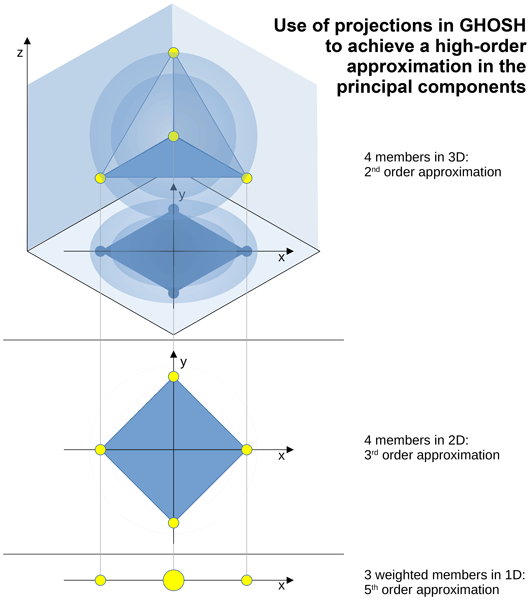
Simone Spada, Anna Teruzzi, Stefano Maset, Stefano Salon, Cosimo Solidoro, and Gianpiero Cossarini
Geosci. Model Dev., 19, 8321–8347, https://doi.org/10.5194/gmd-19-8321-2026, https://doi.org/10.5194/gmd-19-8321-2026, 2026
Short summary
Short summary
In geosciences, data assimilation (DA) combines modeled dynamics and observations to reduce simulation uncertainties. Uncertainties can be dynamically and effectively estimated in ensemble DA methods. With respect to current techniques, the novel Gauss-Hermite High-Order Sampling Hybrid filter (GHOSH) ensemble DA scheme is designed to improve accuracy by reaching a higher approximation order, without increasing computational costs, as demonstrated in idealized Lorenz96 tests.
Simone Spada, Anna Teruzzi, Stefano Maset, Stefano Salon, Cosimo Solidoro, and Gianpiero Cossarini
EGUsphere, https://doi.org/10.5194/egusphere-2026-3182, https://doi.org/10.5194/egusphere-2026-3182, 2026
This preprint is open for discussion and under review for Geoscientific Model Development (GMD).
Short summary
Short summary
In geosciences, data assimilation (DA) combines modeled dynamics and observations to reduce simulation uncertainties. With respect to current techniques, the novel GHOSH ensemble DA scheme is designed to improve accuracy and uncertainty estimate by reaching a higher approximation order, without increasing computational costs. In this work, GHOSH is implemented and evaluated in realistic simulations of the Mediterranean Sea biogeochemistry.
Valeria Di Biagio, Vittorio Ernesto Brando, Simone Colella, Francesco D'Adamo, Anna Teruzzi, Gianluca Volpe, and Gianpiero Cossarini
State Planet Discuss., https://doi.org/10.5194/sp-2026-23, https://doi.org/10.5194/sp-2026-23, 2026
Preprint under review for SP
Short summary
Short summary
In marine ecosystems, primary production is the process by which organisms create organic matter, supporting marine life, carbon storage and fisheries. We tracked spatial and temporal changes in primary production across the Mediterranean Sea by combining four datasets from satellites and models, including global and regional estimates, identifying areas affected by larger discrepancies among estimates. We found a small but significant decrease in basin-wide primary production since 1999.
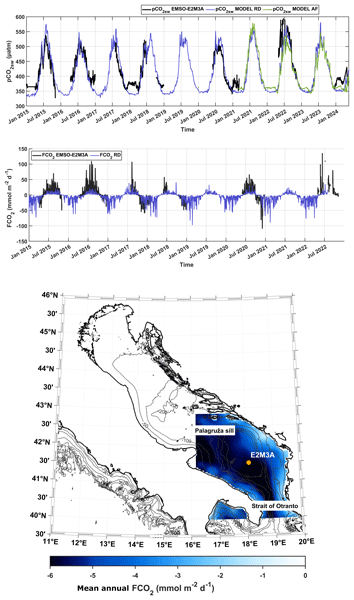
Carlotta Dentico, Gianpiero Cossarini, Giuseppe Civitarese, Michele Giani, Angelo Rubino, and Vanessa Cardin
Biogeosciences, 23, 5399–5418, https://doi.org/10.5194/bg-23-5399-2026, https://doi.org/10.5194/bg-23-5399-2026, 2026
Short summary
Short summary
The concentration of carbon dioxide in the atmosphere is rising due to human activities. The ocean has absorbed almost 30 % of the total emissions and stored in deeper waters. We studied the southern Adriatic, an area where dense water forms and sinks, helping move carbon from the surface to depth. Using a recently validated long-term dataset, we found that over the past decade this region acted as a net sink of carbon dioxide, highlighting its role in storing carbon in the Mediterranean Sea.
Laura Feudale, Giorgio Bolzon, Gianpiero Cossarini, Anna Teruzzi, Emanuela Clementi, and Stefano Salon
EGUsphere, https://doi.org/10.5194/egusphere-2026-3413, https://doi.org/10.5194/egusphere-2026-3413, 2026
This preprint is open for discussion and under review for Ocean Science (OS).
Short summary
Short summary
We investigate the impact of physical forcing frequency on Mediterranean biogeochemical simulations. Using 6-hourly instead of daily ocean fields improves phytoplankton bloom and nutrient patterns through a better representation of vertical transport processes, highlighting the importance of high-frequency variability for ecosystem forecasting.
Fabio Giordano, Matjaž Ličer, Stefano Querin, Stefano Salon, and Martin Vodopivec
EGUsphere, https://doi.org/10.5194/egusphere-2026-2567, https://doi.org/10.5194/egusphere-2026-2567, 2026
Short summary
Short summary
In summer 2023, the Gulf of Trieste (Adriatic, Mediterranean Sea) experienced extreme bottom temperatures recorded by a thermometer at 20 m depth. However, the three-month bottom marine heatwave was not detectable from the surface. The event followed a prolonged drought: high salinity and density of surface waters caused unusually deep mixing, allowing warm surface waters to reach the seafloor and imposing extreme stress on bottom-dwelling biota.
Marilaure Grégoire, Gianpiero Cossarini, Corinne Derval, Elodie Gutknecht, Susan Kay, Julien Lamouroux, Helen Morrison, Coralie Perruche, Annette Samuelsen, Lena Spruch, Anna Teruzzi, Luc Vandenbulcke, Karina Von Schuckmann, and Tsuyoshi Wakamatsu
EGUsphere, https://doi.org/10.5194/egusphere-2026-813, https://doi.org/10.5194/egusphere-2026-813, 2026
Short summary
Short summary
We review the advancements in our capabilities to predict the green ocean in the frame of the European Copernicus Marine Service since its start in 2015 and for the five European seas, the Arctic and Global oceans. The evolutions of the prediction systems, delivered products and computing resources requirements are reviewed. Recommendations for future developments are proposed based on a SWOT analysis of current CMEMS green ocean prediction systems and products.
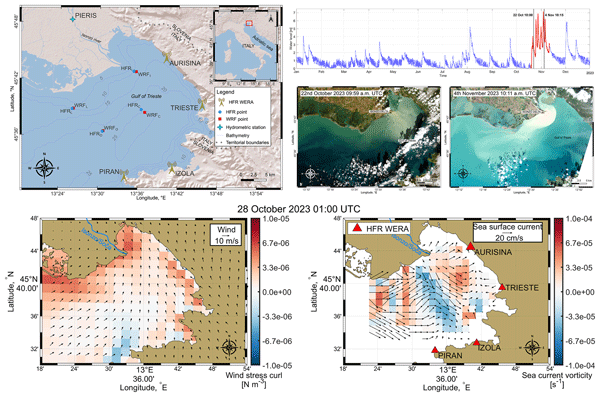
Davide Lombardo, Sofia Flora, Fabio Giordano, Emanuele Ingrassia, Milena Menna, Stefano Querin, and Laura Ursella
Ocean Sci., 21, 2197–2214, https://doi.org/10.5194/os-21-2197-2025, https://doi.org/10.5194/os-21-2197-2025, 2025
Short summary
Short summary
This study analyses the extreme meteo-marine event of October–November 2023 in the Gulf of Trieste, characterised by southerly strong winds, heavy rainfall, and high river discharge. Using high-frequency radar data, wind records, and numerical models, we analysed the interactions between river discharge and wind-driven currents. Results show that strong river discharge can dominate coastal circulation and overlay the wind effects. This multi-platform approach provides valuable insights into ocean dynamics.

Gianpiero Cossarini, Andrew Moore, Stefano Ciavatta, and Katja Fennel
State Planet, 5-opsr, 12, https://doi.org/10.5194/sp-5-opsr-12-2025, https://doi.org/10.5194/sp-5-opsr-12-2025, 2025
Short summary
Short summary
Marine biogeochemistry refers to the cycling of chemical elements resulting from physical transport, chemical reaction, uptake, and processing by living organisms. Biogeochemical models can have a wide range of complexity, from a single nutrient to fully explicit representations of multiple nutrients, trophic levels, and functional groups. Uncertainty sources are the lack of knowledge about the parameterizations, the initial and boundary conditions, and the lack of observations.
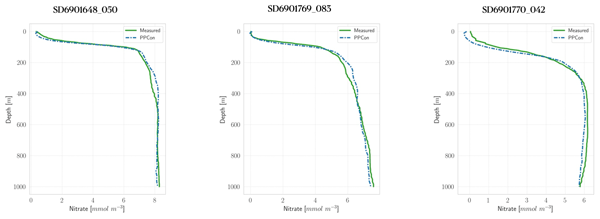
Gloria Pietropolli, Luca Manzoni, and Gianpiero Cossarini
Geosci. Model Dev., 17, 7347–7364, https://doi.org/10.5194/gmd-17-7347-2024, https://doi.org/10.5194/gmd-17-7347-2024, 2024
Short summary
Short summary
Monitoring the ocean is essential for studying marine life and human impact. Our new software, PPCon, uses ocean data to predict key factors like nitrate and chlorophyll levels, which are hard to measure directly. By leveraging machine learning, PPCon offers more accurate and efficient predictions.
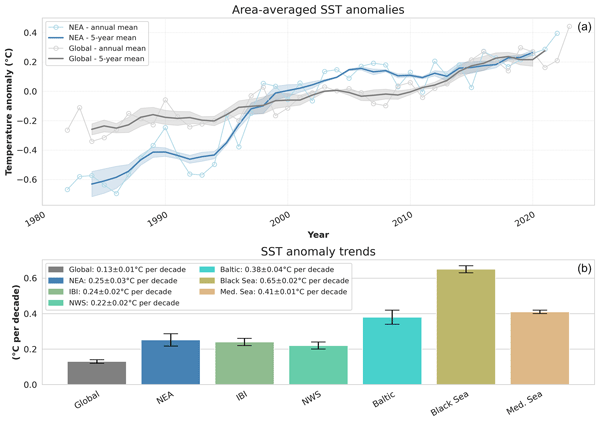
Karina von Schuckmann, Lorena Moreira, Mathilde Cancet, Flora Gues, Emmanuelle Autret, Ali Aydogdu, Lluis Castrillo, Daniele Ciani, Andrea Cipollone, Emanuela Clementi, Gianpiero Cossarini, Alvaro de Pascual-Collar, Vincenzo De Toma, Marion Gehlen, Rianne Giesen, Marie Drevillon, Claudia Fanelli, Kevin Hodges, Simon Jandt-Scheelke, Eric Jansen, Melanie Juza, Ioanna Karagali, Priidik Lagemaa, Vidar Lien, Leonardo Lima, Vladyslav Lyubartsev, Ilja Maljutenko, Simona Masina, Ronan McAdam, Pietro Miraglio, Helen Morrison, Tabea Rebekka Panteleit, Andrea Pisano, Marie-Isabelle Pujol, Urmas Raudsepp, Roshin Raj, Ad Stoffelen, Simon Van Gennip, Pierre Veillard, and Chunxue Yang
State Planet, 4-osr8, 2, https://doi.org/10.5194/sp-4-osr8-2-2024, https://doi.org/10.5194/sp-4-osr8-2-2024, 2024
Anna Teruzzi, Ali Aydogdu, Carolina Amadio, Emanuela Clementi, Simone Colella, Valeria Di Biagio, Massimiliano Drudi, Claudia Fanelli, Laura Feudale, Alessandro Grandi, Pietro Miraglio, Andrea Pisano, Jenny Pistoia, Marco Reale, Stefano Salon, Gianluca Volpe, and Gianpiero Cossarini
State Planet, 4-osr8, 15, https://doi.org/10.5194/sp-4-osr8-15-2024, https://doi.org/10.5194/sp-4-osr8-15-2024, 2024
Short summary
Short summary
A noticeable cold spell occurred in Eastern Europe at the beginning of 2022 and was the main driver of intense deep-water formation and the associated transport of nutrients to the surface. Southeast of Crete, the availability of both light and nutrients in the surface layer stimulated an anomalous phytoplankton bloom. In the area, chlorophyll concentration (a proxy for bloom intensity) and primary production were considerably higher than usual, suggesting possible impacts on fishery catches.
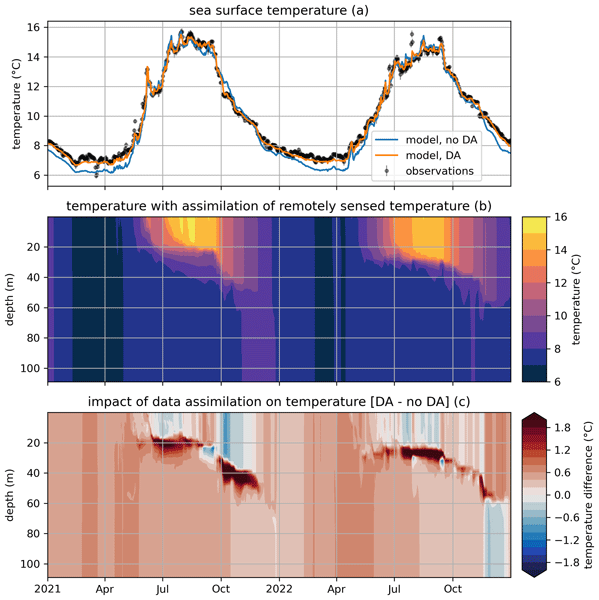
Jorn Bruggeman, Karsten Bolding, Lars Nerger, Anna Teruzzi, Simone Spada, Jozef Skákala, and Stefano Ciavatta
Geosci. Model Dev., 17, 5619–5639, https://doi.org/10.5194/gmd-17-5619-2024, https://doi.org/10.5194/gmd-17-5619-2024, 2024
Short summary
Short summary
To understand and predict the ocean’s capacity for carbon sequestration, its ability to supply food, and its response to climate change, we need the best possible estimate of its physical and biogeochemical properties. This is obtained through data assimilation which blends numerical models and observations. We present the Ensemble and Assimilation Tool (EAT), a flexible and efficient test bed that allows any scientist to explore and further develop the state of the art in data assimilation.
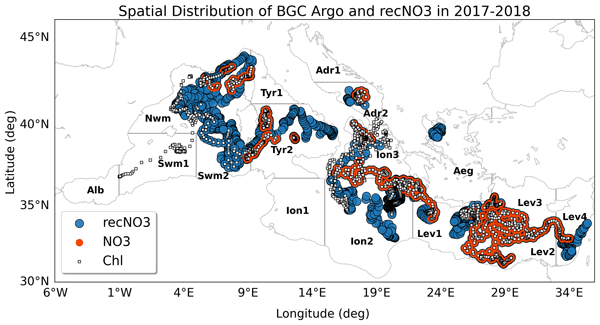
Carolina Amadio, Anna Teruzzi, Gloria Pietropolli, Luca Manzoni, Gianluca Coidessa, and Gianpiero Cossarini
Ocean Sci., 20, 689–710, https://doi.org/10.5194/os-20-689-2024, https://doi.org/10.5194/os-20-689-2024, 2024
Short summary
Short summary
Forecasting of marine biogeochemistry can be improved via the assimilation of observations. Floating buoys provide multivariate information about the status of the ocean interior. Information on the ocean interior can be expanded/augmented by machine learning. In this work, we show the enhanced impact of assimilating new in situ variables (oxygen) and reconstructed variables (nitrate) in the operational forecast system (MedBFM) model of the Mediterranean Sea.
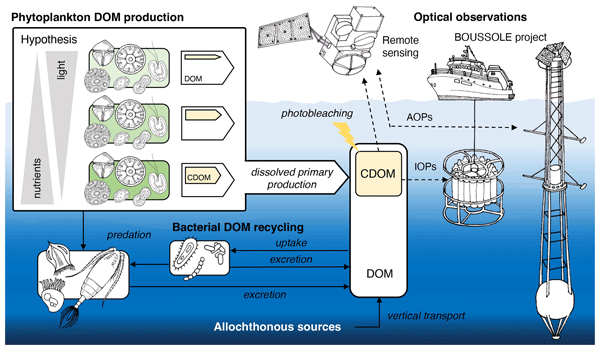
Eva Álvarez, Gianpiero Cossarini, Anna Teruzzi, Jorn Bruggeman, Karsten Bolding, Stefano Ciavatta, Vincenzo Vellucci, Fabrizio D'Ortenzio, David Antoine, and Paolo Lazzari
Biogeosciences, 20, 4591–4624, https://doi.org/10.5194/bg-20-4591-2023, https://doi.org/10.5194/bg-20-4591-2023, 2023
Short summary
Short summary
Chromophoric dissolved organic matter (CDOM) interacts with the ambient light and gives the waters of the Mediterranean Sea their colour. We propose a novel parameterization of the CDOM cycle, whose parameter values have been optimized by using the data of the monitoring site BOUSSOLE. Nutrient and light limitations for locally produced CDOM caused aCDOM(λ) to covary with chlorophyll, while the above-average CDOM concentrations observed at this site were maintained by allochthonous sources.
Giovanni Coppini, Emanuela Clementi, Gianpiero Cossarini, Stefano Salon, Gerasimos Korres, Michalis Ravdas, Rita Lecci, Jenny Pistoia, Anna Chiara Goglio, Massimiliano Drudi, Alessandro Grandi, Ali Aydogdu, Romain Escudier, Andrea Cipollone, Vladyslav Lyubartsev, Antonio Mariani, Sergio Cretì, Francesco Palermo, Matteo Scuro, Simona Masina, Nadia Pinardi, Antonio Navarra, Damiano Delrosso, Anna Teruzzi, Valeria Di Biagio, Giorgio Bolzon, Laura Feudale, Gianluca Coidessa, Carolina Amadio, Alberto Brosich, Arnau Miró, Eva Alvarez, Paolo Lazzari, Cosimo Solidoro, Charikleia Oikonomou, and Anna Zacharioudaki
Ocean Sci., 19, 1483–1516, https://doi.org/10.5194/os-19-1483-2023, https://doi.org/10.5194/os-19-1483-2023, 2023
Short summary
Short summary
The paper presents the Mediterranean Forecasting System evolution and performance developed in the framework of the Copernicus Marine Service.
Stefania A. Ciliberti, Enrique Alvarez Fanjul, Jay Pearlman, Kirsten Wilmer-Becker, Pierre Bahurel, Fabrice Ardhuin, Alain Arnaud, Mike Bell, Segolene Berthou, Laurent Bertino, Arthur Capet, Eric Chassignet, Stefano Ciavatta, Mauro Cirano, Emanuela Clementi, Gianpiero Cossarini, Gianpaolo Coro, Stuart Corney, Fraser Davidson, Marie Drevillon, Yann Drillet, Renaud Dussurget, Ghada El Serafy, Katja Fennel, Marcos Garcia Sotillo, Patrick Heimbach, Fabrice Hernandez, Patrick Hogan, Ibrahim Hoteit, Sudheer Joseph, Simon Josey, Pierre-Yves Le Traon, Simone Libralato, Marco Mancini, Pascal Matte, Angelique Melet, Yasumasa Miyazawa, Andrew M. Moore, Antonio Novellino, Andrew Porter, Heather Regan, Laia Romero, Andreas Schiller, John Siddorn, Joanna Staneva, Cecile Thomas-Courcoux, Marina Tonani, Jose Maria Garcia-Valdecasas, Jennifer Veitch, Karina von Schuckmann, Liying Wan, John Wilkin, and Romane Zufic
State Planet, 1-osr7, 2, https://doi.org/10.5194/sp-1-osr7-2-2023, https://doi.org/10.5194/sp-1-osr7-2-2023, 2023
Valeria Di Biagio, Riccardo Martellucci, Milena Menna, Anna Teruzzi, Carolina Amadio, Elena Mauri, and Gianpiero Cossarini
State Planet, 1-osr7, 10, https://doi.org/10.5194/sp-1-osr7-10-2023, https://doi.org/10.5194/sp-1-osr7-10-2023, 2023
Short summary
Short summary
Oxygen is essential to all aerobic organisms, and its content in the marine environment is continuously under assessment. By integrating observations with a model, we describe the dissolved oxygen variability in a sensitive Mediterranean area in the period 1999–2021 and ascribe it to multiple acting physical and biological drivers. Moreover, the reduction recognized in 2021, apparently also due to other mechanisms, requires further monitoring in light of its possible impacts.
Alexandre Mignot, Hervé Claustre, Gianpiero Cossarini, Fabrizio D'Ortenzio, Elodie Gutknecht, Julien Lamouroux, Paolo Lazzari, Coralie Perruche, Stefano Salon, Raphaëlle Sauzède, Vincent Taillandier, and Anna Teruzzi
Biogeosciences, 20, 1405–1422, https://doi.org/10.5194/bg-20-1405-2023, https://doi.org/10.5194/bg-20-1405-2023, 2023
Short summary
Short summary
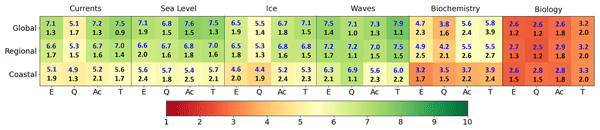
Numerical models of ocean biogeochemistry are becoming a major tool to detect and predict the impact of climate change on marine resources and monitor ocean health. Here, we demonstrate the use of the global array of BGC-Argo floats for the assessment of biogeochemical models. We first detail the handling of the BGC-Argo data set for model assessment purposes. We then present 23 assessment metrics to quantify the consistency of BGC model simulations with respect to BGC-Argo data.
Valeria Di Biagio, Stefano Salon, Laura Feudale, and Gianpiero Cossarini
Biogeosciences, 19, 5553–5574, https://doi.org/10.5194/bg-19-5553-2022, https://doi.org/10.5194/bg-19-5553-2022, 2022
Short summary
Short summary
The amount of dissolved oxygen in the ocean is the result of interacting physical and biological processes. Oxygen vertical profiles show a subsurface maximum in a large part of the ocean. We used a numerical model to map this subsurface maximum in the Mediterranean Sea and to link local differences in its properties to the driving processes. This emerging feature can help the marine ecosystem functioning to be better understood, also under the impacts of climate change.
Marco Reale, Gianpiero Cossarini, Paolo Lazzari, Tomas Lovato, Giorgio Bolzon, Simona Masina, Cosimo Solidoro, and Stefano Salon
Biogeosciences, 19, 4035–4065, https://doi.org/10.5194/bg-19-4035-2022, https://doi.org/10.5194/bg-19-4035-2022, 2022
Short summary
Short summary
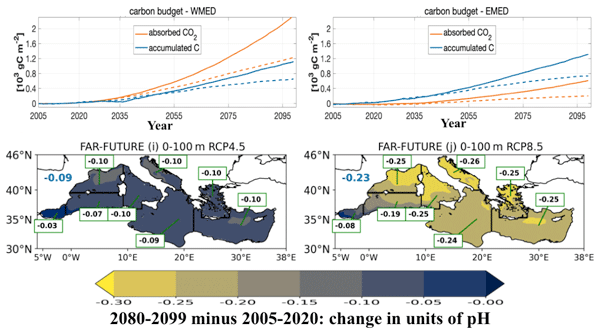
Future projections under the RCP8.5 and RCP4.5 emission scenarios of the Mediterranean Sea biogeochemistry at the end of the 21st century show different levels of decline in nutrients, oxygen and biomasses and an acidification of the water column. The signal intensity is stronger under RCP8.5 and in the eastern Mediterranean. Under RCP4.5, after the second half of the 21st century, biogeochemical variables show a recovery of the values observed at the beginning of the investigated period.
Anna Teruzzi, Giorgio Bolzon, Laura Feudale, and Gianpiero Cossarini
Biogeosciences, 18, 6147–6166, https://doi.org/10.5194/bg-18-6147-2021, https://doi.org/10.5194/bg-18-6147-2021, 2021
Short summary
Short summary
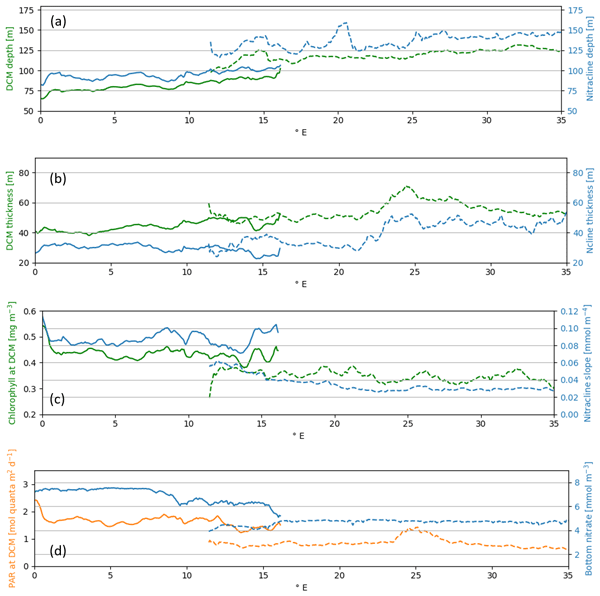
During summer, maxima of phytoplankton chlorophyll concentration (DCM) occur in the subsurface of the Mediterranean Sea and can play a relevant role in carbon sequestration into the ocean interior. A numerical model based on in situ and satellite observations provides insights into the range of DCM conditions across the relatively small Mediterranean Sea and shows a western DCM that is 25 % shallower and with a higher phytoplankton chlorophyll concentration than in the eastern Mediterranean.
Cited articles
ARPAE SIMC – DEXT3R: ARPAE SIMC – DEXT3R User Guide (version 0.95), https://simc.arpae.it/dext3r/doc/GuidaDext3r.html, last access: 25 July 2025.
Bozzoli, M., Crespi, A., Matiu, M., Majone, B., Giovannini, L., Zardi, D., Brugnara, Y., Bozzo, A., Berro, D. C., Mercalli, L., and Bertoldi, G.: Long-term snowfall trends and variability in the Alps, Int. J. Climatol., 44, 4571–4591, https://doi.org/10.1002/joc.8597, 2024.
Bruschi, A., Lisi, I., De Angelis, R., Querin, S., Cossarini, G., Di Biagio, V., Salon, S., Solidoro, C., Fassina, D., Ancona, S., and Silvestri, C.: Indexes for the assessment of bacterial pollution in bathing waters from point sources: The northern Adriatic Sea CADEAU service, J. Environ. Manage., 293, 112878, https://doi.org/10.1016/j.jenvman.2021.112878, 2021.
Cavallini, E., Viaroli, P., Naldi, M., Saccò, M., Scibona, A., Barbieri, E., Franceschini, S., and Nizzoli, D.: Seasonal Variability and Hydrological Patterns Influence the Long-Term Trends of Nutrient Loads in the River Po, Water, 16, 2628, https://doi.org/10.3390/w16182628, 2024.
Colella, S., Böhm, E., Cesarini, C., Jutard, Q., and Brando, V. E.: EU Copernicus Marine Service Product User Manual for the Mediterranean Sea, Bio-Geo-Chemical, L3, daily Satellite Observations (Near Real Time), OCEANCOLOUR_MED_BGC_L3_NRT_009_141, Issue 5.0, Mercator Ocean International, https://documentation.marine.copernicus.eu/PUM/CMEMS-OC-PUM.pdf (last access: 25 July 2025), 2024a.
Colella, S., Böhm, E., Cesarini, C., Jutard, Q., and Brando, V. E.: EU Copernicus Marine Service Product User Manual for the Mediterranean Sea, Bio-Geo-Chemical, L3, daily Satellite Observations (1997–ongoing), OCEANCOLOUR_MED_BGC_L3_MY_009_143, Issue 5.0, Mercator Ocean International, https://documentation.marine.copernicus.eu/PUM/CMEMS-OC-PUM.pdf (last access: 25 July 2025), 2024b.
Colella, S., Brando, V. E., Di Cicco, A., D'Alimonte, D., Forneris, V., and Bracaglia, M.: EU Copernicus Marine Service Quality Information Document for the Mediterranean Sea, Bio-Geo-Chemical, L3, daily Satellite Observations (Near Real Time), OCEANCOLOUR_MED_BGC_L3_NRT_009_141, Issue 4.1, Mercator Ocean International, https://documentation.marine.copernicus.eu/QUID/CMEMS-OC-QUID-009-141to144-151to154.pdf (last access: 25 July 2025), 2025a.
Colella, S., Brando, V. E., Di Cicco, A., D'Alimonte, D., Forneris, V., and Bracaglia, M.: EU Copernicus Marine Service Quality Information Document for the Mediterranean Sea, Bio-Geo-Chemical, L3, daily Satellite Observations (1997-ongoing), OCEANCOLOUR_MED_BGC_L3_MY_009_143, Issue 4.1, Mercator Ocean International, https://documentation.marine.copernicus.eu/QUID/CMEMS-OC-QUID-009-141to144-151to154.pdf (last access: 25 July 2025), 2025b.
Copernicus Climate Change Service (C3S): European State of the Climate 2024, Copernicus Climate Change Service (C3S), https://doi.org/10.24381/14J9-S541, 2025.
Coppini, G., Clementi, E., Cossarini, G., Salon, S., Korres, G., Ravdas, M., Lecci, R., Pistoia, J., Goglio, A. C., Drudi, M., Grandi, A., Aydogdu, A., Escudier, R., Cipollone, A., Lyubartsev, V., Mariani, A., Cretì, S., Palermo, F., Scuro, M., Masina, S., Pinardi, N., Navarra, A., Delrosso, D., Teruzzi, A., Di Biagio, V., Bolzon, G., Feudale, L., Coidessa, G., Amadio, C., Brosich, A., Miró, A., Alvarez, E., Lazzari, P., Solidoro, C., Oikonomou, C., and Zacharioudaki, A.: The Mediterranean Forecasting System – Part 1: Evolution and performance, Ocean Sci., 19, 1483–1516, https://doi.org/10.5194/os-19-1483-2023, 2023.
Cossarini, G., Feudale, L., Teruzzi, A., Bolzon, G., Coidessa, G., Solidoro, C., Di Biagio, V., Amadio, C., Lazzari, P., Brosich, A., and Salon, S.: High-resolution reanalysis of the Mediterranean Sea biogeochemistry (1999–2019), Front. Mar. Sci., 8, 741486, https://doi.org/10.3389/fmars.2021.741486, 2021.
Cozzi, S. and Giani, M.: River water and nutrient discharges in the Northern Adriatic Sea: Current importance and long term changes, Cont. Shelf Res., 31, 1881–1893, https://doi.org/10.1016/j.csr.2011.08.010, 2011.
Cozzi, S., Ivančić, I., Catalano, G., Djakovac, T., and Degobbis, D.: Dynamics of the oceanographic properties during mucilage appearance in the Northern Adriatic Sea: Analysis of the 1997 event in comparison to earlier events, J. Marine Syst., 50, 223–241, https://doi.org/10.1016/j.jmarsys.2004.01.007, 2004.
Djakovac, T., Supić, N., Bernardi Aubry, F., Degobbis, D., and Giani, M.: Mechanisms of hypoxia frequency changes in the northern Adriatic Sea during the period 1972–2012, J. Marine Syst., 141, 179–189, https://doi.org/10.1016/j.jmarsys.2014.08.001, 2015.
Escudier, R., Clementi, E., Nigam, T., Aydogdu, A., Fini, E., Pistoia, J., Grandi, A., and Miraglio, P.: EU Copernicus Marine Service Quality Information Document for the Mediterranean Sea Physics Reanalysis, MEDSEA_MULTIYEAR_PHY_006_004, Issue 2.4, Mercator Ocean International, https://documentation.marine.copernicus.eu/QUID/CMEMS-MED-QUID-006-004.pdf (last access:25 July 2024), 2024.
EU Copernicus Emergency Management Service Product: River discharge and related historical data from the European Flood Awareness System, Joint Research Center, Copernicus Emergency Management Service, [data set], https://doi.org/10.24381/cds.e3458969, 2019.
EU Copernicus Marine Service Product: Mediterranean Sea Biogeochemistry Reanalysis, Mercator Ocean International [data set], https://doi.org/10.48670/mds-00374, 2022.
EU Copernicus Marine Service Product: Mediterranean Sea Biogeochemistry Analysis and Forecast, Mercator Ocean International [data set], https://doi.org/10.48670/mds-00358, 2024a.
EU Copernicus Marine Service Product: Mediterranean Sea Physics Analysis and Forecast, Mercator Ocean International [data set], https://doi.org/10.48670/mds-00359, 2024b.
EU Copernicus Marine Service Product: Mediterranean Sea Physics Reanalysis, Mercator Ocean International [data set], https://doi.org/10.48670/mds-00375, 2024c.
EU Copernicus Marine Service Product: Mediterranean Sea, Bio-Geo-Chemical, L3, daily Satellite Observations (Near Real Time), Mercator Ocean International [data set], https://doi.org/10.48670/moi-00297, 2025a.
EU Copernicus Marine Service Product: Mediterranean Sea, Bio-Geo-Chemical, L3, daily Satellite Observations (1997–ongoing), Mercator Ocean International [data set], https://doi.org/10.48670/moi-00299, 2025b.
European Commission: Commission staff working document: Review of the status of the marine environment in the European Union, SWD(2020) 61 final, Brussels, https://eur-lex.europa.eu/legal-content/EN/TXT/?uri=CELEX%3A52020SC0061 (last access: 5 May 2026), 2020.
Ferreira, J.G., Andersen, J.H., Borja, A., Bricker, S.B., Camp, J., da Silva, M.C., Garcés, E., Heiskanen, A.-S., Humborg, C., Ignatiades, L., Lancelot, C., Menesguen, A., Tett, P., Hoepffner, N., and Claussen, U.: Overview of eutrophication indicators to assess environmental status within the European Marine Strategy Framework Directive, Estuar. Coast. Shelf Sci., 93, 117–131, https://doi.org/10.1016/j.ecss.2011.03.014, 2011.
Feudale, L., Bolzon, G., Lazzari, P., Salon, S., Teruzzi, A., Di Biagio, V., Coidessa, G., Álvarez, E., Amadio, C., and Cossarini, G.: EU Copernicus Marine Service Quality Information Document for the Mediterranean Sea Biogeochemistry Analysis and Forecast, MEDSEA_ANALYSISFORECAST_BGC_006_014, Issue 3.2, Mercator Ocean International, https://documentation.marine.copernicus.eu/QUID/CMEMS-MED-QUID-006-014.pdf (last access: 25 July 2025), 2024.
Giani, M., Djakovac, T., Degobbis, D., Cozzi, S., Solidoro, C., and Umani, S. F.: Recent changes in the marine ecosystems of the northern Adriatic Sea, Estuar. Coast. Shelf Sci., 115, 1–13, https://doi.org/10.1016/j.ecss.2012.08.023, 2012.
Gualtieri, L., Goglio, A. C., Clementi, E., Grandi, A., Moulin, A., Giurato, M., Aydogdu, A., Pistoia, J., Miraglio, P., Sadighrad, E., Mariani, A., and Drudi, M.: EU Copernicus Marine Service Quality Information Document for the Mediterranean Sea Physics Analysis and Forecast, MEDSEA_ANALYSISFORECAST_PHY_006_013, Issue 2.5, Mercator Ocean International, https://documentation.marine.copernicus.eu/QUID/CMEMS-MED-QUID-006-013.pdf (last access: 25 July 2025), 2024.
Hassoun, A. E. R., Mojtahid, M., Merheb, M., Lionello, P., Gattuso, J.-P., and Cramer, W.: Climate change risks on key open marine and coastal mediterranean ecosystems, Sci. Rep., 15, https://doi.org/10.1038/s41598-025-07858-x, 2025.
Horner-Devine, A. R., Hetland, R. D., and MacDonald, D. G.: Mixing and Transport in Coastal River Plumes, Annu. Rev. Fluid Mech., 47, 569–594, https://doi.org/10.1146/annurev-fluid-010313-141408, 2015.
Lazzari, P., Salon, S., Terzić, E., Gregg, W. W., D'Ortenzio, F., Vellucci, V., Organelli, E., and Antoine, D.: Assessment of the spectral downward irradiance at the surface of the Mediterranean Sea using the radiative Ocean-Atmosphere Spectral Irradiance Model (OASIM), Ocean Sci., 17, 675–697, https://doi.org/10.5194/os-17-675-2021, 2021.
Lecci, R., Salon, S., Bolzon, G., and Cossarini, G.: EU Copernicus Marine Service Product User Manual for the Mediterranean Sea Biogeochemistry Reanalysis, MEDSEA_MULTIYEAR_BGC_006_008, Issue 3.2, Mercator Ocean International, https://documentation.marine.copernicus.eu/PUM/CMEMS-MED-PUM-006-008.pdf (last access: 25 July 2025), 2022.
Lecci, R., Salon, S., Bolzon, G., and Cossarini, G.: EU Copernicus Marine Service Product User Manual for the Mediterranean Sea Biogeochemistry Analysis and Forecast, MEDSEA_ANALYSISFORECAST_BGC_006_014, Issue 2.4, Mercator Ocean International, https://documentation.marine.copernicus.eu/PUM/CMEMS-MED-PUM-006-014.pdf (last access: 25 July 2025), 2024a.
Lecci, R., Drudi, M., Grandi, A., and Clementi, E.: EU Copernicus Marine Service Product User Manual for the Mediterranean Sea Physics Analysis and Forecast, MEDSEA_ANALYSISFORECAST_PHY_006_013, Issue 2.4, Mercator Ocean International, https://documentation.marine.copernicus.eu/PUM/CMEMS-MED-PUM-006-013.pdf (last access: 25 July 2025), 2024b.
Lecci, R., Drudi, M., Grandi, A., and Clementi, E.: EU Copernicus Marine Service Product User Manual for the Mediterranean Sea Physics Reanalysis, MEDSEA_MULTIYEAR_PHY_006_004, Issue 2.4, Mercator Ocean International, https://documentation.marine.copernicus.eu/PUM/CMEMS-MED-PUM-006-004.pdf (last access: 25 July 2025), 2024c.
Lipizer, M., Partescano, E., Rabitti, A., Giorgetti, A., and Crise, A.: Qualified temperature, salinity and dissolved oxygen climatologies in a changing Adriatic Sea, Ocean Sci., 10, 771–797, https://doi.org/10.5194/os-10-771-2014, 2014.
Ludwig, W., Dumont, E., Meybeck, M., and Heussner, S.: River discharges of water and nutrients to the Mediterranean and Black Sea: major drivers for ecosystem changes during past and future decades?, Prog. Oceanogr., 80, 199–217, https://doi.org/10.1016/j.pocean.2009.02.001, 2009.
Marini, M. and Grilli, F.: The role of nitrogen and phosphorus in eutrophication of the northern Adriatic Sea: history and future scenarios, Appl. Sci., 13, 9267, https://doi.org/10.3390/app13169267, 2023.
Mazzetti, C., Carton de Wiart, C., Gomes, G., Russo, C., Decremer, D., Ramos, A., Grimaldi, S., Disperati, J., Ziese, M., Schweim, C., Sanchez Garcia, R., Jacobson, T., Salamon, P., and Prudhomme, C.: River discharge and related forecasted data from the European Flood Awareness System, v5.0. European Commission, Joint Research Center (JRC) [data set], https://doi.org/10.24381/cds.9f696a7a, 2023.
Montanari, A., Nguyen, H., Rubinetti, S., Ceola, S., Galelli, S., Rubino, A., and Zanchettin, D.: Why the 2022 Po River drought is the worst in the past two centuries, Sci. Adv., 9, https://doi.org/10.1126/sciadv.adg8304, 2023.
Mozetič, P., Solidoro, C., Cossarini, G., Socal, G., Precali, R., Francé, J., Bianchi, F., De Vittor, C., Smodlaka, N., and Fonda Umani, S.: Recent trends towards oligotrophication of the northern Adriatic: evidence from chlorophyll a time series, Estuar. Coast., 33, 362–375, https://doi.org/10.1007/s12237-009-9191-7, 2010.
Poulain, P. M.: Adriatic Sea surface circulation as derived from drifter data between 1990 and 1999, J. Marine Syst., 29, 3–32, https://doi.org/10.1016/S0924-7963(01)00007-0, 2001.
Precali, R., Giani, M., Marini, M., Grilli, F., Ferrari, C. R., Pečar, O., and Paschini, E.: Mucilaginous aggregates in the northern Adriatic in the period 1999–2002: Typology and distribution, Sci. Total Environ., 353, 10–23, https://doi.org/10.1016/j.scitotenv.2005.09.066, 2005.
Raicich, F.: On the fresh balance of the Adriatic Sea, J. Marine Syst., 9, 305–319, https://doi.org/10.1016/S0924-7963(96)00042-5, 1996.
Regional Agency for prevention, environment and energy – Arpae Emilia Romagna SIMC Product: HydroMeteoClimate Service of Emilia-Romagna, Hydrological data extracted via DEXT3R, SIMC ARPAE portal, https://simc.arpae.it/dext3r/ (last access: 5 May 2026), 2025.
Ricci, F., Capellacci, S., Casabianca, S., Grilli, F., Campanelli, A., Marini, M., and Penna, A.: Variability of hydrographic and biogeochemical properties in the North-western Adriatic coastal waters in relation to river discharge and climate changes, Chemosphere, 361, 142486, https://doi.org/10.1016/j.chemosphere.2024.142486, 2024.
Salon, S., Cossarini, G., Bolzon, G., Feudale, L., Lazzari, P., Teruzzi, A., Solidoro, C., and Crise, A.: Novel metrics based on Biogeochemical Argo data to improve the model uncertainty evaluation of the CMEMS Mediterranean marine ecosystem forecasts, Ocean Sci., 15, 997–1022, https://doi.org/10.5194/os-15-997-2019, 2019.
Simpson, J. H.: Physical processes in the ROFI regime, J. Marine Syst., 12, 3–15, https://doi.org/10.1016/s0924-7963(96)00085-1, 1997.
Teruzzi, A., Bolzon, G., Feudale, L., and Cossarini, G.: Deep chlorophyll maximum and nutricline in the Mediterranean Sea: emerging properties from a multi-platform assimilated biogeochemical model experiment, Biogeosciences, 18, 6147–6166, https://doi.org/10.5194/bg-18-6147-2021, 2021.
Teruzzi, A., Di Biagio, V., Feudale, L., Bolzon, G., Lazzari, P., Salon, S., Teruzzi, A., Coidessa, G., and Cossarini, G.: EU Copernicus Marine Service Quality Information Document for the Mediterranean Sea Biogeochemistry Reanalysis, MEDSEA_MULTIYEAR_BGC_006_008, Issue 3.2, Mercator Ocean International, https://documentation.marine.copernicus.eu/QUID/CMEMS-MED-QUID-006-008.pdf (last access: 25 July 2025), 2022.
Tojčić, I., Denamiel, C., and Vilibić, I.: Kilometer-scale trends, variability, and extremes of the Adriatic far-future climate (RCP 8.5, 2070–2100), Front. Mar. Sci., 11, https://doi.org/10.3389/fmars.2024.1329020, 2024.
Vaquer-Sunyer, R. and Duarte C. M. : Thresholds of hypoxia for marine biodiversity, P. Natl. Acad. Sci. USA, 105, 15452–15457, https://doi.org/10.1073/pnas.0803833105, 2008.
Verri, G., Pinardi, N., Oddo, P., Ciliberti, S. A., and Coppini, G.: River runoff influences on the Central Mediterranean overturning circulation, Clim. Dynam., 50, 1675–1703, https://doi.org/10.1007/s00382-017-3715-9, 2018.
Vilibić, I., Terzić, E., Vrdoljak, I., Dominović Novković, I., Vodopivec, M., Ciglenečki, I., Djakovac, T., and Hamer, B.: Extraordinary mucilage event in the northern Adriatic in 2024 – A glimpse into the future climate?, Estuar. Coast. Shelf Sci., 317, 109222, https://doi.org/10.1016/j.ecss.2025.109222, 2025.
Vona, I., Colella, S., Sammartino, M., Brando, V. E., and Falcini, F.: Positive correlation between the Po River discharge and ocean colour trends of Chl and TSM in the Adriatic Sea, Front. Remote Sens., 6, https://doi.org/10.3389/frsen.2025.1574347, 2025.
Zittis, G., Bruggeman, A., and Lelieveld, J.: Revisiting future extreme precipitation trends in the Mediterranean, Weather and Climate Extremes, 34, 100380, https://doi.org/10.1016/j.wace.2021.100380, 2021.
Short summary
Anomalous eutrophication levels characterised the northern Adriatic Sea in 2024 spring and fall. We analysed the anomaly in marine chlorophyll and primary production by using satellite and models, in connection with multiple events of very intense river discharges, high temperatures and circulation structures. Our study proves the importance of coastal forecasting models to monitor ocean-land dynamics.
Anomalous eutrophication levels characterised the northern Adriatic Sea in 2024 spring and fall....


Altmetrics
Final-revised paper
Preprint